
Why Fake Noob and V6 Factory Listings Still Exist Across the Replica Watch Market
Spend enough time exploring the replica watch underworld and you will eventually notice a persistent paradox: factory names rarely die, even long after the assembly lines themselves stop operating. A manufacturer can vanish from production entirely overnight due to localized supply chain disruptions or state crackdowns, yet its branding continues circulating for years across dealer websites, Telegram groups, Reddit subreddits, WhatsApp statuses, and WeChat Moments. The unnatural permanence of these names is not accidental; it reflects a deeper structural reality of how trust is built—and exploited—inside a gray market that operates almost entirely on reputation and word-of-mouth.
Noob Factory and V6 Factory are undoubtedly the premier case studies of this marketing resurrection phenomenon. Their physical operations should be long buried, but on the internet, they remain functionally immortal.
The Undead Factories: What Dealers Are Actually Advertising
Even now, deep into 2026, many online sellers still boldly advertise the “latest Noob Daytona,” “Noob V11 Submariner,” or “new V6 Factory IWC release” as if these legendary workshops were actively operating three shifts a day. Some aggressive dealers—frequently catering to uneducated buyers outside the primary enthusiast forums—even post fabricated factory stock updates, pretending they have a direct line to newly released warehouse inventory. For newcomers just entering the replica watch hobby, these promotional feeds look completely believable because these specific factory names once entirely dominated the upper echelons of the market.
But the operational reality behind these listings is far more complicated, fragmented, and deceptive than most casual observers anticipate.
Recently, I spent some time analyzing a cross-section of high-volume WeChat dealer accounts and WhatsApp seller catalogs that broadcast replica watch content daily. What immediately stood out was how seamlessly these discontinued factory labels are weaponized as pure marketing bait. Sellers were openly promoting timepieces supposedly engineered by manufacturing hubs that disappeared from primary wholesale distribution channels years ago. The language used was contemporary, the product photography looked incredibly fresh, and the pricing was calibrated to modern market expectations, offering no hint that the underlying data was years out of date.
Two specific examples caught my attention almost instantly during this review.
One prominent seller claimed that Noob Factory’s V2 Rolex Sky-Dweller was fully restocked and ready for immediate Quality Control (QC) photos. Another flash advertisement announced that V6 Factory was preparing to roll out a brand-new, overhauled iteration of the IWC Aquatimer. Anyone who has closely followed the institutional evolution of the replica watch industry over the last several years would instantly recognize the gaping logical flaws in these claims.
Neither production announcement was anchored in reality.
Case Study 1: The Ghost Legacy of Noob Factory
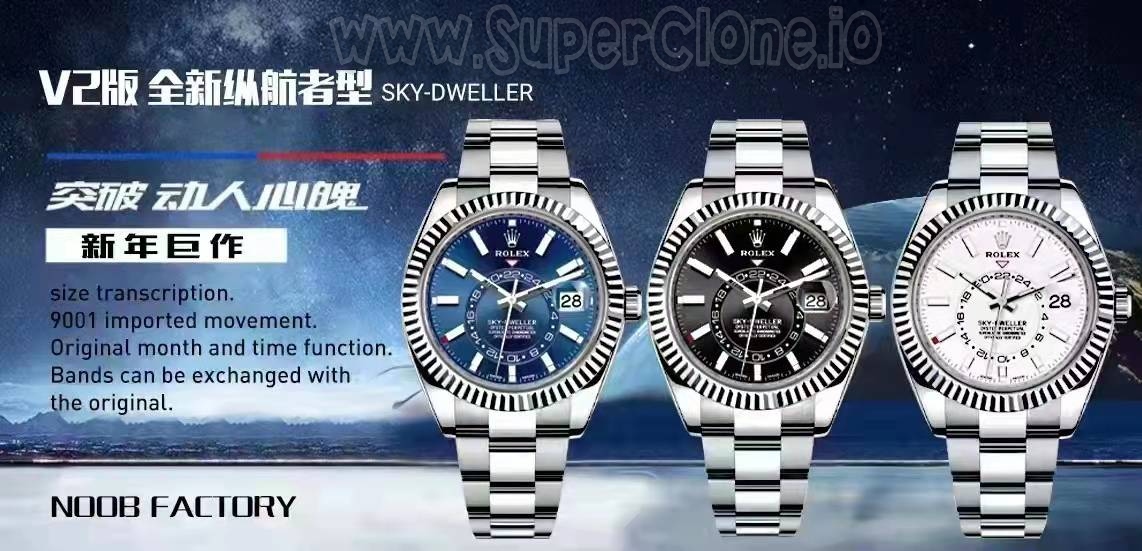
The first promotional image floating through dealer feeds claimed that Noob Factory still held massive, unexhausted inventory of its specialized Sky-Dweller models. For novice buyers, this pitch sounds incredibly persuasive because Noob once held an absolute monopoly over high-tier Rolex replicas. Their historic Submariner iterations shaped consumer expectations for nearly a decade, while their game-changing Daytona breakthroughs essentially birthed the modern “super clone” category that dictates today’s premium market tier.
The Daytona Revolution: Shifting the Industry Benchmark
Before Noob altered the landscape by securing exclusive access to fully cloned Rolex chronograph movements, historical Daytona replicas were notoriously flawed. They relied heavily on modified Asian 7750 (A7750) automatic movements, which suffered from incorrect subdial spacing, excessive case thickness, and notoriously fragile reliability when the stopwatch functions were engaged. Once Noob introduced their groundbreaking, fully functional 4130 clone caliber, the entire consumer expectation shifted overnight. Collectors suddenly demanded true-to-gen case proportions, razor-sharp dial printing, deep ceramic bezel platinum-dust engravings, buttery-smooth pusher engagement, and a movement architecture that visually mirrored genuine Rolex Caliber engineering.
That hard-earned technical reputation completely outlived the actual factory.
Because the “Noob” nomenclature still commands an immense psychological premium and trust within the global community, hundreds of drop-shippers and tier-two dealers keep using it years after the original operation ceased to exist. The name has essentially decoupled from its manufacturing origin; it now functions purely as a quality signal rather than a verifiable claim about who actually tightened the screws on the watch.
Case Study 2: The Illusory Return of V6 Factory
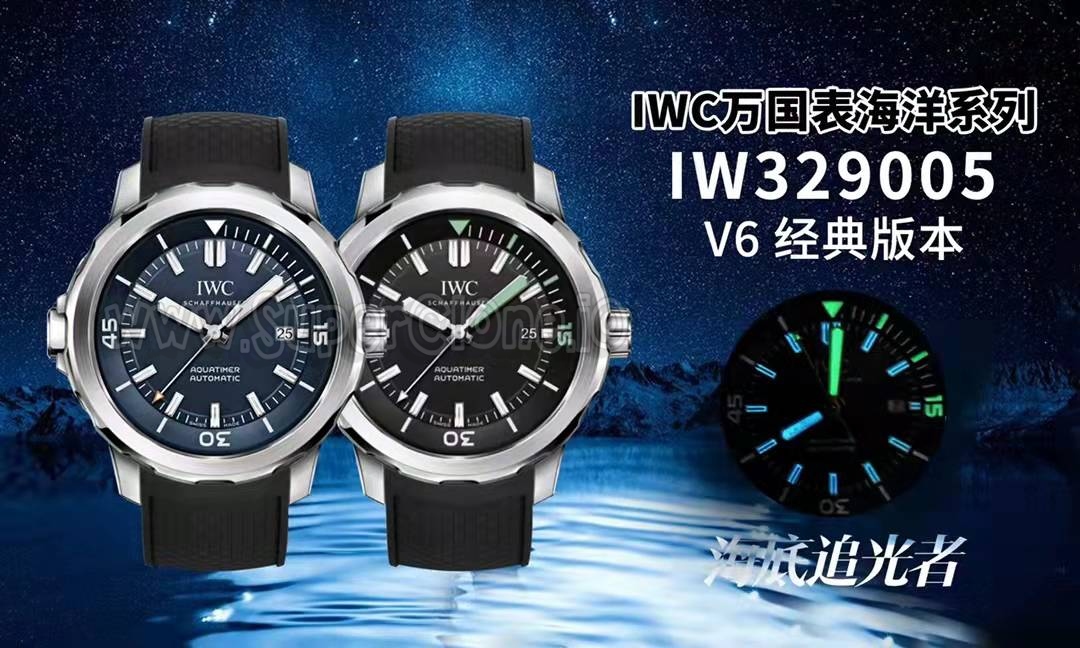
The second viral advertisement asserted that V6 Factory was on the verge of rolling out a major new IWC Aquatimer reference. Veteran watch enthusiasts will remember that V6 Factory (closely tied to the historical VS/KW consortium) built its massive empire on the flawless execution of specific IWC and Cartier models. Their Aquatimer dive watches and Ingenieur sports models were wildly sought after during an era when very few independent workshops bothered to master high-end sports replicas outside of the oversaturated Rolex category. V6 carved out a highly profitable niche and built genuine credibility within it, which is exactly what makes the continued use of their name so effective as marketing today.
However, the genuine, original V6 manufacturing hub gradually disappeared and dissolved from the primary wholesale market years ago. Despite this definitive shutdown, the V6 label keeps appearing on freshly manufactured watches because mainstream buyers still instantly connect that label with top-tier case finishing and robust construction. A seller who slaps a “V6” tag on a listing today is simply borrowing years of accumulated brand equity they had no historical role in creating.
Factory Names as SEO Marketing Keywords, Not Manufacturing Realities
This reveals one of the most critical truths a newcomer must accept about this industry: factory names frequently function as search-optimized keywords rather than verifiable, centralized manufacturing facilities. They are broad brand identifiers, not indicators of current production origins.
Dealers know buyers search for familiar terms. Acronyms like Noob, V6, Clean (CF), VS (VSF), ZF, APS, and AR Factory trigger immediate brand recognition among forum browsers on RWI or Reddit. Even if a specific watch is being assembled in an entirely different, unnamed workshop, using a historic sticker on the caseback helps generate unearned trust and drive immediate conversions. This is especially true because replica buyers cannot verify production origins the way they might verify legitimate consumer goods—there is no auditable supply chain, no factory certification, and no transparent shipping manifest. The name is the only signal a buyer has, which makes that signal incredibly easy to manipulate.
This dynamic creates a perfect breeding ground for deep misinformation.
The New Buyer’s Dilemma: Navigating the Time-Flattened Internet
A new buyer might spend an evening reading an archived 2020 forum review praising the build quality of Noob’s V11 Submariner. Later, they visit a modern dealer storefront that conveniently lists a “Noob V11 Submariner 2026 Upgraded Edition” as ready-to-ship stock. Lacking context regarding how fast the ground shifts in the Guangzhou watch districts, the buyer naturally assumes Noob is still open for business and merely iterating on their classic designs. The seller isn’t necessarily lying about having a watch available—they may genuinely have a Submariner in stock—but they are profoundly misrepresenting the origin of that watch.
According to verified field data shared by multiple trusted insiders close to the primary wholesale channels, Noob Factory has not resumed normal operations in any capacity. The genuine residual New Old Stock (NOS) inventory dried up years ago. The vast majority of timepieces marketed as “Noob” today fall into three distinct categories: low-grade old stock leftovers, re-badged mid-tier watches from completely different workshops, or outright budget counterfeits capitalizing on a legendary name to trick uneducated buyers into paying premium prices.
This distinction carries massive implications for the actual quality of the watch on your wrist. A contemporary Daytona marketed under the “Noob” banner might look somewhat convincing on a compressed dealer website, but its internal mechanics tell a radically different story. The actual movement geometry, component finishing, mainspring power reserve behavior, rotor winding acoustics, chronograph tactility, and overall assembly tolerances will differ wildly from the historic, custom-cloned Noob pieces that earned the factory its legendary status. Paying for a Noob-branded watch in 2026 and expecting the specific mechanical engineering associated with Noob circa 2019 is a recipe for immediate disappointment.
The Fragmented Supply Chain: Why Tracing Origins is Impossible
The deep confusion among buyers stems from a fundamental misunderstanding of how replica manufacturing actually works. Many hobbyists visualize a single, massive, vertically integrated factory building every single component under one roof—from stamping the steel cases to printing the dials. In reality, the industry relies on a hyper-fragmented network of anonymous, specialized subcontractors.
Case sets come from one specialized CNC machine shop. Dials are sourced from a dedicated print workshop. Stainless steel bracelets are contracted to an independent manufacturer, while sapphire crystals, ceramic bezels, hands, date wheels, movements, and Super-LumiNova applications all flow through completely separate, insulated channels. When a major “factory” brand like Noob gets raided and forced out of business, the underlying component suppliers do not stop working. They simply pivot, sell their remaining parts to other assembly managers, or redirect their output toward whoever places the next order. Over time, a watch becomes a hybrid creation, making it impossible to attribute the finished product to a single original source. This modular ecosystem is precisely why recycled factory branding remains rampant and incredibly easy to execute.
The Role of Outdated Dealer Catalogs
Another reason old names survive is because dealer websites rarely remove discontinued listings. Many massive multi-brand platform sites still host active checkout pages for replica models released nearly a decade ago. They willingly accept orders for watches they cannot actually source. Once payment clears via cryptocurrency or wire transfer, the buyer is hit with a classic bait-and-switch: they are told the watch is unexpectedly “out of stock due to sudden factory raids,” and are gently steered toward a substitute version from an alternative workshop, or subjected to endless shipping delays. These justifications sound highly plausible because factory raids genuinely do happen periodically, providing convenient cover for sellers operating in bad faith.
The situation becomes even more confusing because genuine resurrections do occasionally happen. A workshop might go dark for twelve months due to legal pressure, restructure its management, split its assembly teams, and eventually re-emerge using a slightly modified version of its historical name. Because these genuine comebacks are part of industry lore, buyers easily fall victim to rumors claiming that *every* dead factory is on the verge of a triumphant return. But blind trust in this hobby is an expensive mistake, and patience without verification is just delayed disappointment.
Not long ago, a close acquaintance of mine attempted to purchase a Noob Submariner after reading legacy reviews celebrating the V11 generation. Several clean, professional-looking dealer websites still listed the watch as active inventory. When I stepped in to explain that Noob had been completely offline for years, his initial reaction was pure skepticism—he assumed I was simply overstating the situation because everything he had found online pointed in the opposite direction. That reaction is incredibly common among newer buyers who mistake a polished website for a legitimate retail brand.
The replica watch industry does not run on transparent corporate press releases; it moves entirely through screenshots, unverified rumors, copied dealer updates, archived forum threads, and highly recycled product descriptions that travel from one site to another without timestamps. A person entering the hobby today consumes information from wildly different eras simultaneously. A 2019 review, a 2021 dealer blog post, and a fake 2026 product listing all sit side-by-side in Google search results, flattening out time and masking completely different market realities.
hr />
The Modern Shift: Focus on Technical Specs Over Stickers
This structural opacity is exactly why seasoned collectors no longer care about the factory sticker on the caseback. Instead, they focus entirely on granular, verifiable technical specifications. Modern, high-tier discussions surrounding Rolex replicas live and die by precise movement caliber designations rather than marketing acronyms. Smart buyers evaluate watches based on concrete mechanics:
- Dandong 4130 and 4131 Chronograph Movements: The absolute gold standard for Daytona replicas, offering genuine 72-hour power reserves, correct clone architecture, and rock-solid reliability.
- Dandong 3235 Automatic Calibers: Highly coveted for true-to-gen power reserve metrics and reliable instant calendar clickover.
- Shanghai 3285 GMT Movements: Known for adjustable independent hour hands and smooth travel-time utility on GMT-Master II models.
- Decorated ETA-Based Architectures: Utilizing robust, easily serviceable bases like the Asia 2824 or 2836 for daily beating.
- Clone Movement Stability and Serviceability: Assessing whether local independent watchsmiths can source replacement parts or swap in genuine Swiss components.
- Power Reserve Consistency: Verifying true performance under load versus advertised marketing metrics.
- Rotor Noise and Winding Feel: Dropping the telltale noisy “helicopter” spin of lower-tier Miyota movements for silent, premium bi-directional winding.
These tangible mechanical attributes offer infinitely more consumer protection than simply trusting a familiar factory label. For example, two distinct Daytona replicas sold under the recycled “Noob” moniker might look identical in a dealer’s compressed video clip, yet hide completely different beating hearts. Visual aesthetics alone never tell the complete story, and a convincing case finish does not predict what happens inside after two years of daily wear.
The Fine Details True Collectors Inspect
Collectors who have spent years inside the hobby now pay closer attention to a broader range of micro-details before greenlighting a purchase:
- Rehaut engraving alignment, symmetry, and font crispness
- Ceramic bezel font thickness and the quality of the platinum-dust plating
- Dial print sharpness, 3D typography magnification, and logo spacing
- Lume color consistency and application neatness under UV light
- Case finishing transitions between brushed and polished surfaces
- Bracelet edge softness and SEL (Solid End Link) fitment tolerances
- Crystal clarity, cyclops magnification accuracy, and anti-reflective (AR) coating quality
- Chronograph pusher engagement feedback and click crispness
- Clasp engraving depth and coronet execution quality
- Timegrapher (timing machine) amplitude, beat error, and daily rate stability data
Those details reveal everything you need to know about the watch’s origin, rendering the marketing label entirely irrelevant. A seller who cannot or will not provide close-up photos of these specific elements should be treated with immediate skepticism, regardless of which factory name they use in the headline.
How to Safely Navigate the Ghost-Filled Market
To be perfectly fair, not every dealer using obsolete factory terminology is actively attempting to pull a malicious scam. In many instances, Trusted Dealers (TDs) keep terms like “Noob Submariner” in their titles simply because that is exactly what consumers type into search bars. Over a long enough timeline, historic factory names morph into broad quality descriptors rather than literal indicators of origin, creating a strange situation where both the seller and buyer are using the same word to mean completely different things simultaneously.
Even so, your internal alarm bells should immediately ring whenever a seller makes urgent, specific factory claims like:
- “Brand new official factory-direct Noob release”
- “Latest V6 Factory batch straight from the production line”
- “Exclusive factory upgrade from a discontinued legend”
- “Original factory comeback edition with upgraded steel”
Healthy skepticism is your single best defense in this hobby. The more specific and urgent the factory claim, the more carefully the actual watch should be evaluated. The safest approach is always to assess the actual watch being offered via the QC table rather than buying into the brand myth. Serious buyers typically request updated quality control photos, macro movement shots, timegrapher data readings, and detailed clasp stampings before committing to a shipment. Sellers who cannot produce this documentation quickly are either working from old stock photos or do not have the watch they claim to have. Both situations are worth walking away from.
The replica watch market operates in endless cycles of emergence, dominance, disruption, and replacement. One factory commands a category for several years before eventually disappearing and being replaced by newer workshops competing for that same market share. Years ago, the entire hobby revolved around Noob and V6. Today, the cutting edge of the market has shifted entirely toward powerhouses like Clean Factory, VSF, ZF, APS, and C+ Factory, all locked in fierce competition across Rolex, Patek Philippe, Audemars Piguet, Omega, and Richard Mille models. Those names will eventually be followed by others, and the same pattern of lingering brand recognition will likely repeat with each generation.
But even after factories disappear, their names continue circulating across the internet for years because reputation itself becomes part of the product. A name that once represented genuine manufacturing excellence gets stripped of its original meaning and repurposed as a shortcut to buyer confidence. That is a fundamental dynamic of how trust gets weaponized inside markets that operate without transparency or verification.
For anyone entering the replica watch space today, the most critical lesson is simple: never assume a factory name on a website represents a real, active brick-and-mortar entity. In most cases, those legendary names are now just ghosts—recycled marketing code words attached to watches born from entirely different corners of the industrial landscape. And unfortunately, as long as uneducated buyers continue chasing those ghosts, these misleading listings are not going away anytime soon. The only real protection is knowing enough about the current market to recognize when a name is being used as a substitute for substance.
