
New Replica Watch Releases That Quietly Changed the Market in Early 2022
The landscape of the replica watch market rarely progresses in a predictable, linear fashion. Some months are completely defined by the relentless iteration of flagship staples—another round of Submariner bezel refinements or incremental Daytona movement upgrades. However, there are specific windows of time where the industry shifts its focus toward experimentalism, embracing unusual dial textures, niche complications, and historical tributes that cater to the most discerning segments of the collecting community.
Throughout the early months of 2022, several prominent factories orchestrated a series of “quiet” releases that, while not always making front-page headlines, signaled a profound shift in manufacturing priorities. Rather than chasing a singular mass-market trend, these releases addressed a remarkably diverse spectrum of enthusiasts: from the purists obsessed with vintage Rolex geometry to the trend-seekers riding the Tiffany Blue wave, and from the material-focused buyers of colored ceramics to those who demand the aggressive, stealth-inspired aesthetics of DLC-coated custom divers.
The significance of these releases extends beyond the individual timepieces. They offer a window into the current “arms race” within the industry. Factories are no longer merely competing on the basic accuracy of case finishing or the superficial decoration of movements. Instead, they are responding to increasingly granular demands for historical fidelity, sophisticated material science, and case profiles that mimic the slender elegance of genuine luxury horology.
Some of these models will probably disappear from production after a short period. Others may eventually become long-running staples in dealer catalogs. But together, they offer a useful snapshot of where the replica industry was heading during this particular stage of the market — and what that means for buyers at every level of the hobby.
Quick Reference: Key Specs Across All Four Releases
Before diving into each model individually, here is a direct comparison of the core specifications across all four factory releases discussed in this article. These numbers matter because proportions and materials are increasingly how collectors judge replica quality — not just movement names.
| Model | Factory | Diameter | Thickness | Movement | Case Material |
|---|---|---|---|---|---|
| Paul Newman Daytona | WM Factory | 37.5mm | ~16mm | Venus 75 Manual Wind | Steel / Gold-tone |
| Nautilus 5712 | GR Factory | Standard | ~9.5mm | Clone PP240 Auto | Stainless Steel |
| Big Bang Unico Ceramic | Z Factory | 42mm+ | Standard | Asia 7750 | Colored Ceramic |
| Blaken Sea-Dweller | N/A | 44mm | ~18mm | Asia Clone ETA 2836 | 316F Steel + DLC |
The Return of Vintage Daytona Proportions
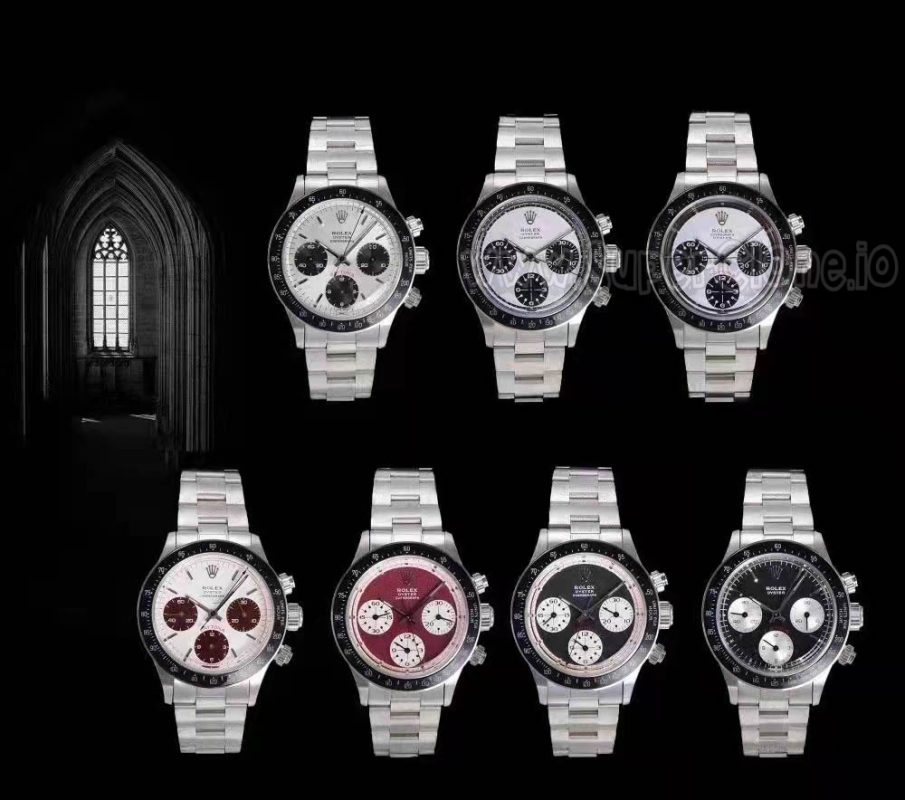
Among the most significant developments in early 2022 was the introduction of the new Paul Newman Daytona series from the WM factory. This release immediately resonated with a specific class of collectors who have grown weary of the bulky, oversized nature of modern ceramic chronographs. While the mainstream market remains fixated on precious metal Daytonas and contemporary references, WM chose to look backward, reviving the compact, manual-winding era that many consider the golden age of Rolex design.
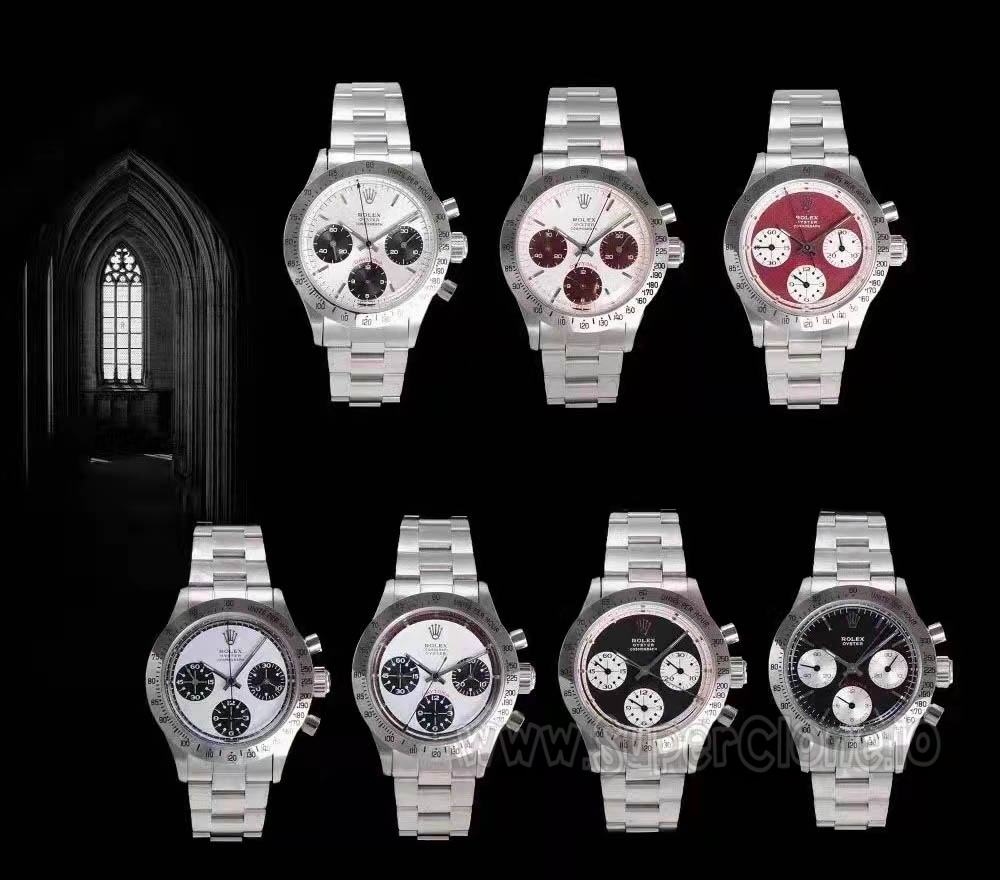
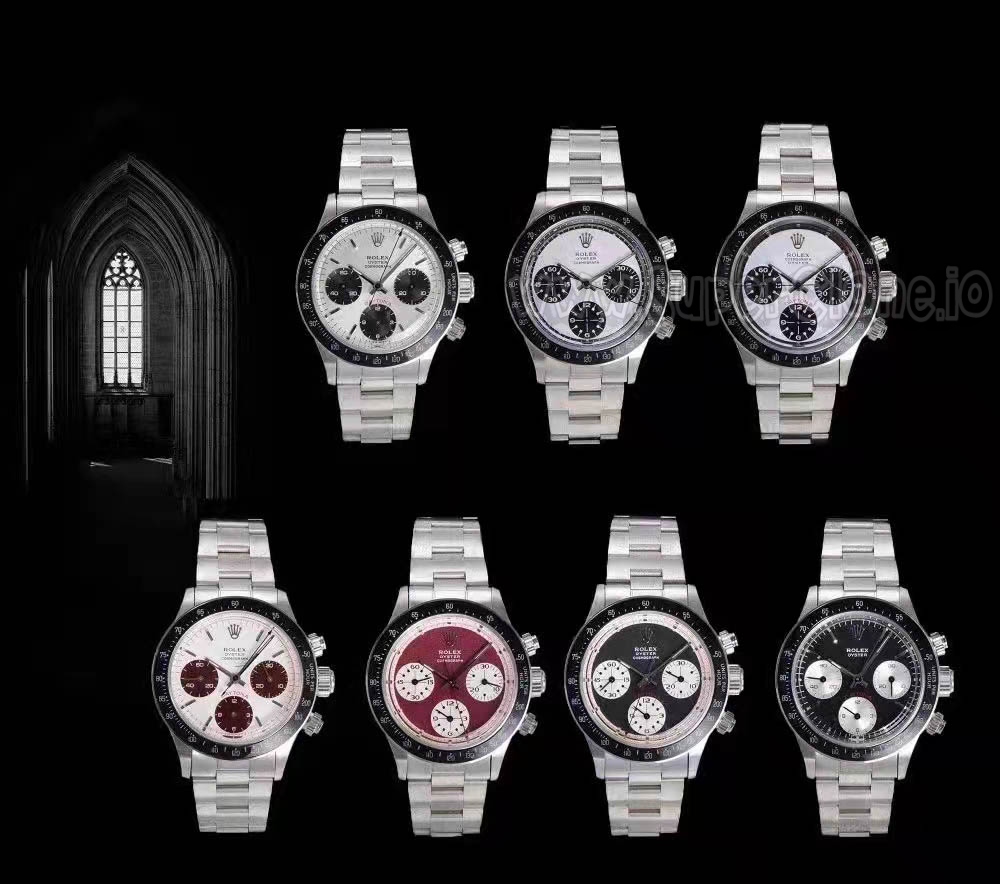
The WM factory rollout was ambitious, featuring seventeen distinct Paul Newman configurations that spanned the gamut from classic stainless steel to opulent gold-tone finishes. What sets these pieces apart is the refusal to compromise on historical proportions. Many previous attempts at vintage Daytonas utilized modern 40mm cases, which fundamentally distorted the visual balance of the exotic dials. WM, however, committed to the period-correct 37.5mm diameter.
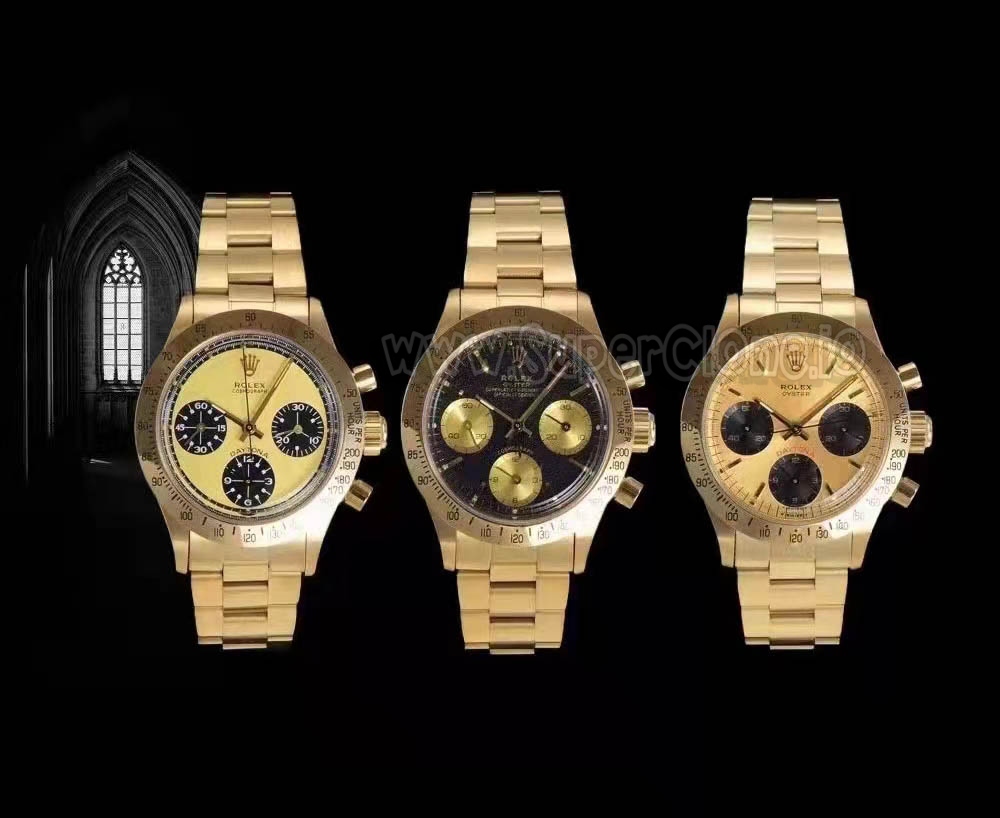
On the wrist, that 37.5mm measurement is transformative. For buyers accustomed to the broad presence of a modern sports watch, the initial experience is one of surprising compactness. Yet, vintage enthusiasts recognize this as the “sweet spot” of chronograph design. The case thickness, reaching approximately 16mm, is substantial on paper, but much of that verticality is attributed to the high-domed acrylic crystal and the architecture of the manual-winding movement, lending the watch a charming, three-dimensional character that modern flat-sapphire pieces lack.
The visual equilibrium shifts entirely toward the dial. By reducing the case footprint, the intricate details of the exotic Paul Newman layout—the art-deco subdial numerals and the contrasting outer tracks—are given the prominence they deserve. This is a watch that emphasizes personality over sheer wrist presence.
Perhaps the most technically interesting aspect of the WM release is the utilization of the Venus 75 manual-winding movement. In a market where “clone” automatic calibers are often used as the primary marketing tool, the choice of a manual-wind movement is a deliberate nod to authenticity. The Venus 75 architecture has deep roots in Chinese horological history, being a direct descendant of the Swiss tooling and technical knowledge that migrated decades ago. The Venus 75 itself was originally developed in Switzerland during the mid-twentieth century and became widely respected for its reliability in column-wheel controlled chronograph applications. This historical lineage makes the movement feel far more appropriate for a vintage tribute than a generic, modified automatic caliber ever could.
The dial variations are also critically important to the overall appeal of this release. Paul Newman Daytonas are remembered largely because of their exotic dial layouts, contrasting subdials, art-deco numerals, and unusual color separation. Modern ceramic Daytona replicas focus heavily on polished surfaces and bezel execution, but vintage Daytonas rely almost entirely on dial personality. The so-called “exotic” dial style — with its square subdial markers, outer chapter ring, and bold color contrasts — is what made these references so distinctive during their original production run, and it remains the primary reason collectors continue paying enormous premiums for authentic examples today.
For the collector who values the ritual of winding a watch and the tactile feedback of a mechanical chronograph, these WM releases represent a rare moment of industry restraint. They eschew the aggressive modifications of the modern era in favor of a faithful, historical narrative that continues to shape the broader luxury watch market. In a segment where “more” often dominates decision-making, that kind of deliberate understatement is harder to execute than it appears.
GR Factory and the Continuing Tiffany Blue Phenomenon
While WM focused on the past, GR factory set its sights firmly on the zeitgeist of the present. The release of their new Nautilus 5712 models coincided with the peak of the “Tiffany Blue” phenomenon, a trend that has fundamentally altered how color is valued in the high-end replica space. The cultural impact of the Tiffany-stamped Patek Philippe collaboration cannot be overstated; it transformed a niche horological color into a global fashion statement, and GR factory was among the first to capture that lightning in a bottle with high-level execution.
The GR factory 5712 lineup introduced three key variations: the headline-grabbing Tiffany Blue, a classic deep blue, and a sophisticated grey dial.

The Tiffany Blue variant is a masterclass in visual engagement. The specific pastel tone is notoriously difficult to replicate without appearing “toy-like,” but GR managed to achieve a hue that reacts beautifully to varying light conditions. This visual “pop” is critical in the age of social media, where a watch’s photogenic qualities often dictate its market desirability. However, for the long-term collector, the grey and deep blue variants offer a more conservative, enduring appeal, maintaining a closer tie to the traditional Patek Philippe aesthetic that first made the 5712 an icon of integrated-bracelet design.

Beyond the colors, the real achievement of the GR factory lies in the case profile. The 5712 is a notoriously difficult watch to replicate because the genuine article is exceptionally thin despite its asymmetrical complications. Historically, replica versions were plagued by “fat” cases that ruined the elegant silhouette of the watch. GR factory utilized its clone PP240 movement to achieve a case thickness of approximately 9.5mm. This reduction in bulk is not just a technical stat; it fundamentally changes how the watch sits on the wrist, allowing the integrated bracelet to drape naturally and maintain the slim, “second-skin” feel of the original.

While the power reserve indicator remains decorative—a necessary compromise given the extreme complexity and cost of a fully functional 240 caliber—the focus here is on aesthetic fidelity and daily reliability. For most enthusiasts, the trade-off is more than fair. The 5712 has always been more about asymmetrical dial aesthetics, slim wrist presence, and integrated bracelet elegance than about practical complications. By prioritizing the correct case dimensions and movement architecture, GR factory has delivered a version that satisfies the visual and tactile requirements of the most demanding Nautilus fans.
The Growing Popularity of Colored Ceramic Cases
One of the most technically impressive trends of early 2022 was the maturation of colored ceramic production. For years, the replica industry was largely restricted to black or white ceramic, as the high-temperature stabilization of other pigments often resulted in inconsistent tones or structural brittleness. Z factory’s release of five new Hublot Big Bang Unico models—in vibrant red, yellow, white, blue, and black ceramic—marked a significant milestone in the industry’s material capabilities.

Hublot is a brand built on the “Art of Fusion,” where the case material is just as important as the movement inside. In the context of the Big Bang Unico, a stainless steel case simply cannot replicate the futuristic, high-tech aura of genuine ceramic. Z factory’s commitment to using real ceramic for both the case and bezel is a testament to their manufacturing confidence. The vibrancy of the red and yellow versions is particularly noteworthy, as these colors are famously difficult to maintain during the sintering process.
The manufacturing process requires careful control of pigment dispersion, sintering temperatures, and surface finishing — all of which become significantly more complex when working with non-black colorants. For replica factories working at smaller production scales without the same quality control infrastructure, achieving consistent colored ceramic output represents a genuine technical accomplishment worth recognizing.
Inside these ceramic shells beats the Asia 7750 platform, decorated to mimic the appearance of Hublot’s in-house HUB1280 caliber. While it lacks the flyback functionality of the genuine movement, the 7750 is a “workhorse” of the replica industry. It is a known quantity with a vast ecosystem of spare parts and service knowledge, making it a pragmatic choice for a watch that is primarily about bold, avant-garde design. Although it has known limitations — particularly around column-wheel operation and vertical clutch performance — experienced collectors generally understand how to maintain these movements and which operating habits help reduce long-term reliability issues. Running the chronograph regularly, keeping the crown properly sealed, and scheduling periodic servicing all extend the functional life of these calibers significantly. These releases prove that the market is moving beyond simple steel sports watches and into the realm of experimental, high-concept horology.
Blaken Sea-Dweller Models and the Enduring Appeal of DLC Black Cases
The final pillar of the early 2022 releases is the continued popularity of the “stealth” aesthetic, exemplified by two Blaken-inspired Sea-Dweller models. These watches cater to the segment of the market that finds traditional stainless steel too ubiquitous and seeks the aggressive, modified look of high-end customizers.
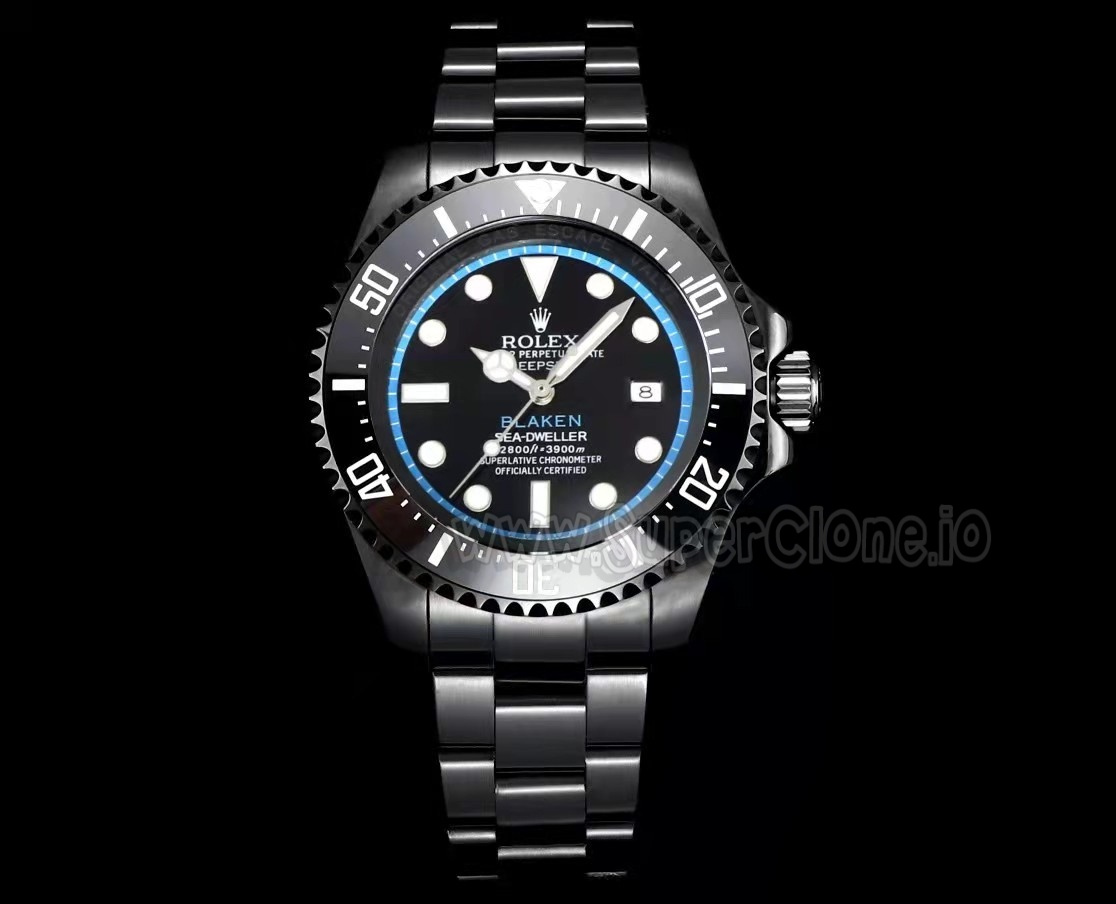
Featuring DLC (Diamond-Like Carbon) black coatings paired with striking blue or green accents, these Sea-Dwellers are the antithesis of the vintage Daytona releases. At 44mm in diameter and 18mm thick, they are unapologetically large, designed for maximum visual impact. The underlying Rolex architecture provides immediate credibility and wearability, while the custom coating and color accents push the visual presentation into territory the factory watch never occupies. The result feels simultaneously familiar and aggressively non-conformist.
The cases use DLC black coating combined with ceramic bezel inserts. DLC is a surface treatment applied through a vapor deposition process that creates an extremely hard, scratch-resistant coating with a distinctive matte-to-satin appearance. On genuine custom watches, DLC significantly improves surface durability compared to traditional polished or brushed stainless steel. On replica applications, the coating achieves the visual effect while providing moderate scratch resistance. Internally, the base material is 316F stainless steel rather than 904L. Experienced collectors still pay attention to steel composition because it affects polishing behavior, corrosion resistance over extended periods, and overall market positioning relative to other factory releases using higher-grade steel alloys.
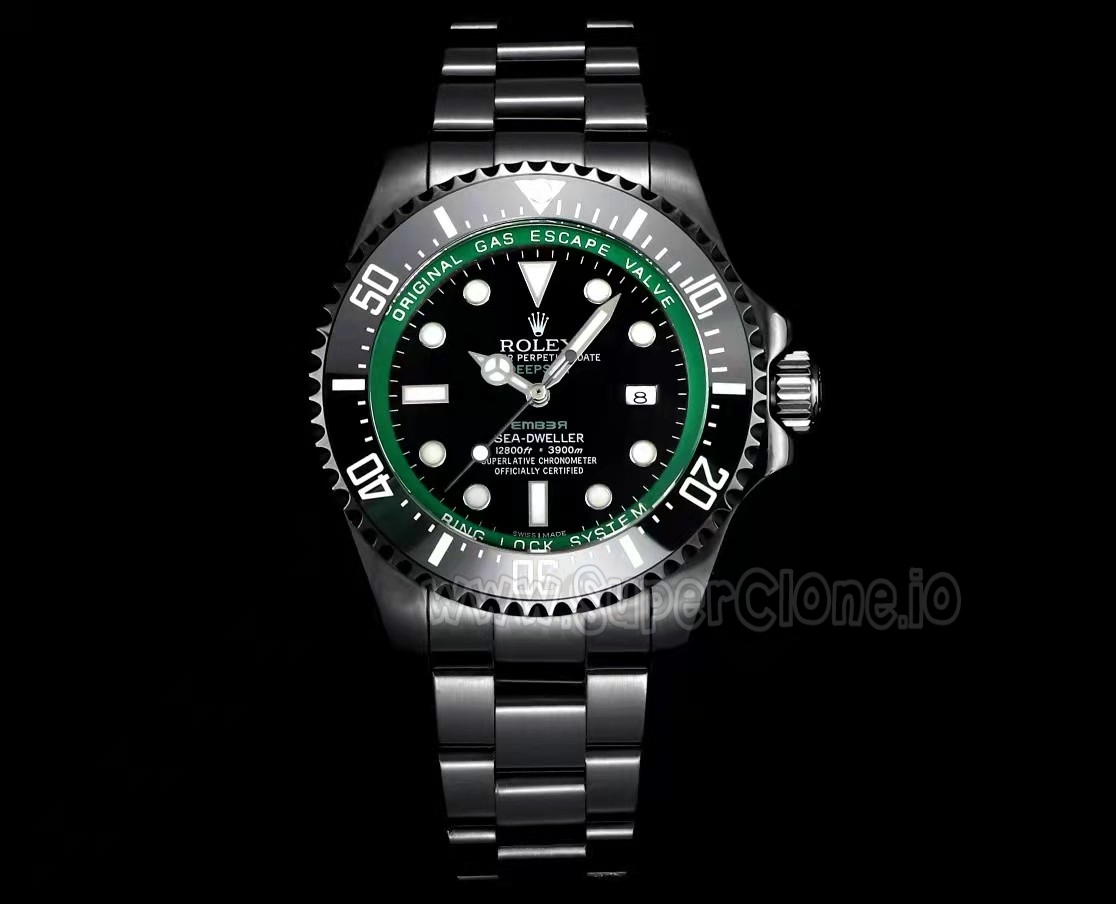
Powering these blacked-out divers is the Asia clone ETA 2836. While some collectors might prefer a more complex “Super Clone” movement, the 2836 is arguably the superior choice for a rugged, daily-wear sports watch. Its simplicity and robustness mean it can withstand the rigors of everyday use without the temperamental nature of some highly-strung clone calibers. Replacement parts are widely available, service intervals are predictable, and most experienced watchmakers who work on replica movements are already familiar with the 2836 architecture. It reinforces the idea that for many buyers, the appeal of a replica is the combination of high-impact aesthetics and worry-free mechanical performance.
What These Releases Say About the Current Replica Watch Market
The releases of early 2022 paint a picture of a replica watch market that has reached a new level of maturity. No longer content with just “getting the look right,” factories are now segmenting their offerings to satisfy specific, high-level demands. Whether it is the historical purism of a 37.5mm Paul Newman Daytona, the ultra-thin elegance of a GR Nautilus, or the bold material experimentation of Z factory’s ceramics, there is a clear move toward specialization.
A few years ago, factories concentrated heavily on producing the single most popular Rolex sports models because demand was relatively straightforward. Today, buyers are far more fragmented across preferences, price sensitivities, and aesthetic philosophies. Some collectors prioritize vintage accuracy and manually wound movements. Others chase social-media-driven dial colors. Some want ultra-thin integrated bracelet watches, while others prefer oversized ceramic sports chronographs or blacked-out custom diver aesthetics. All of these buyer types coexist simultaneously, and factories are responding accordingly by diversifying aggressively.
Another important trend visible across all four releases is the growing emphasis on materials and proportions rather than purely movement marketing. Earlier stages of the replica market often focused almost entirely on movement names and beat rates as the primary quality differentiator. Now collectors increasingly evaluate case thickness, ceramic execution, dial texture, bracelet tapering, lug geometry, and how closely a watch captures the overall character of the genuine model when worn on the wrist. These are subtler evaluations that require more experience and a more developed eye — which suggests the buyer base itself is maturing.
This shift reflects a more experienced collector community. Many buyers who have been in the hobby for several years already understand the technical limitations of replica movements at various price points. Instead of expecting impossible technical perfection from calibers that cost a fraction of their genuine counterparts, they now prioritize overall wearing experience, visual balance, proportional accuracy, and long-term usability. The question has shifted from “what movement is inside” to “does this feel right on the wrist.”
While the industry will always be subject to rapid shifts and the sudden discontinuation of models, these particular timepieces represent a high-water mark for manufacturing. They prove that as collectors become more educated and their tastes more refined, the industry is more than capable of rising to the challenge, delivering watches that capture not just the appearance, but the very soul of modern and vintage horology alike.
FAQ
What is the Paul Newman Daytona and why do collectors care about it?
The Paul Newman Daytona refers to a family of vintage Rolex Daytona references featuring distinctive “exotic” dials with contrasting subdials, square markers, and art-deco styling. The nickname came from the actor who wore these watches publicly and helped establish their cultural profile. Original examples now sell for substantial premiums at auction, making accurate replicas particularly appealing to collectors who appreciate the aesthetic but not the price.
What does DLC coating mean on a replica watch?
DLC stands for diamond-like carbon. It is a surface treatment applied through a vapor deposition process that creates a hard, scratch-resistant coating with a matte or satin appearance. On replica watches, DLC is used primarily to achieve the blacked-out visual effect associated with custom watch modification brands like Blaken. Durability varies depending on application quality and base material preparation.
Why do replica factories sometimes use decorative rather than functional complications?
Accurately replicating complex mechanical complications — power reserve indicators, annual calendars, split-second chronographs — requires extremely precise manufacturing tolerances and creates significant reliability challenges at replica price points. Many factories choose to make certain complication displays decorative while keeping the more straightforward functions operational. This prioritizes stable daily performance over complete mechanical replication, which most experienced buyers consider a reasonable trade-off.
Is colored ceramic harder to produce than black ceramic?
Yes, significantly. Black ceramic achieves its color from carbon content that integrates naturally into the sintering process. Colored ceramic requires careful pigment dispersion and tight temperature control during firing to maintain consistent hue across components. Even small variations in the manufacturing process can produce visible differences in color between case components or production batches, which is why consistent colored ceramic output remains technically demanding even for established manufacturers.
