
APS Factory Pushes the AP Royal Oak “Iron Man” Ahead of ZF
The replica Audemars Piguet Royal Oak market followed a very predictable direction. Most collectors stayed focused on traditional references like the 15400, 15500, and 15202, while factories continued competing over familiar details such as brushing quality, bezel finishing, bracelet flexibility, and clone 3120 movement upgrades. Blue dials, black dials, grey dials — the formula rarely changed. But during the past year, another trend slowly started appearing inside the Royal Oak scene. More buyers began paying attention to non-traditional AP designs, especially pieces influenced by industrial fashion, custom collaborations, and minimalist metal aesthetics.
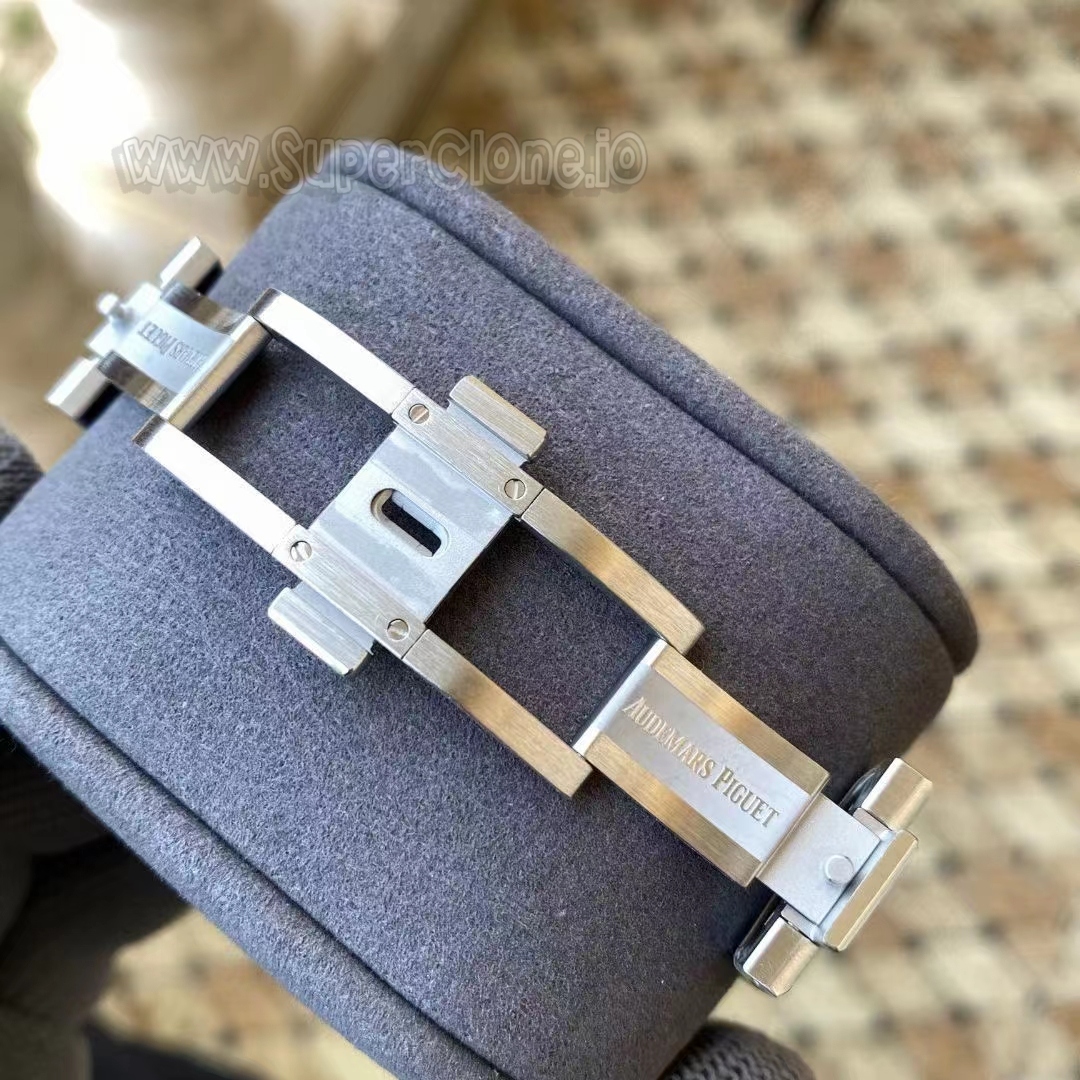
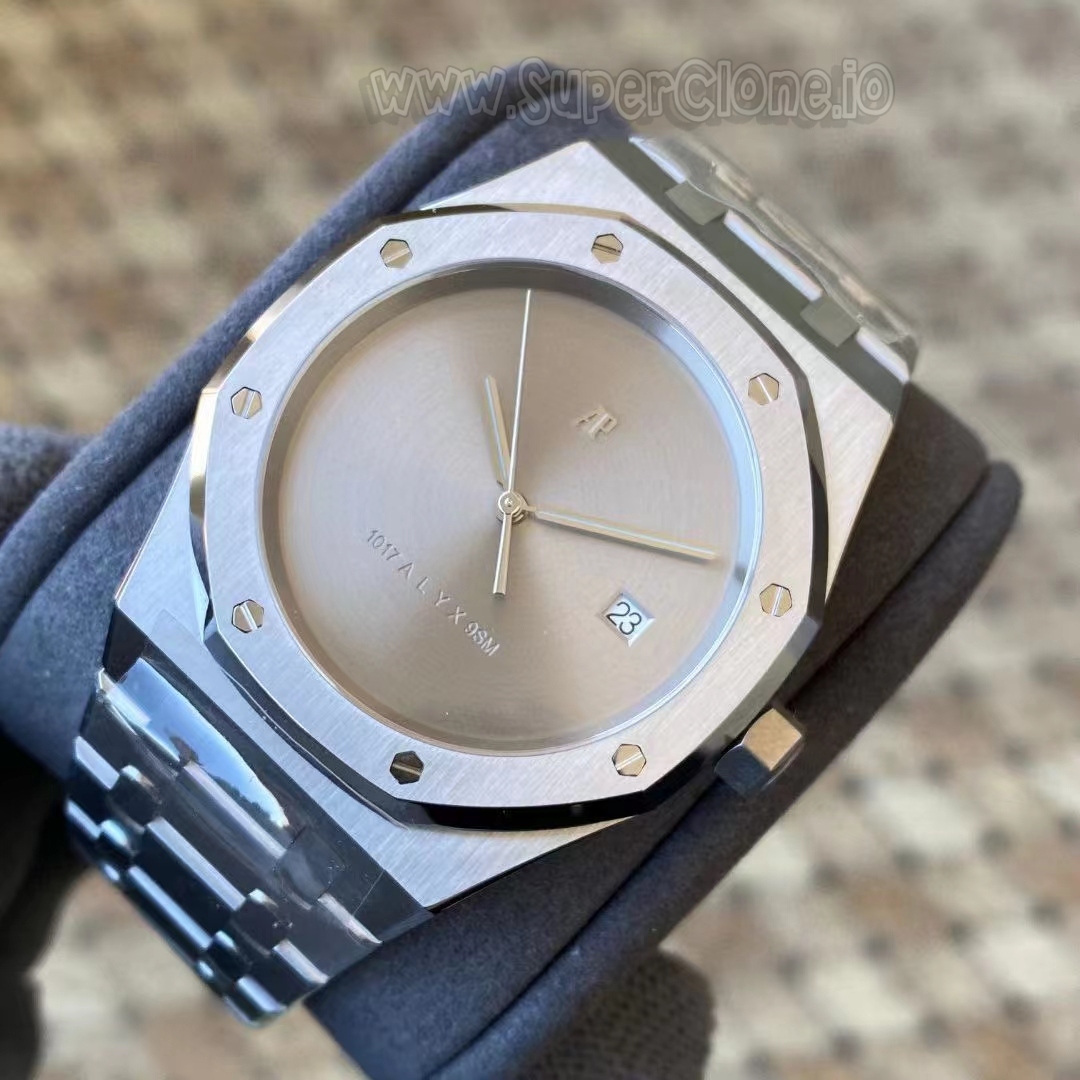
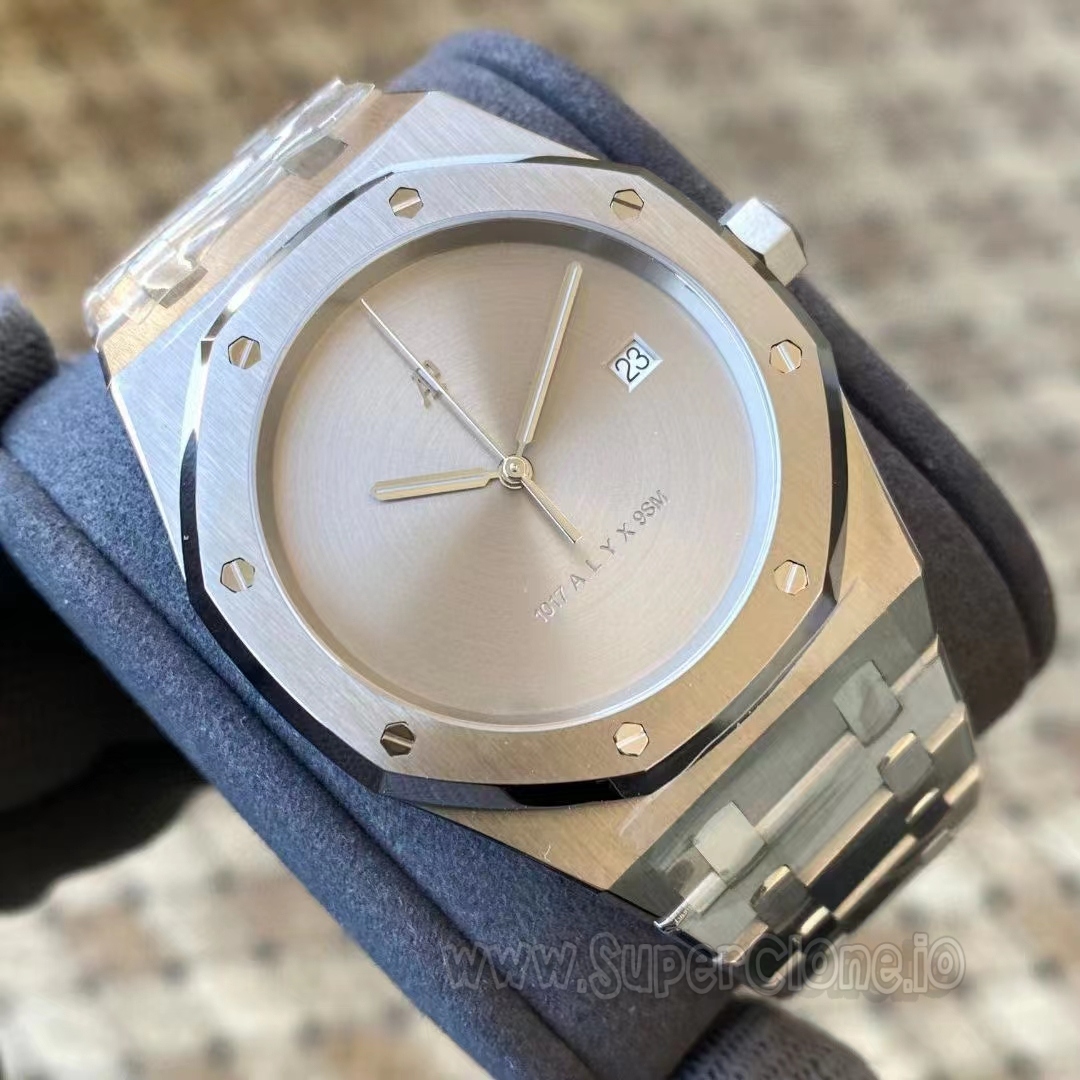
This AP Royal Oak, often nicknamed the “Iron Man” by collectors, perfectly represents that shift. It does not look like a traditional Royal Oak at first glance. There is no tapisserie dial, no applied hour markers, no complicated color combination, and almost no decorative elements at all. The watch feels like a single block of stainless steel shaped into Royal Oak form. Even the dial follows the same philosophy — only hands and a date window remain. Everything else has been stripped away. The result is an extremely cold and industrial appearance that fits very closely with the design language associated with 1017 ALYX 9SM.

There are still many discussions about the original version behind this design. Some people believe it comes from a custom project, while others see it more as a conceptual collaboration piece. But in the replica market, the bigger story is not the origin of the watch itself. The important part is that APS Factory actually released this model before ZF. That almost never happened in previous years.
Traditionally, ZF was always the first factory to push new Royal Oak releases into the market, while APS focused more on movement upgrades and later refinements. This time, APS moved much more aggressively. Over the past two years, the factory has clearly shifted from simply copying popular AP references toward building its own identity inside the Royal Oak replica segment.
The biggest reason behind that confidence is the movement. Right now, APS has one major advantage that even long-time AP replica buyers acknowledge: their clone 3120 caliber has reached a level that is no longer comparable to older decorated Miyota-based solutions.
New buyers often assume that any movement with a visible rotor and balance wheel can be called a “super clone,” but experienced collectors usually judge the movement differently. The real difference comes from the architecture itself — gear positioning, bridge layout, automatic winding structure, date mechanism behavior, and the overall visual depth seen through the case back.
Earlier generations of clone 3120 movements were essentially modified Miyota 9015 calibers with decorative plates installed on top. They looked acceptable in photos but immediately exposed themselves once compared side-by-side with genuine AP movement structure. APS changed that direction significantly. Their newer 3120 is not simply a decorated base movement anymore. The internal structure has been redesigned much more deeply, which is why many collectors now consider it the strongest clone 3120 currently available in the market.
This becomes especially obvious through the display case back. Lower-end movements usually reveal themselves quickly because certain areas look unnaturally empty or mechanically incorrect. Gear spacing often feels wrong, and the movement lacks the layered appearance of a genuine caliber. APS improved these weaknesses noticeably. The movement finally delivers the kind of visual density that buyers expect from a serious Royal Oak super clone.
Of course, movement quality alone is never enough for a Royal Oak. The hardest part of producing a convincing AP replica has always been the case and bracelet finishing. Many newcomers underestimate this because almost every Royal Oak looks impressive in factory photos. Under strong lighting, even lower-grade replicas can appear sharp online. The difference only becomes obvious once the watch is actually worn.
The Royal Oak case is extremely unforgiving. Unlike round sports watches, AP relies heavily on angular surfaces, sharp transitions, brushing direction, and polished bevel consistency. A tiny mistake around the bezel edge or bracelet connection can immediately reduce the entire watch’s sense of quality.
There is actually a very simple way to judge whether a Royal Oak replica is properly finished: use your hands instead of your eyes. Run your fingers slowly across the bracelet edges, bezel corners, and case transitions. Better factories spend much more time refining these subtle areas. You should not feel sharpness, rough steel edges, or unfinished transitions. Smaller factories often skip secondary polishing work to reduce production cost, which is why their bracelets frequently feel scratchy despite looking acceptable in photos.
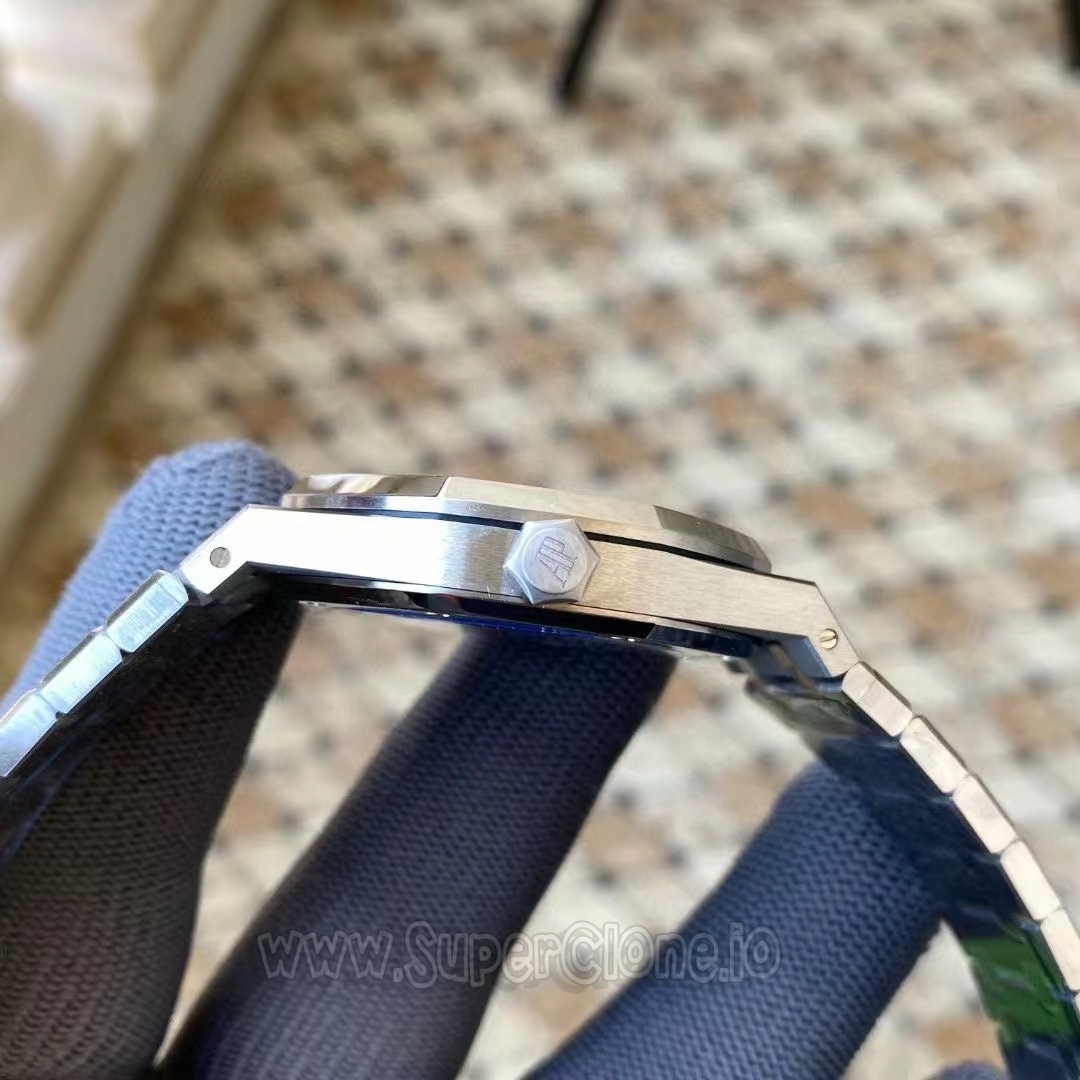
This “Iron Man” version amplifies that challenge even further because the entire watch depends almost completely on metal texture itself. There is no patterned dial or colorful design element to distract the eye. Every surface becomes visible. Every brushing direction matters more. Even the smallest imperfection can stand out immediately on such a minimalistic design.
Fortunately, APS handled the overall case execution very well on this release. The octagonal bezel sits correctly against the mid-case, screw alignment looks clean, and the heavy stainless steel construction still delivers the solid wrist presence expected from a Royal Oak. Despite the minimalist appearance, the watch still feels mechanically dense and substantial on hand.
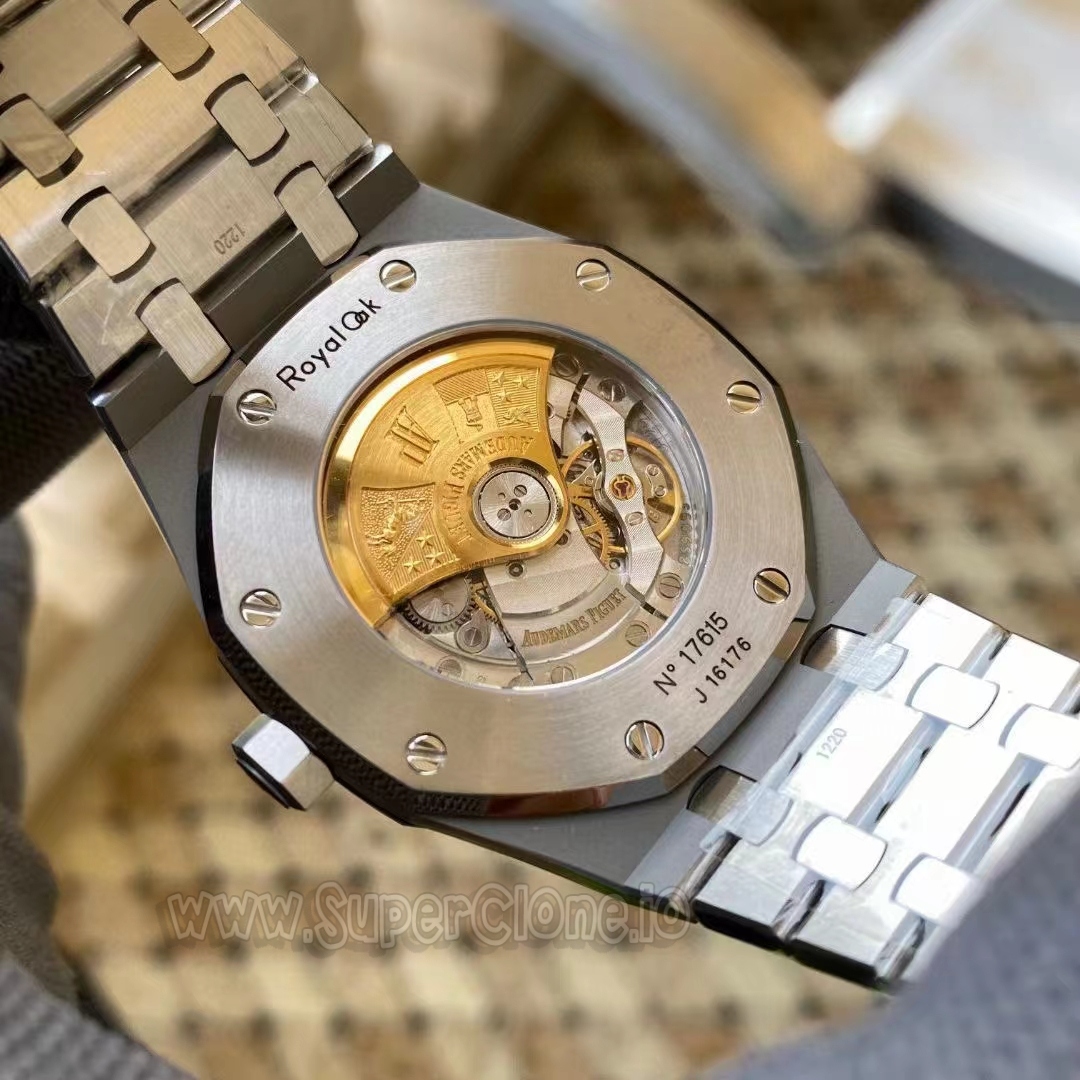
Another interesting change happening inside the AP replica market is that collectors now pay much more attention to wearing experience rather than only technical specifications. Years ago, buyers mainly focused on movement names, thickness measurements, or whether the movement was considered “integrated.” Today, people care more about how the watch actually behaves on the wrist — bracelet flexibility, weight balance, case comfort, and overall tactile feeling.
That is also where APS improved the most recently. While their finishing may still not fully reach the legendary level that JF once established during its peak years, APS is getting much closer. Bracelet articulation feels more natural than before, and newer releases show fewer signs of overly mechanical finishing.
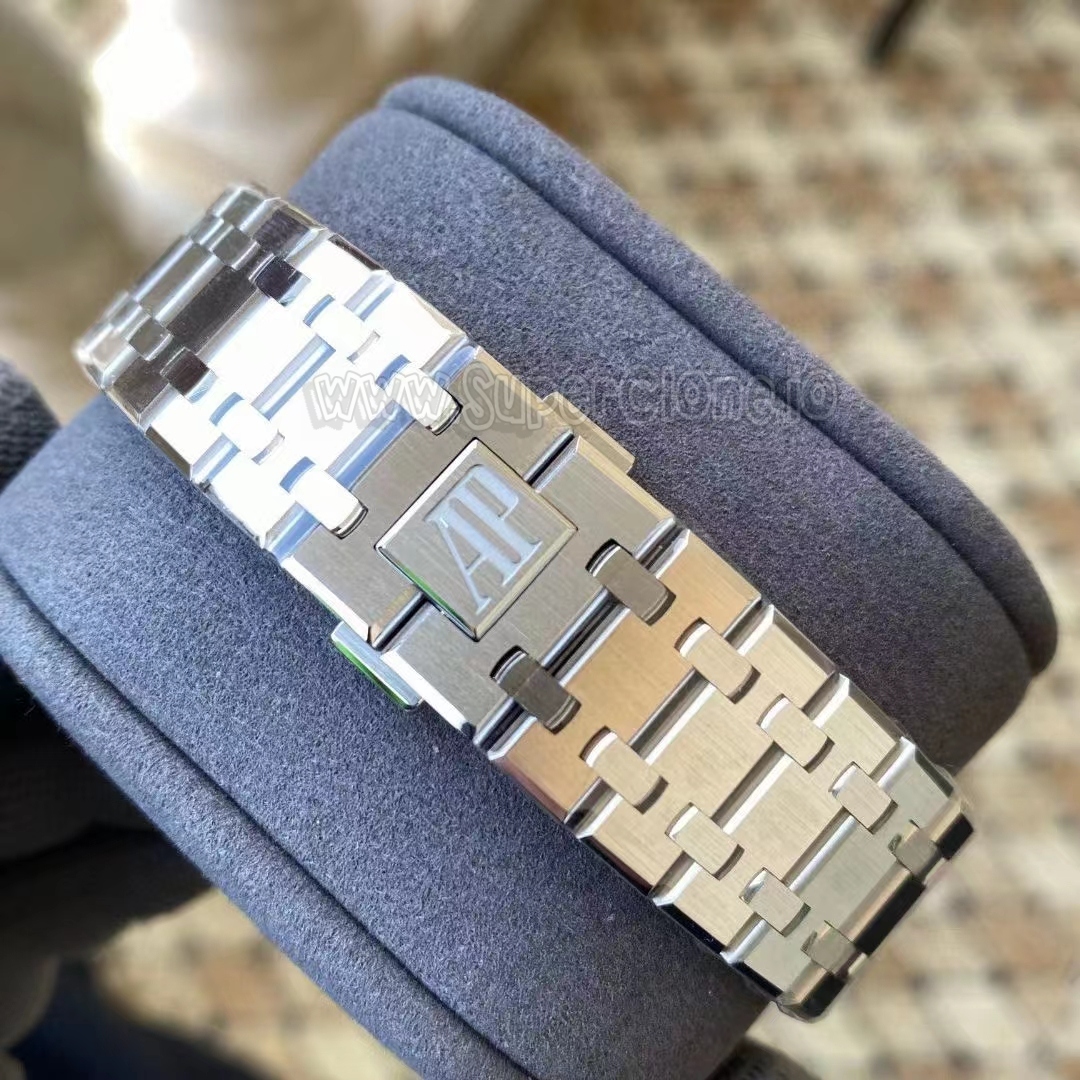
Many experienced collectors still remember the old JF era because for more than a decade, JF almost completely dominated the Royal Oak replica segment. Whenever someone asked for the best AP replica, the answer was automatically JF. But after factory changes, movement evolution, and market restructuring, that position gradually became empty again.
Now APS appears to be moving toward a very similar path. They are no longer satisfied with simply following ZF releases. Instead, they are trying to shape their own position inside the Royal Oak market.
If APS continues improving case refinement and bracelet finishing while maintaining its movement advantage, the factory genuinely has a chance to become the next major leader in Audemars Piguet replicas. At least from this “Iron Man” release, it is clear that APS is already trying to define the next stage of the Royal Oak super clone market instead of waiting for someone else to lead first.