
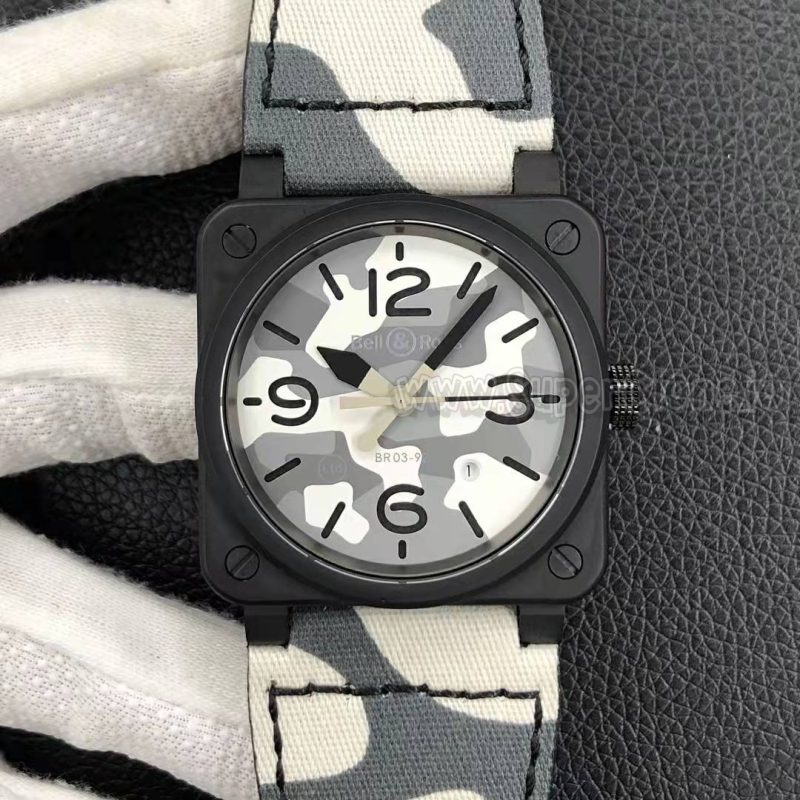
Why Bell & Ross Military Replicas Never Became Mainstream Even Though Some Designs Are Surprisingly Good
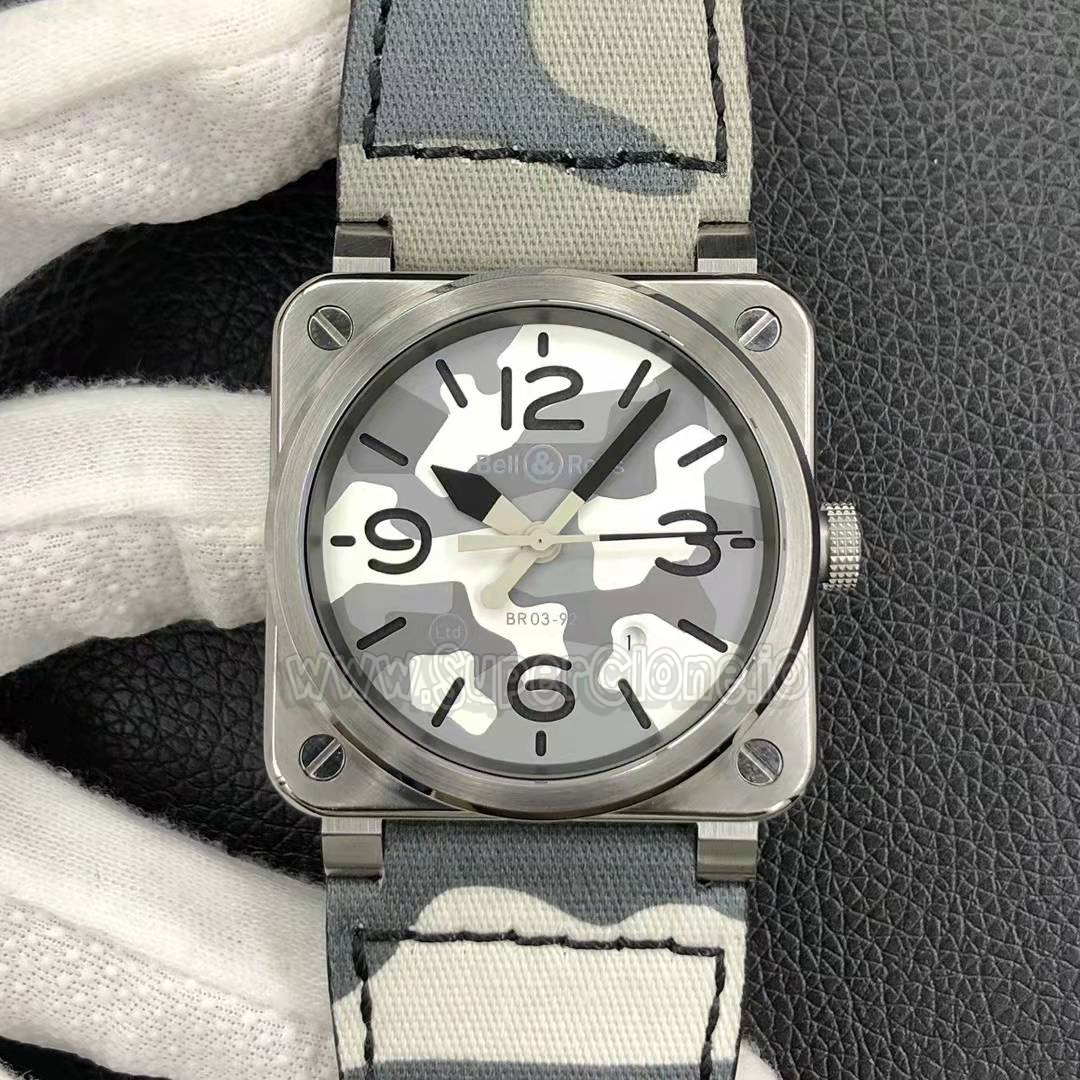
Bell & Ross has always occupied a rather strange and peculiar position inside the replica watch market. Almost every experienced collector across the major forums knows the brand inside out. Most people immediately recognize the iconic square BR01 and BR03 case shape the absolute moment they see it on a dealer’s table or on a wrist across a crowded room. Yet, when buyers actually prepare to spend real money on high-end replica watches, Bell & Ross rarely becomes the final choice. The mainstream market consistently moves toward Rolex sports models, Royal Oak references, Nautilus variants, high-tier Daytona releases, or increasingly, hyper-complex Richard Mille super clone projects. Bell & Ross stays highly visible across online catalogs and forum wrist-checks, but somehow it has always remained just outside the center of actual buying demand.
What makes this situation particularly worth examining is that Bell & Ross does not fail because of poor design or sloppy aesthetics. In fact, the brand probably commands one of the clearest and most immediately legible visual identities in the modern sports watch category. The square aviation instrument look is instantly recognizable from several meters away without even needing to inspect the dial closely. Even people who know absolutely nothing about luxury watches can usually identify a Bell & Ross silhouette immediately. That is an incredibly rare achievement in horology. Very few brands have achieved that level of pure visual separation from the rest of the field, and the ones that have — like Rolex, Patek Philippe, or Audemars Piguet — tend to dominate collector culture accordingly.
Bell & Ross achieved this stark visual separation without ever achieving that mainstream cultural dominance. That specific gap is where the story gets interesting for replica enthusiasts.
Inside the replica industry, buyers typically want one of two things. Either they want prestige-driven, highly recognizable luxury models that signal wealth and status inside social contexts, or they want replicas that closely mimic mainstream Swiss icons that already dominate the broader social recognition economy. Bell & Ross never fully belongs to either category. The brand has a fiercely loyal niche audience — particularly among people drawn to aviation-inspired watches, military aesthetics, tactical gear, matte black surfaces, woven nylon straps, and pure utilitarian design logic — but that target audience has always been considerably smaller compared to the massive wave of buyers chasing traditional Swiss sports watch references.
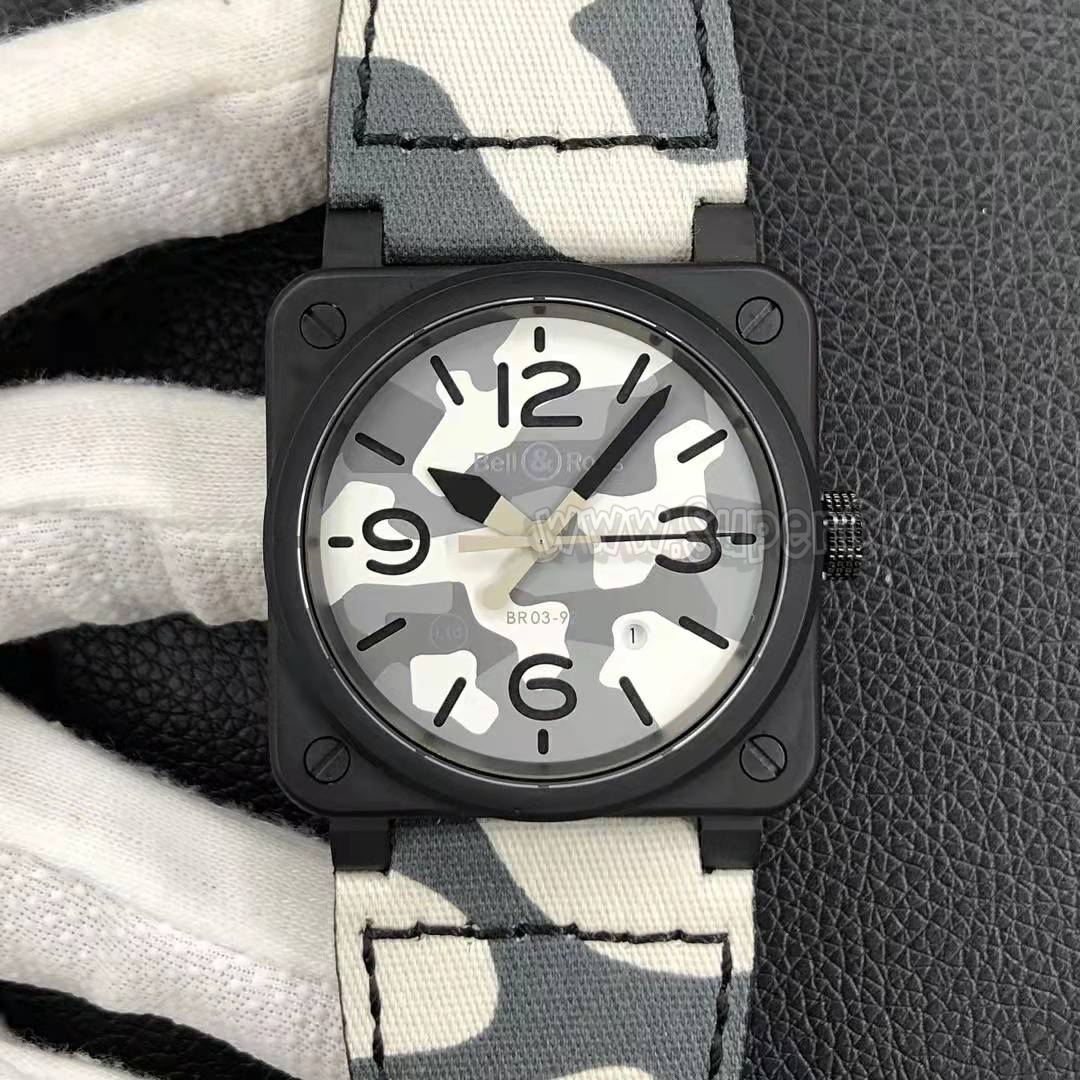
That underlying demand gap becomes even more obvious when specific cult-favorite camouflage editions like these BR03-92 models appear in the market.
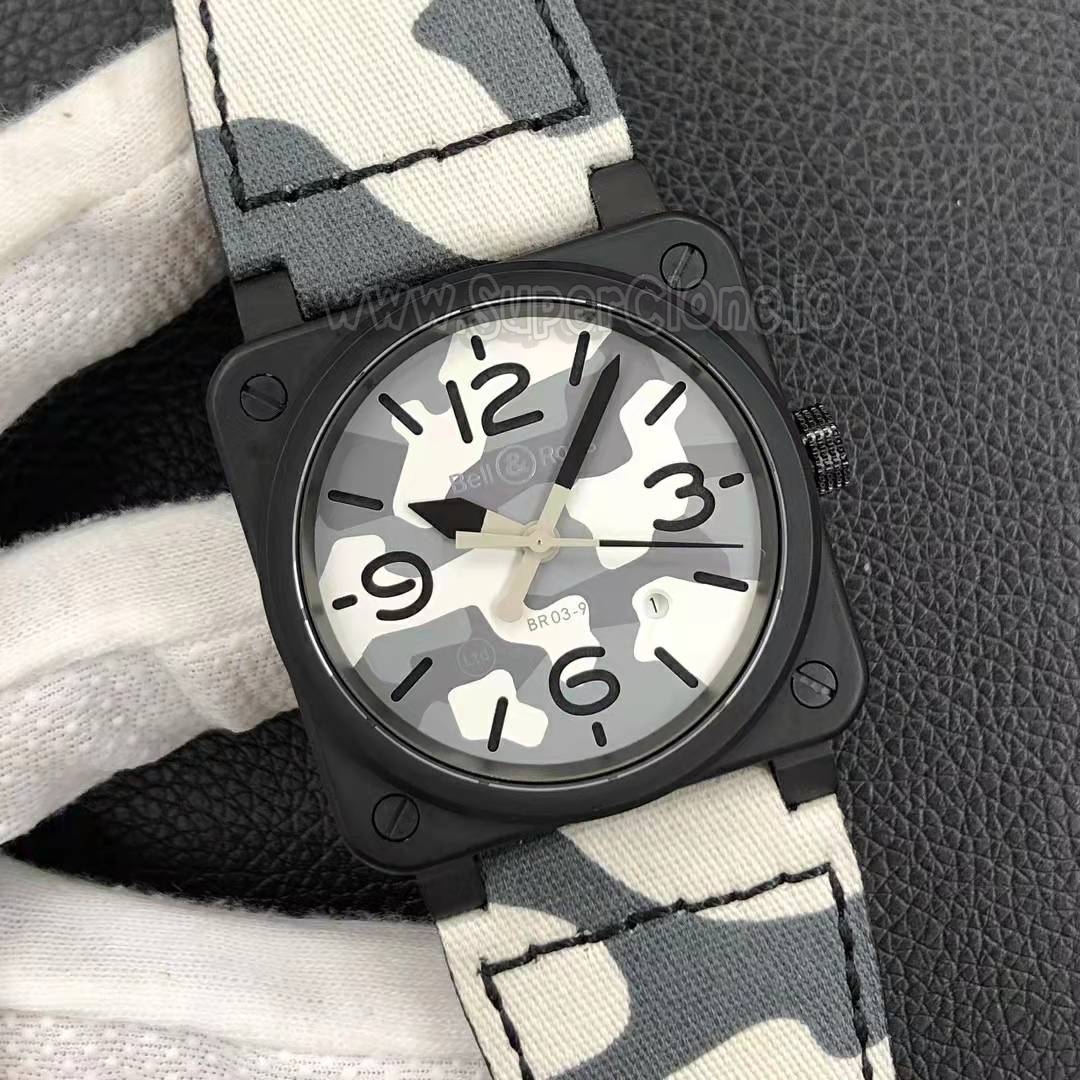
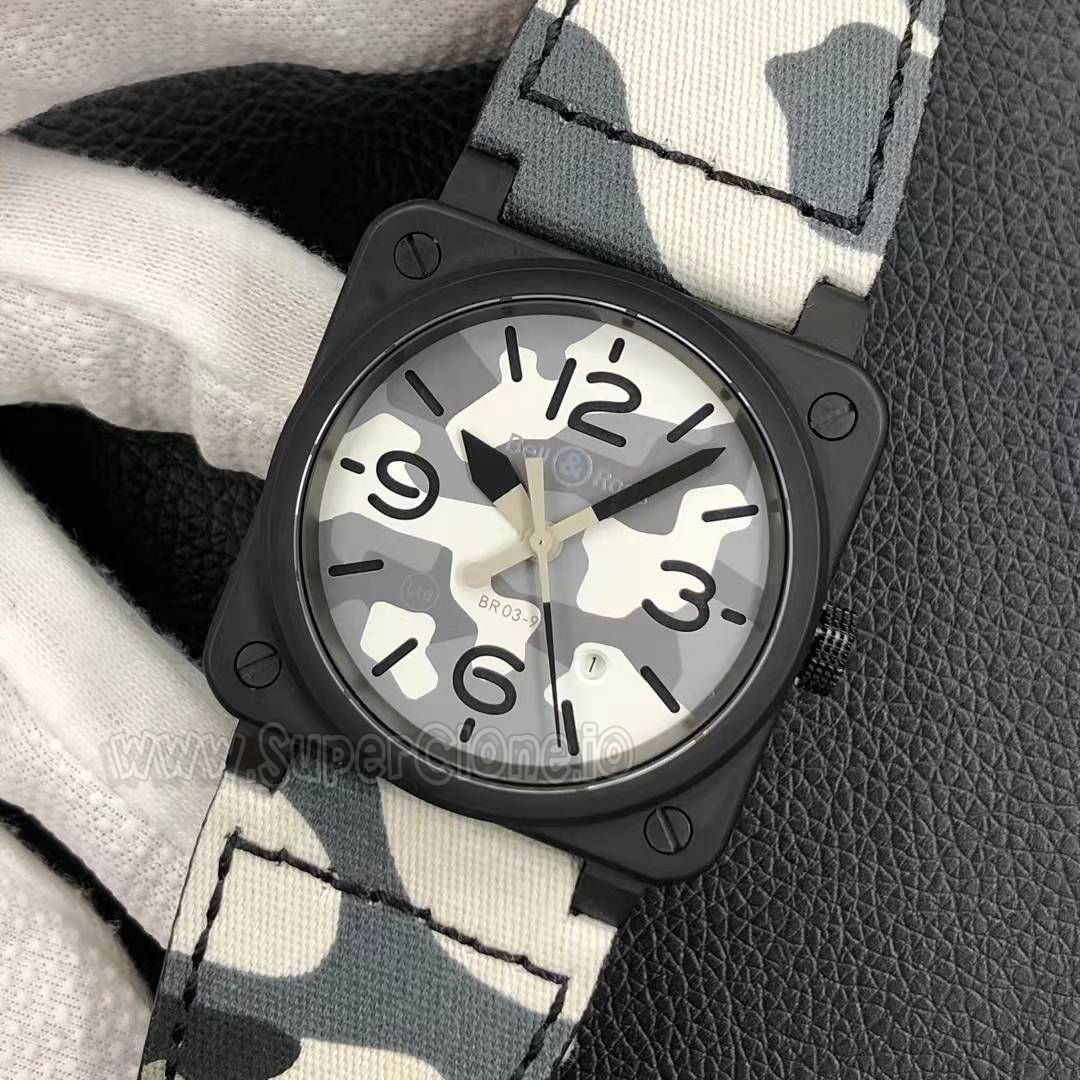
These two Bell & Ross BR03-92 camouflage replicas represent a very specific type of watch that has almost completely disappeared from the modern super clone conversation. They are not trying to imitate high-polished, country-club luxury. They are not focused on precious metal replicating, ceramic bezels, custom clone chronograph movements, tungsten weighting systems, or heavily researched dial texture replication down to the micron level. Instead, they belong to an older and honestly more fascinating category of replica watches where overall style, distinct personality, and wearable uniqueness mattered far more than microscopic movement duplication or forum-grade laboratory authentication testing.
And honestly, revisiting them today makes them feel incredibly interesting again in ways that purely technical, sterile super clones rarely manage.
The replicas shown here are solid, moderate-tier pieces rather than true modern super clones in the contemporary sense. The factory behind them was never particularly famous or a household name, and that detail already says something meaningful about how the Bell & Ross replica ecosystem evolved compared to heavier-demand references. Unlike the cutthroat Rolex replica scene, where multiple top-tier factories compete aggressively year over year to dominate specific references, Bell & Ross replicas were usually produced by smaller secondary workshops without the sustained factory competition that drives continuous improvement. There was never a meaningful, multi-factory “war” around BR03 models the way there was around Submariners or Daytonas, where seasonal competition between Clean Factory, VSF, and others produced genuinely remarkable replication advances over the past several years.
That absence of intense manufacturer competition also explains why many classic Bell & Ross replicas from earlier years relied heavily on dependable, off-the-shelf Japanese movements like the Miyota 9015 workhorse instead of fragile, heavily modified clone calibers attempting to replicate in-house Swiss designs.
Ironically, this practical engineering choice sometimes made them far more reliable daily wear watches than many of the technically ambitious but fragile replicas being produced alongside them.
The BR03-92 camouflage series was never intended to attract traditional luxury watch buyers who crave flashy wrist presence. Everything about the core design philosophy leans heavily toward military equipment aesthetics rather than conventional Swiss prestige signaling. The square case shape was directly derived from cockpit instrumentation and military instrument panels rather than from jewelry or formal dress traditions. The camouflage dial intentionally reduces visual elegance and replaces it with something closer to field equipment texture. The heavy nylon strap construction prioritizes rugged material behavior over surface refinement. Even the PVD-coated black version feels closer to professional tactical gear than to the polished finishing logic of conventional Swiss luxury sports watches.
For a particular kind of seasoned collector, that is exactly where the appeal lies.
One dimension of replica watch collecting that rarely gets discussed openly in forum threads is how much aesthetic fatigue genuinely builds around polished luxury styling over time. After years of examining endless ceramic Rolex replicas with increasingly precise bezel pip calibration, rainbow gem-set Daytonas with painstaking stone-setting verification, heavily weighted gold clones obsessively chasing correct metal density, and increasingly exaggerated hype-model releases from top-tier factories, certain experienced collectors quietly start appreciating watches that feel functional, grounded, and understated instead. Bell & Ross military references quietly satisfy that exact counter-trend preference without competing for it loudly.
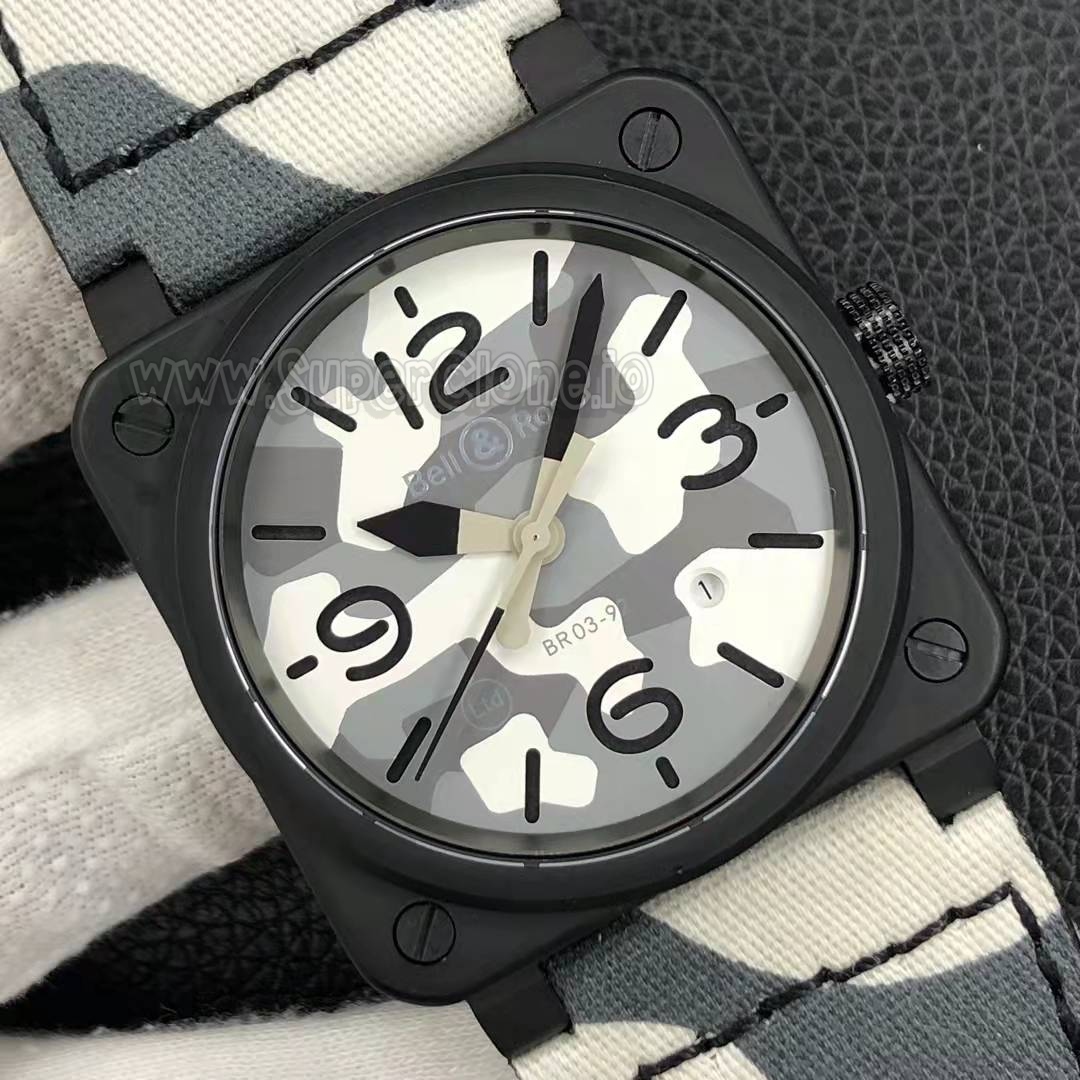
The dial layout on these BR03-92 camouflage models is actually far more carefully considered and calculated than many casual observers initially realize. Camouflage patterning is genuinely difficult to apply to a watch dial without completely destroying legibility, and plenty of fashion-oriented brands have proven that repeatedly by releasing camouflage watches where the pattern becomes the entire visual point and reading the time becomes a secondary concern at best. Bell & Ross understood that their entire brand identity depends fundamentally on cockpit-inspired, split-second visibility — the whole design lineage comes from the military requirement that a pilot should be able to read essential information within 0.1 seconds under high stress. That instrument logic survived perfectly into the camouflage editions.
Large Arabic numerals at 3, 6, 9, and 12 preserve orientation immediately regardless of what the dial texture is doing behind them. The hands are thick enough to maintain strong, high contrast even against the irregular color breaks of the camouflage pattern. The small, circular date window sitting discreetly between 4 and 5 o’clock avoids disrupting the primary symmetry of the dial while staying readable enough for ordinary daily use without squinting.
The instrument-panel structure stays absolutely dominant here. The camouflage pattern operates strictly as a background layer rather than as the headline statement. That subtle distinction matters considerably more than it might seem at first glance.
The black PVD version especially captures the raw military atmosphere that makes these watches compelling to a particular target audience. Matte black surfaces suppress reflections and glare in ways that polished metal cannot, which immediately strengthens the tactical aesthetic at a gut level. The functional assembly screws on the four corners of the bezel are fully blackened rather than polished, avoiding any unnecessary visual contrast that might undermine the design’s cohesion. Even small decisions like that contribute to the overall impression of a watch designed strictly for utility rather than admiration.
This is also connected to why Bell & Ross fans often actively prefer a degree of honest wear on these watches rather than fighting to preserve pristine condition. Small scratches, PVD edges losing their coating gradually from daily contact, softened nylon weave textures, and slightly aging camouflage patterns frequently make the watch look more authentic and more interesting over time rather than looking worse. That aesthetic behavior stands in sharp, refreshing contrast to highly polished luxury replicas, where every single surface scratch and every bezel edge ding damages the delicate illusion of perfection that was the entire point of the purchase.
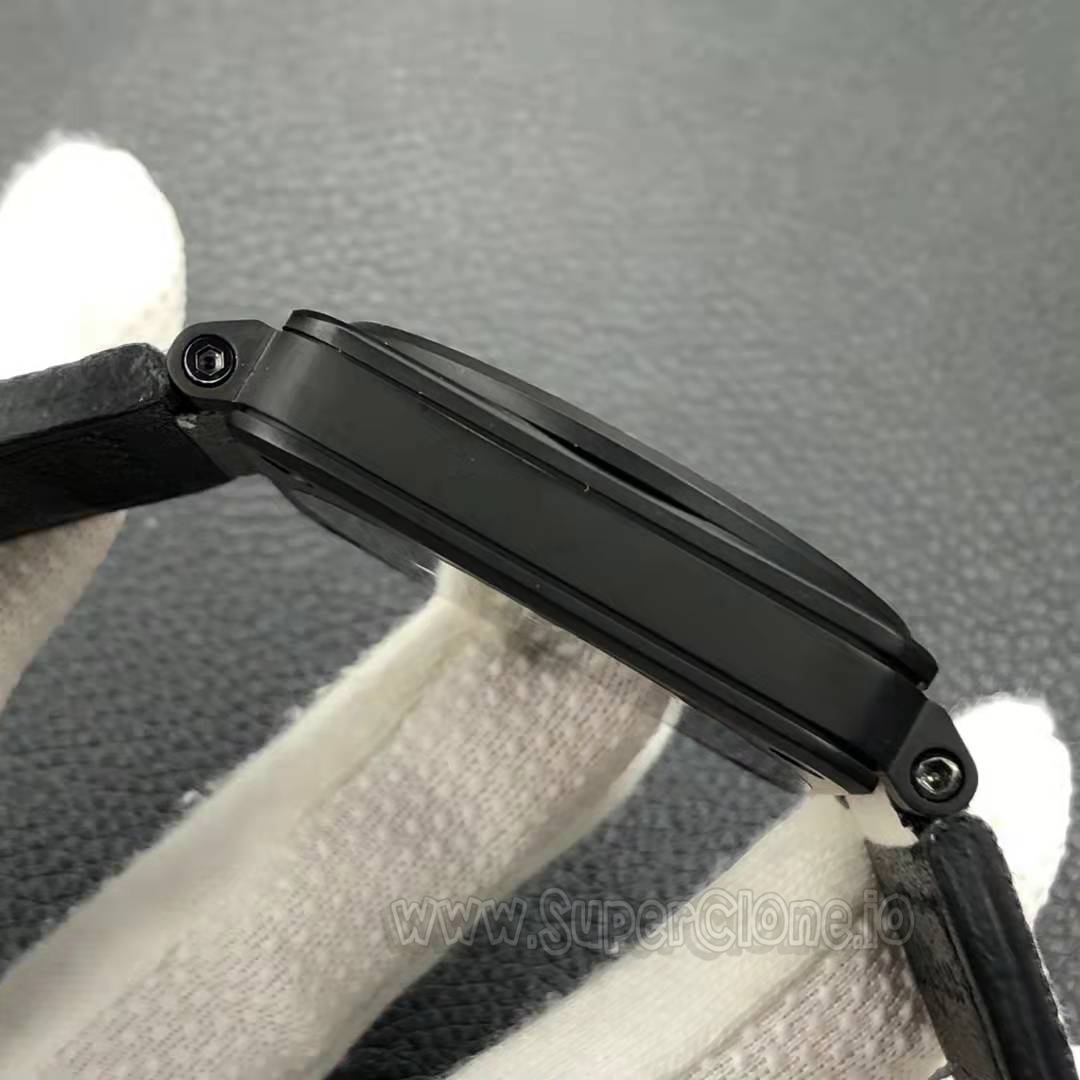
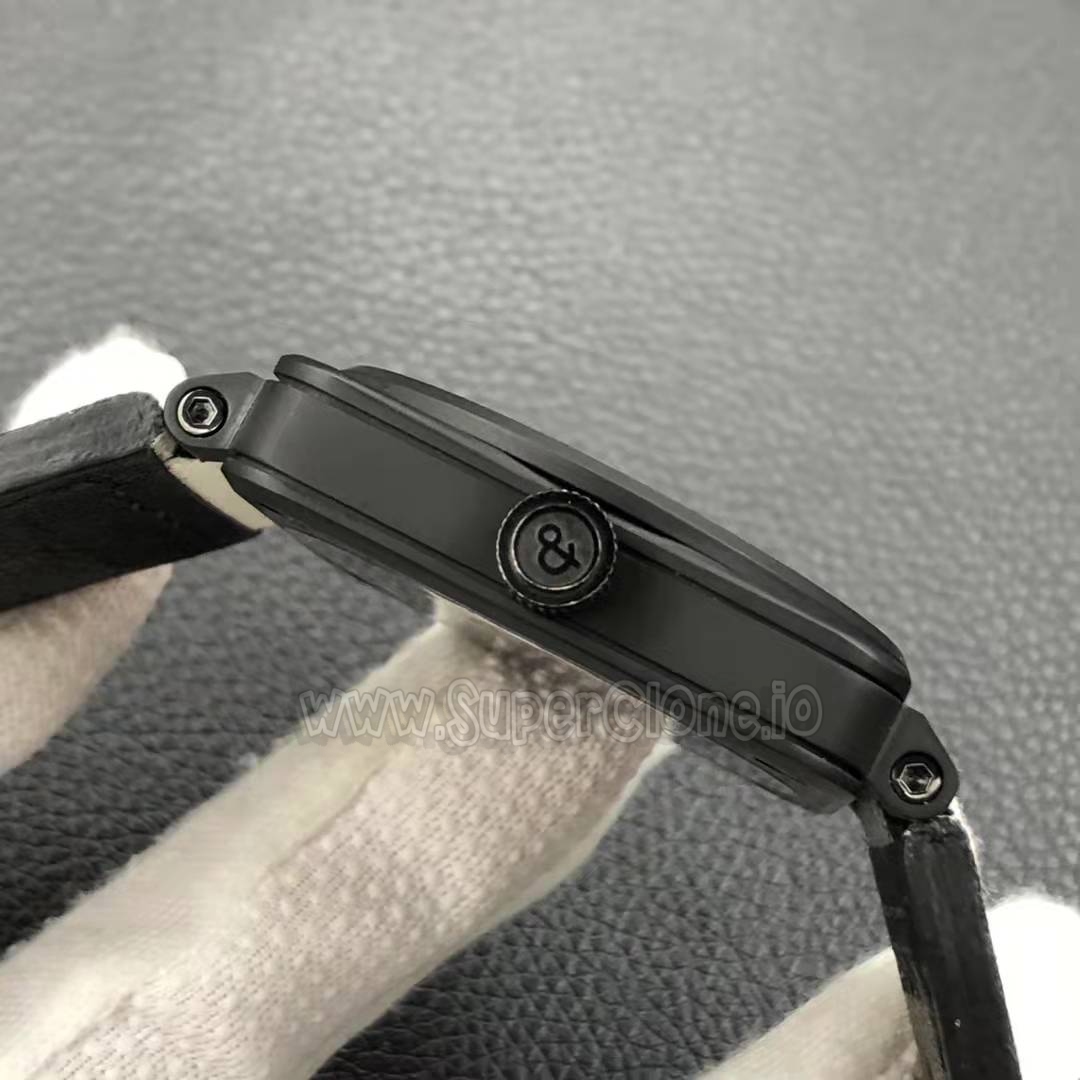
On the wrist, the case dimensions remain entirely faithful to the standard BR03 wearing experience. Although the official technical specification is 42mm on paper, the unique square geometry fundamentally changes how the watch actually feels on a wrist compared to a traditional round sports case of equivalent diameter. Square watches distribute their physical wrist presence quite differently. A 42mm Bell & Ross visually occupies meaningfully more real estate than a 42mm Submariner or a 42mm Seamaster because the squared, right-angle edges extend outward and create a specific corner presence that round cases simply do not generate. Whether that reads as bold individuality or as an oversized footprint depends almost entirely on the individual wrist wearing it.
This inherent visual uncertainty is one significant reason square watches have remained a niche taste inside the replica market rather than following round sports models into mainstream global demand.
Most online buyers ordering round Rolex and Omega replicas already have a strong, intuitive sense of how those familiar shapes will wear on their wrist based on years of exposure to photos, forum discussions, and real-world sightings. Square watches introduce genuine uncertainty. Some wrist profiles handle them beautifully and the proportions click immediately, while others make them read as oversized and boxy the moment they go on. Because replica buyers are almost always purchasing online from remote dealers without the benefit of a physical trial, conservative familiar shapes naturally dominate the purchase decision by default.
Still, for collectors who have already figured out that their wrist handles square watches well, Bell & Ross offers an advantage that traditional sports models simply cannot replicate: immediate visual individuality.
Seeing someone wear a well-made BR03 camouflage model out in public creates a noticeably different impression from seeing another standard Submariner homage on another wrist at a local gathering. It reads as significantly less predictable. Less status-oriented. More like an actual personal choice driven by genuine aesthetic preference rather than market consensus. That quality of individual expression is increasingly difficult to achieve inside the modern replica market as it currently stands, where the most technically accomplished watches also happen to be the most commonly purchased and most frequently spotted.
That sense of individuality gets further amplified by the fact that Bell & Ross watches were never overproduced inside the replica market. There were no endless competing factory versions flooding trusted dealer catalogs simultaneously month after month. Camouflage editions in particular appeared in relatively modest production runs and quietly disappeared from active dealer inventory afterward. As a result, older Bell & Ross replicas can sometimes become genuinely difficult to locate years later — not because they held significant monetary or collector value, but simply because the factories moved on and stopped caring about producing them entirely.
The movement choice ticking inside these replicas also beautifully reflects a manufacturing philosophy that belongs to an earlier, highly practical chapter of the replica industry’s development.
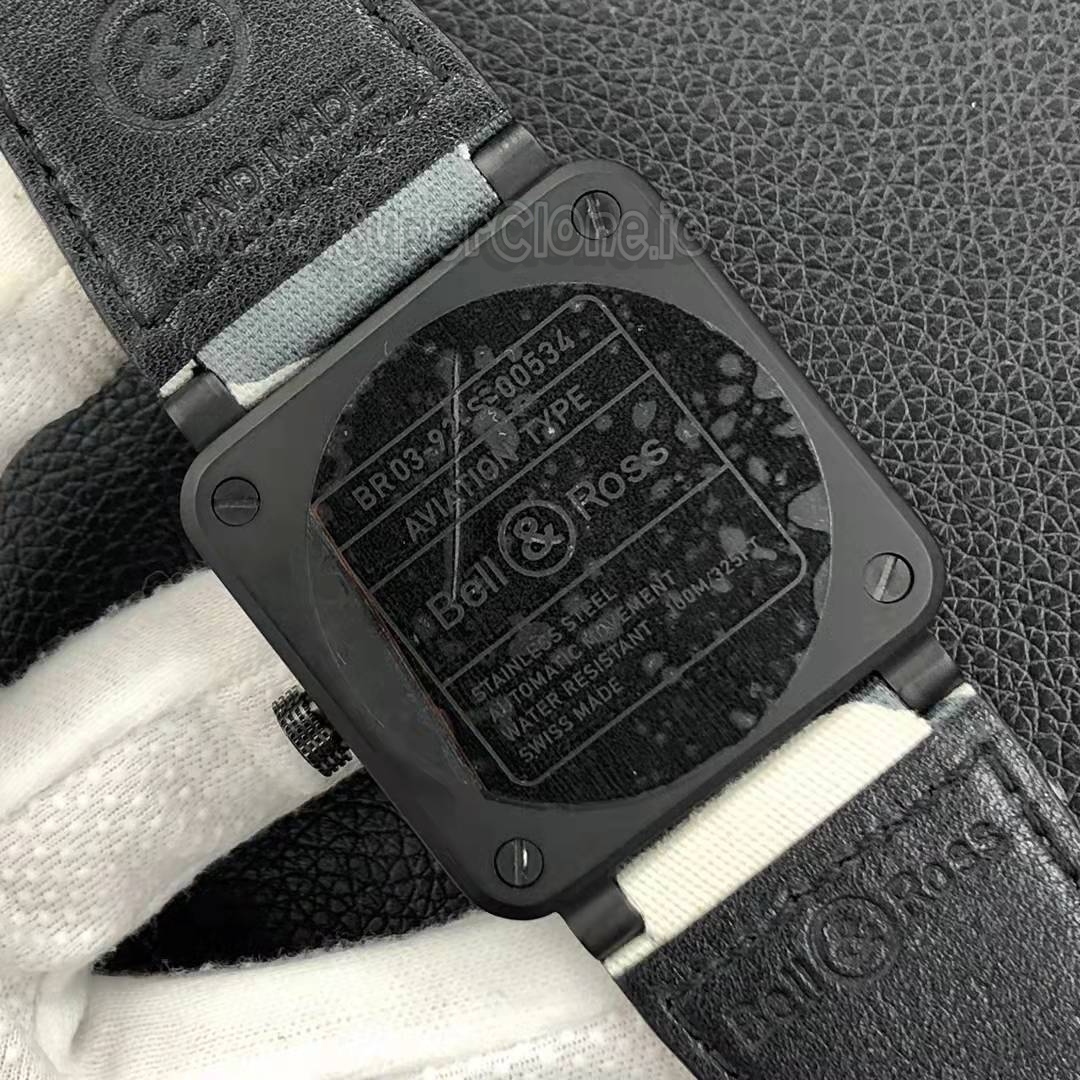
Rather than installing a fragile, decorative clone caliber designed to visually approximate a Swiss movement behind a solid caseback for inspection purposes, the factory used a genuine, unmodified Japanese Miyota 9015 automatic movement. For collectors with some history in the replica space, that specification choice immediately communicates the intended positioning of the watch and the mindset of both the workshop and the expected buyer.
The Miyota 9015 earned its absolute staple reputation inside the replica industry through a combination of factors that mattered practically rather than photographically. The movement runs relatively thin compared to older, bulkier Asian automatic calibers, which gave factories better proportional options when designing case heights without resorting to an exaggerated, clunky thickness. Out-of-the-box reliability over extended daily wear was typically meaningfully stronger than what most low-cost cloned Swiss calibers delivered during the same era. Servicing was straightforward because Miyota movements and their components remained accessible to any local watchsmith without the sourcing headaches that specialist clone caliber parts could introduce. The rotor weight and winding efficiency were good enough that the watches actually kept time reliably day after day without drama.
Before the current culture of movement decoration and visual authentication replication became the dominant evaluation framework, a real contingent of experienced collectors actively preferred Miyota-based replica watches precisely because they simply worked without any fuss.
That practical mindset has not disappeared. It has just become less visible in current forum culture, which tends to reward increasingly technical discussions about clone movement accuracy over actual daily ownership experience.
There is a genuine, strong argument to be made that some older replicas have survived and remained in active use for far longer than technically ambitious clone caliber watches precisely because they avoided complicated movement experiments. Certain heavily modified clone calibers deliver jaw-dropping visual fidelity under inspection but introduce long-term maintenance uncertainty that becomes a real problem five or six years down the road when replacement parts are completely unavailable and the factory has moved on to different references entirely. A straightforward, Miyota-based tool watch may look less compelling on a review forum, but it often continues running reliably long after trend-driven super clones have become expensive paperweights.
This Bell & Ross project belongs firmly to that practical, enthusiast-driven philosophy, and there is something honest about that positioning.
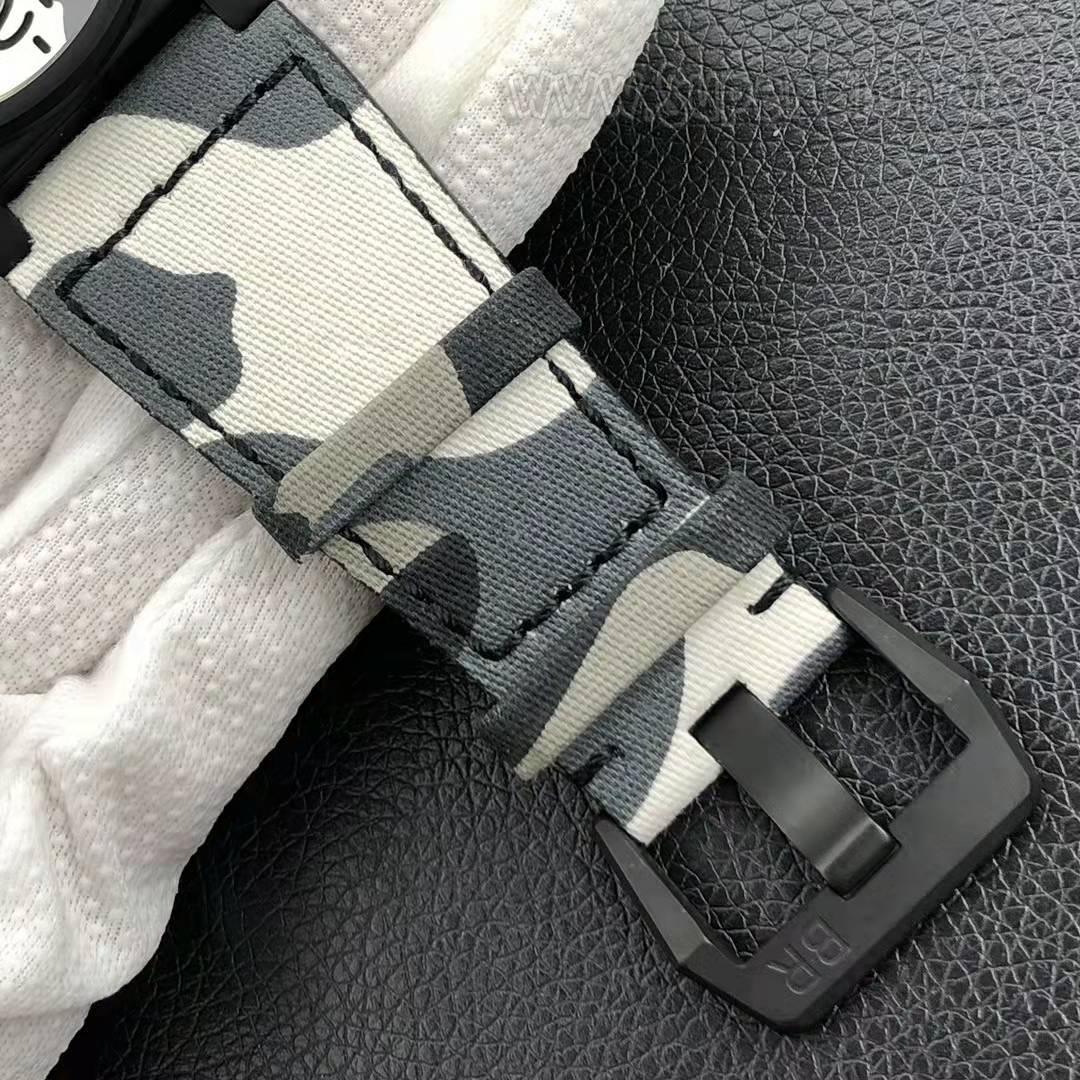
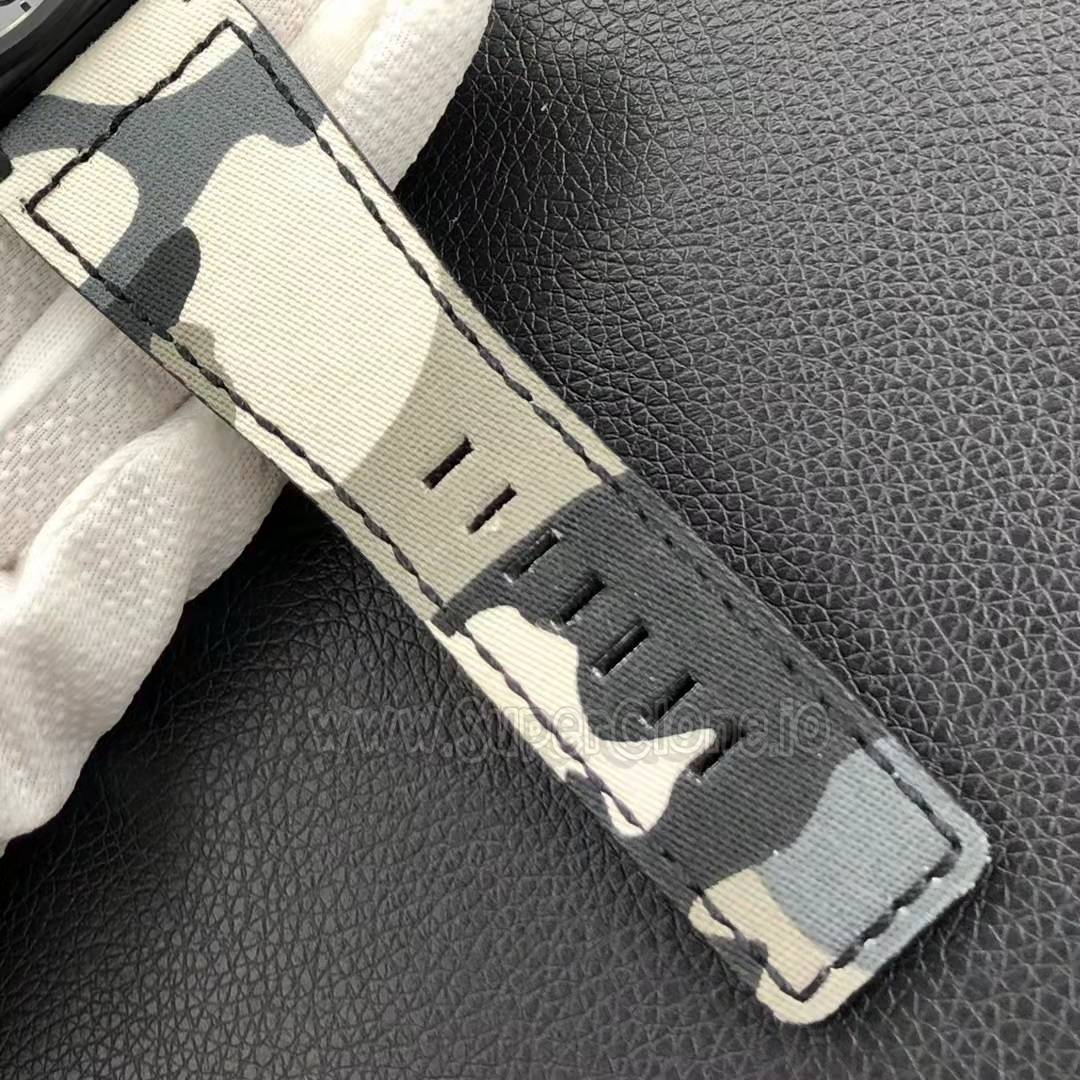
The camouflage nylon strap included here also deserves more attention than it typically receives because the strap fundamentally changes the foundational character of the piece compared to standard rubber Bell & Ross straps or any steel bracelet option. The woven nylon immediately introduces a particular kind of military texture — slightly rough, dimensionally woven, visually informal — that softens the harder edges of the square case in ways that rubber or leather does not quite replicate. The smooth leather backing layer on the underside improves direct skin contact comfort considerably while maintaining the structural durability that makes nylon appropriate for actual daily use rather than just studio photography.
More bloody broadly, the strap architecture on Bell & Ross models has always quietly encouraged experimentation in ways that many round sports watches actively resist. Bell & Ross built their wide lug and attachment system to accommodate different strap personalities without fighting the collector every step of the way.
Many buyers significantly underestimate how important strap versatility becomes over actual years of ownership rather than just at the brief moment of purchase.
A Rolex Submariner almost always stays on its factory steel bracelet because that bracelet is fundamental to its visual identity and removing it often creates proportion problems. A Royal Oak essentially never leaves its integrated bracelet in any meaningful way due to its specific design. Bell & Ross watches, by contrast, transform dramatically and convincingly depending purely on strap selection. Switching from camouflage nylon over to a distressed vintage brown leather changes the watch from military utility to old-school explorer territory. Moving to a solid black rubber strap pulls it toward modern dive watch functionality. Suede or Alcantara options shift it toward something almost contemporary and fashion-adjacent. The exact same square case reads across surprisingly different contexts depending purely on what connects it to the wrist.
That immense flexibility is exactly what helped Bell & Ross develop a genuine, dedicated cult following over the years, even while the brand stayed well outside mainstream collector trends.
Another fascinating dimension of Bell & Ross replicas that deserves acknowledgment is how cleanly they avoided the specification exaggeration problems that began inflating other replica categories during the same period. Modern high-end replica markets increasingly chase almost impossible or barely verifiable technical claims. Factories constantly advertise tungsten-weighted precious metal cases calibrated to specific gram tolerances, deep crystal upgrades with claimed anti-reflective coatings that match Swiss production, CNC movement engraving replication at resolutions measured in hundredths of a millimeter, nano-coated ceramic bezels chemically matched to genuine production, and increasingly elaborate, hyperbolic assertions about one-to-one dimensional accuracy across dozens of individual components.
Bell & Ross replicas essentially never participated in that exhausting, competitive arms race.
Most factories producing BR03 models understood that their buyer base was inherently different in character from the people chasing sub-zero-tolerance Rolex replication. Buyers interested in camouflage BR03 models were typically looking for strong wrist presence, a bold design personality that felt distinct from mainstream sports references, and durable daily wear appeal. Microscopic replication scoring was not the evaluation framework they were applying. As a result, Bell & Ross replicas often feel far more honest about exactly what they are — well-built, moderate-quality watches with genuine visual character rather than laboratory-grade duplicates competing against authentication tools.
That straightforward honesty can be genuinely refreshing when the alternative is spending hours researching which factory’s 126610 has the correct rehaut font weight.
Not every replica watch needs to attempt faithful, hyper-obsessive reproduction of a six-figure luxury object down to its crystal anti-reflective coating chemistry. Sometimes a well-designed, military-inspired watch with strong wrist presence, historical design cues, a reliable Japanese automatic movement, and enough visual personality to generate actual conversation offers more real daily enjoyment than another over-analyzed super clone whose primary context is forum discussion rather than actual wearing.
The camouflage BR03-92 models occupy exactly and comfortably in that specific category.
They are not attempting to reach grail-level replication status destined to fool high-end auction houses. They are not designed to defeat modern laboratory genuine authentication testing. They are not built to compete head-to-head against modern Clean Factory Rolex releases or VSF Omega projects in terms of technical replication depth or dimensional accuracy. They exist at a completely different point on the replica spectrum — one where pure character and wearability matter far more than technical comparison metrics.
There is also a structural, purely financial industry reason why unique watches like these gradually faded from active replica dealer catalogs, and it has less to do with build quality and more to do with economic logic inside the replica market.
The super clone industry became increasingly data-driven, risk-averse, and concentrated during the mid-2010s and into the 2020s. Factories discovered through actual sales data that investing heavy engineering development resources into mainstream Rolex sports references generated returns that alternative references simply could not match. Every single incremental improvement made to a Daytona, a GMT-Master II, or a Submariner — however small — created instant, massive global demand response across forums, social media communities, and dealer networks overnight. Collectors tracked rehaut engraving alignment improvements. They noticed when ceramic bezel color calibration shifted closer to the genuine reference. They discussed correct hand stack ordering and movement decoration plate updates in threads spanning hundreds of pages. Every new iteration generated new interest, new sales, and new development incentive.
Bell & Ross simply never generated that type of obsessive, hyper-focused discussion ecosystem. Without that massive, vocal buyer pressure creating development incentive, factories naturally stopped refining these niche models aggressively. Many military-style Bell & Ross replicas remained essentially frozen at moderate production quality levels, while Rolex super clones evolved dramatically and continuously year after year, pulling the quality ceiling progressively higher across the entire category.
There is an interesting irony buried in that manufacturing stagnation, though.
These BR03 camouflage replicas still feel deeply connected to an older, classic replica watch culture where variety, experimentation, and individual taste mattered far more than laboratory-grade replication and forum leaderboards. The watches prioritize strong visual identity, casual everyday wearability, and niche aesthetic conviction over internet comparison metrics and authentication stress testing.
For collectors who have spent years deep inside the high-end super clone world and grown genuinely tired of seeing the exact same twelve references discussed with increasing technical precision across every platform simultaneously, that absolute sense of difference still carries real weight.
The modern super clone industry has made enormous technical advances that would have seemed completely impossible fifteen years ago. But technical perfection alone does not automatically create a lasting emotional attachment to a watch, and emotional attachment is ultimately what determines whether a piece gets worn every day or sits in a drawer after the initial excitement fades. Sometimes a timepiece becomes genuinely memorable simply because it looks and feels completely different from everything else currently occupying the market, and its identity comes from pure design conviction rather than replication accuracy.
That reality may ultimately be the most honest explanation for why Bell & Ross continues to hold the deep respect and recognition that it does among veteran hobbyists even while remaining comfortably outside the mainstream collector hierarchy.
People may not buy Bell & Ross replicas nearly as often as they buy mainstream Rolex replicas. The factory infrastructure around them never developed to the same technical depth. The forum culture never mobilized around them with the same intense pressure. But almost everyone who has spent real time inside the replica space remembers encountering a BR03 at some point — on a table, on a wrist, or in a photograph — and thinking that it looked genuinely different from everything else in the conversation. That distinct impression tends to stick in the mind in ways that incremental bezel improvements on a Submariner rarely manage.
And in the long run, that might actually be the more durable kind of reputation to have.
