
The Return of Ceramic Hublot Classic Fusion Replicas After the Factory Shutdown Era
For several years, the high-end replica watch market operated under the heavy dominance of mainstream steel sports models—specifically Rolex stalwarts like the Submariner, Daytona, and GMT-Master II, alongside the integrated-bracelet hype driven by Patek’s Nautilus and Audemars Piguet’s Royal Oak clones. During this extended era, Hublot occupied a genuinely peculiar, almost neglected position inside the super clone industry. The brand carried immense real-world visual recognition, a loyal collector base, and a well-documented commitment to aggressive material experimentation. Yet, relatively few top-tier factories were willing to invest serious R&D capital into producing high-quality Hublot replicas with any meaningful consistency. Production runs came and went, development cycles remained short, and long-term commitment to the brand’s catalog was exceedingly rare.
This structural imbalance became starkly exposed after the large-scale factory disruptions and regulatory crackdowns around 2021. Familiar, long-standing manufacturing names vanished from trusted dealers’ (TDs) inventories almost overnight, leaving massive logistical gaps. Models that had existed in stable supply for years suddenly became impossible to source. While a handful of surviving operations redirected their entire focus toward safer, faster-moving, and lower-risk Rolex stainless steel references to safeguard their cash flow, complex multi-material replication projects were abandoned completely. The Hublot replica category—particularly Classic Fusion models across multiple case sizes and material configurations—became one of the most visibly affected casualties during that market consolidation period.
Collectors who followed the replica market closely through those turbulent years will remember the supply drought in very specific terms. JJ Factory (JJF) had previously produced several respectable 38mm Classic Fusion variants that earned reasonably consistent reviews from the community, while WWF catered to larger wrist profiles with their accessible Titanium Classic Fusion models in 42mm and 45mm, priced to appeal to buyers entering the scene without heavy financial investment. Neither factory ever delivered a definitive, flawless super clone, but between them, they helped keep meaningful market supply alive. Once those specific channels collapsed, buyers began noticing a trend that went beyond simple temporary stock shortages: there were almost no factories willing to step up, re-engineer the tooling, and continue serious development work on Hublot Classic Fusion replicas. The entire category had effectively stalled.
This historical context explains why the sudden appearance of the full-ceramic Classic Fusion collection from GS Factory attracted intense attention from seasoned buyers far more quickly than most routine new releases manage. On first encounter, these pieces can easily appear to be just another straightforward, three-hand sports watch entry. Inside the current replica market landscape, however, this launch signaled something considerably larger. It demonstrated that certain manufacturing teams were still willing to work with more demanding materials, pursue specialized finishing processes, and develop watches outside the endlessly recycled Rolex ecosystem—even when the short-term commercial logic for doing so was not immediately obvious to the rest of the industry.
The Hublot Classic Fusion has always occupied highly unusual territory in contemporary watch design. Unlike the Big Bang, which fundamentally depends on visual aggression—multi-layered sandwich cases, exposed bezel hardware, oversized dimensions, intricate skeleton structures, and relentless texture contrasts—the Classic Fusion line is built on historical restraint. Proportions run noticeably thinner, dials are cleaner and more legible, and the overall ergonomics prioritize a versatile wearing experience across varied settings and dress codes. Yet, the watch still carries enough of Hublot’s signature “Art of Fusion” design DNA that even peripheral observers can identify the silhouette immediately. It reads as distinctly Hublot without announcing itself with the sheer visual volume of a Big Bang.
This exact stylistic equilibrium is precisely why the Classic Fusion grew into one of the strongest-selling Hublot references globally across the past fifteen years. It appealed not only to the brand’s traditional collectors but also to a wider demographic that normally gravitated toward minimalist sports watches from other luxury manufacturers. The clean bezel architecture, slim mid-case profile, and seamless integrated strap design allowed the timepiece to function effortlessly in formal environments where a Big Bang would feel visually excessive or contextually inappropriate.
Within the high-end replica scene, organic consumer demand followed a virtually identical pattern. A significant segment of enthusiasts who had zero interest in oversized, bulky chronographs or loud skeleton movements still desired a modern sports watch with a clear visual identity separate from Rolex or Audemars Piguet. The Classic Fusion naturally filled that niche, offering modern material aesthetics and architectural proportions that felt contemporary rather than legacy-driven.
Producing a truly convincing Classic Fusion replica, however, is substantially more difficult than macro photographs suggest. Because the watch is visually minimalist, a large portion of its premium identity depends entirely on subtle execution quality rather than complicated visual engineering. The exact thinness of the bezel, the razor-sharp texture transitions between brushed and polished surfaces, the flawless alignment and depth of the H-shaped screws, the downward curvature of the lugs, and above all, the physical quality of the case material become instantly noticeable during real-world wear. These are not details that can be obscured by flattering lighting or strategic camera angles; they either read correctly in person or they expose the watch as a replica immediately.
This structural difficulty is the direct reason why budget, lower-end Hublot replicas never gained durable respect or longevity among experienced collectors. While their proportions might look acceptable in flat dealer photography, the shortcomings emerged quickly and unmistakably once handled directly. The mid-cases felt blocky and overly thick, losing the elegant low profile that defines the genuine reference. Bezels lacked crisp geometric sharpness, and the rubber-backed straps arrived stiff and resistant against the wrist. Furthermore, dial textures appeared entirely flat under directional lighting, completely missing the visual depth that makes the genuine versions dynamic. The bezel screws sat unevenly in their wells, proud of the surface. Instead of feeling like an upscale Swiss luxury piece, those low-grade reps ended up feeling closer to generic fashion watches.
The implementation of genuine ceramic by GS Factory changes that entire dynamic, and the reasons are highly material-specific.
Among all commonly utilized watchmaking materials inside the replica industry, zirconia ceramic remains one of the most unforgiving and technically demanding to execute with consistent quality. Stainless steel can be easily re-cut, buffed, and refinished to correct minor production line errors. Titanium can conceal subtle surface inconsistencies because of its inherently softer, warmer visual texture. Ceramic accommodates neither approach. With a Vickers hardness typically exceeding 1200 HV—roughly three times that of hardened steel—the material resists scratching effectively during daily wear but also stubbornly resists correction during manufacturing. Once the ceramic components are baked and sintered, any microscopic inconsistency in the grain of the satin brushing, any unevenness in the high-polish bevel transitions, or any distortion along the lug edges becomes instantly magnified under light. There is no recovery or reworking once the final finishing stage is complete.
Because of these extreme production overheads and high rejection rates during quality control, most replica factories historically avoided full ceramic construction unless the watch category already demonstrated massive sales volume. Ceramic Daytona bezels, ceramic Submariner inserts, and ceramic Royal Oak Offshore parts became commercially viable because the immense sales volume easily justified the heavy initial tooling investment. For a lower-volume reference like the Hublot Classic Fusion, almost every factory defaulted to steel or basic titanium alloy substitutes—not because ceramic technology was unavailable, but because the financial risk of ceramic development simply did not make commercial sense on a niche model.
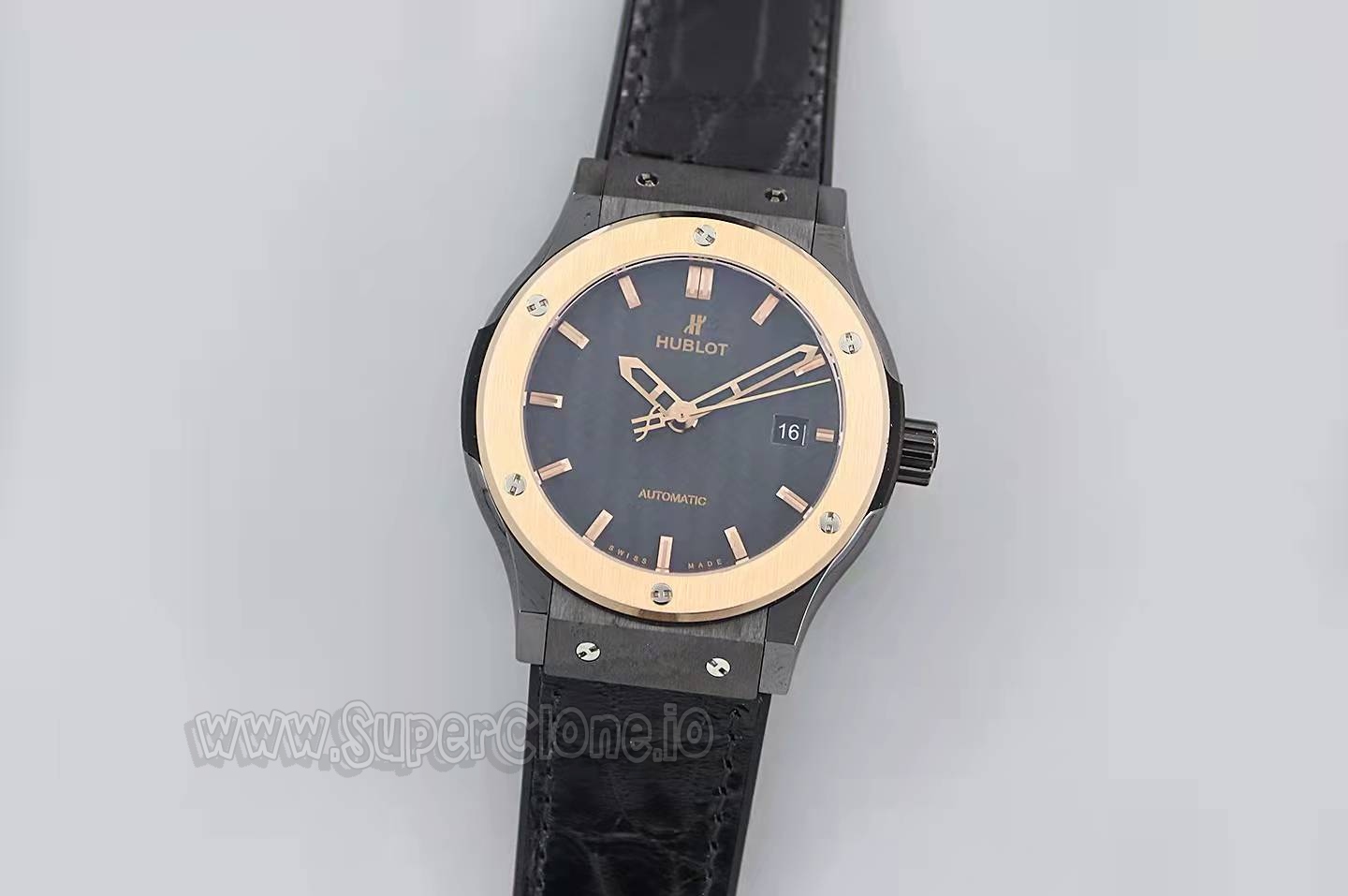
GS Factory approached this project from a fundamentally different starting point. Rather than treating ceramic as an optional upgrade or a decorative detail applied selectively to a single component, they committed to an uncompromising, full-ceramic architecture. All four models introduced in this series feature genuine black ceramic for the main mid-case, the porthole bezel, the winding crown, and even the outer ring of the display caseback. This extensive use of the material fundamentally alters both the visual presence and the tactile essence of the watch on the wrist.
The first quality most people notice when handling these ceramic Hublot replicas is the sophisticated behavior of the surface under changing light conditions. Stainless steel tends to bounce light off its polished facets with a bright, reflective glare. Ceramic, especially when executed with the deep matte and satin-brushed finishes found on these GS Factory pieces, absorbs visual depth differently. It creates a surface that appears significantly darker, sharper, and more architecturally defined, making the watch read as more geometric and intentional on the wrist. This moody, structural optical quality aligns precisely with the modern Hublot design language, which relies heavily on controlled contrast between different textures and material finishes to generate visual tension.
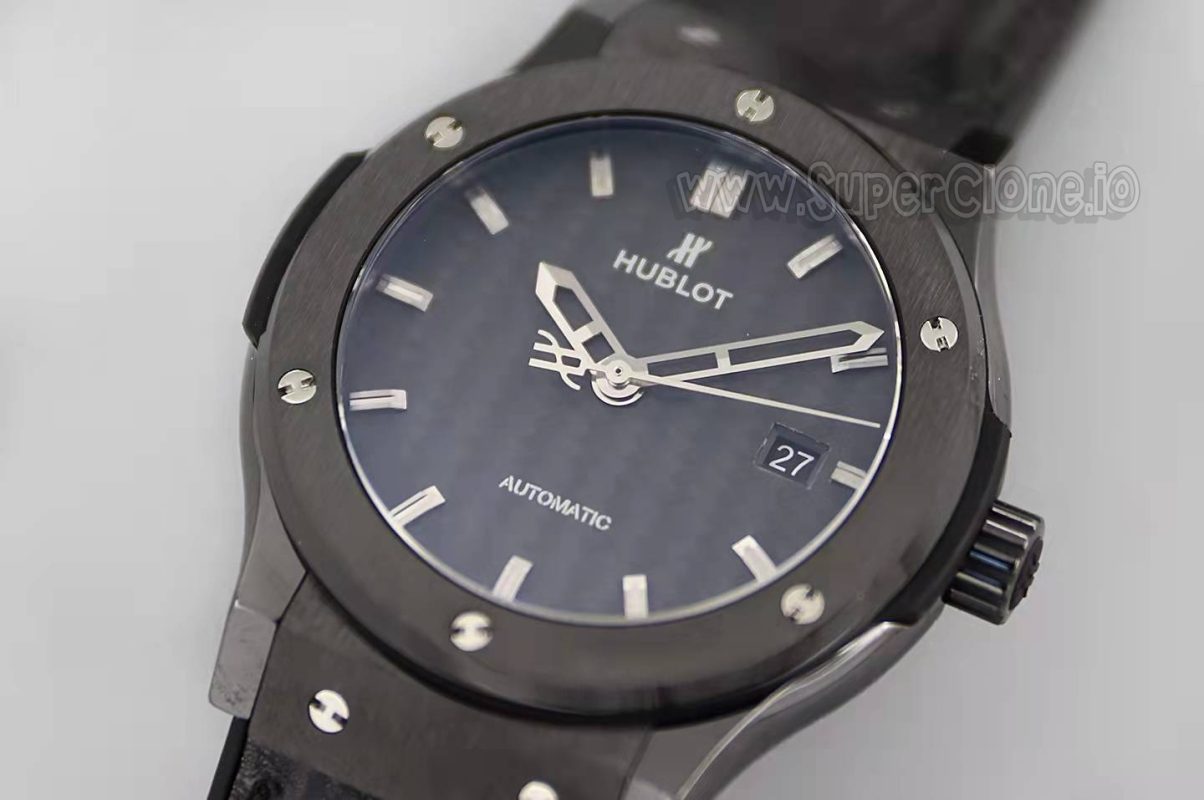
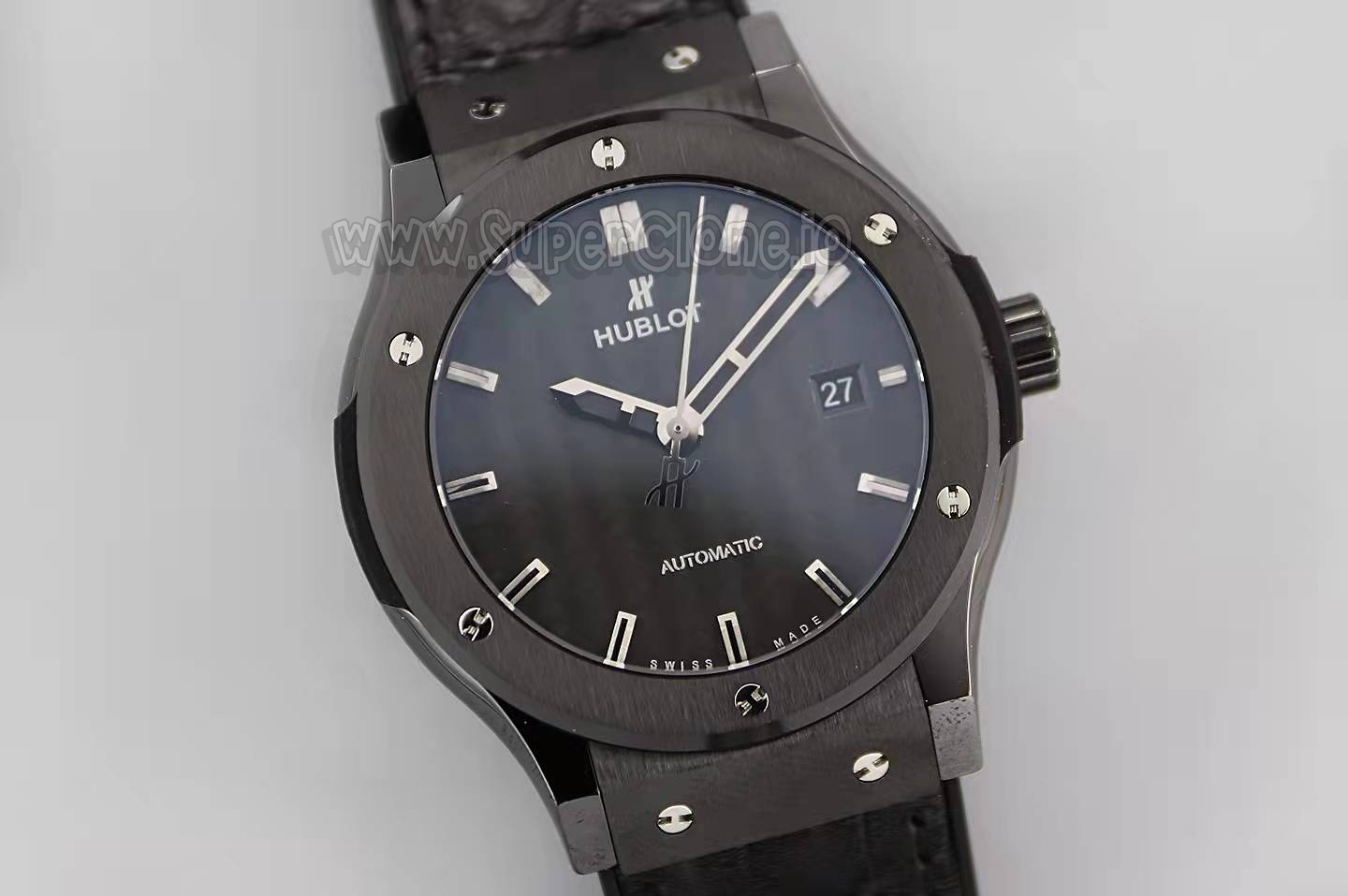
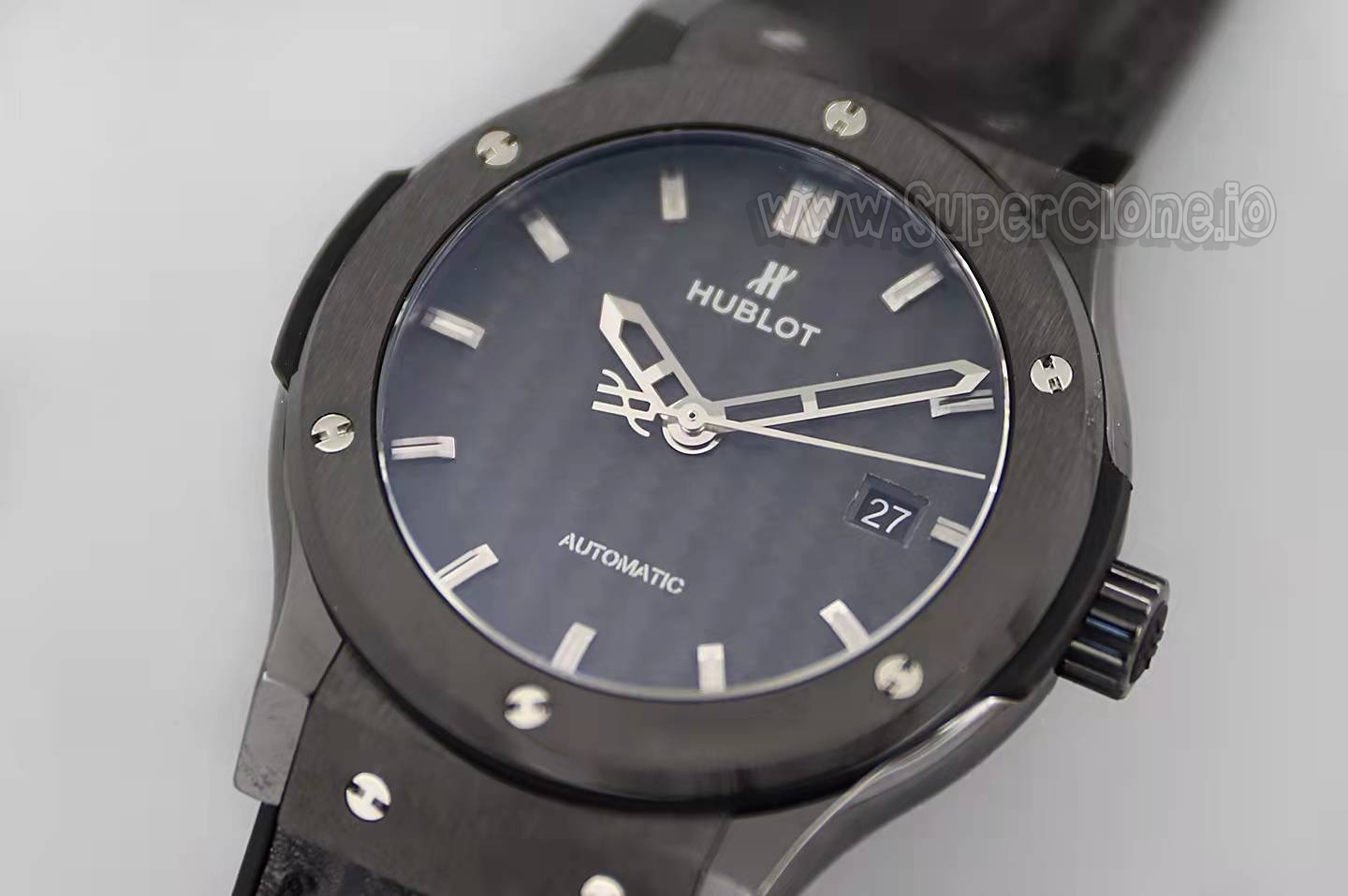
The black carbon fiber dial variant stands out as the absolute highlight of the entire rollout. While carbon fiber has been utilized extensively across numerous Hublot collections historically—most notably within the motorsport-heavy Big Bang chronographs—mating that specific weave pattern to the clean, time-only layout of the Classic Fusion creates a fascinating new personality. Instead of reading as aggressive or overtly racing-influenced, the watch feels technically specific, sleek, and tightly controlled. The carbon pattern adds material depth without visually cluttering or over-complicating the clean dial geometry.
It is precisely in this specific configuration that Hublot’s famous “fusion” philosophy finally translates into a high-tier replica format that makes genuine sense to watch enthusiasts.
Many lower-tier replica manufacturers fundamentally misunderstand what makes modern Hublot designs compelling to genuine collectors. They erroneously interpret the brand merely as a collection of loud visual signals—oversized screws, heavy carbon texture, chaotic skeletonization, and confrontational bezels—and amplify those elements in isolation. The resulting watches typically feel like a caricature rather than a convincing interpretation. The real allure of Hublot, particularly in their best modern references, comes from deliberate, calculated contrast. The watches combine industrial raw materials with refined, slim proportions in a way that should still feel entirely appropriate for extended daily wear, not merely impressive at a brief glance from across a room.
The carbon dial ceramic Classic Fusion models from GS Factory capture this difficult balance with remarkable accuracy, executing it far more convincingly than most Hublot replicas released during the same period.
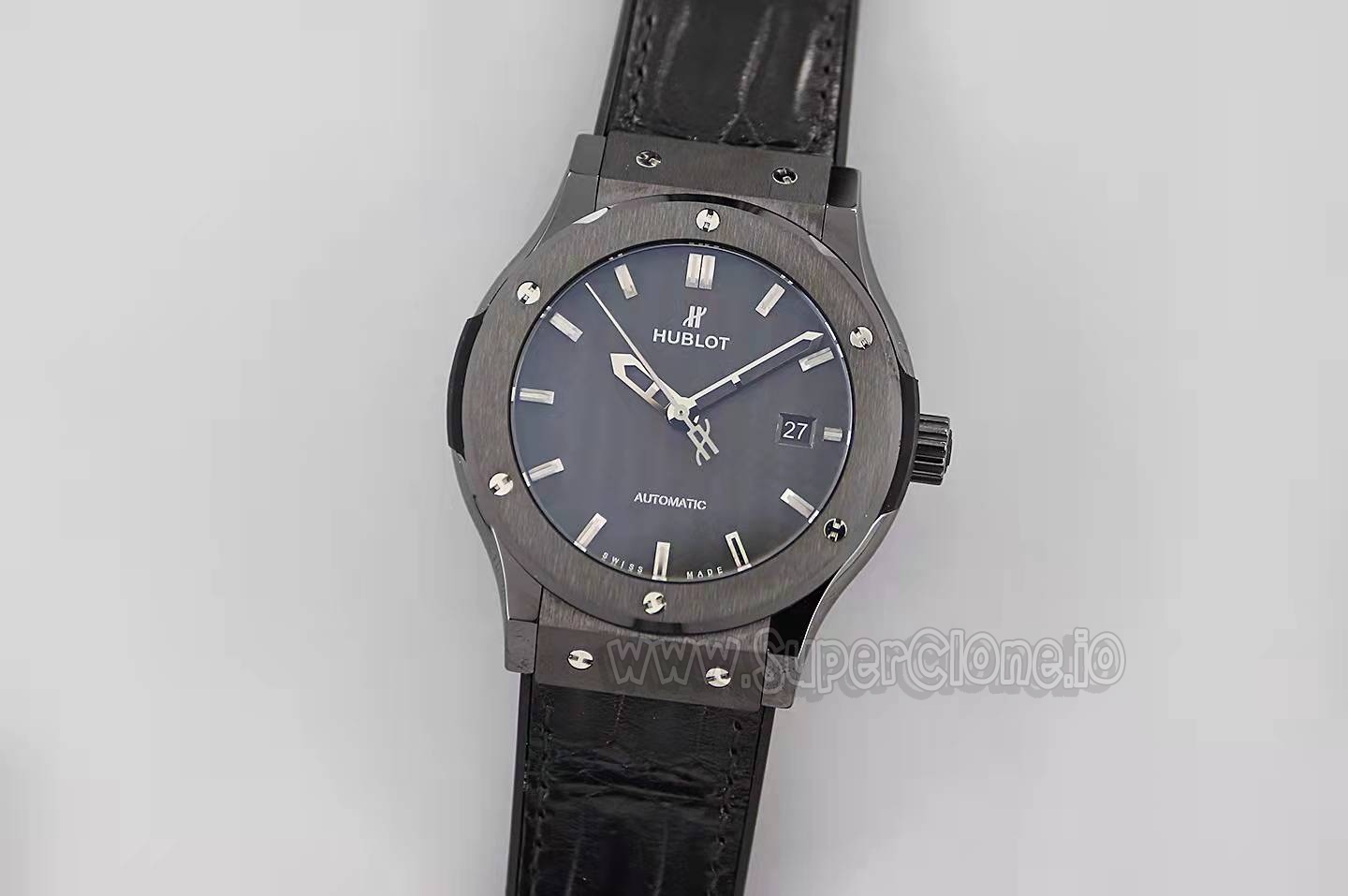
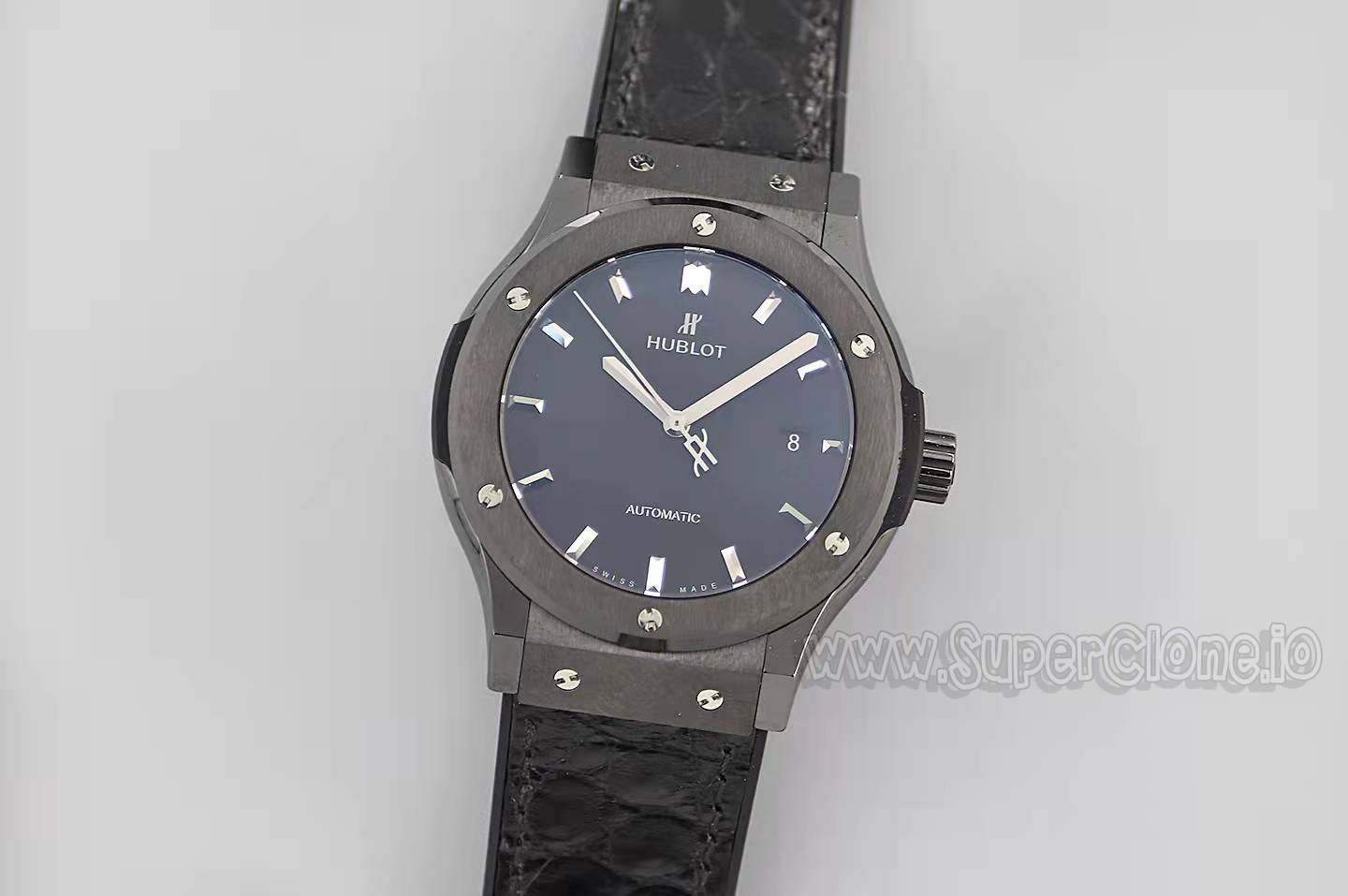
Under direct sunlight, the woven texture of the dial provides excellent visual depth, catching the light at different angles to create subtle movement across the surface, while the minimalist polished indices and classic three-hand layout keep the overall presentation clean, readable, and focused. Compared with standard sunburst dial variants, the carbon fiber execution feels intensely modern, deeply tactical, and distinctively premium. Conversely, the glossy, smooth black dial variant caters perfectly to traditionalists who value the stealthy, sophisticated side of the Classic Fusion heritage; it offers a cleaner look that slips effortlessly under a formal shirt cuff, accurately mirroring the behavior of some of the rarest, boutique-exclusive genuine pieces launched over the past decade.
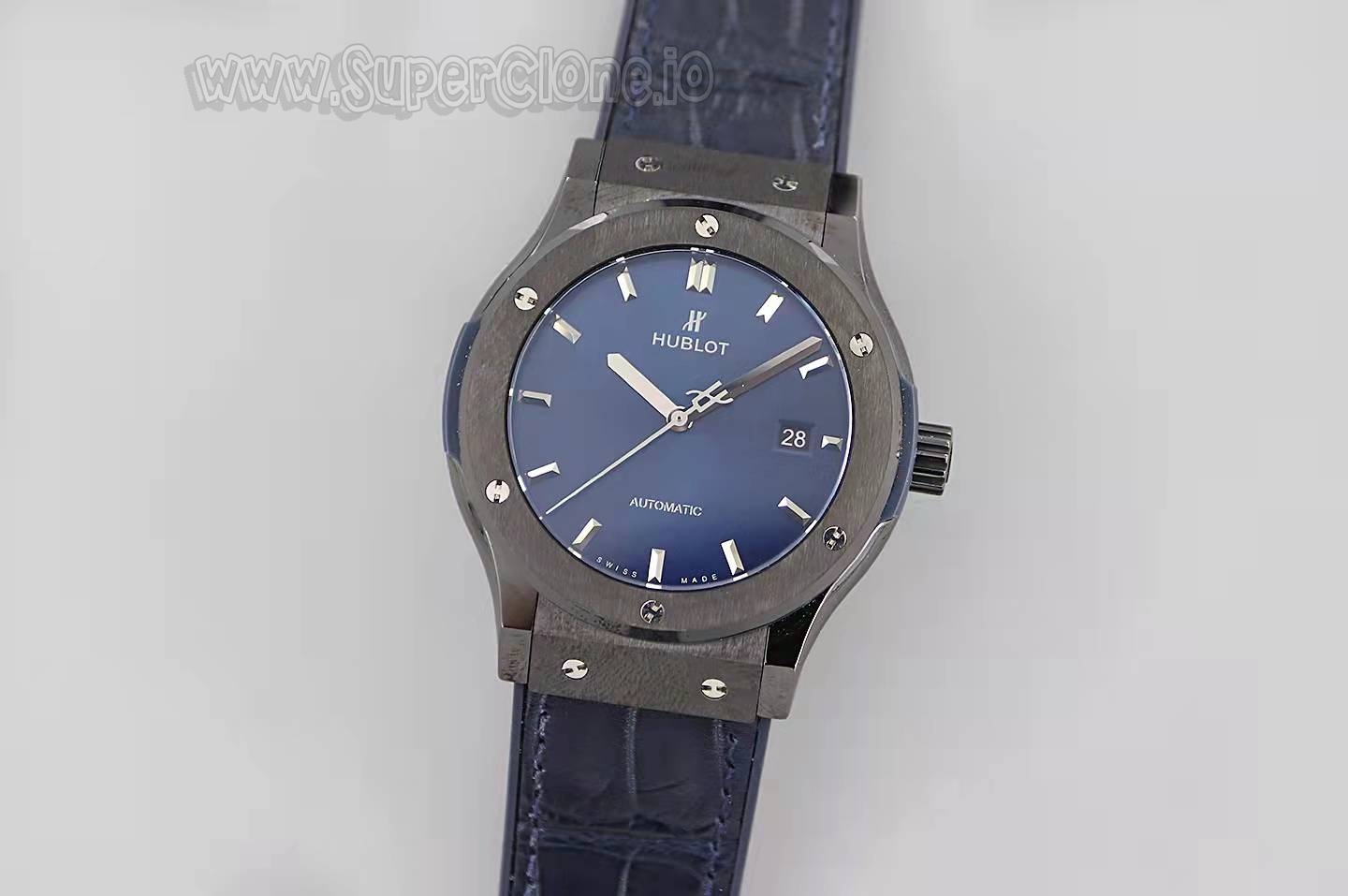
The blue dial iteration also demands separate attention, especially given the luxury watch market’s ongoing obsession with blue integrated sports watches. Following the massive global hype surrounding blue-dial Royal Oaks and Nautilus references, Hublot aggressively expanded its blue ceramic offerings in the genuine market. Replica factories eventually followed, though blue ceramic presented even greater technical manufacturing challenges than standard black ceramic, largely due to the precise management of colorant compounds required during the high-temperature sintering process to avoid uneven coloration or structural brittleness.
Beyond the material breakthroughs, these GS Factory pieces stand noticeably apart from earlier Hublot replica releases due to their meticulous case proportion control.
Measuring in at a highly versatile 42mm, these watches occupy the absolute sweet spot of modern watch sizing. While Hublot’s traditional 45mm references often feel overwhelming on the average wrist—largely due to how the integrated strap flares outwards from the lugs, drastically increasing the effective lug-to-lug distance beyond what the dial size implies—the 42mm Classic Fusion case avoids this issue entirely. It commands excellent, modern wrist presence while remaining genuinely comfortable and proportional for continuous daily wearing across varied physical contexts.
In today’s collecting climate, this focus on ergonomics is more crucial than ever. The mid-2010s era of oversized, wrist-swamping timepieces has waned consistently across enthusiast communities over the past several years. Modern buyers increasingly prioritize watches that wear thinner against the wrist, sit more cleanly under clothing, and feel less physically demanding during extended wear. The Classic Fusion design benefits directly and immensely from this macro shift in consumer preference.
Furthermore, the quality of the case finishing demands specific praise, as the finishing of ceramic is what instantly separates a master-tier super clone from a mediocre factory attempt. On these GS Factory pieces, the sharp contrast between the deeply satin-brushed ceramic planes and the mirror-polished titanium H-screw hardware creates an exceptional level of visual definition. This precise interplay of materials may sound subtle in text, but the physical presence it creates—particularly when the watch is viewed under directional light—substantially elevates the perceived build quality at a glance. Factories that fail to execute those finishing transitions accurately end up with coarse, uneven brushing or warped polished reflections, losing the entire industrial character that defines genuine Hublot luxury.
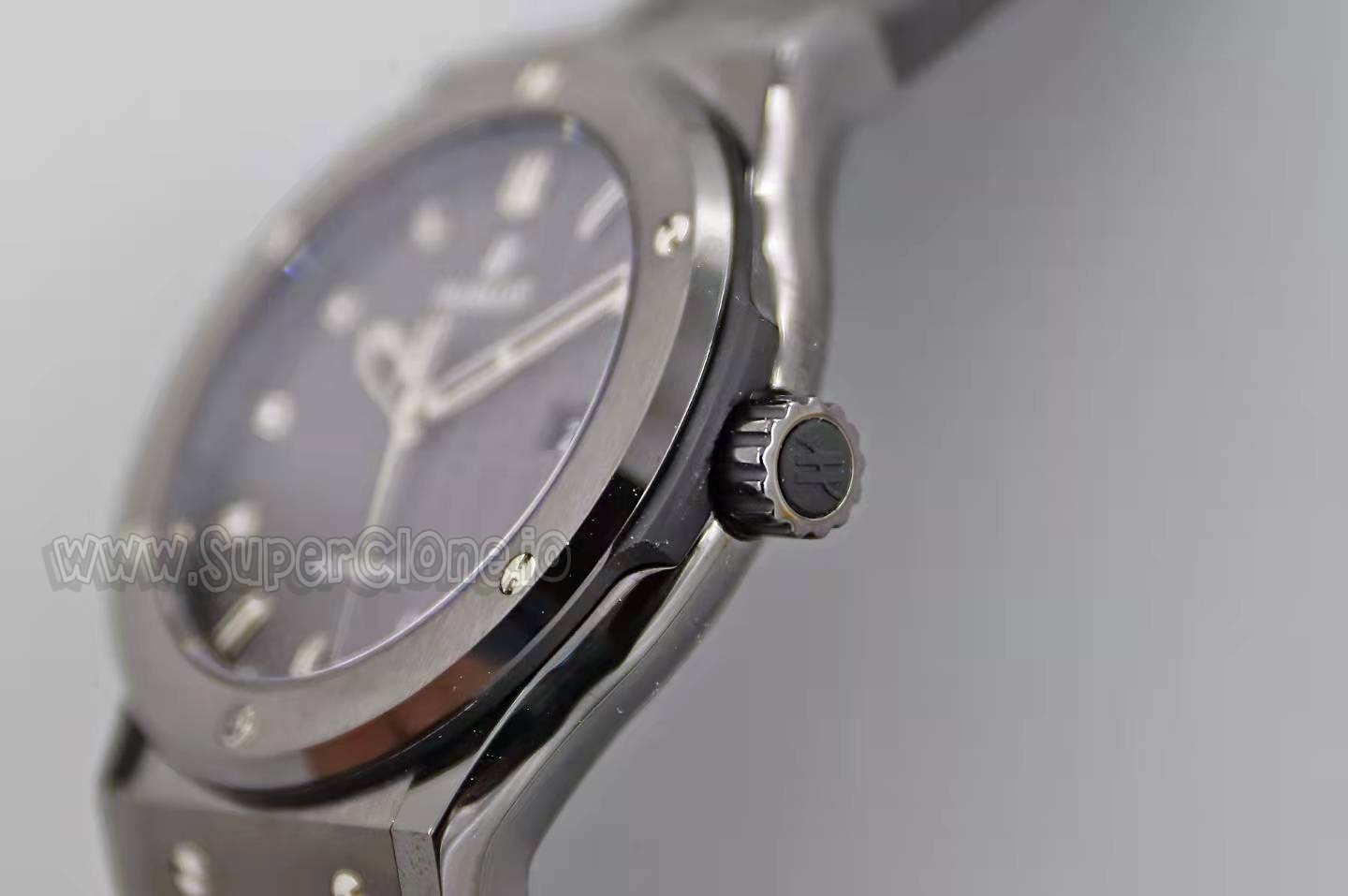
The integration between the winding crown and the main ceramic bezel structure is exceptionally well-executed, reflecting the highest manufacturing standards of its release window. Achieving sharp, clean edges on sintered ceramic components is an ongoing battle for replica factories, as improper finishing easily rounds off the sharp transitions, instantly making the watch look like a cheap plastic toy. On these models, the geometric edges remain remarkably crisp, especially around the outer perimeter of the bezel and the recessed screw wells—not perfectly razor-sharp in the way genuine Hublot CNC machining achieves, but convincing enough that the visual impression holds beautifully under normal handling distances.
Another critical check for seasoned rep buyers is the overall case thickness, which connects directly to movement selection. The genuine Classic Fusion runs at approximately 11mm in height for the three-hand models—not a record-breaking ultra-thin dress watch, but perceptibly slimmer in wear than its dimensions suggest because of how the case architecture tapers toward the integrated strap. Factories that use cheap, bulky movements inevitably fail to control the mid-case profile, resulting in a bloated replica that sits noticeably higher on the wrist and destroys the elegant lines of the original design.
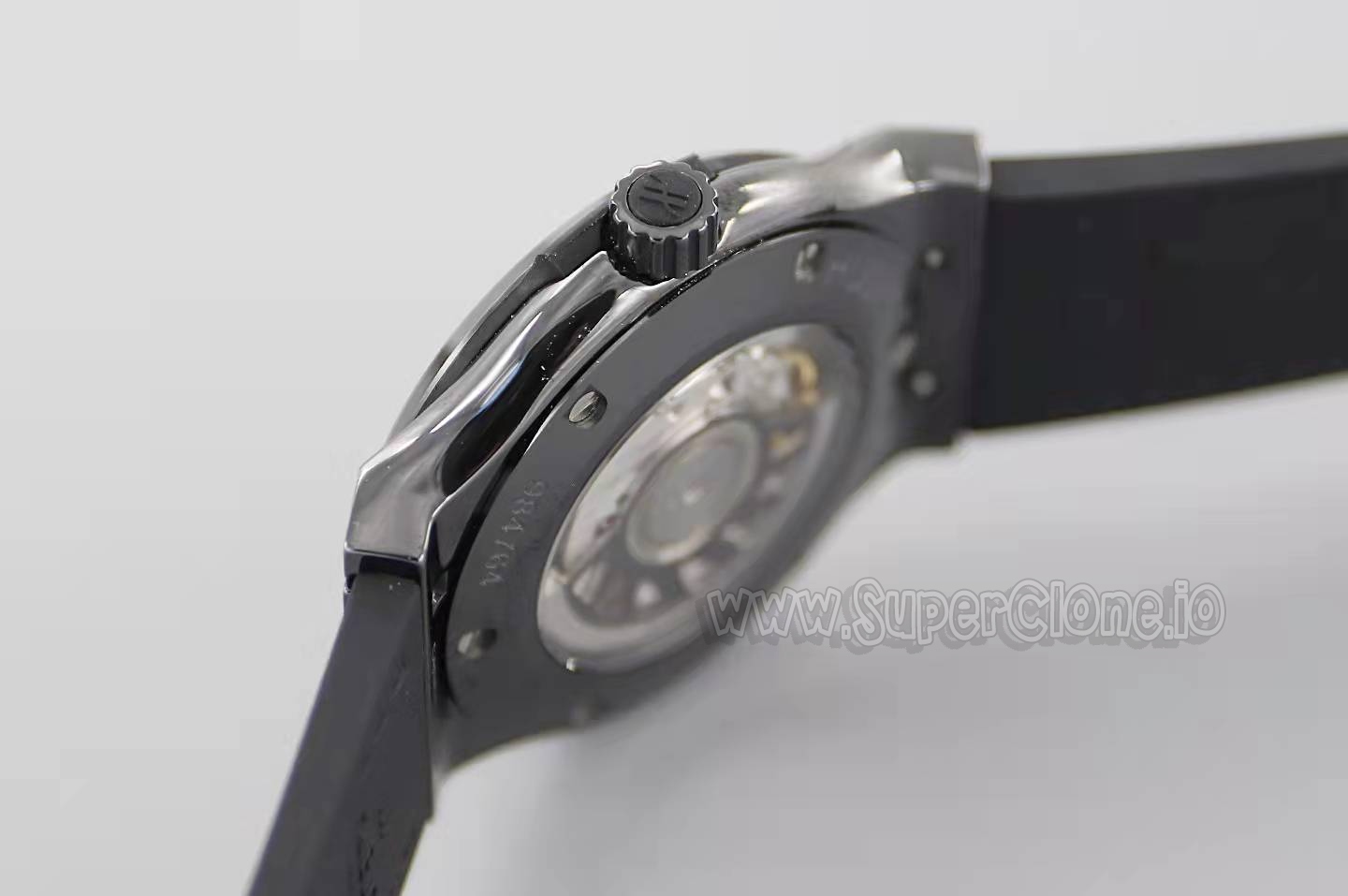
GS Factory successfully solved this dimensional challenge by choosing to build these Classic Fusion replicas around a slim clone Asian 2892 movement architecture, extensively decorated to replicate the visual layout of the Swiss Sellita SW300/Hublot HUB1110 caliber used in genuine configurations. From a practical collecting perspective, this engineering choice was entirely correct for several reasons simultaneously.
The 2892 movement family has long been revered within the replica community for its ultra-slim profile—the base caliber measures a mere 3.6mm in height—combined with exceptional architectural stability and reliable long-term winding efficiency. By utilizing this thinner movement platform rather than thicker alternative movements (which would have forced the mid-case to be artificially thickened), GS Factory successfully maintained true-to-gen case proportions, ensuring the watch sits flat against the wrist and delivers the exact comfort profile of the genuine counterpart. Furthermore, the movement’s 42-hour power reserve provides practical daily reliability that aligns with the expectations of buyers investing at this price tier.
The aesthetic decoration applied to the movement plates is also significantly more advanced and considered than the crude overlays found on older, mid-tier Hublot reps. The font styles of the engravings, the custom rotor cutouts, and the sandblasted finish on the baseplates are all executed with a clear intent to mirror a genuine caliber, rather than leaving the display back looking generic and unfinished. Experienced collectors know that no decorated clone movement will ever match a genuine Swiss caliber under a loupe, nor is that the goal. The true value lies in its ability to support correct external case proportions while presenting a clean, visually coherent aesthetic through the sapphire display caseback.
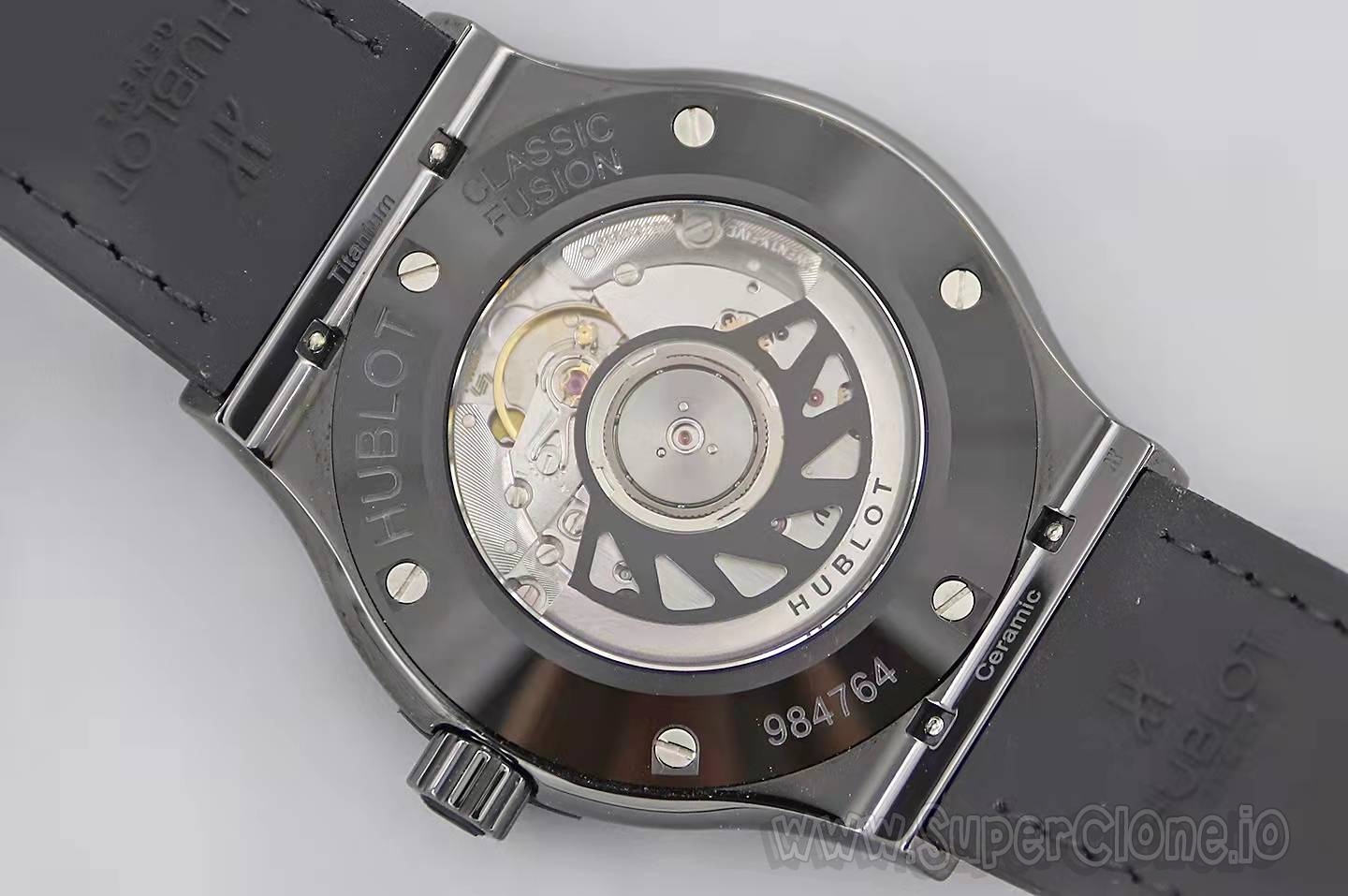
The availability of an optional genuine Swiss Sellita SW300 movement installation is another fascinating detail, highlighting a significant market evolution that gained momentum after 2020. As the retail prices for top-tier super clones moved upward across the entire industry, collector expectations naturally adjusted in tandem. Experienced replica hobbyists began prioritizing long-term mechanical reliability, smooth winding engagement, and ease of local servicing over absolute rock-bottom pricing. A genuine Swiss movement can be serviced by any local watchmaker using standard parts, whereas a clone movement, however well-decorated, creates greater uncertainty over a five-to-ten-year ownership horizon.
Factories responded to this sophisticated demand by integrating genuine Swiss heart upgrades more frequently into their higher-positioned releases, treating them not as a niche offering but as a natural part of a tiered purchasing decision. This macro shift has successfully elevated the super clone category away from basic look-alike novelties and moved it toward enthusiast-grade, alternative watch collecting—a category defined by informed buyers making deliberate choices rather than simply seeking the cheapest plausible facsimile.
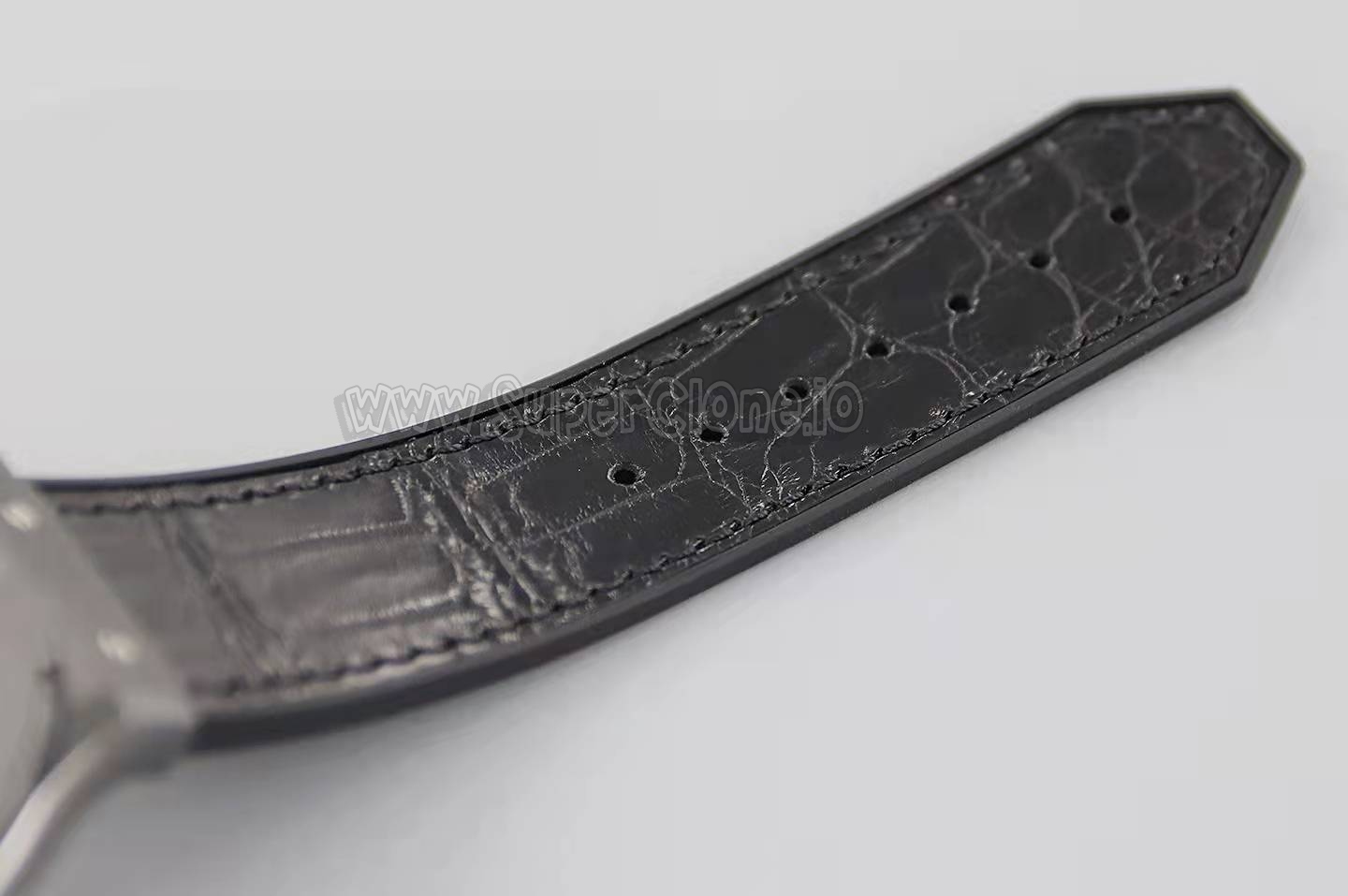
The straps paired with these Classic Fusion references also deserve far more analytical praise than standard reviews provide. Strap quality is absolutely paramount on an integrated-lug design like the Classic Fusion because the strap functions as a structural extension of the watch case itself; a substandard strap cannot be hidden with an aftermarket swap. Poorly sourced, stiff leather or thin rubber instantly cheapens the entire tactile experience.
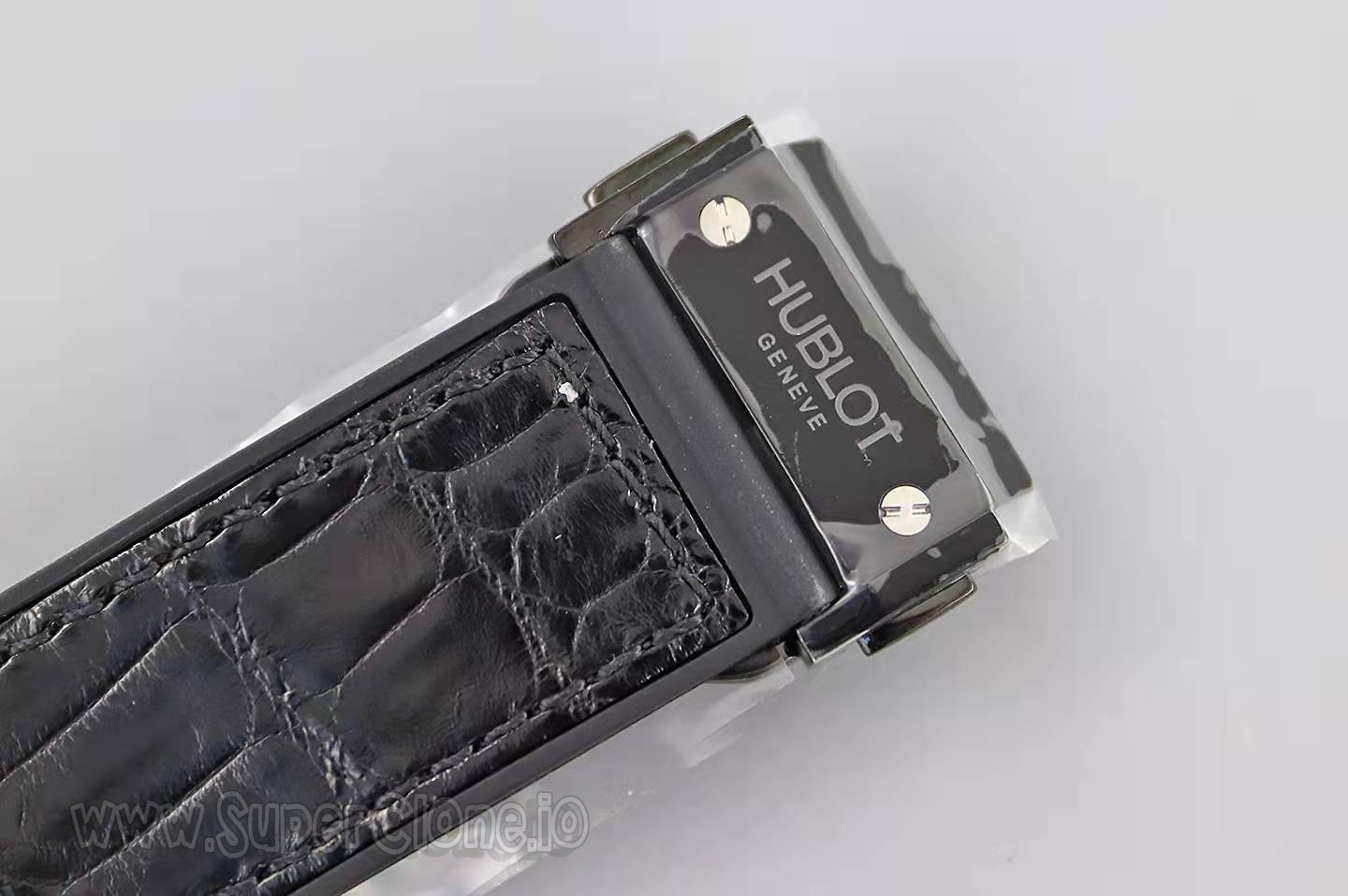
The leather-on-rubber straps supplied by GS Factory are genuinely impressive and convincingly handled. The alligator grain embossing carries excellent dimensionality and depth rather than appearing laser-etched or flat. Stitching runs perfectly uniform without thread gaps or tension variation across the strap length, and the rubber lining remains incredibly supple against the skin. This flexibility matters practically because stiff straps create noticeable comfort issues during extended wear and signal lower build quality immediately to experienced hands. Combined with the heavy, premium feel of the ceramic head, the entire package achieves a luxury tactile feel that was completely missing from earlier generations of Hublot replicas.
One of the persistent reasons high-end Hublot replicas continue to thrive among collectors—despite the absolute market dominance of Rolex, AP, and Patek super clones—is that Hublot taps into an entirely different emotional and stylistic domain within watch culture. The collecting logic for Hublot replicas operates on fundamentally different terms than the logic driving a Submariner or Nautilus purchase.
A top-tier Rolex Submariner clone achieves success when it completely vanishes into ordinary expectations; its goal is absolute visual anonymity, hyper-realism, and reference-chart accuracy. Hublot operates on an entirely different wavelength. The joy of owning a Hublot clone stems from its avant-garde materials, bold industrial case geometry, and modern aesthetic styling. It isn’t about pretending you are wearing an antique heirloom; it is about engaging with the visual and tactile identity of modern, architectural wrist art that does not depend on historical prestige or vintage reference points.
This fundamental difference completely alters how an experienced collector critiques a replica. Minor typographical variations on a date wheel text, which would completely disqualify a high-end Rolex clone for many buyers, are often secondary concerns on a Hublot. This is because the visual success of a Hublot clone relies entirely on its overall manufacturing execution, its texture contrasts, and its physical weight. Conversely, surface quality and material authenticity become infinitely more important, precisely because the entire design language is a celebration of texture and physical presence rather than microscopic specification matching.
This reality is why the implementation of real zirconia ceramic on these GS Factory releases is such a massive milestone. Without it, these would just be another run-of-the-mill addition to the dealer catalogs. With ceramic as the foundational material—used consistently across the case, bezel, crown, and caseback rim—they cross over into a highly specialized tier of manufacturing that showcases the absolute limits of modern replication technology and required meaningfully greater production effort than typical replica releases of the same period.
Reflecting on these releases today, they mark a specific and pivotal moment in the evolution of post-crackdown replica watch manufacturing. During a period when the commercial incentive strongly favored conservative production decisions—recycling safe steel models, reducing development investment, and avoiding difficult materials—some factories chose to push forward with technically ambitious projects anyway. Naturally, not every ambitious factory release during this chaotic era was a triumph. Many short-lived operations closed down as quickly as they opened, and several models looked incredible in curated factory promo videos but proved to be massive letdowns once actual physical examples reached collectors.
Occasionally, though, a specific release defied the odds, demonstrating meticulous quality control, material honesty, and genuine engineering passion rather than lazy market exploitation. These ceramic Hublot Classic Fusion replicas belong closer to that rare category. The decision to utilize genuine sintered ceramic throughout, combine it with a slim movement architecture that preserves case proportion integrity, and execute the strap and finishing to an elevated standard all point toward a deliberate, high-effort manufacturing campaign.
Years after their initial appearance, these references feel remarkably fresh, retaining far more relevance than many newer, generic releases flooding the trusted dealer networks. A massive part of this longevity is due to the brilliance of the base design itself—the Classic Fusion has aged beautifully because its clean proportions were never tied to fleeting fashion trends or seasonal aesthetic preferences. Furthermore, high-end ceramic sports watches have only grown more desirable among modern collectors who want a contemporary look without moving into oversized skeletonized territory.
For any collector whose watch box is already filled with the standard, omnipresent Rolex and AP super clones, a properly executed, full-ceramic Classic Fusion brings something genuinely refreshing and different to the wrist rotation. It provides a lighter visual footprint, an incredibly sleek style profile, and a material-focused presence that completely avoids the mainstream overexposure affecting today’s watch scene. It delivers a wearing experience few other replica categories can match.
Ultimately, this explains why the Classic Fusion remains incredibly relevant within the high-end replica community, even without occupying the top sales spot. It masterfully bridges a gap that very few other luxury watch designs can navigate across time: sporty without being visually aggressive, thoroughly contemporary without looking sci-fi, and deeply luxurious without leaning on outdated vintage design tropes. And when a dedicated manufacturing team executes those exact design traits using genuine sintered ceramic, an ultra-slim movement architecture, and pristine surface finishing, the final product becomes infinitely more compelling and satisfying than anyone would ever expect from a standard, three-hand time-only replica watch.
