Clean and VS Are Fighting a Different Battle Through the Modern Datejust
Discussions about replica Rolex watches were heavily focused on Daytona models, that was understandable. The release of the 4130 movement changed the entire market, and it also pushed several factories into a completely different league. Today, if people talk about the two biggest names in the current Rolex replica scene, the conversation almost always starts with Clean and VS.
What makes the competition interesting is that both factories became successful for very different reasons. Clean built its reputation around the Daytona. VS built its position around movement stability, especially the Dandong 3235. One factory dominates the sports chronograph category, while the other gained long-term trust from buyers who care more about daily reliability and power reserve.
The strange thing is that despite years of comparisons, there is still no universal answer when people ask which factory makes the better Datejust.
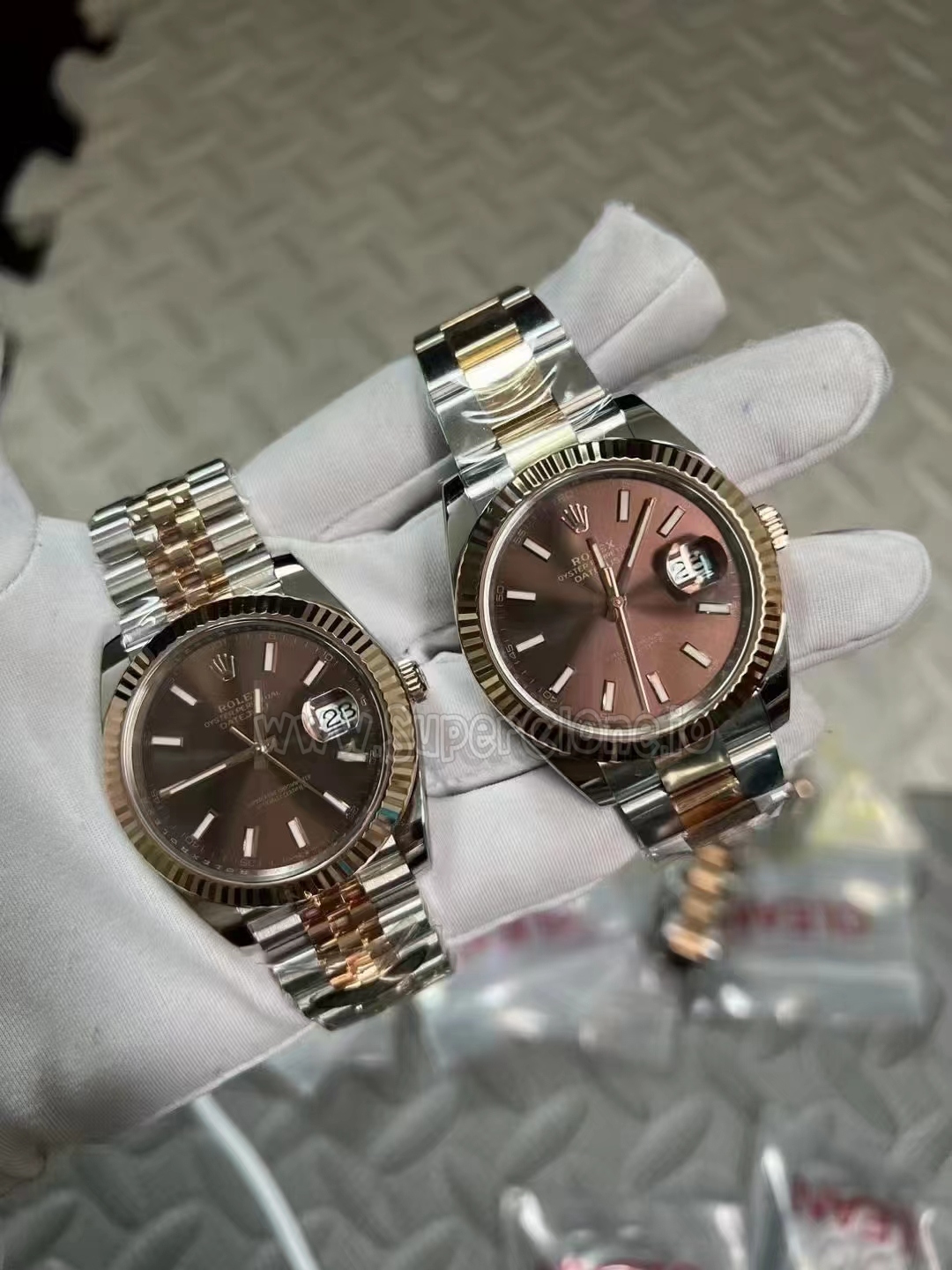
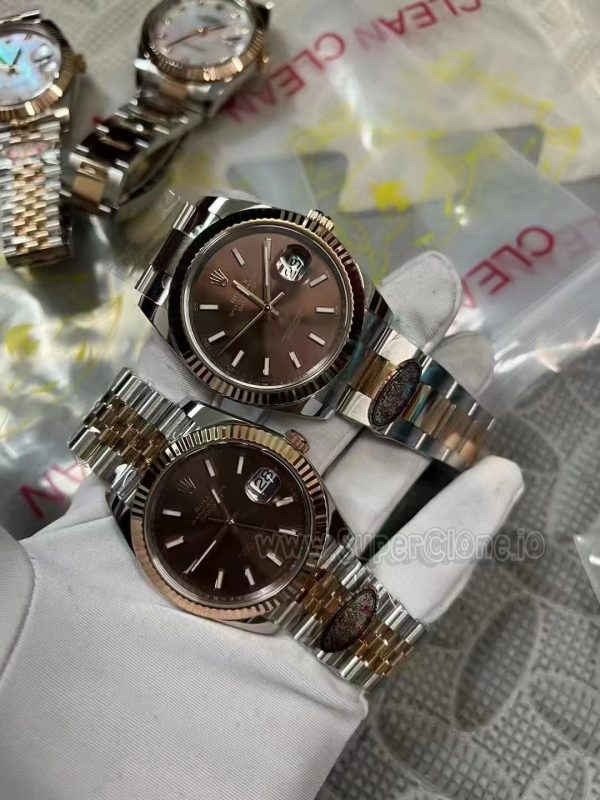
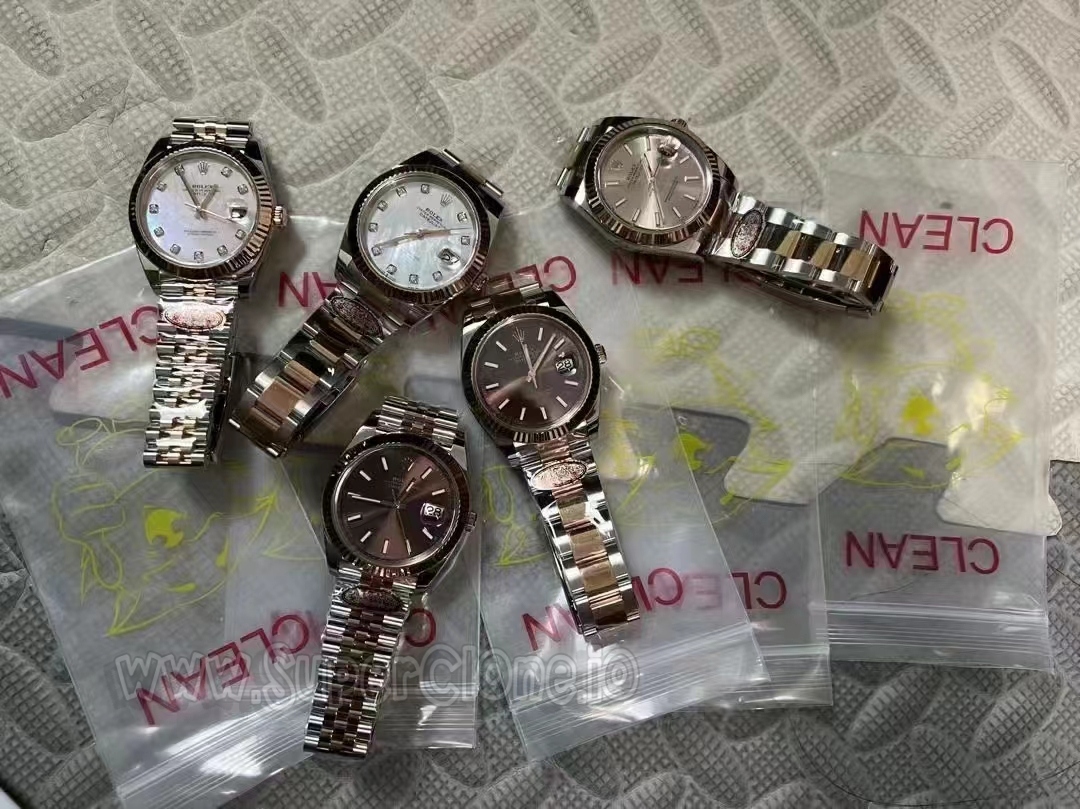
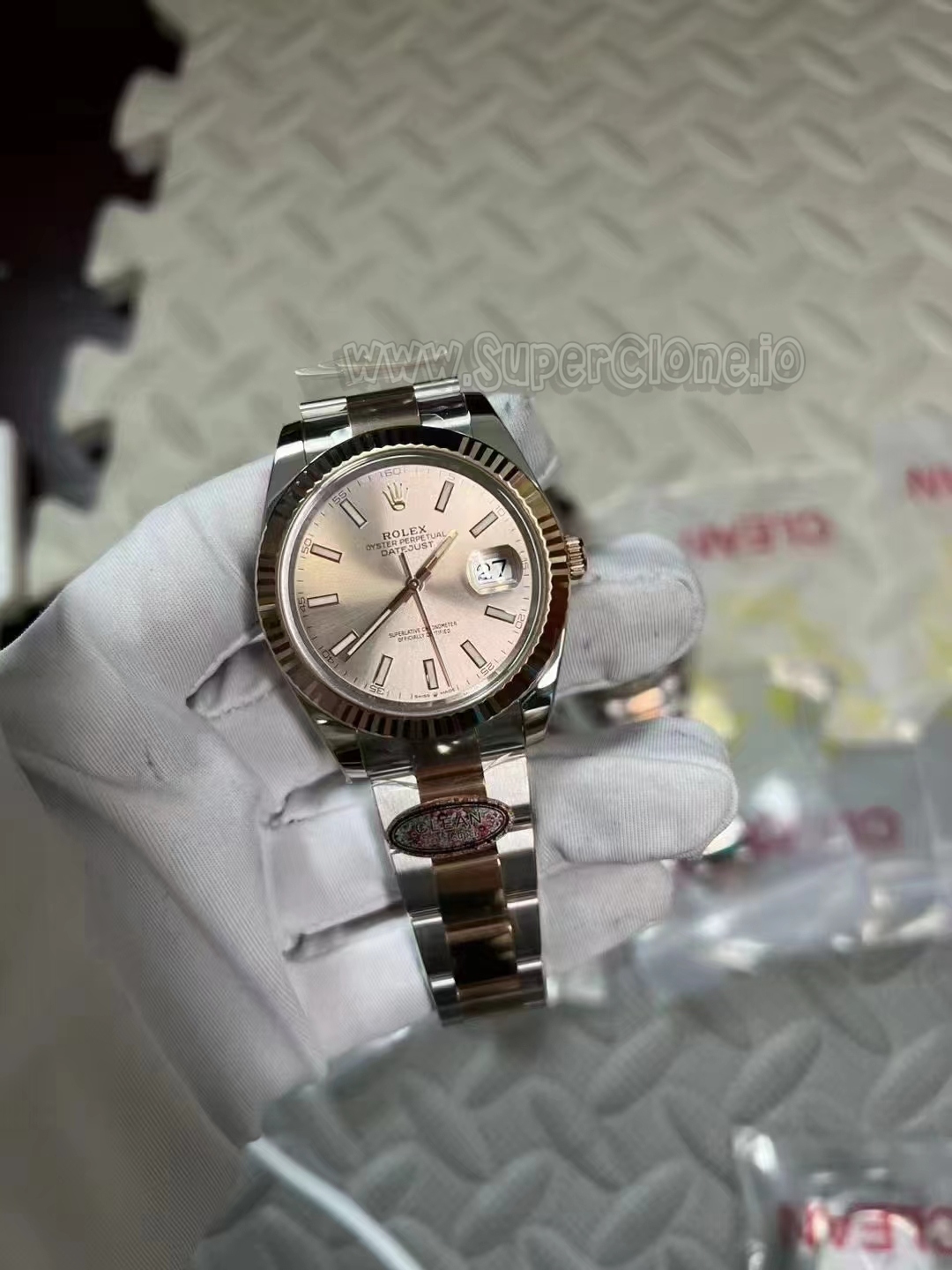
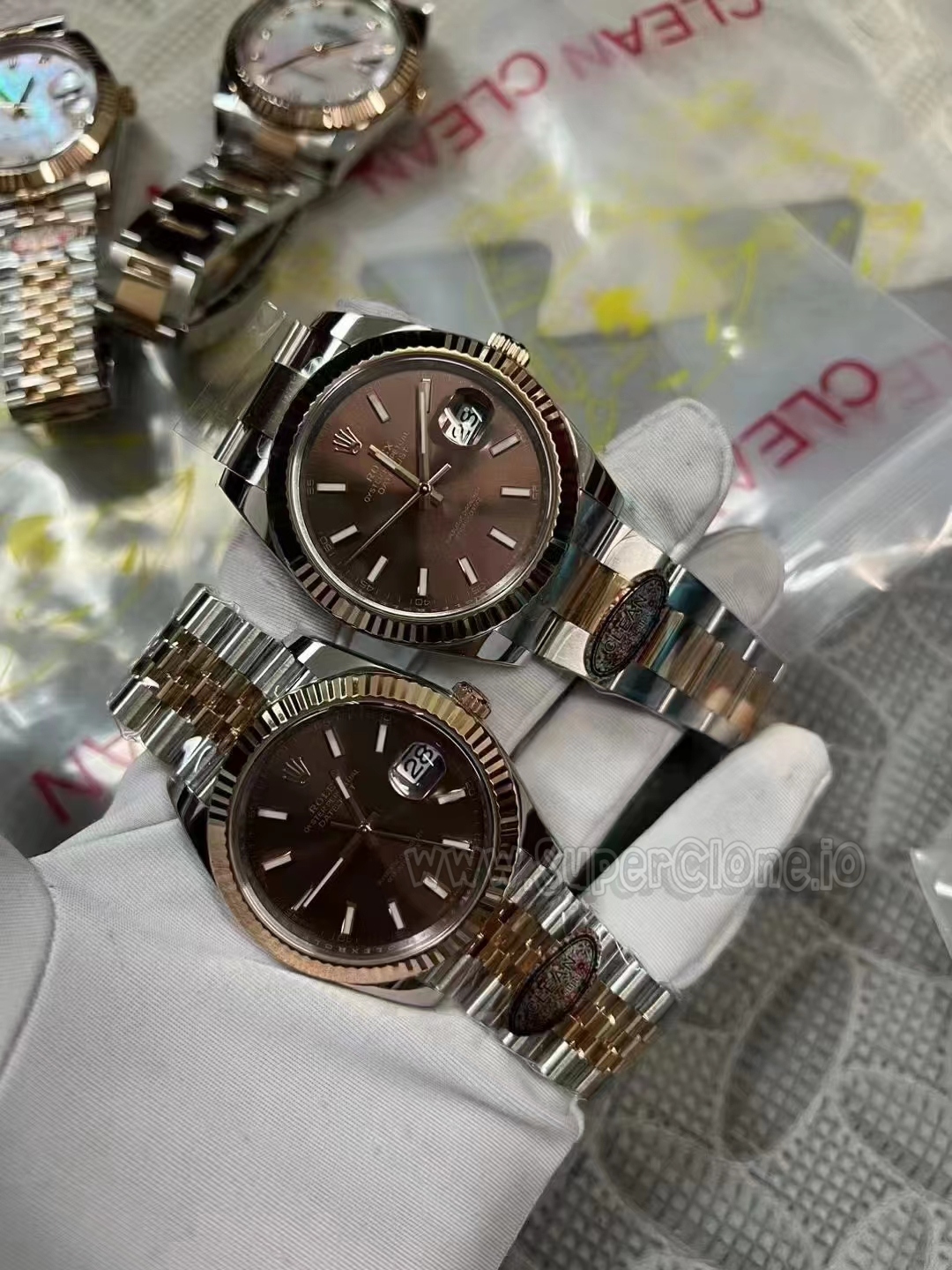
That question became active again after several newly released two-tone Datejust models from Clean started appearing in dealer catalogs near the end of the year. Most of these configurations were not typical safe choices. Instead of focusing only on black or silver dials, Clean introduced more decorative combinations, including mother-of-pearl diamond dials, soft pink dials, champagne tones, and rose gold variations with both Jubilee and Oyster bracelet options.
The release direction itself says a lot about where the market has moved recently. More buyers are no longer looking only for stainless steel sports models. There is increasing attention on dress-oriented Datejust configurations, especially watches that can work as everyday jewelry instead of purely “tool watch” designs.

Among the newly released pieces, the softer dial colors immediately stand out more than the case finishing. The light pink version especially feels different from the typical Datejust combinations that dominate dealer inventories year after year. Under indoor lighting, the dial tone changes subtly instead of looking flat, which is something many factories still struggle to reproduce correctly.
The mother-of-pearl versions are probably the most visually successful releases in this batch. MOP dials are difficult because the texture can easily look artificial when the surface reflection becomes too uniform. On these newer models, the dial structure appears more uneven and natural compared to many older Datejust attempts from previous years.
One reason why the Clean versus VS debate never disappears is because buyers often judge watches using completely different standards. Some care more about movement performance. Others focus on dial printing, bezel shape, bracelet finishing, or crystal clarity. The result is that two people can compare the same watch and arrive at opposite conclusions.
The Dandong 3235 movement created another layer of misunderstanding in the market. Many buyers started assuming that a watch automatically becomes superior as long as it uses that movement. Reality is more complicated. Movement quality matters, but it does not magically fix case proportions, rehaut finishing, date alignment, or dial texture consistency.
That is why some collectors still choose Clean Datejust models even though VS has an advantage in movement reserve time. The overall finishing balance on certain Clean references simply feels more refined to them.

The biggest strength of VS remains practical daily performance. On many Datejust models, the power reserve can reach around 60 hours, while some Clean Datejust models stay closer to approximately 40 hours. For buyers who rotate multiple watches during the week, that difference becomes noticeable very quickly.
Still, movement reserve alone rarely decides which watch looks more convincing on the wrist. Certain blue dials from VS appear slightly stronger under direct light, while some silver and black dials from Clean tend to present cleaner sunburst transitions. Small differences like these are usually model-specific rather than factory-wide advantages.
That is why experienced dealers rarely answer “which factory is best” with a simple one-word reply anymore. The better factory often depends entirely on the exact reference being discussed.
Another issue affecting both factories right now is availability. Even though Clean and VS continue releasing new Datejust references, most of them are not kept in stable stock quantities. Dealers usually carry only several fast-moving configurations, while less common dial combinations often require special ordering and waiting periods.
This situation has become increasingly normal across the higher-end super clone market. Factories are publishing more references than before, but production capacity still tends to focus heavily on proven sellers. As a result, many newly announced watches appear online long before they become easy to source consistently.
The pink dial model is a good example. Photos started circulating quickly after release, but actual availability remained limited for weeks in many dealer channels. The same happened with several mother-of-pearl variants.
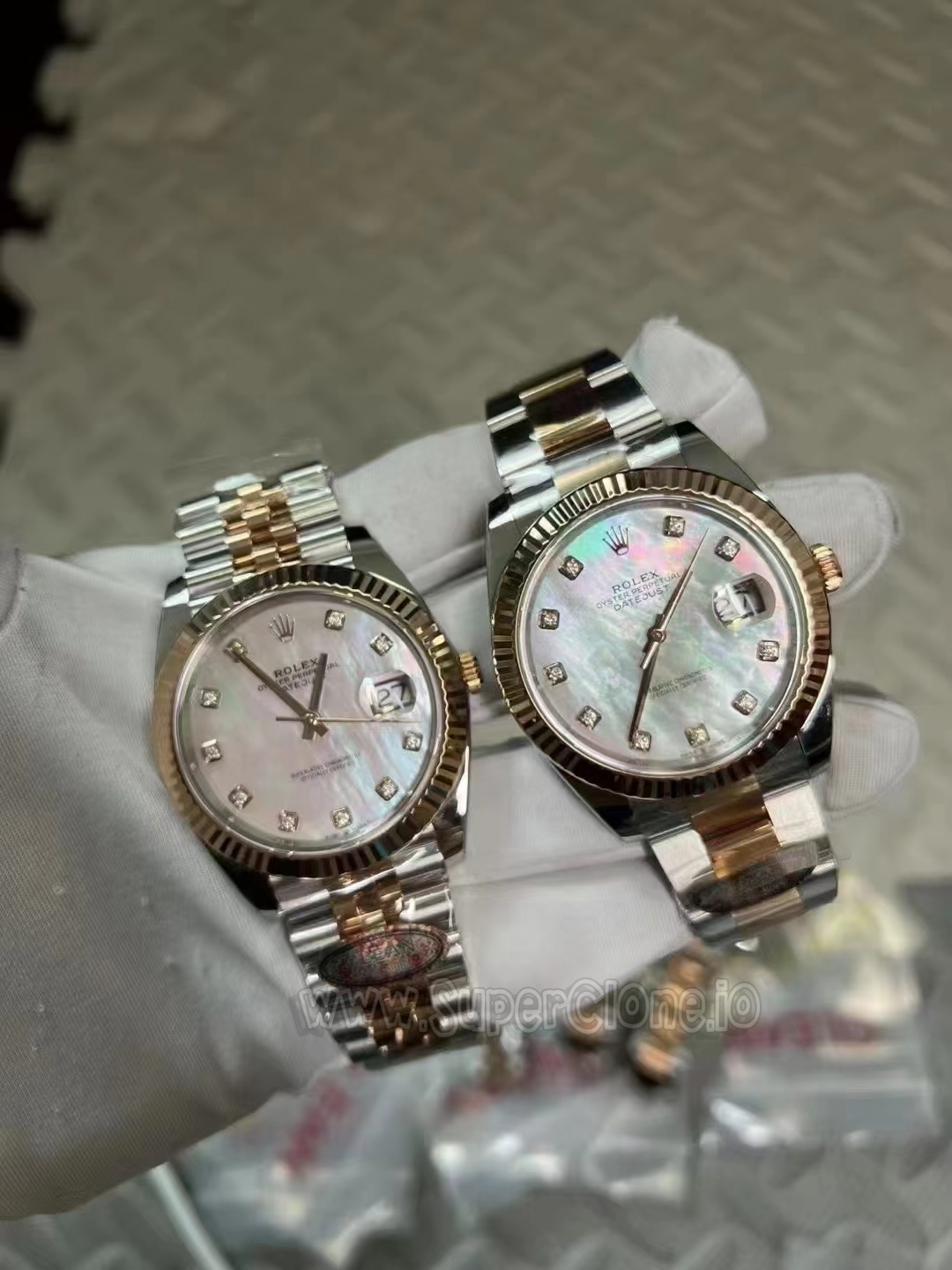
Visually, these newer two-tone Datejust models feel closer to jewelry-oriented Rolex designs than traditional sports watches. The warmer tones work especially well with diamond markers and polished center links because the watches rely more on light reflection than aggressive contrast.
For buyers looking for larger women’s watches or more decorative daily wear pieces, these configurations make more sense than another black Submariner or GMT. The softer dial colors also reduce the heavy appearance that larger Datejust cases sometimes create on smaller wrists.
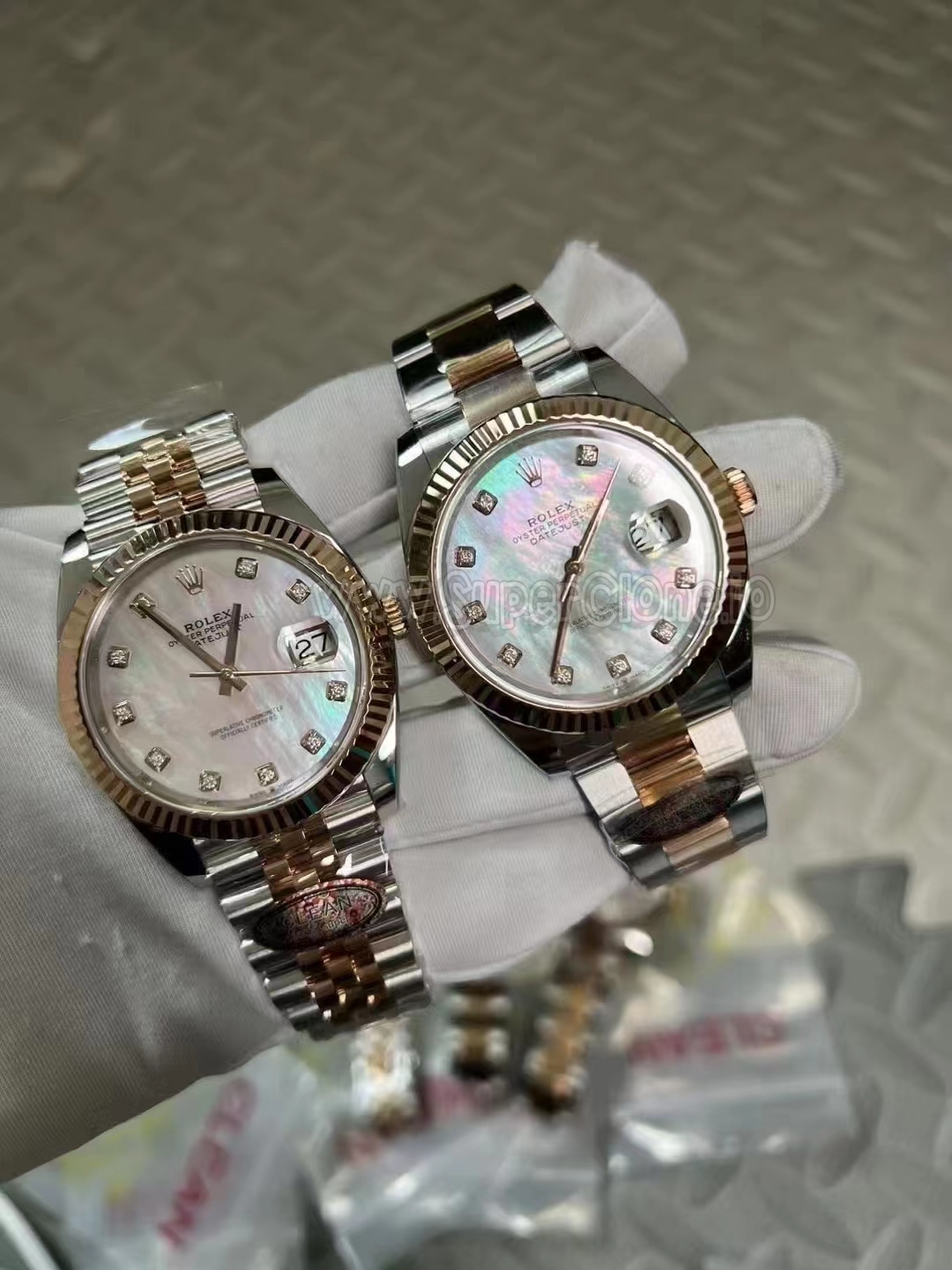
One thing that continues to separate the better factories from average manufacturers is consistency under close viewing conditions. A watch can look impressive in dealer photos but still lose realism once examined near a window, under restaurant lighting, or beside a genuine piece.
That is where details like date wheel depth, bezel cut sharpness, crystal edge distortion, and dial reflection become more important than spec sheets. Some improvements are obvious immediately. Others only become visible after wearing the watch for several days.
The current generation of Datejust models from both Clean and VS shows how far the category has evolved compared to several years ago. Earlier versions often focused mainly on case shape and bracelet construction. Newer releases pay much more attention to dial atmosphere, color behavior, and overall wrist presence.
Many collectors still hope VS eventually enters the Daytona category directly. If that happens, the market could become even more competitive than it already is today. Daytona development has historically pushed technical improvements throughout the entire industry, not just within one model line.
At the moment, however, the most interesting competition may actually be happening in quieter categories like the Datejust. The differences are smaller, the details are harder to evaluate, and buyers often end up choosing based on subtle preferences rather than obvious superiority.
That may also explain why the debate between Clean and VS never really ends.