
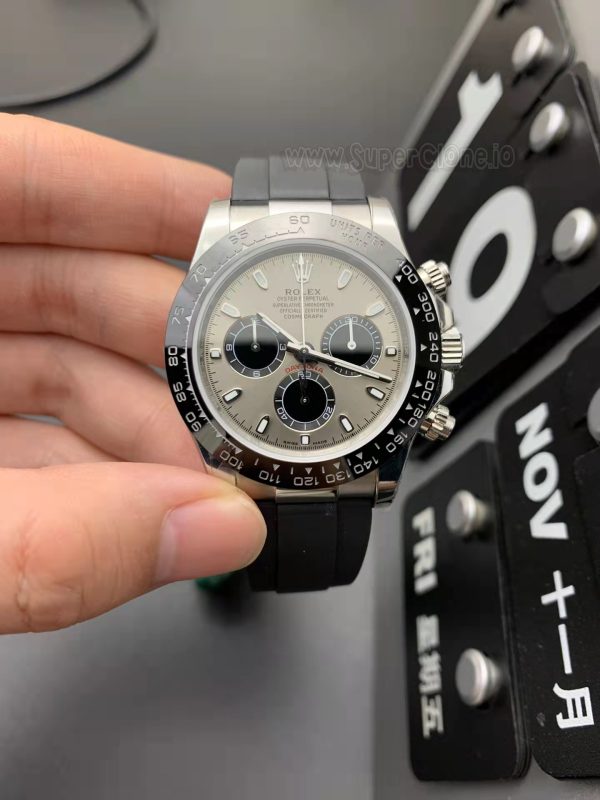
Why The EW Factory Daytona Started Getting Attention After The Noob Era Slowed Down
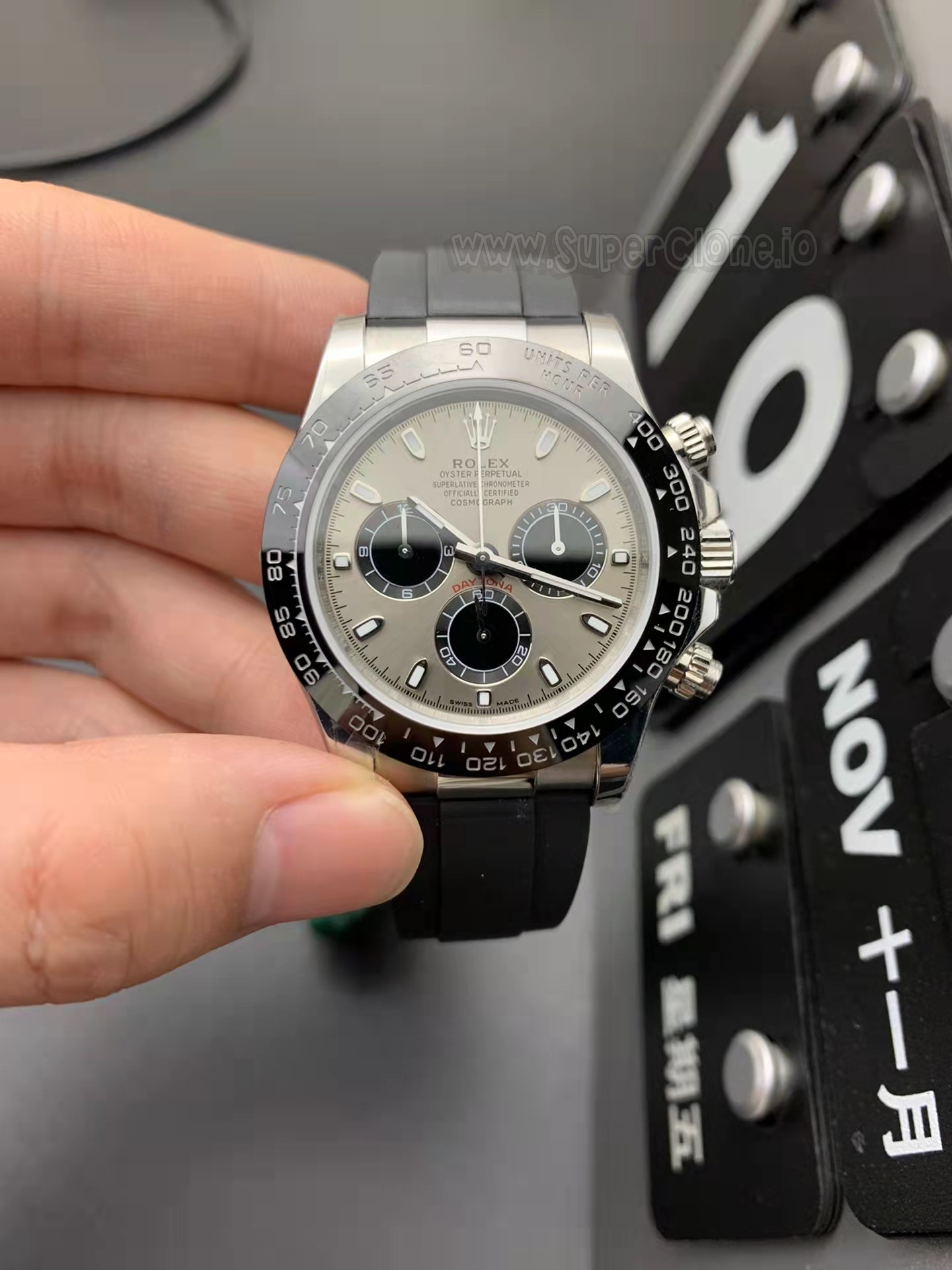
For several years, almost every serious discussion about Rolex Daytona replica watches centered on one dominant name: Noob Factory. It set the benchmark for Daytona chronograph replicas, especially in dial alignment, subdial spacing, and overall visual accuracy. Dealers pushed it heavily, collectors compared everything against it, and few factories tried to compete directly at the same level.
That structure did not last. As regulatory pressure and factory shutdowns began affecting major production hubs, the replica watch market went through a structural reset. Supply stability, consistency, and availability started to matter almost as much as finishing quality.
This shift created room for secondary factories to move into categories that were previously locked by dominant players. EW Factory was one of the names that began to appear more frequently in Daytona discussions.
Market Shift: From Dominant Factories to Flexible Supply Chains
Before this shift, EW Factory was not considered a top-tier Daytona producer. Its early catalog focused mainly on simpler Rolex models such as Datejust and Day-Date replicas, positioned closer to mid-tier production rather than true super clone competition.
Finishing quality was acceptable for its segment, but serious Daytona buyers still preferred established high-end factories. That perception changed only after supply disruptions reduced the influence of traditional leaders.
At the same time, buyer expectations also changed. Instead of searching for a single “best factory,” customers increasingly prioritized:
- Stable availability
- Visual accuracy on the wrist
- Reasonable consistency between batches
- Fast access without long waiting cycles
This practical shift explains why EW Daytona models gained traction faster than expected.
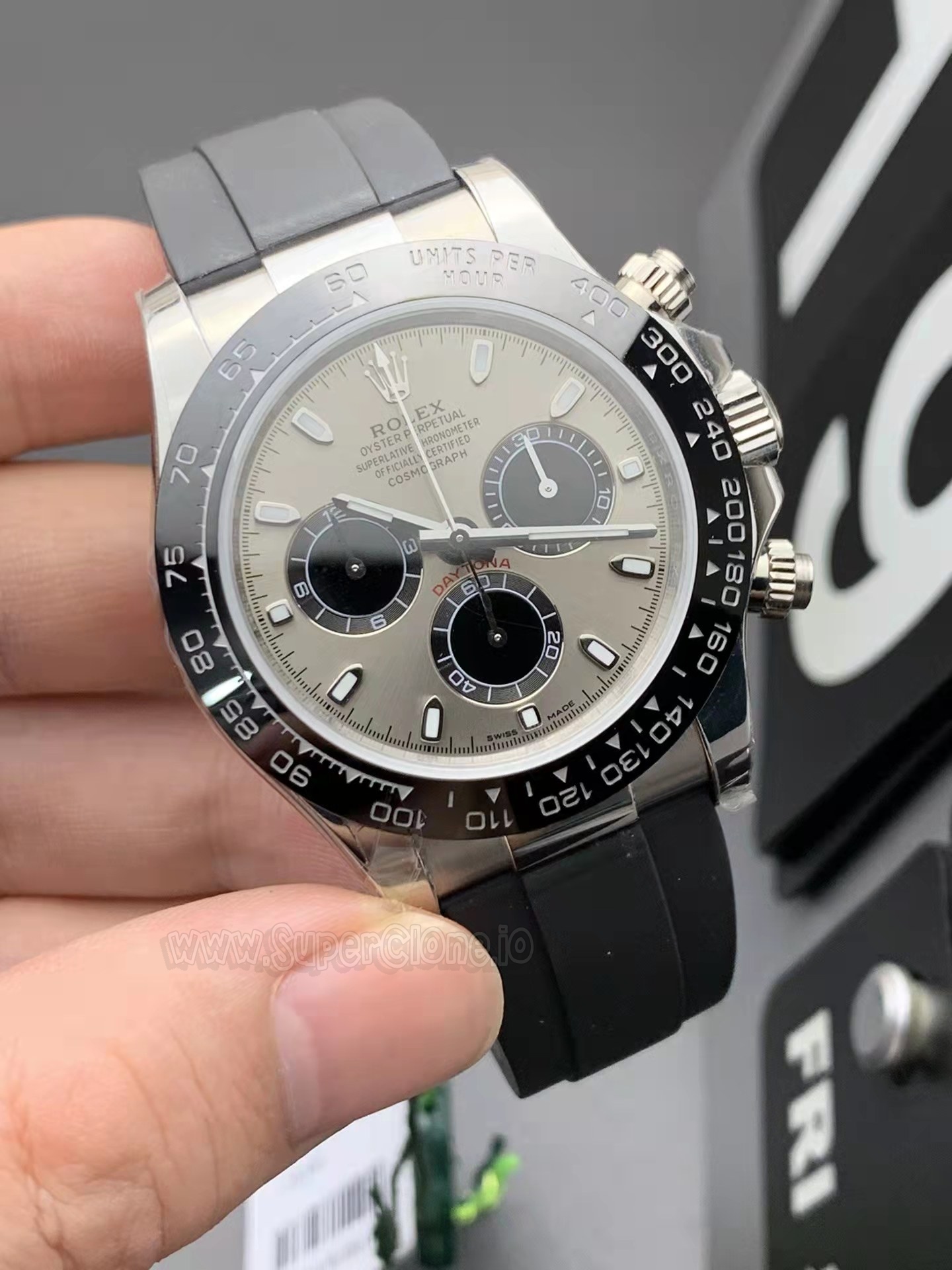
Design Direction: Grey Dial and Oysterflex Appeal
The grey dial Daytona on Oysterflex became one of EW’s early breakout configurations. Compared to heavily saturated Panda Daytona replicas, this version introduced a cleaner and more modern visual tone.
In genuine Rolex design evolution, the Daytona has gradually moved from pure steel chronograph tool watch to a more lifestyle-oriented sports luxury piece. The Oysterflex system reinforced this shift by changing both the visual weight and wearing style of the watch.
Many collectors who already owned Submariner or GMT-Master replicas naturally shifted toward Oysterflex Daytona models because they wear differently:
Less formal. More flexible. More modern in presence while keeping the core Daytona identity intact.
Case Architecture: Why Thickness Matters More Than Details
In any Daytona replica, case architecture is often more important than surface detailing. Among all variables, thickness is the most critical.
A difference of even 1mm can completely change wrist perception. A thick Daytona loses the sharp, low-profile elegance that defines the genuine model.
This is why older modified Asian 7750 Daytonas were frequently criticized. They often looked correct from the front but appeared too tall from the side.
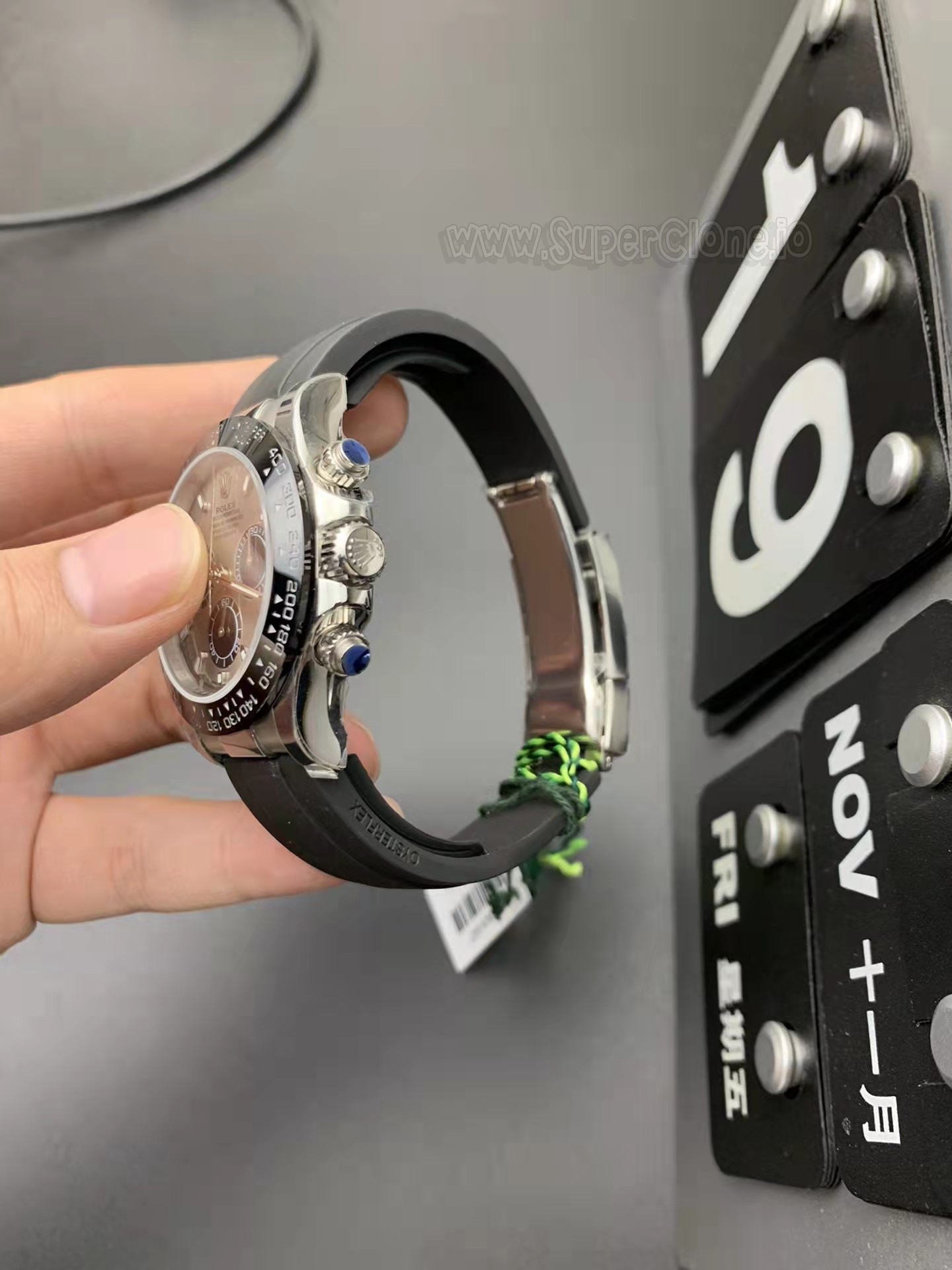
EW improved this aspect by focusing more on proportional balance. The case profile sits closer to genuine Daytona dimensions compared to earlier budget chronograph generations.
On the wrist, this creates a flatter silhouette that feels more natural in daily wear. In real-world conditions, this matters more than minor engraving or font accuracy.
Modern replica evaluation trends increasingly favor proportional correctness over isolated detail perfection.
Movement Reality: 7750 vs 4130
The Rolex Caliber 4130 is widely considered one of the most difficult chronograph movements to replicate due to its vertical clutch architecture and integrated design.
For many years, the industry relied on modified Asian Valjoux 7750 movements. These could replicate subdial positions but not internal structure or mechanical behavior.
At the time this EW Daytona was released, clone 4130 movements were not yet fully standardized across the industry. As a result, buyers placed more emphasis on external realism than mechanical replication.
| Attribute | EW Factory 7750 Platform | True Clone 4130 |
|---|---|---|
| Rotor Noise | Noticeable during wrist movement | Near silent winding |
| Chronograph Architecture | Modular design | Integrated column wheel system |
| Service Complexity | Standard watchmaker tools | Specialized clone parts required |
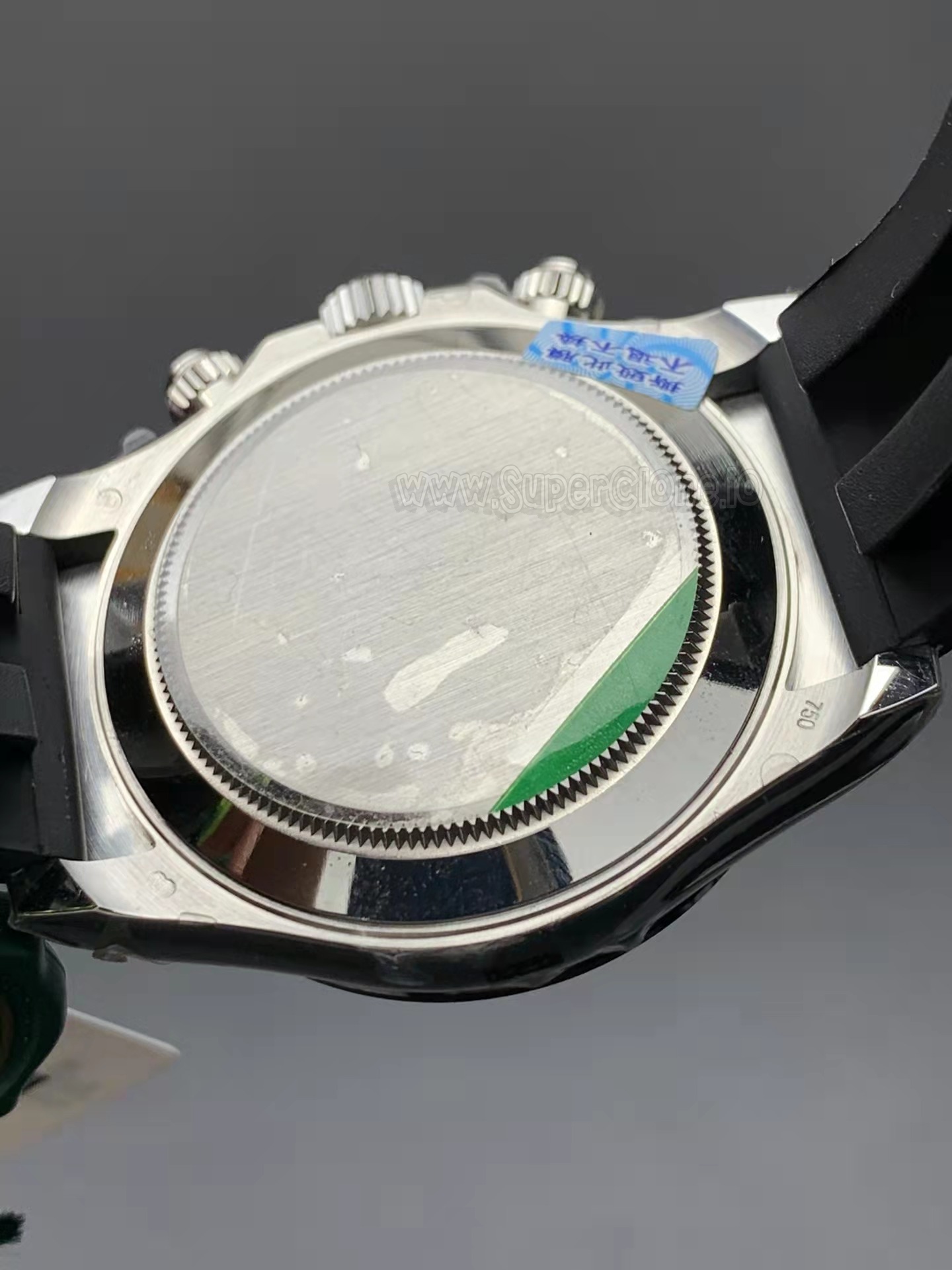
Despite internal differences, most users prioritized wrist presence and appearance. The movement remains hidden under a solid case back during normal use.
Factory Expansion and Market Positioning
EW Factory expanded quickly across multiple Rolex categories, including Datejust, Day-Date, Yacht-Master, and Daytona models.
This rapid expansion changed how dealers positioned the brand. Instead of a niche producer, EW became a practical option for stable inventory and visually strong watches.
For new buyers, visual impression is usually the first filter:
- Dial texture
- Bezel color accuracy
- Bracelet integration
- Overall wrist proportion
EW models performed well in these areas, especially under natural lighting where minor finishing imperfections are less visible.
Oysterflex Integration and Wearability
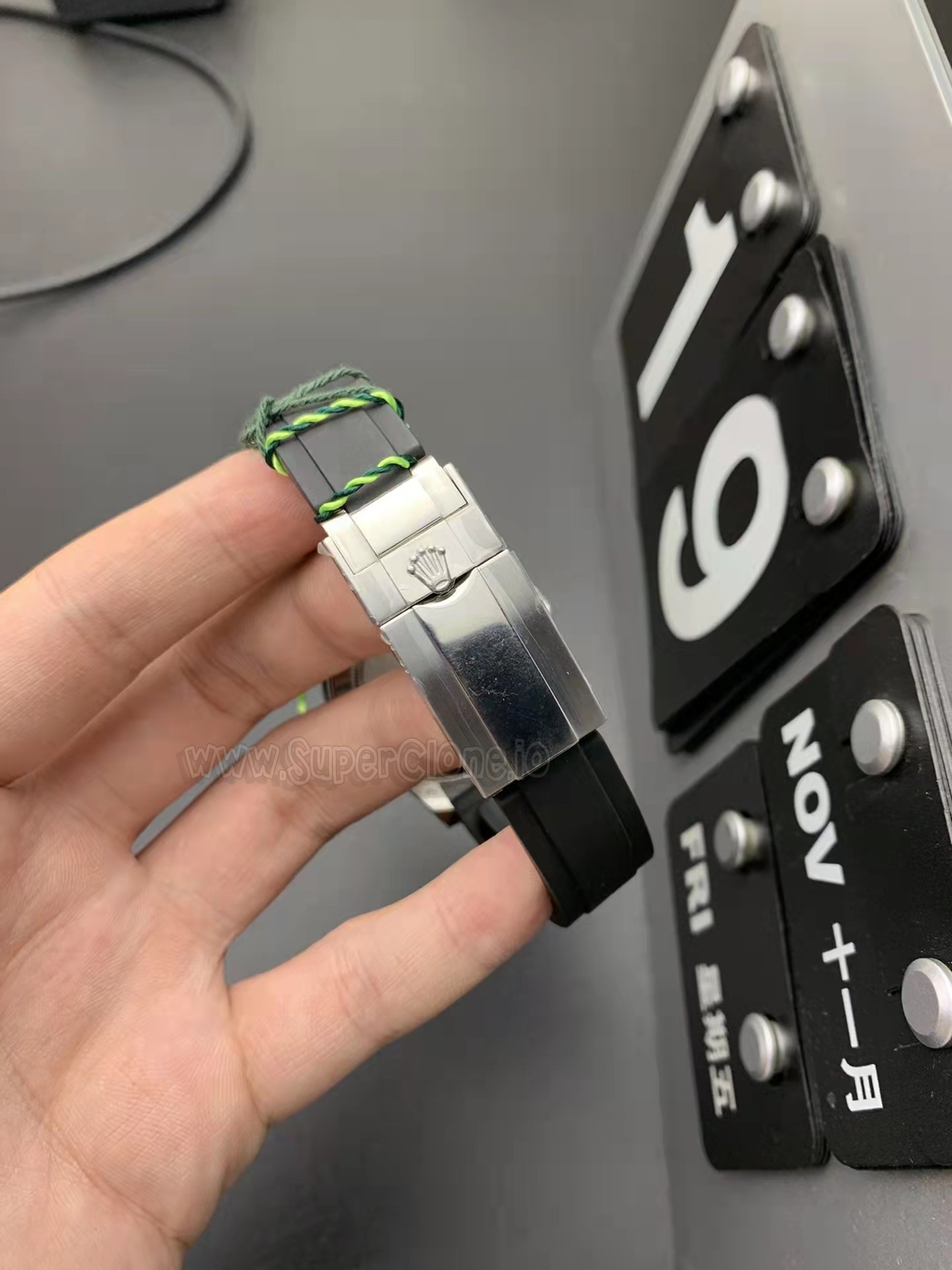
The Oysterflex system is more than a rubber strap. In the genuine design, it uses an internal reinforcement structure that controls flexibility and balance.
Many replicas fail here due to poor case-strap integration, often creating gaps or uneven transitions.
EW’s version is not perfect, but it achieves a consistent visual flow between case and strap. This is critical for Oysterflex Daytonas, where side profile realism defines overall credibility.
The grey dial configuration also avoids the saturation problem seen in Panda Daytona replicas, which became extremely common across factories.
Compared to high-contrast designs, the grey dial offers more flexibility. It appears understated indoors but gains depth under direct light.
A Transitional Phase in Daytona Replica Development
The EW Factory Daytona represents a transition phase in Rolex Daytona replica evolution. It sits between older modified chronograph generations and newer standardized clone 4130 models.
During this period, the market shifted:
- Factories adapted production strategies
- Buyers became more informed and analytical
- Dealers adjusted positioning models
EW succeeded not through technical dominance, but by aligning with what the market actually needed: stable supply, realistic proportions, and strong visual execution.
This grey Daytona remains relevant today not because it was the most advanced chronograph replica, but because it reflects a key moment when the entire industry restructured its priorities.
