
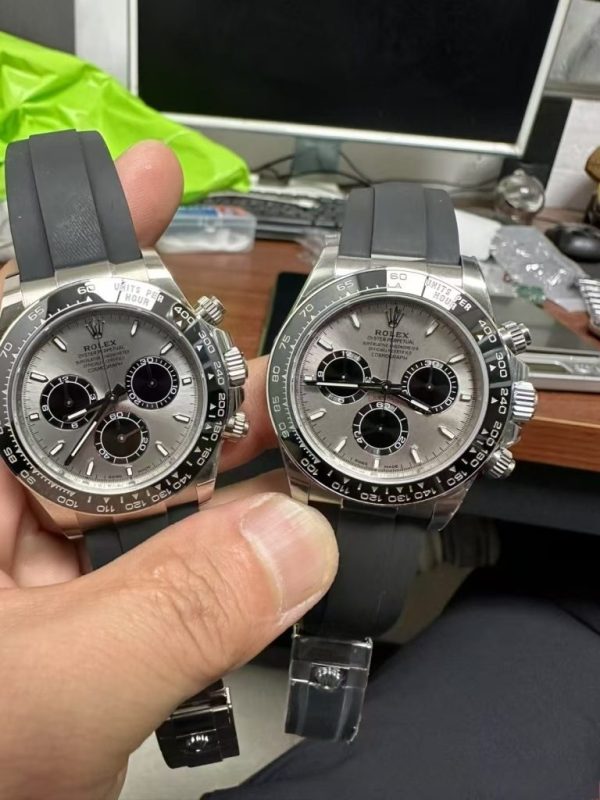
One of the Few Weighted Daytonas That Actually Feels Natural on Wrist
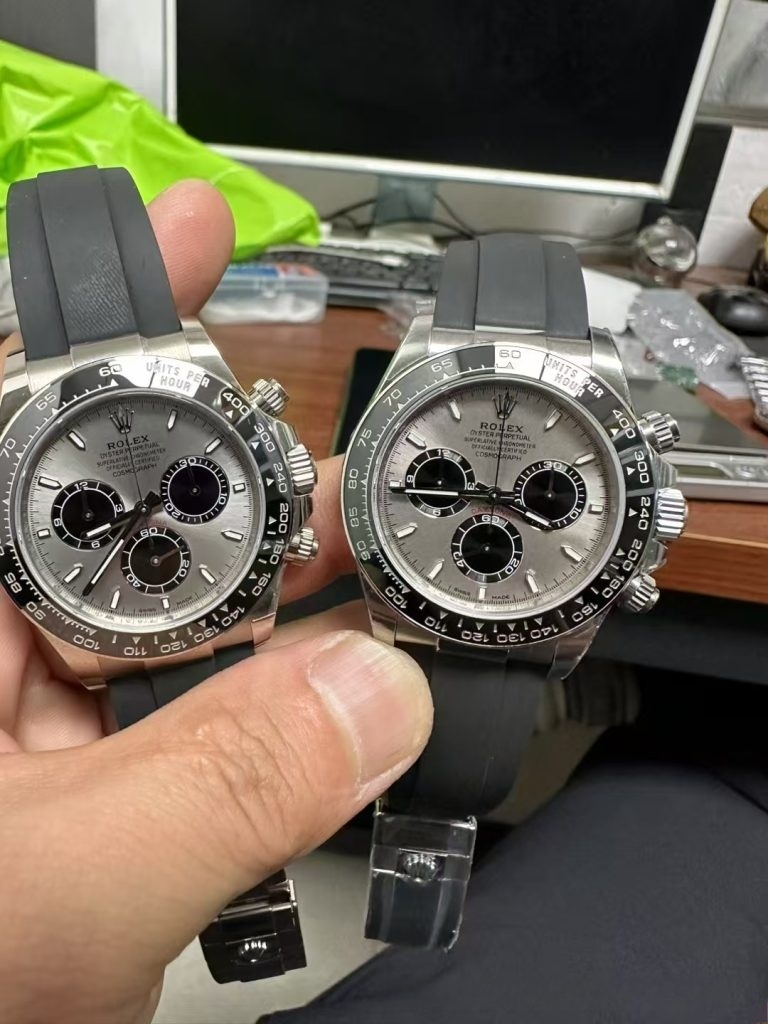
The VS Factory Daytona 126519 V2 weighted version gets surprisingly close to the experience of handling a genuine precious-metal Daytona—not just visually, but physically. What stands out most is not the raw number displayed on a scale, but the way the watch behaves once it is actually strapped to the wrist. The case carries enough density to eliminate the hollow sensation common in older replicas, yet the overall balance remains exceptionally comfortable during extended periods of daily use.
For most enthusiasts, the illusion of a heavy gold Daytona is decided within the first few seconds of contact. The moment the watch lands in the palm, the brain immediately judges whether it feels convincing or artificially light; if the weight distribution feels wrong, even a visually flawless replica instantly loses its credibility. The VS V2 addresses this psychological threshold far better than most current weighted competitors on the market.
Why Weight Has Become the New Battleground in the Super Clone Market
A few years ago, replica factories mainly competed on visible details such as dial printing, bezel engravings, chronograph hand alignment, and aesthetic movement decoration. Today, however, the competition has shifted deeper into physical realism. Buyers no longer judge a watch solely under bright studio lighting or via zoomed macro photographs; they judge it in the hand, on the wrist, and during normal daily movement.
This is why factories like VS, Clean, QF, and GM have all shifted their focus heavily toward weighted constructions. In reality, “heft” has become an integral part of the emotional experience of luxury watches, as a substantial timepiece simply feels more expensive and authentic to most users before they even examine the fine finishing details.
How Different Factories Approach the Weight Challenge
GM Factory’s Internal Metal Layer Method
GM was among the pioneers to aggressively chase weight specifications by adding extra metal structures inside the case assembly to artificially increase mass. While this solution successfully brings the total weight impressively close to genuine specifications on paper, the result in actual wear can feel slightly unnatural. Some users notice that the watch head feels unusually dense compared to the bracelet, concentrating the center of gravity upward rather than distributing it evenly across the wrist during daily movement. It achieves the target number, but fails to capture the natural feeling.
QF and Bracelet-Focused Weight Distribution
Conversely, QF approaches the problem by shifting additional mass into the bracelet system. While this avoids excessive modifications inside the case itself, it introduces a different kind of balance inconsistency. When worn loosely, the bracelet can feel bottom-heavy underneath the wrist, creating a subtle dragging sensation during arm movements, especially in warmer weather when the bracelet moves more freely against the skin.
Tungsten Alloy Case Strategy
Some factories utilize a tungsten-copper alloy within the case to mimic the dense inertia of precious gold, creating an impressive first impression. However, long-term concerns regarding surface durability, edge wear, and structural aging remain a topic of debate among collectors, introducing an element of uncertainty that daily wearers prefer to avoid.
VS Factory’s Practical Philosophy
In contrast to its competitors, VS takes a more restrained and practical approach. Instead of obsessing over matching every single gram at the expense of engineering integrity, the factory focuses on reproducing how the watch balances during real-world use.
A Daytona is not meant to be experienced on a digital scale; it is experienced dynamically while driving, typing, walking, or resting your wrist on a desk. By avoiding exaggerated internal modifications, the VS V2 maintains a realistic presence that carries substantial weight without the fatiguing, unnatural pull that some heavily modified replicas develop over time.
Case Weight Analysis: Near Parity Without Overbuilding
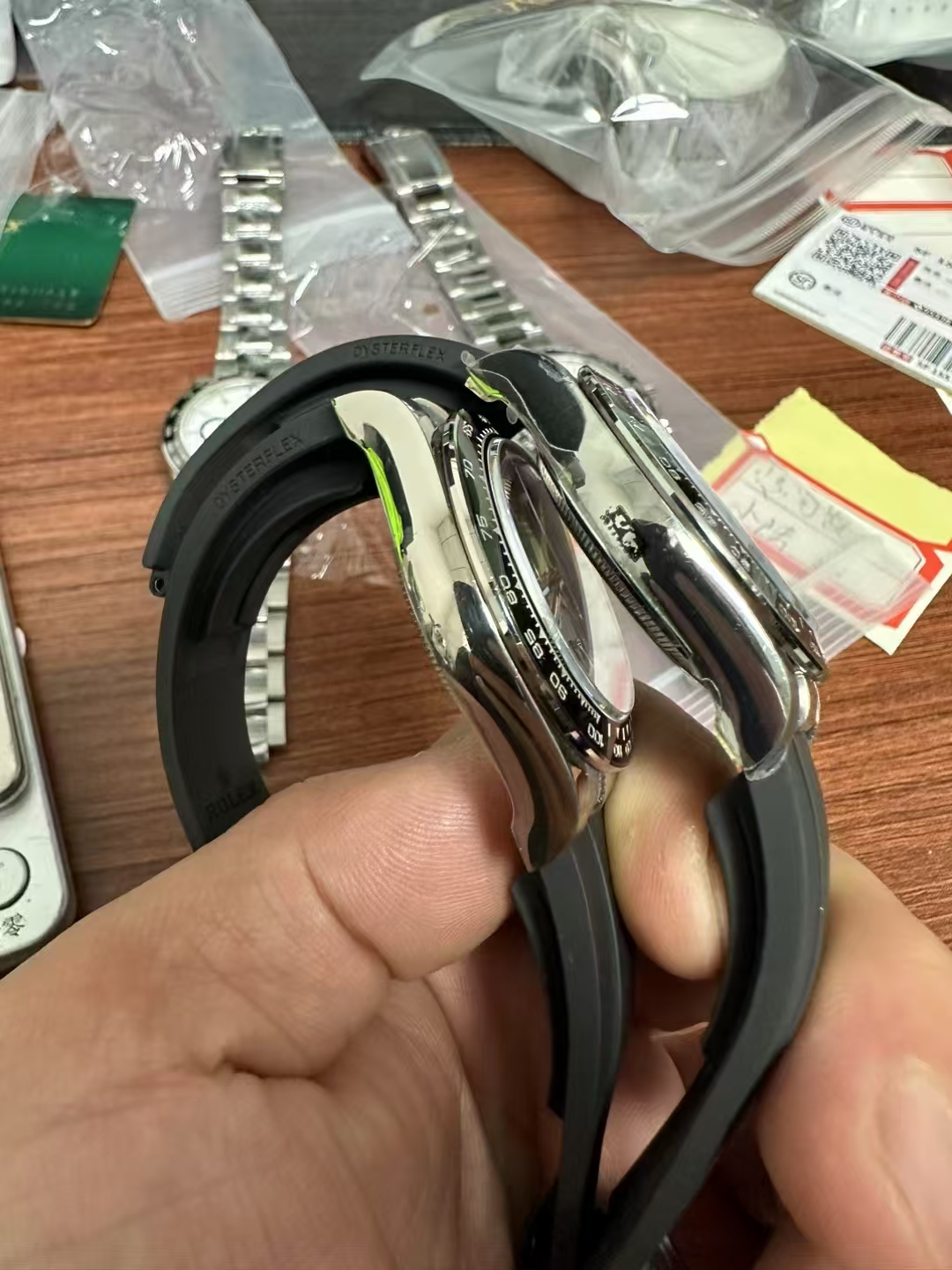
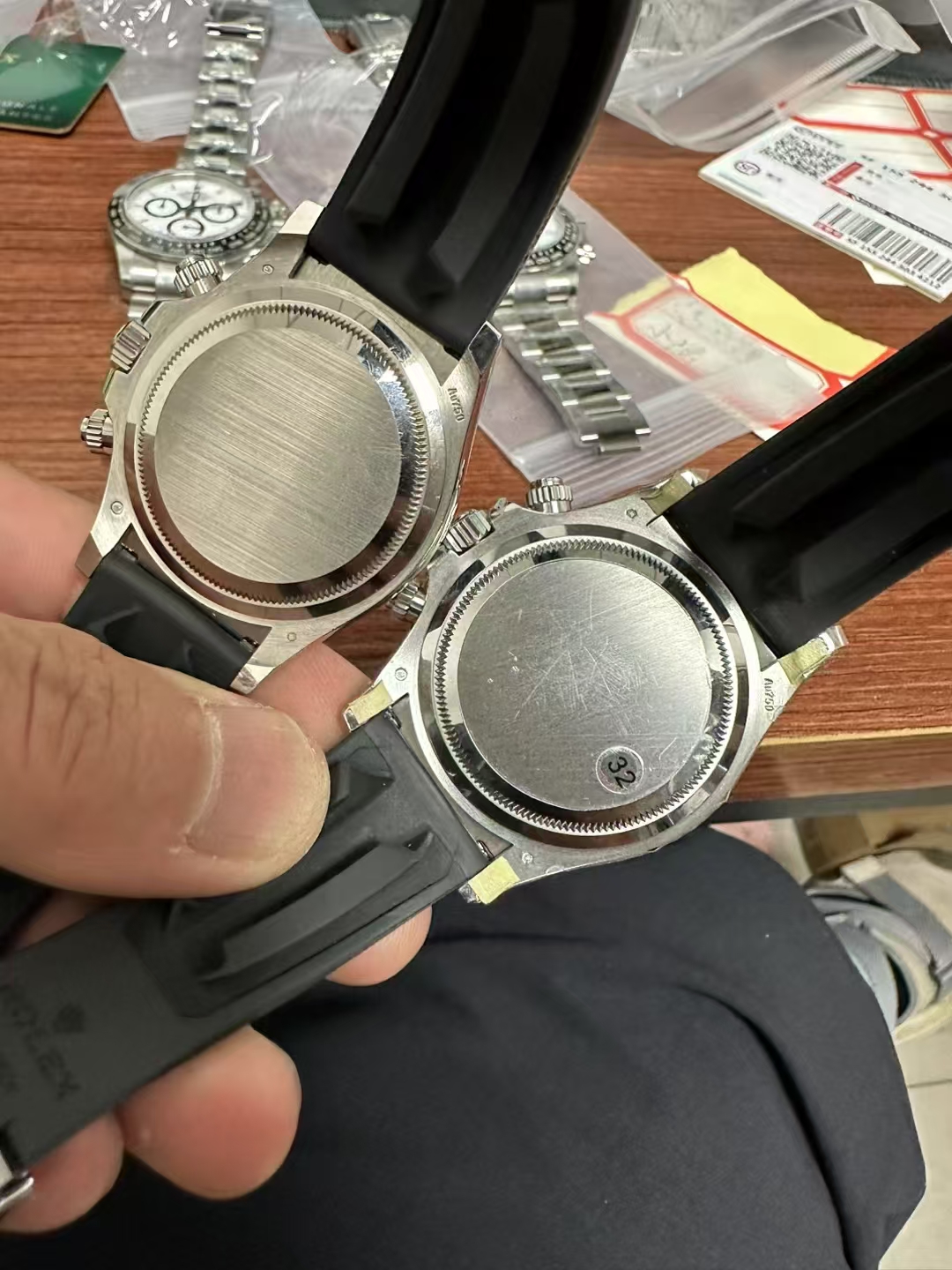
The VS Daytona 126519 V2 case head weighs approximately 96.2 grams, while the genuine model sits around 99.3 grams. While this 3-gram difference might sound notable on paper, it is virtually impossible to detect on the wrist unless you are handling both watches side by side. What users actually notice is the density behavior: the VS case no longer feels hollow when lifted from a table, settling onto the wrist with the slower, slightly planted sensation typically associated with genuine precious-metal watches.
Where the Discrepancy Lies: Strap and Clasp
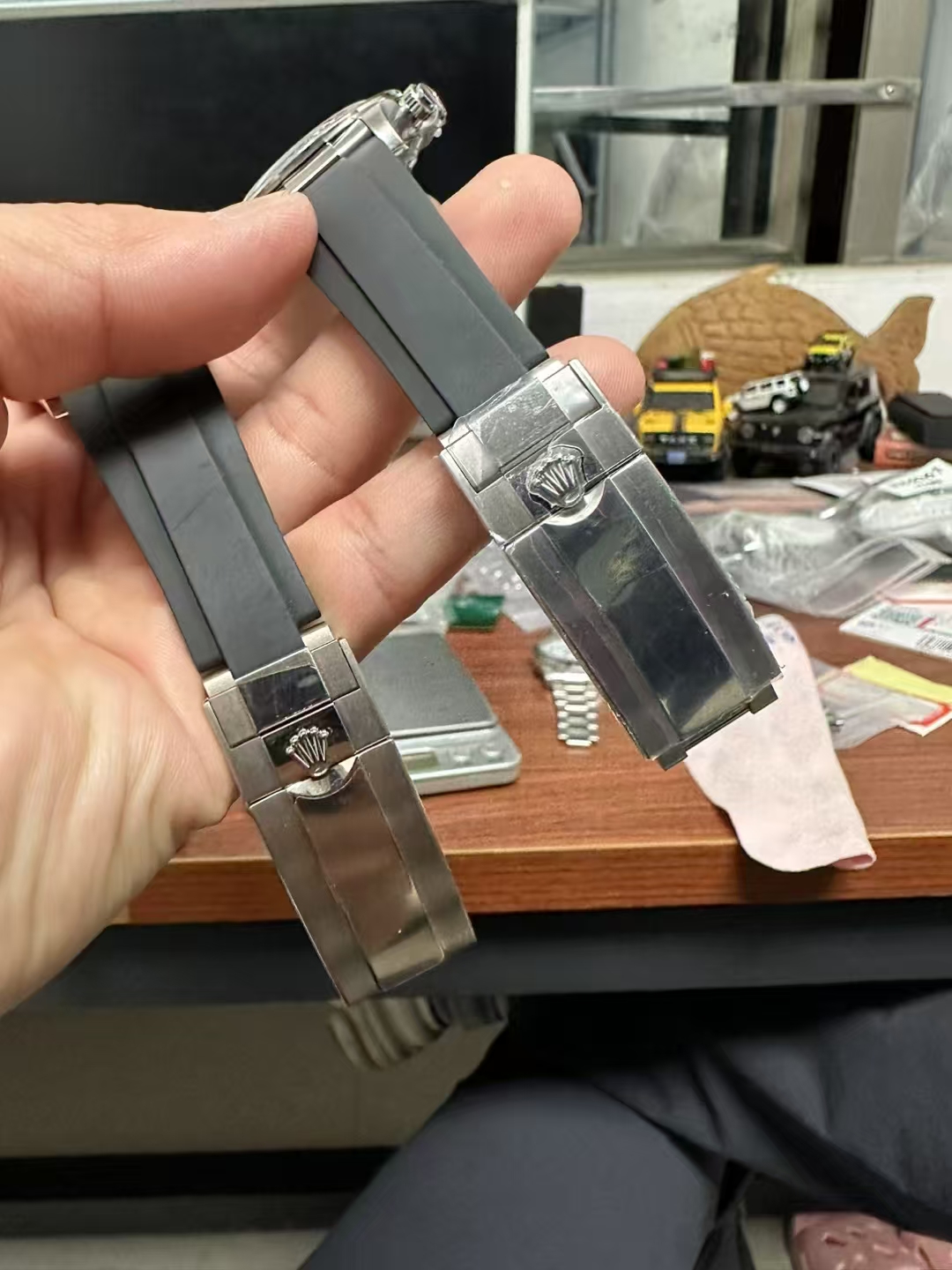
The most significant weight gap appears in the rubber strap and clasp assembly, where the VS version weighs around 40.5 grams compared to the genuine’s 64.2 grams. Most of this missing mass is concentrated in the clasp itself. The genuine clasp closes with a denser, more compact sensation and a sharper mechanical confidence that is difficult to duplicate without using highly expensive materials.
However, this lighter construction yields an unexpected advantage in daily wear: comfort. During extended use, especially in hot weather, the VS version feels less fatiguing on the underside of the wrist, allowing the watch to maintain its luxury presence without becoming a physical burden.
Dial and Micro-Detailing Under Direct Light
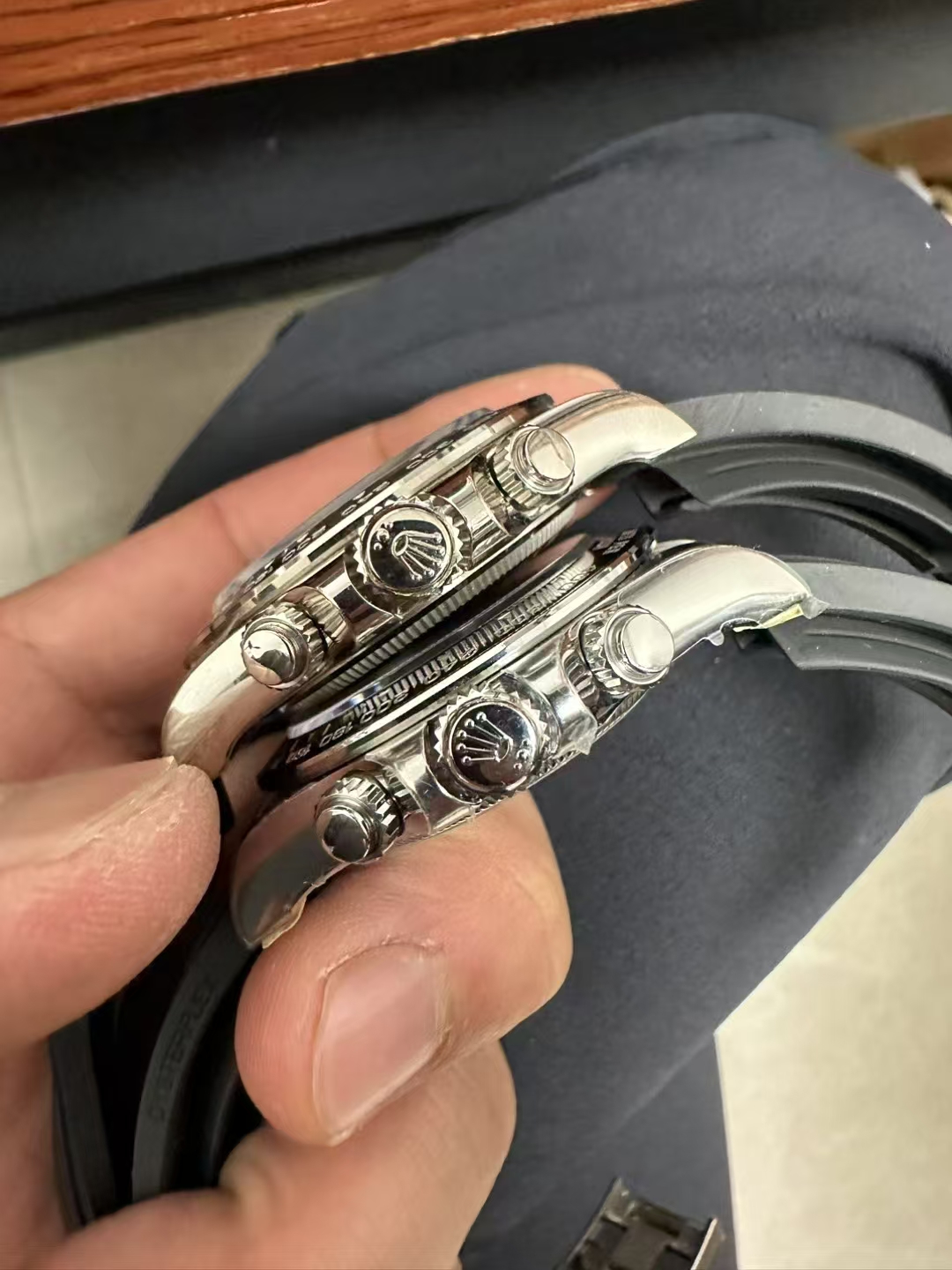
Beyond weight, several subtle finishing differences remain visible under close, side-by-side inspection. The genuine Daytona dial exhibits a more pronounced, dynamic sunburst effect under direct sunlight, whereas the VS dial texture appears slightly softer and more muted.
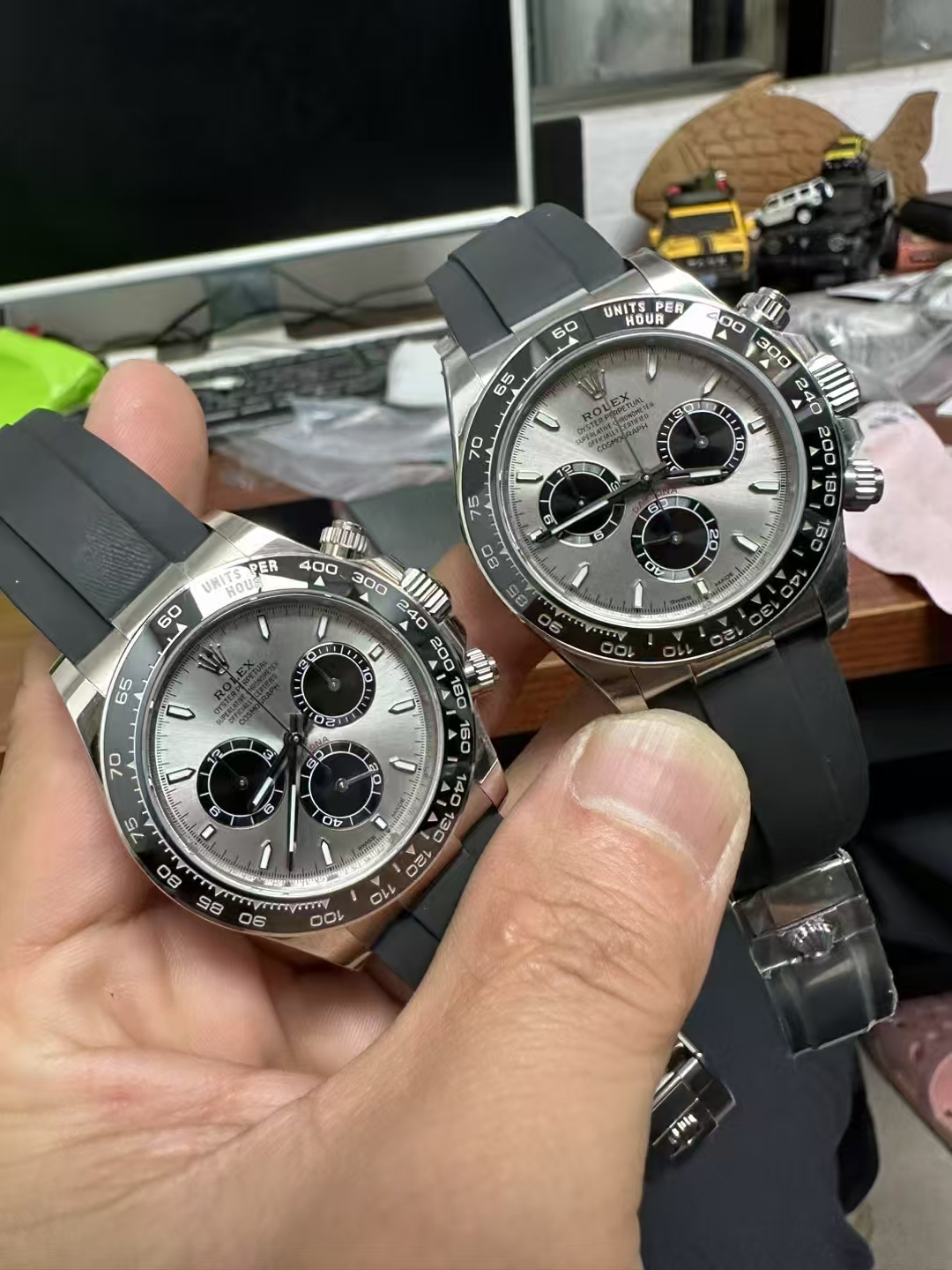
Similarly, the inner lug engravings and crown details on the genuine watch show cleaner depth transitions and crisper tactile feedback when rotated between the fingers. However, these microscopic differences are mostly confined to macro photography and laboratory conditions; under normal restaurant or office lighting, the VS version remains visually indistinguishable to the untrained eye.
Who is This Model For?
The rising prices of high-end super clones are directly tied to these physical, tactile upgrades that are felt rather than just seen. The VS Daytona V2 is ultimately designed for buyers who prioritize:
- A realistic, planted wrist feel rather than perfect scale accuracy
- Comfortable, fatigue-free long-term wear
- Balanced weight distribution during daily movement
- High visual accuracy without compromising internal structural integrity
The VS Factory Daytona 126519 V2 does not attempt to win specification battles by forcing numerical parity on a scale. Instead, it delivers a watch that behaves naturally and comfortably in real life. While some competitors build replicas to satisfy data sheets, VS has crafted an experience that feels believable where it matters most—on your wrist.
