RC’s Heavy Day-Date Feels Different From Most New Releases
The market for weighted Day-Date replicas has become crowded very quickly. Every few months a new factory claims to have solved the same problems: inaccurate weight, weak gold tone, soft bracelet construction, or the long-term risk of plating wear around the case edges. Some brands increase mass by stretching bracelet links, others hide additional steel components inside the watch head, and a few simply advertise unrealistic specifications that never match the real product once it arrives in hand.
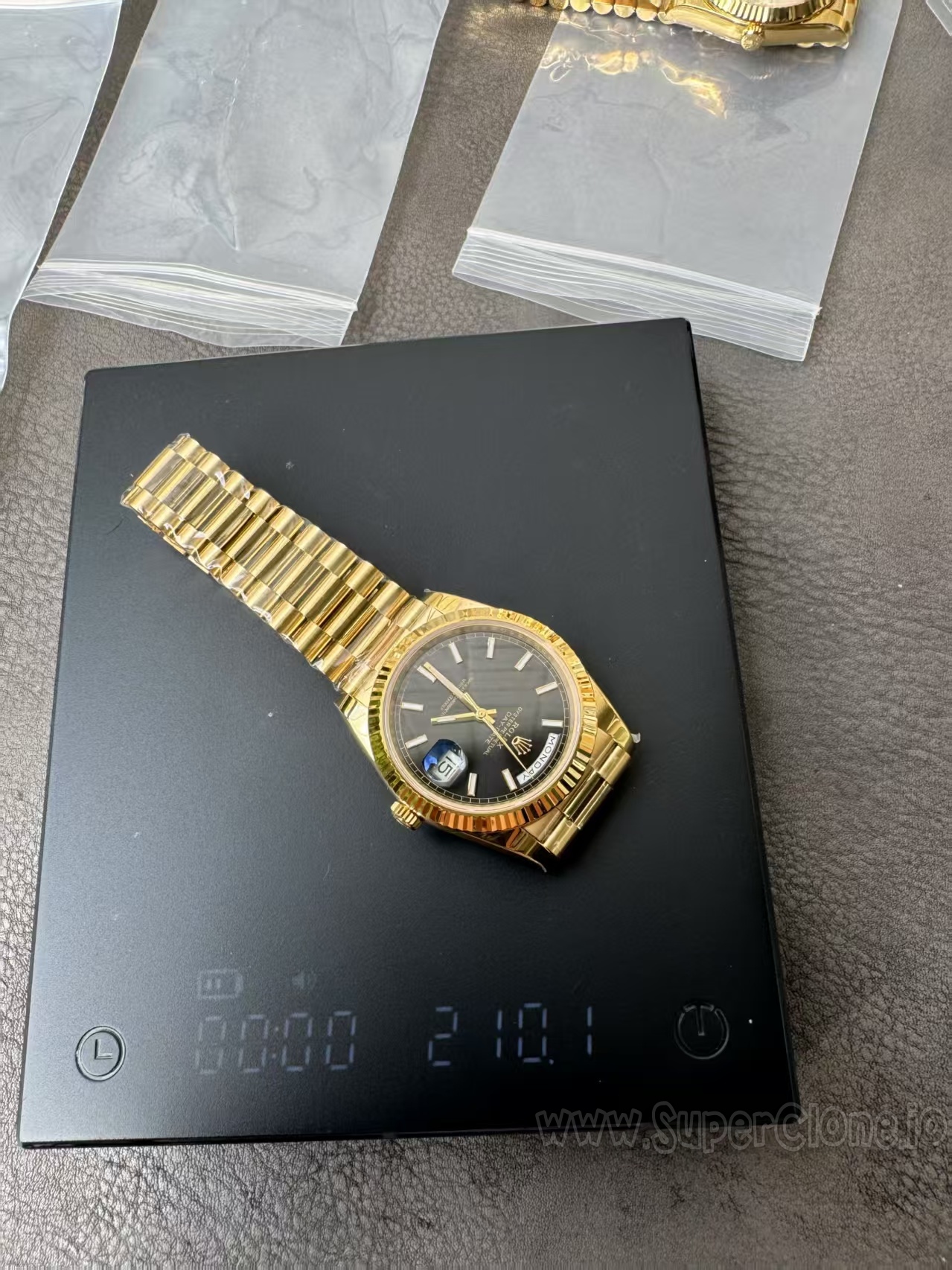
RC entered this category quietly, without the kind of aggressive promotion that usually follows a new release. What immediately drew attention was not the movement or dial options, but the claimed total weight. According to RC, their Day-Date reaches genuine-like heft without relying on oversized bracelet links or visibly thicker construction. That alone made collectors curious, especially buyers who have already handled versions from QF, THB, CBD, GM, and several smaller workshops over the last two years.
After spending time examining the watch closely, the most interesting part is not whether RC made a perfect Day-Date. They did not. The interesting part is how differently they approached the weight distribution compared to most competitors currently producing this style.
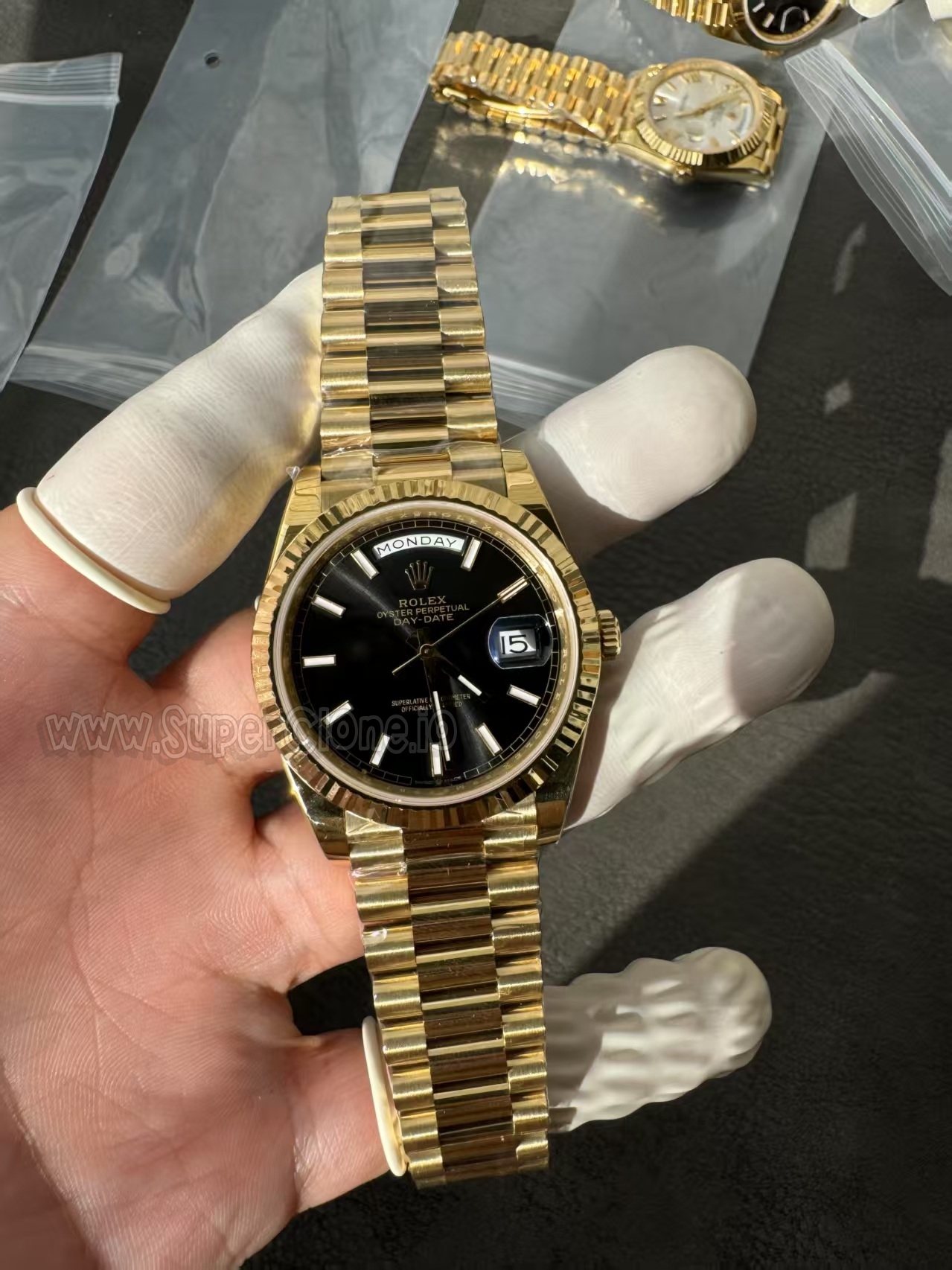
At first glance, the watch looks familiar. The proportions stay close to the modern Day-Date profile, and RC avoided making the bracelet visually bulky just to achieve a heavier feel on the wrist. That decision matters because many weighted versions lose the elegant balance that makes the original Day-Date attractive in the first place.
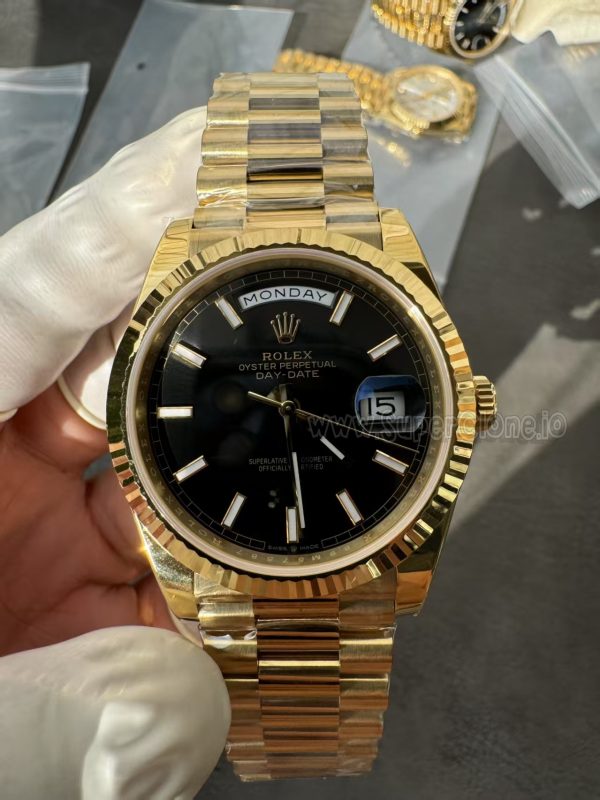
The gold tone is also noticeably warmer than many recent releases. Under indoor lighting, the finish avoids the harsh yellow appearance often seen on lower-end plated cases. In natural daylight, the tone becomes softer and slightly deeper, especially around the bezel teeth and center links. While color accuracy remains subjective, RC’s finish feels less artificial than several recent competitors in the same price range.
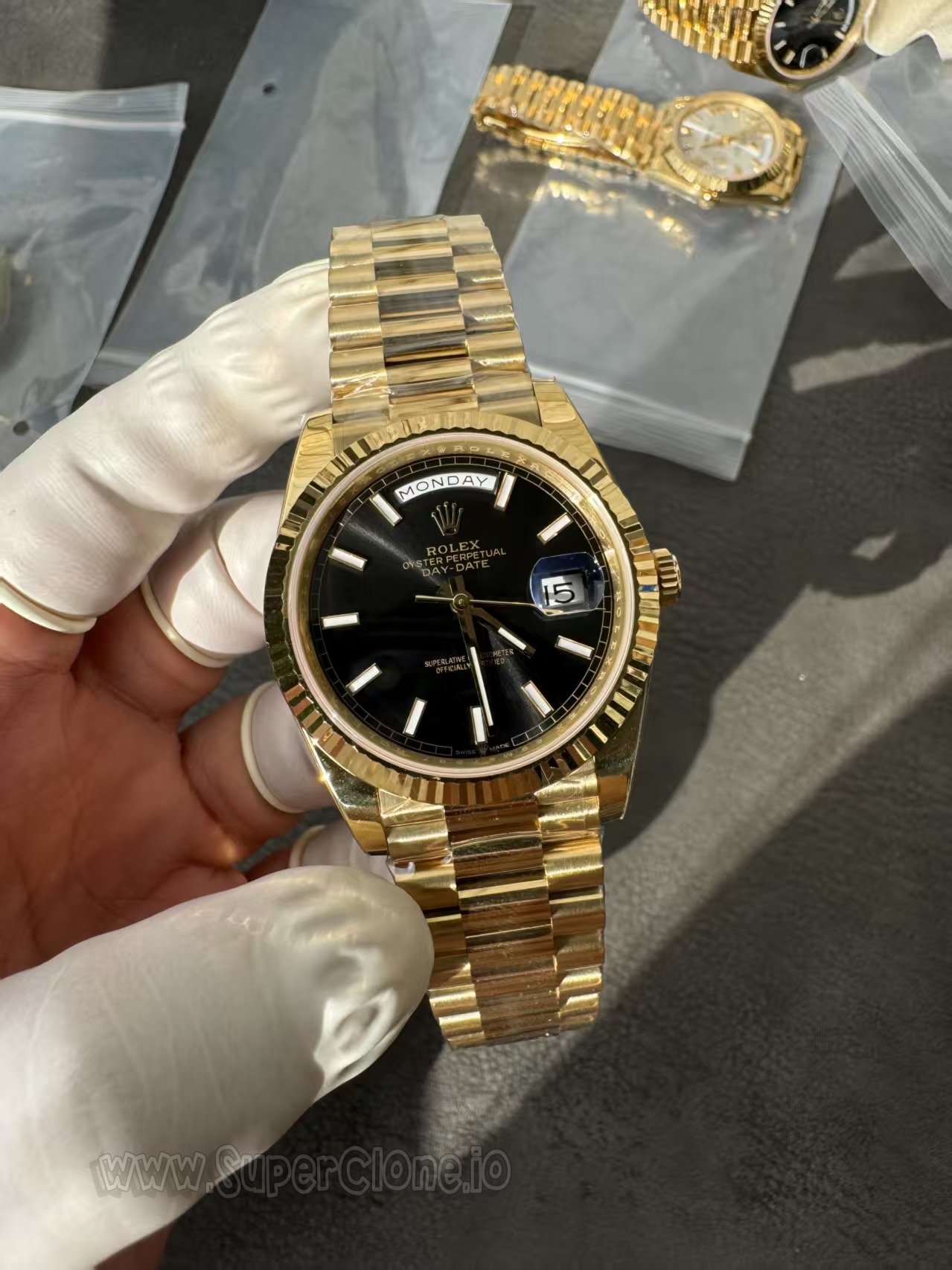
One detail repeatedly discussed among collectors is the way factories artificially increase weight. Some manufacturers add extra bracelet links that most buyers immediately remove. Others slightly enlarge the dimensions of each center link so the watch becomes heavier without appearing dramatically different in photos. Those methods work numerically, but they also change how the bracelet drapes around the wrist.
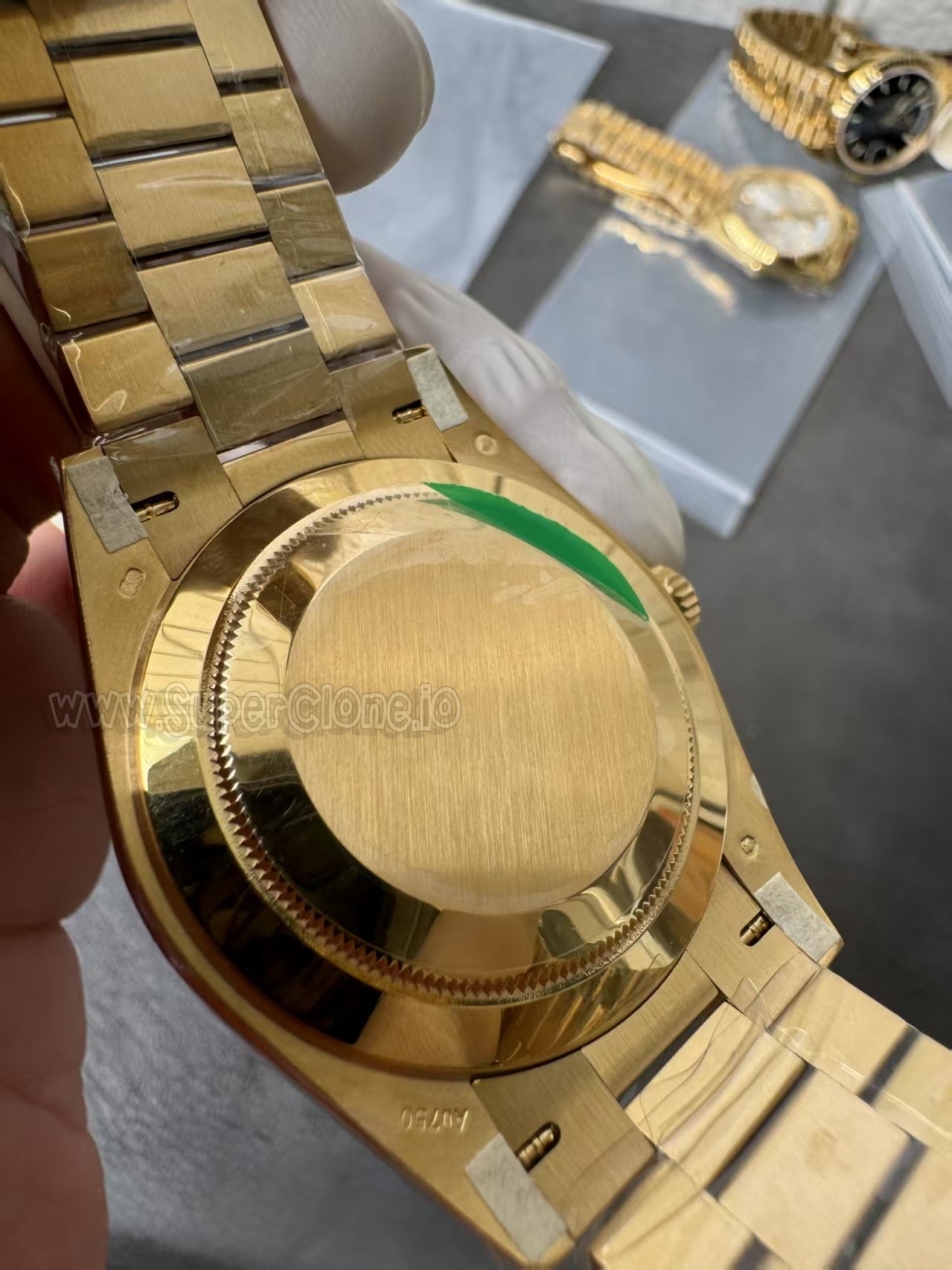
RC appears to have focused more heavily on internal components instead. Opening the case back reveals a significantly heavier retaining structure surrounding the movement. The retaining ring itself looks wider than standard versions currently used by several mainstream factories. The case back also carries additional mass. Together these modifications noticeably shift the balance toward the watch head rather than the bracelet.
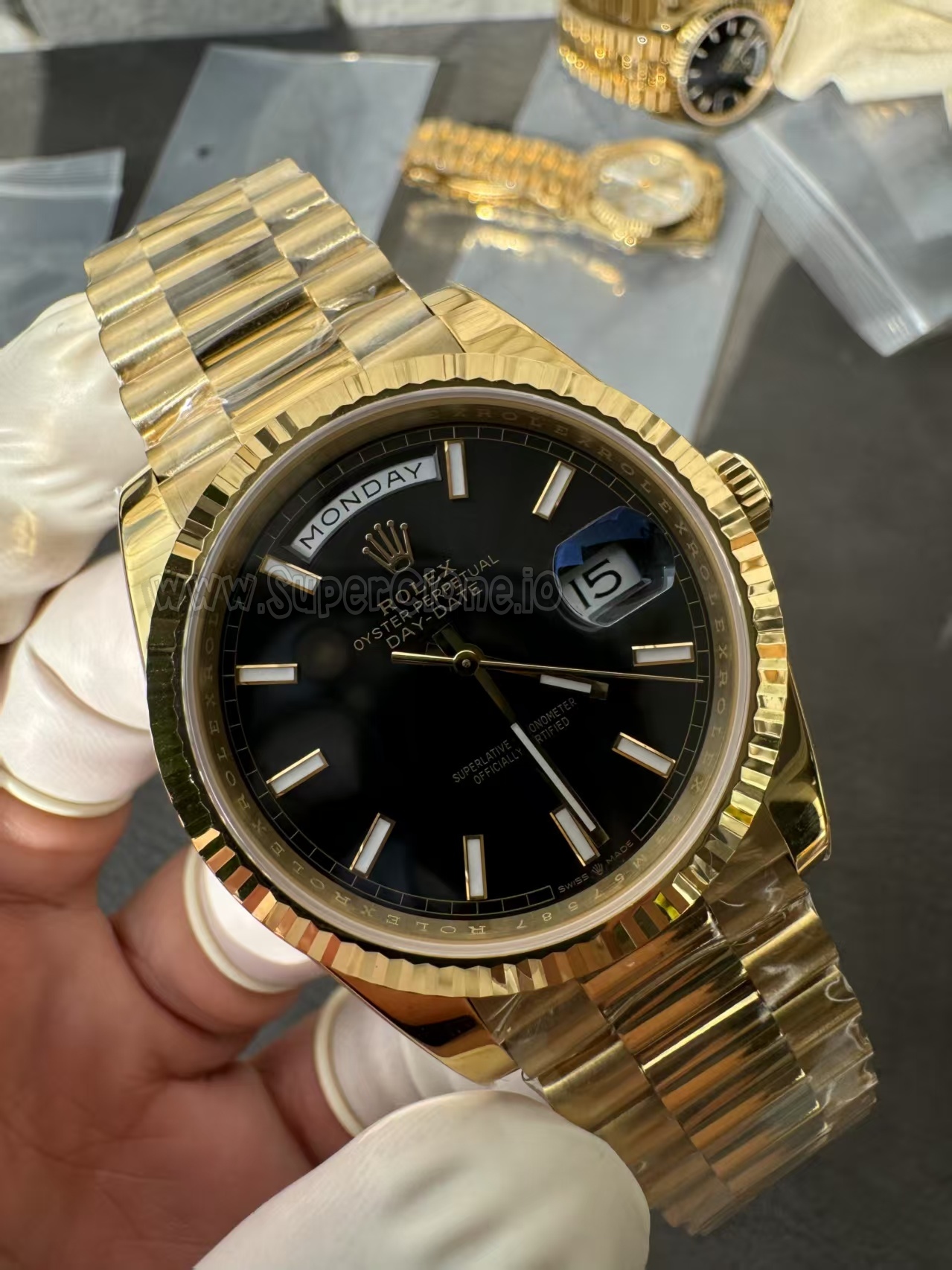
Even with those changes, it still raises questions about how RC achieved the final advertised weight. The watch reportedly approaches genuine specifications at around 209 grams, yet the bracelet construction does not appear excessively dense. There may be additional reinforcement hidden inside the middle case or clasp structure, although RC has not publicly explained every modification in detail.
That uncertainty is important because weight alone never determines long-term quality. A heavy watch can still develop plating issues, loose bracelet tolerances, or premature wear around high-contact edges. Some factories in the past focused entirely on matching grams while ignoring finishing quality. Buyers eventually discovered that extra mass did not necessarily mean better durability.
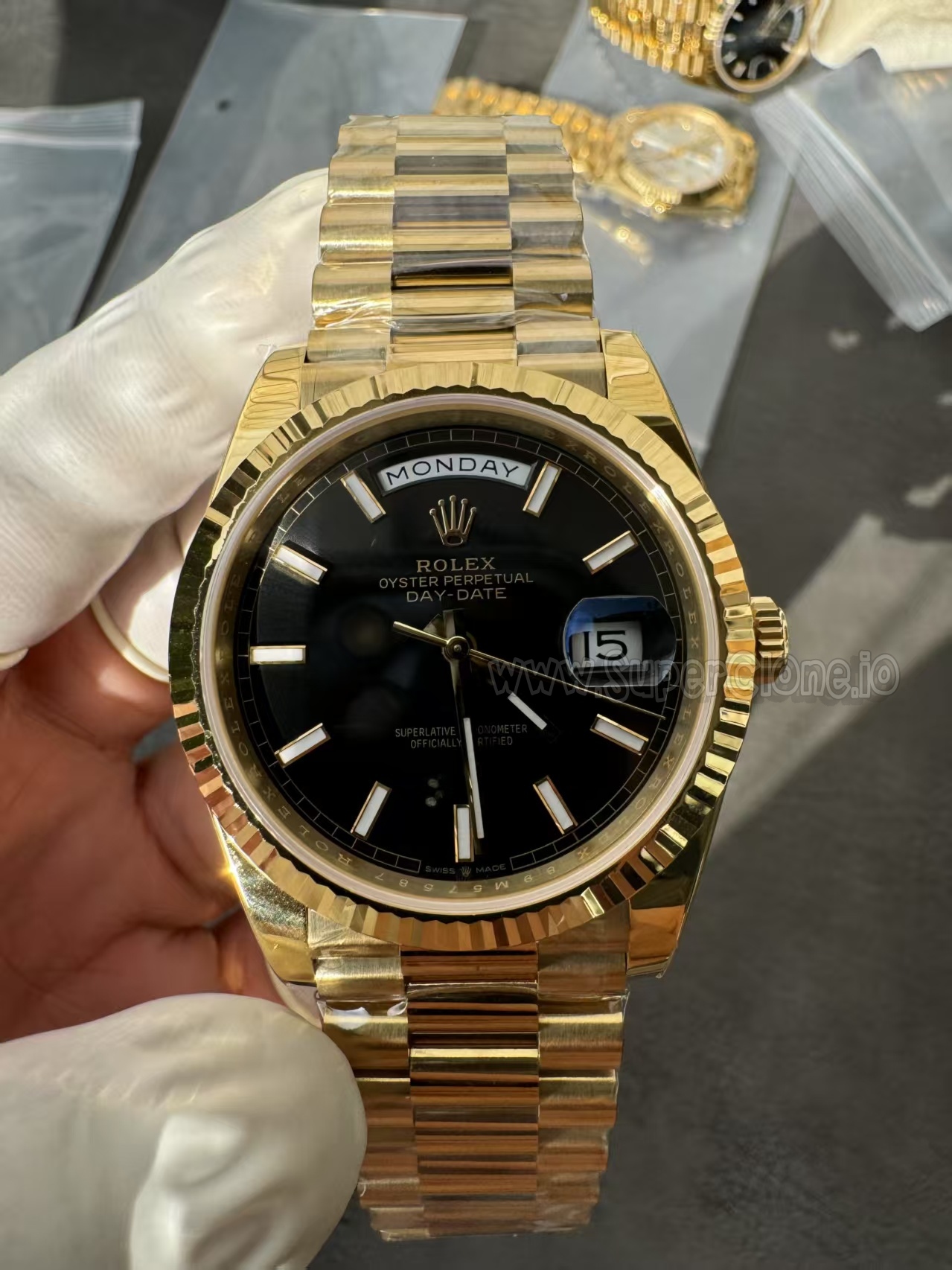
RC also claims the case can handle repeated gold wrapping treatments. That sounds promising on paper, especially for owners who regularly replate their watches after extended wear. Still, these claims need real-world testing over time. Freshly released models almost always look impressive during the first few months. The real evaluation begins after regular use exposes friction points around the crown guards, bracelet edges, clasp corners, and lugs.
The dial is probably the strongest visual feature of this watch. The sunburst texture reacts well under directional light and gives the surface a cleaner sense of depth than many expected from a newer factory. On the wrist, the dial shifts naturally rather than appearing overly glossy or flat.
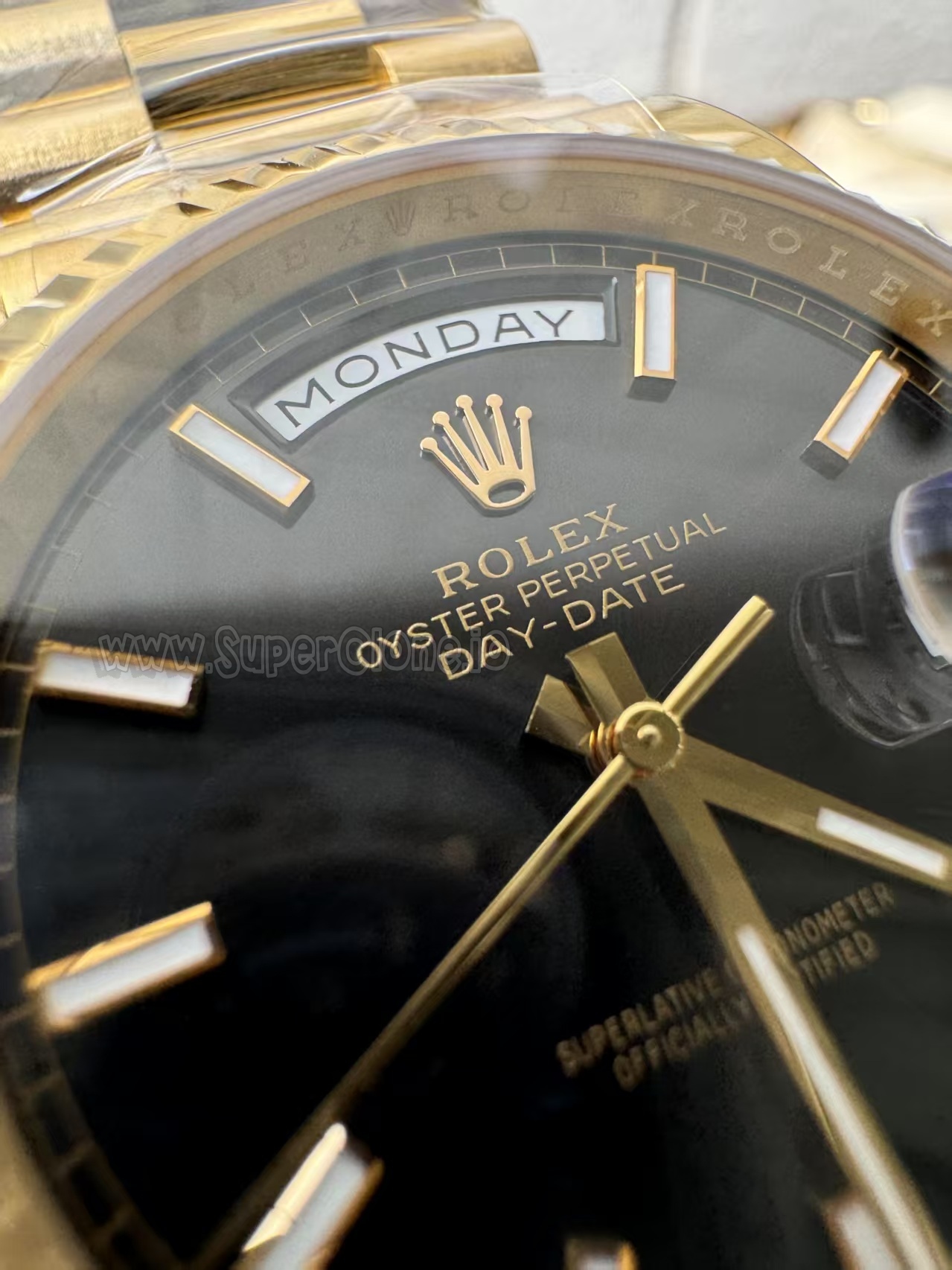
The day window printing, however, is not perfect. Compared side by side with genuine examples, the weekday font appears slightly thinner. Most people would never notice this during casual wear, but experienced collectors who frequently compare date wheels and typography details will immediately recognize the difference.
The same pattern continues throughout the watch. RC clearly invested attention into certain visible areas while leaving smaller finishing imperfections behind. Under magnification, minor burrs can be seen along the edges of the hands. These are not obvious to the naked eye, yet they remind you this is still a replica positioned in a competitive mid-to-upper segment rather than a flawless reproduction.
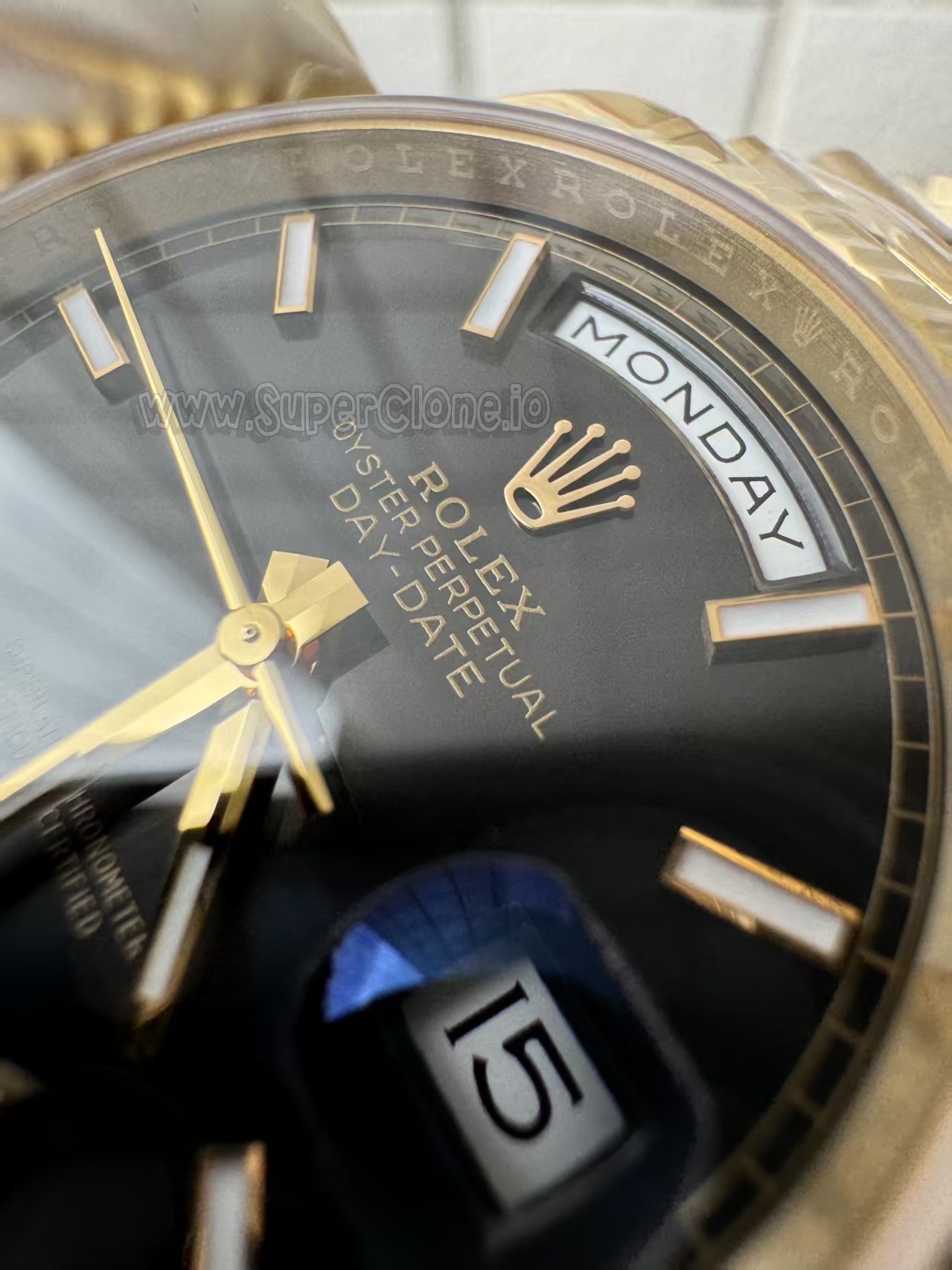
Another area where the watch falls slightly short is the sapphire crystal finishing. The crystal edge lacks the refined transition seen on higher-end Clean models. The difference is subtle, but it affects how light bends near the outer perimeter when viewed from an angle. Small details like this separate factories that focus primarily on overall appearance from those obsessed with micro-finishing.
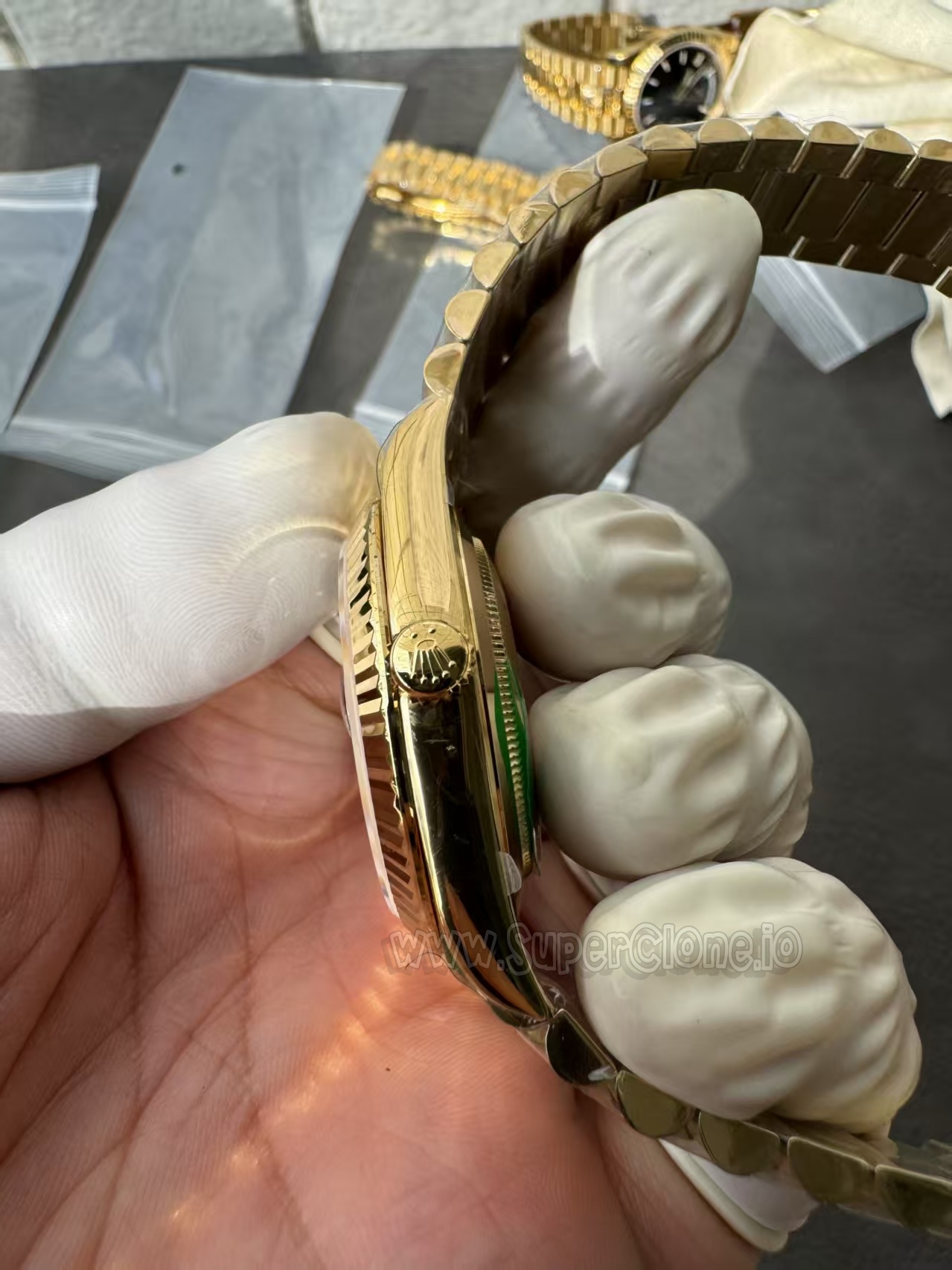
The crown emblem shape also differs slightly from genuine examples. The base proportions beneath the Rolex coronet are not completely identical, particularly when examined close up. Again, this is the type of detail most visible to longtime enthusiasts rather than casual observers.
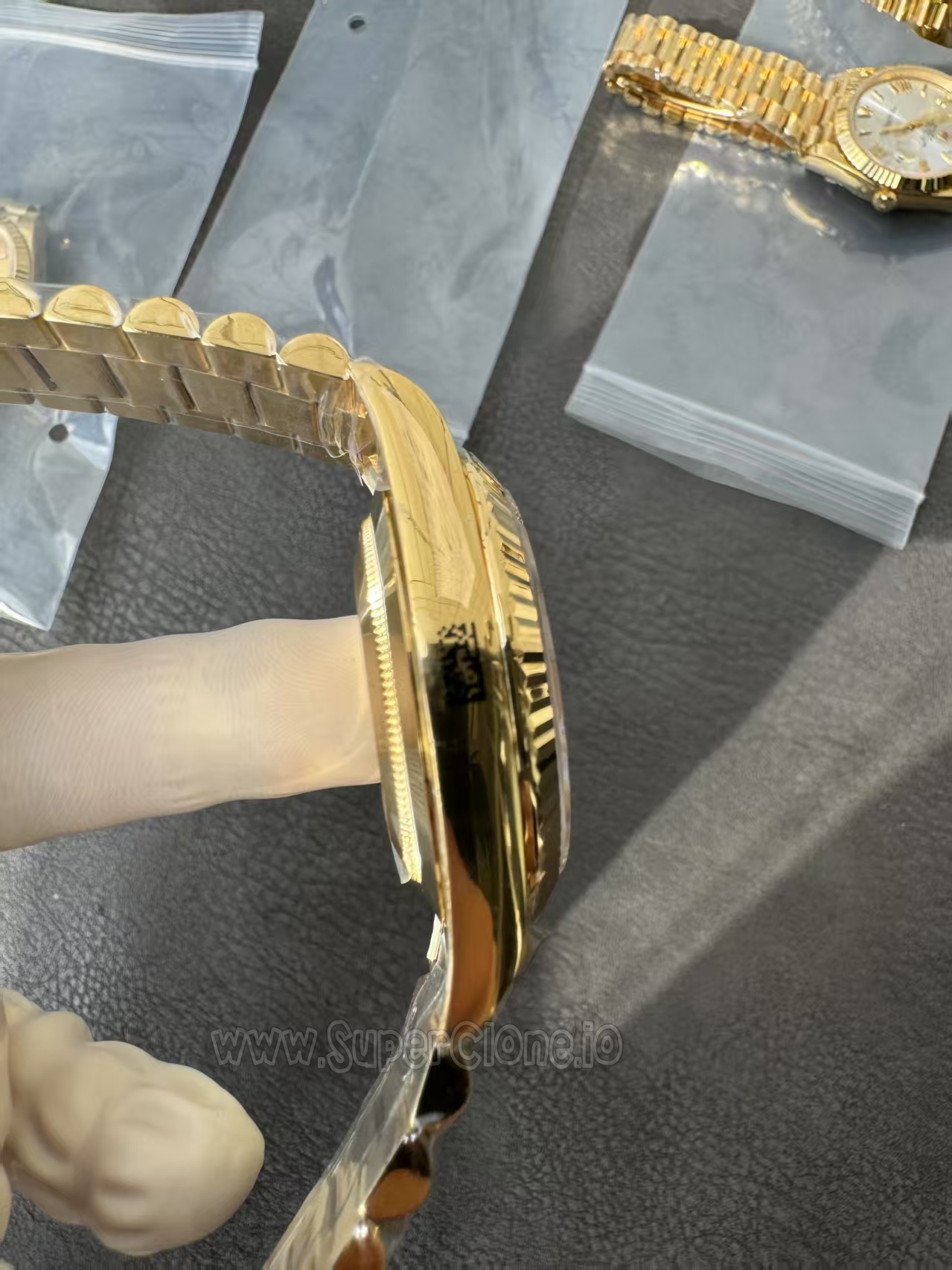
One thing RC handled well is preserving a relatively balanced side profile despite the additional weight. Some heavy Day-Date builds feel dense but awkward, especially near the lugs and clasp. This one still wears naturally. The bracelet articulation remains flexible enough that the watch settles properly instead of sitting stiffly across the wrist.
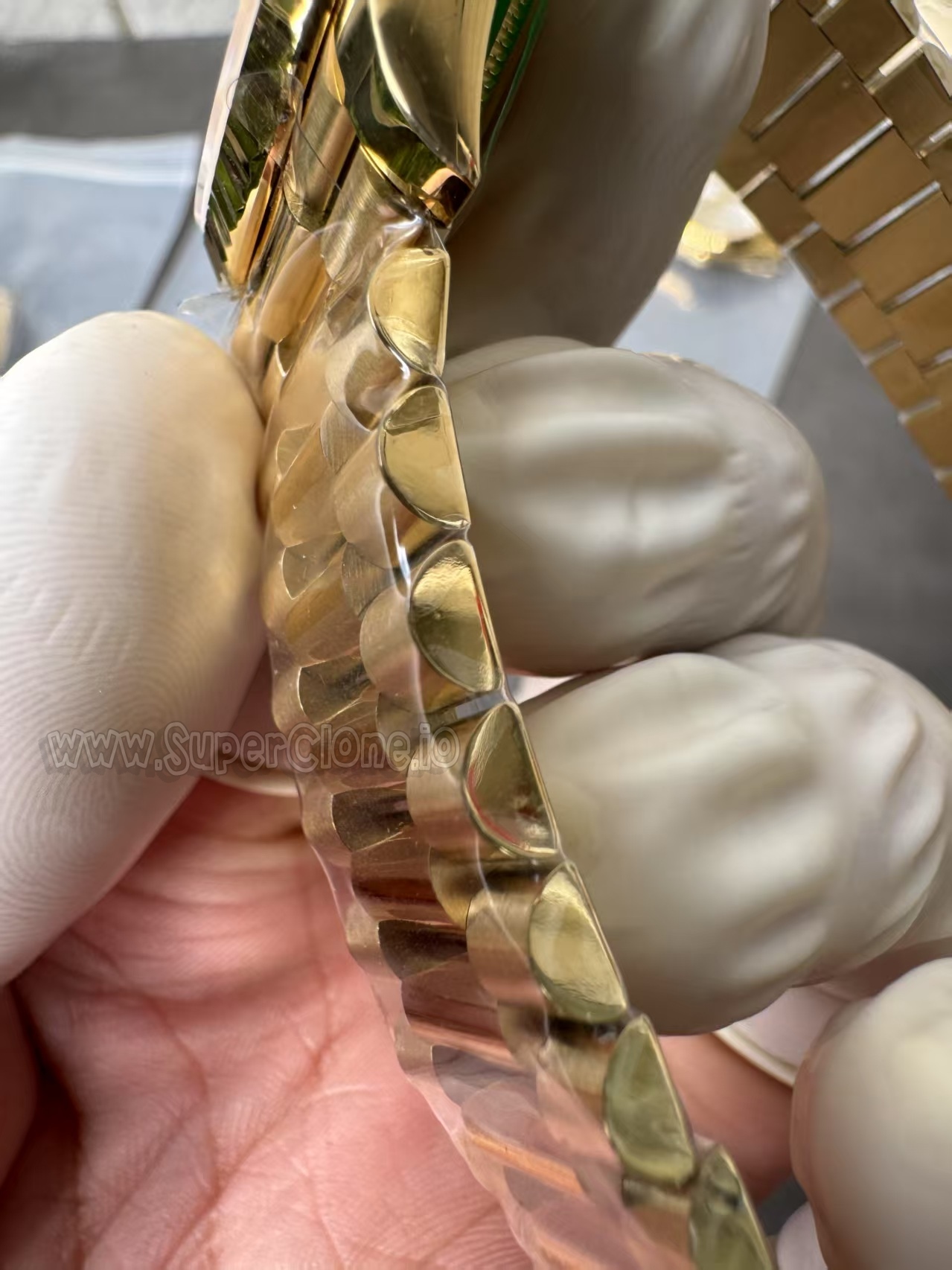
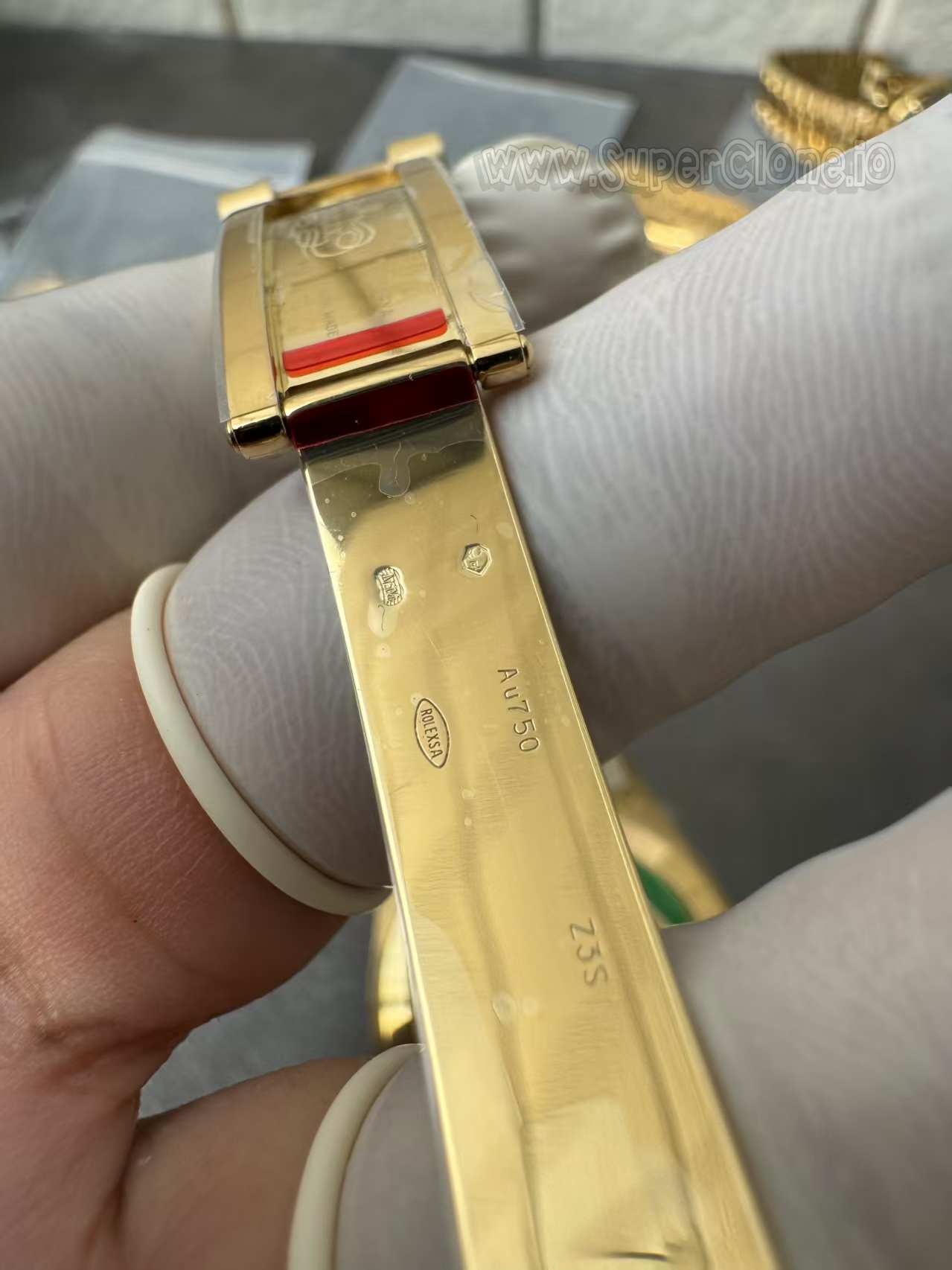
The clasp construction feels solid without becoming excessively tight. Tolerances are reasonably consistent, and there is less unwanted play than expected from a newly released factory model. Over time, long-term wear will reveal whether RC can maintain that consistency across larger production batches.
For buyers already familiar with the modern super clone market, RC does not completely redefine the Day-Date category. What it does offer is a slightly different balance of priorities. Instead of exaggerating bracelet dimensions or relying on cosmetic tricks alone, the factory seems more focused on internal weight distribution and overall wrist feel.
That approach gives the watch a more convincing presence during actual wear, which matters more than isolated specification numbers posted in dealer advertisements. The remaining question is durability. New factories often impress early adopters before long-term issues begin surfacing months later.
Right now, RC’s Day-Date looks like a genuinely competitive entry rather than another rushed release chasing trends inside the super clone segment. The watch has visible flaws, but it also avoids several shortcuts that experienced buyers have learned to recognize immediately.
Collectors who care mainly about perfect microscopic accuracy may still prefer more established names with longer track records. Buyers focused on wrist weight, gold tone, and overall presence, however, will probably find RC worth watching over the next production cycles.