
Vintage Spirit or Modern Finish? Inside Today’s Paul Newman Daytona Replicas
Among all vintage Rolex models discussed in the replica watch community, few names create as much curiosity—or flat-out stop conversations—as the Paul Newman Daytona. Even people who are not deeply involved in vintage Rolex collecting usually know the folklore behind the watch. The unusual “exotic” dial layout, the art-deco subdial typography, and the unbreakable connection with motorsport culture transformed this regular chronograph into something much bigger than a timepiece. It became a cultural artifact.
That legendary popularity naturally pushed replica factories to attempt their own versions over the decades. However, unlike modern Submariner or GMT-Master replicas — where factories such as Clean, VS, GMF, and ZF have reached an extremely mature level that constantly raises the bar — the vintage Rolex segment remains surprisingly inconsistent. There is no single “go-to” factory here. There are many options available on the market, but very few can truly balance vintage appearance, reliable movement architecture, correct case geometry, and convincing finishing details all in one package.
Most collectors who have handled a few vintage-inspired replica Daytonas understand this frustration firsthand. One watch might have an acceptable dial but ships with a hollow, cheap-feeling bracelet. Another nails the exterior finishing but relies on an unstable hand-winding movement with a power reserve that feels like a lottery, barely lasting a day. Certain workshops focus entirely on cosmetic aging effects—artificial patina and yellowed lume—while completely missing pusher proportions or the subtle bevel on the lugs. Because of this, finding a truly satisfying vintage Daytona replica remains a massive hunt, far harder than buying a modern ceramic Daytona clone which has become almost a commodity.
The Vintage Rep Dilemma: From Small Workshops to Factory Standards
For many years, the vintage Rolex replica category was dominated by smaller, independent workshops rather than large, highly organized factories. Names like JK occasionally surfaced in dealer listings, and while some models photographed beautifully under soft light, the actual quality usually remained strictly middle-tier. These watches were wearable and visually entertaining, but they rarely achieved the level of refinement collectors expect from modern super clone standards.
The Gap is Hard to Miss: Modern pieces benefit from years of multi-million dollar development around clone calibers, whereas vintage-inspired pieces often feel like experimental niche products produced in smaller batches without the same level of engineering consistency.
The stark difference becomes obvious once you place these vintage replicas right beside a modern Daytona clone produced by a top-tier factory. Current-generation Daytona clones benefit from intensive, long-term development around the Rolex 4130 architecture. Case machining technology has improved out of sight via CNC advancement, bracelet tolerances are tighter, and dial printing is highly controlled. Vintage-inspired pieces, meanwhile, can feel like side projects that lack standard engineering consistency.
That situation explains why some collectors continue searching for years, handling dozens of pieces, before finding a vintage Daytona replica they genuinely enjoy wearing. Vintage watches are highly emotional objects. Buyers are not just checking dimensions against a spec sheet; they are chasing a specific atmosphere, proportion, and character. If a watch feels too sharp, too polished, or too aggressive in its finishing, the entire vintage illusion collapses instantly.
Technical Complexity & Market Compromises
A few years ago, a wave of Paul Newman Daytona replicas hit the forums and dealer blogs, attracting considerable attention online. At first glance, these watches appeared highly attractive because the dial layout immediately reminded buyers of famous auction pieces and rare Rolex references. However, once collectors started handling them closely, limitations quickly became apparent.
The earlier generations often relied on relatively basic hand-wound chronograph movements (frequently unmodified Chinese standards like the ST19) that lacked long-term stability. Power reserve was inconsistent, the chronograph operation felt gritty or mushy, and the finishing quality around the lugs and bezel edges usually revealed obvious shortcuts. In glamour photographs, these issues could remain hidden. On the wrist, experienced collectors caught them immediately.
Interestingly, vintage Rolex Submariner replicas generally evolved more successfully than vintage Daytona replicas. Factories found it easier to reproduce old Submariner cases, aluminum bezels, and aged lume aesthetics. The Daytona platform, on the other hand, introduced greater technical complexity because of the chronograph complication, specific dial subdial spacing, and pusher construction.
As a result, the market became filled with compromises. Some Paul Newman replicas captured the vintage look but performed poorly mechanically. Others used stronger, more robust movements but sacrificed historical proportions, making the watch look bloated. Very few achieved a convincing balance between the two worlds.
Enter the Noob 4130 Clone Caliber
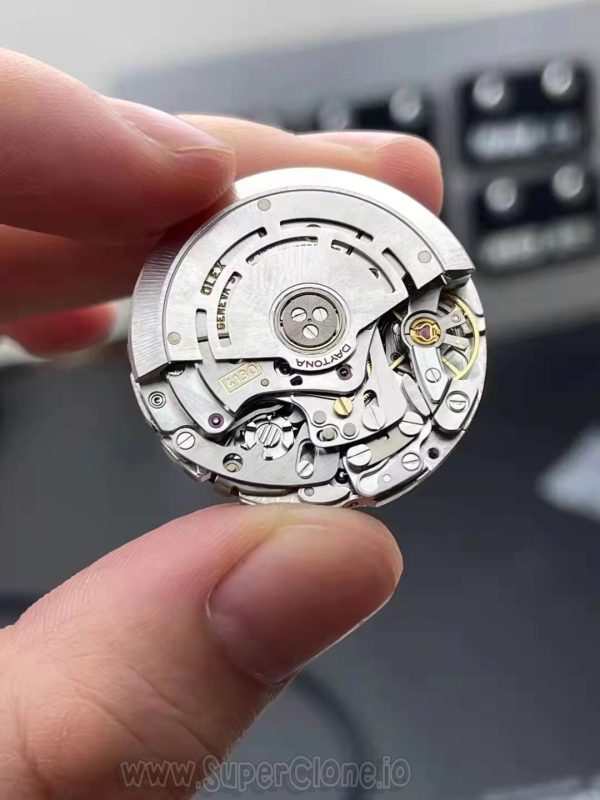
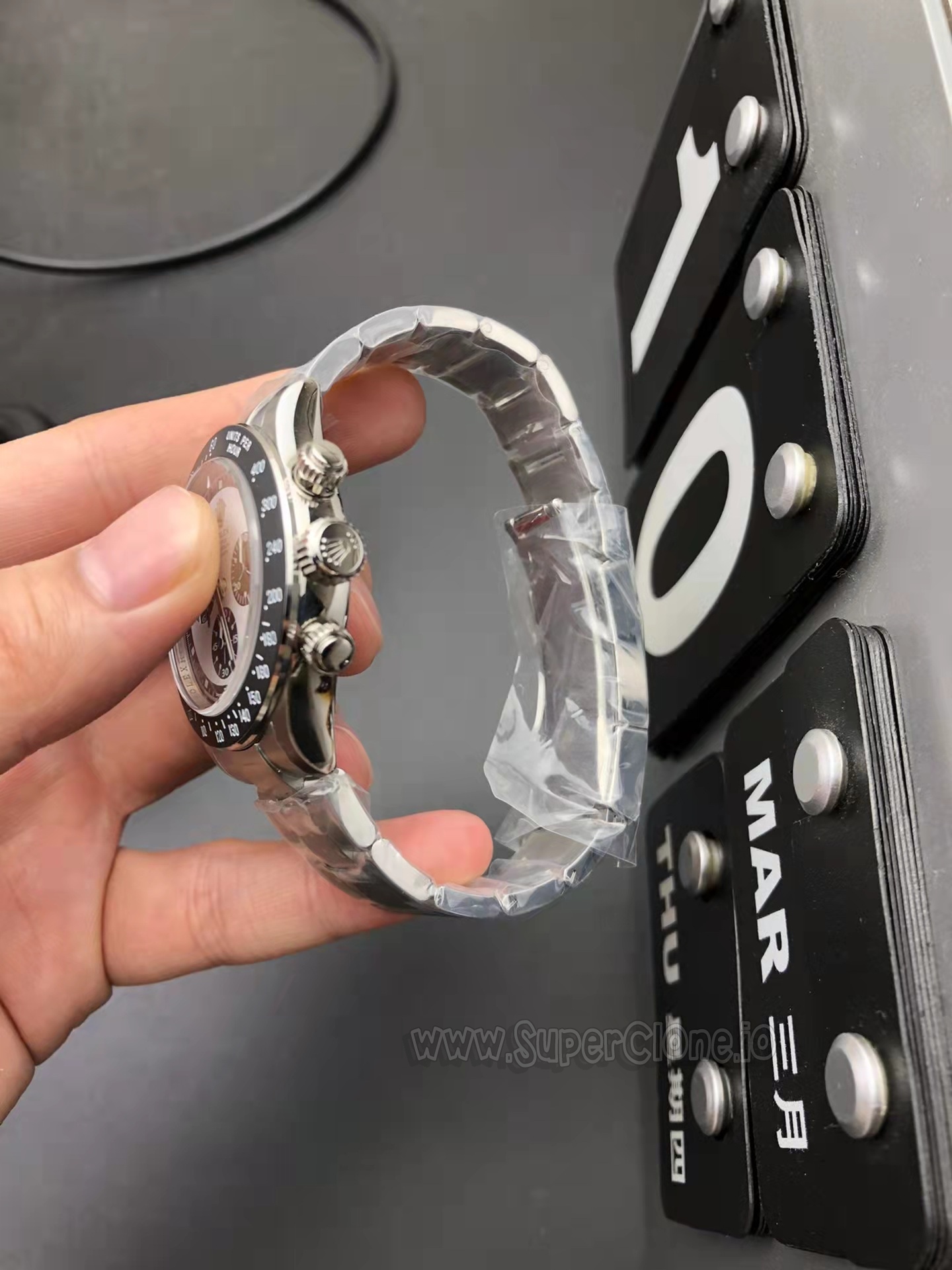
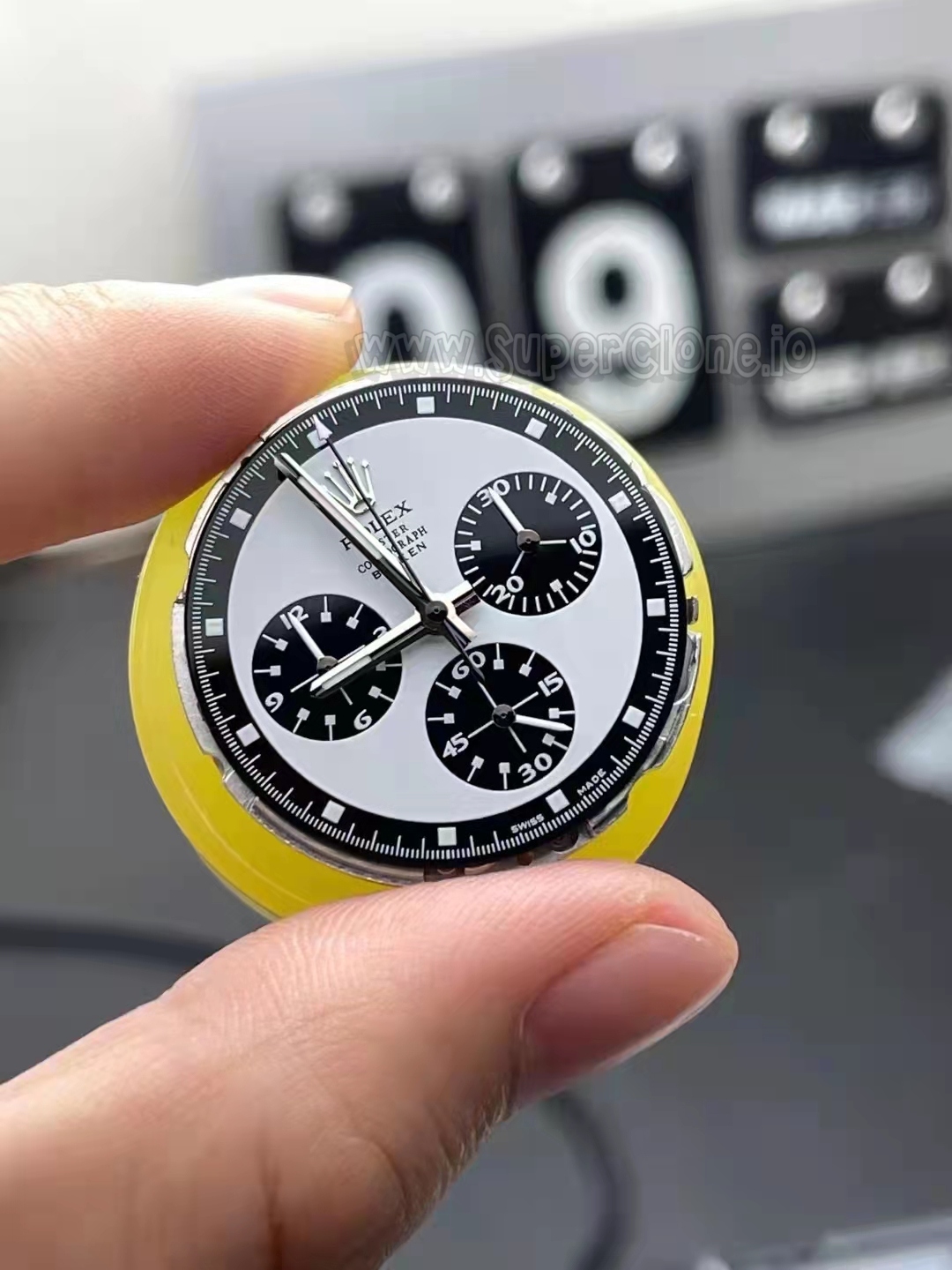
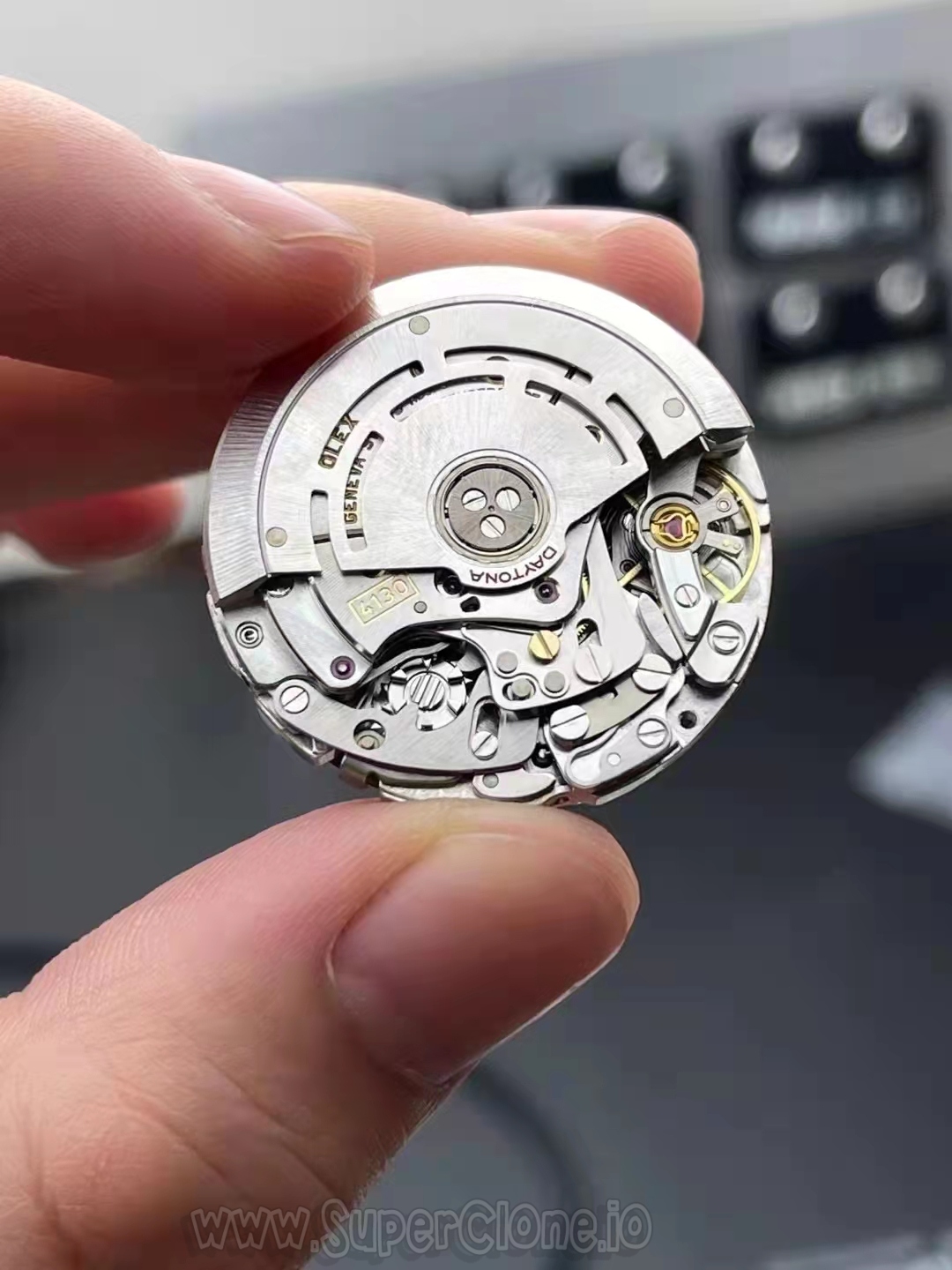
The watch shown here represents a very different direction. Technically speaking, it is one of the more advanced Paul Newman-inspired Daytona replicas introduced during that period because it incorporates a modified Noob 4130 movement rather than the simpler, less reliable manual-winding alternatives commonly seen in older vintage replicas.
Within the replica watch market, the Noob 4130 movement still carries immense respect despite the factory’s disappearance. When Noob first developed its clone 4130 platform, it fundamentally shifted expectations inside the Daytona replica segment. Chronograph function became incredibly smooth, reliability improved drastically, and the overall user experience moved much closer to modern Rolex Daytona behavior.
That movement upgrade alone puts real distance between this watch and many older Paul Newman replicas. Daily timekeeping stability is noticeably improved, the winding action feels precise and less “grainy” under the crown, and the power reserve comfortably performs better than previous vintage Daytona attempts. For buyers who actually wear their watches regularly instead of storing them as display pieces, these mechanical improvements carry far more weight than minor cosmetic details.
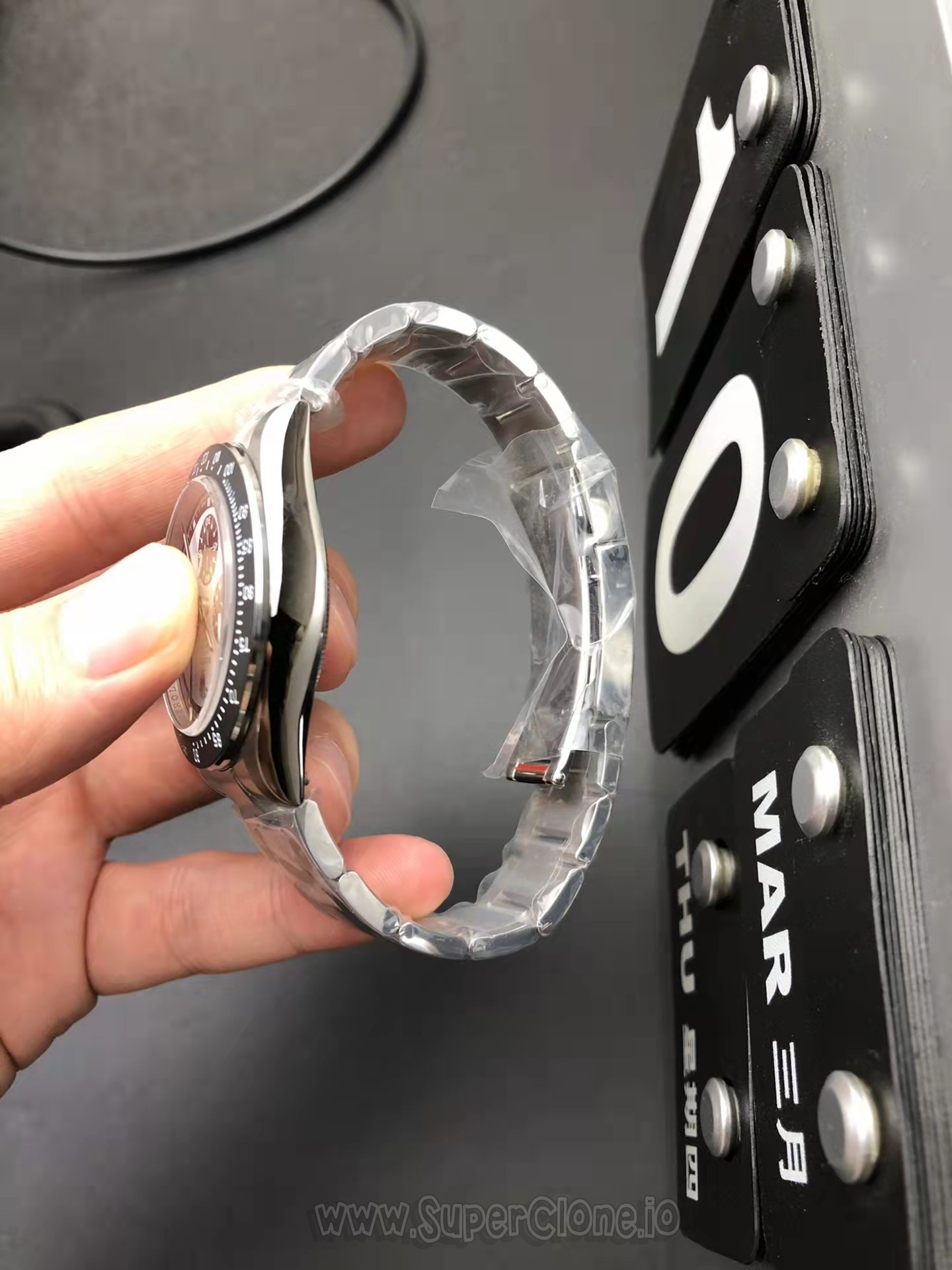
The exterior finishing also reflects a higher manufacturing standard. The brushing transitions across the bracelet feel more refined, lug edges appear sharper, and the overall machining tolerances are cleaner than what smaller workshops typically produced several years ago. However, this improvement introduces another debate entirely.
The Hybrid Trend: Blaken Customization Meets Heritage Dials
As replica factories improved manufacturing capability, many began blending vintage Rolex aesthetics with modern Daytona construction techniques. Instead of reproducing historically accurate vintage watches, they created hybrid interpretations that combine retro dial designs with contemporary ceramic bezels, black-coated components, modern bracelets, or customized styling themes.
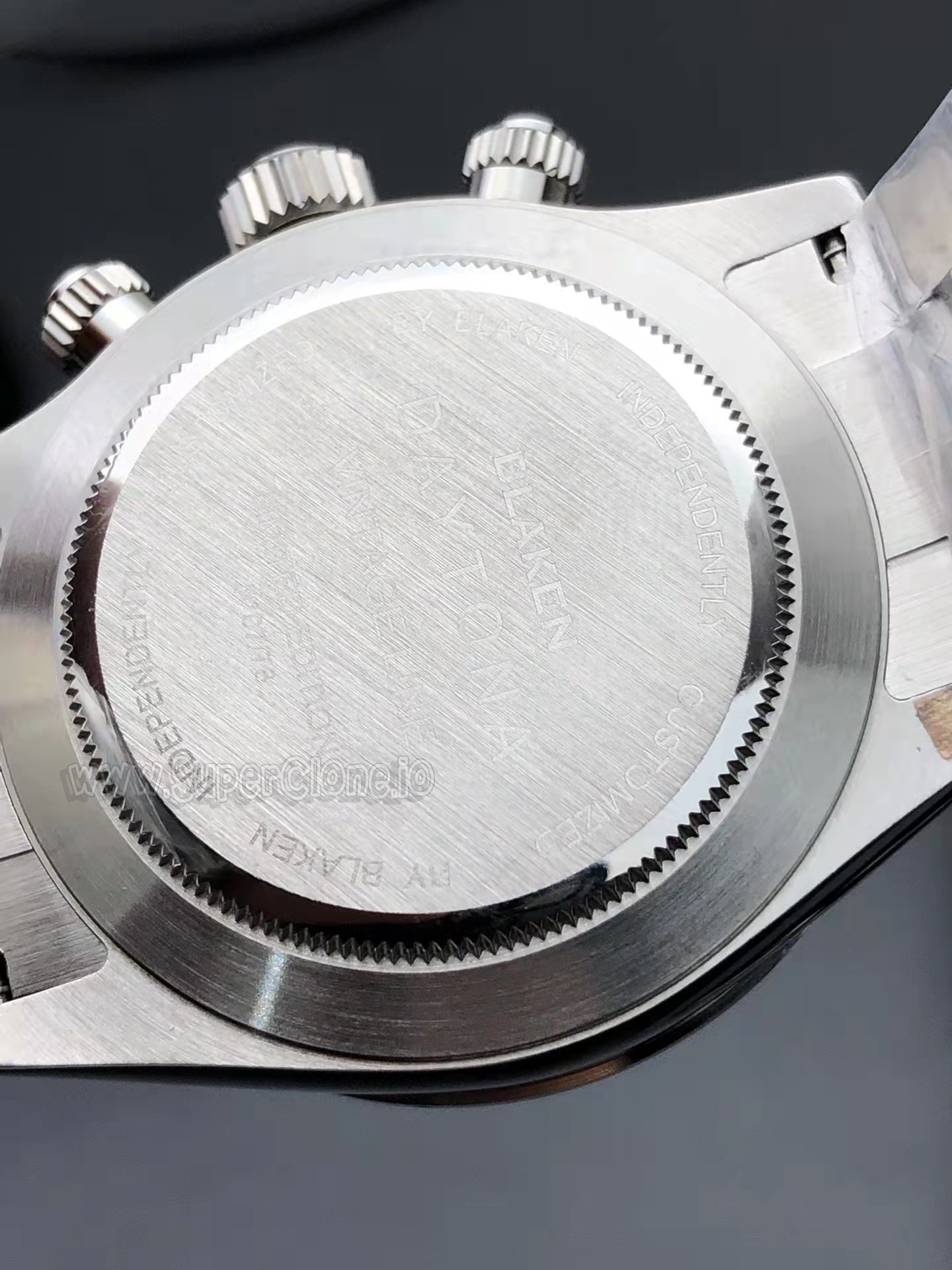
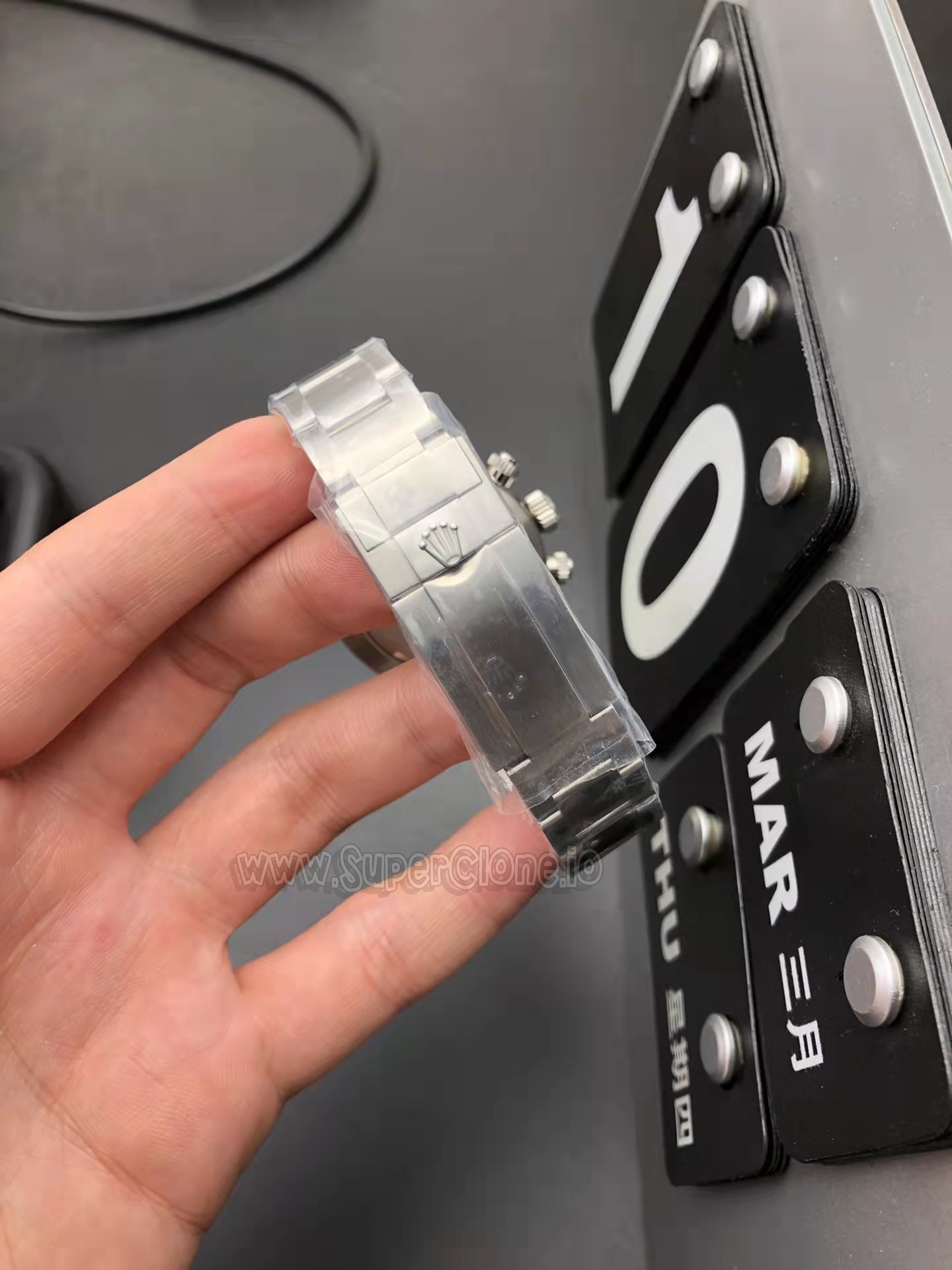
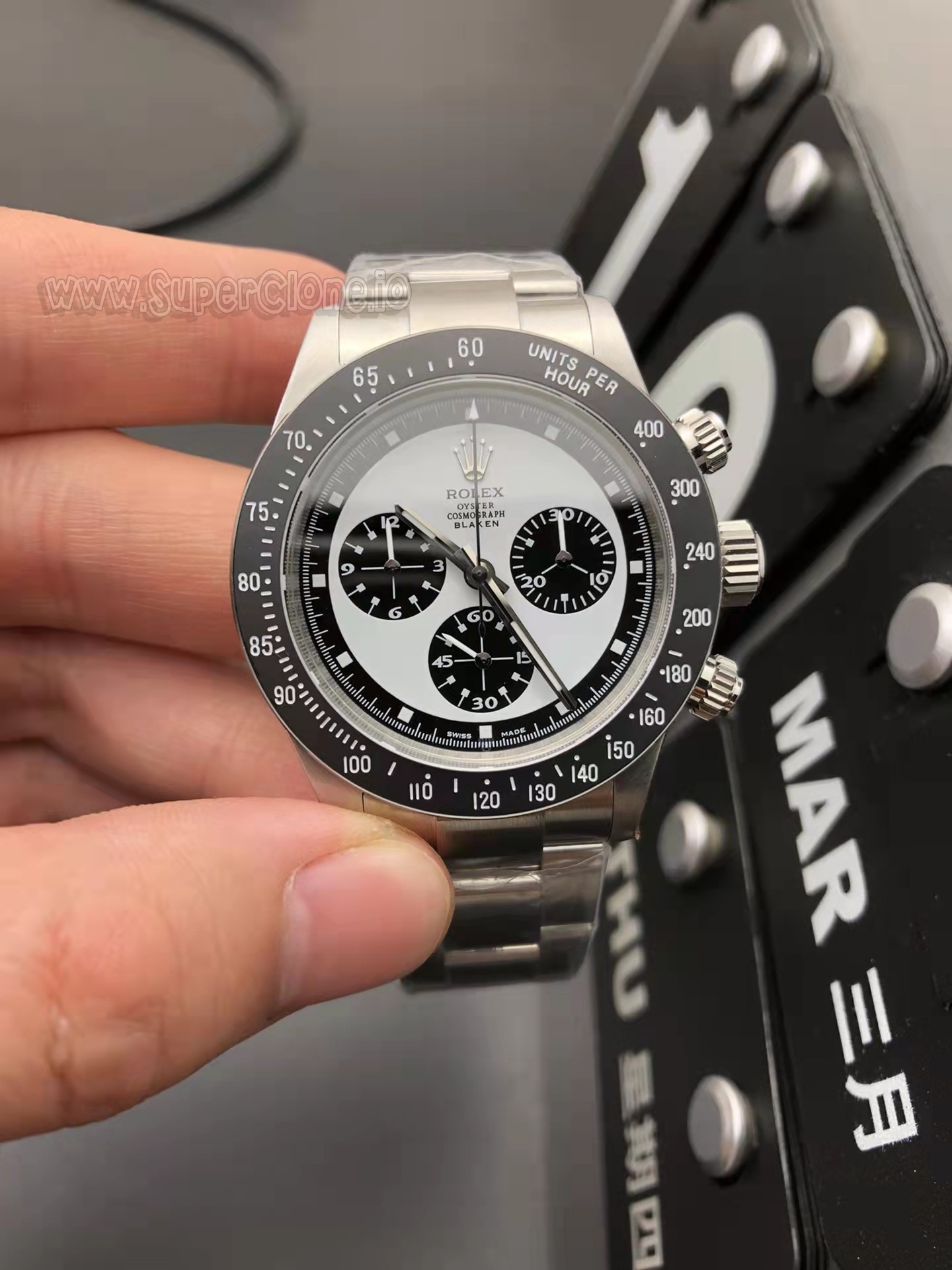
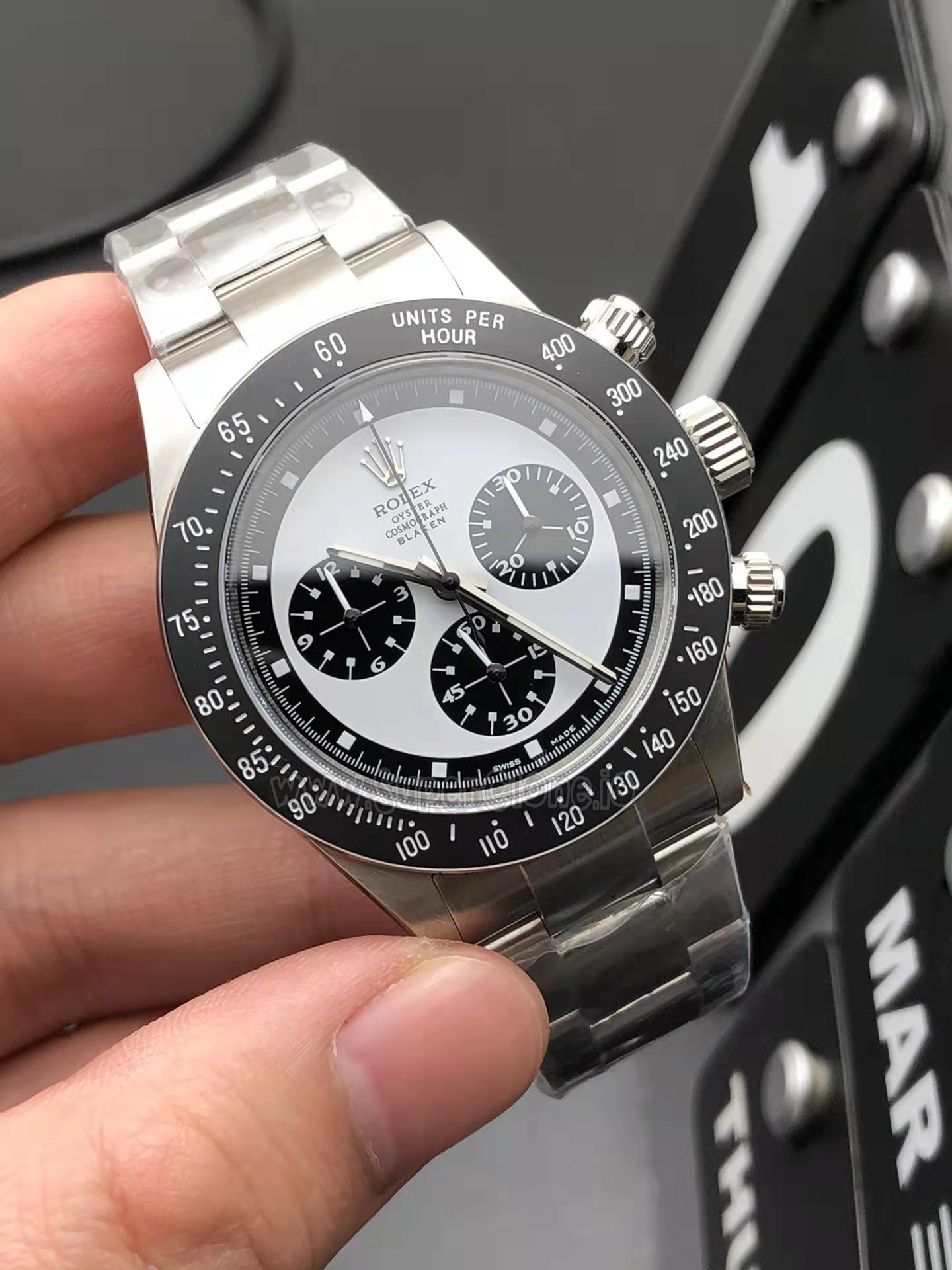
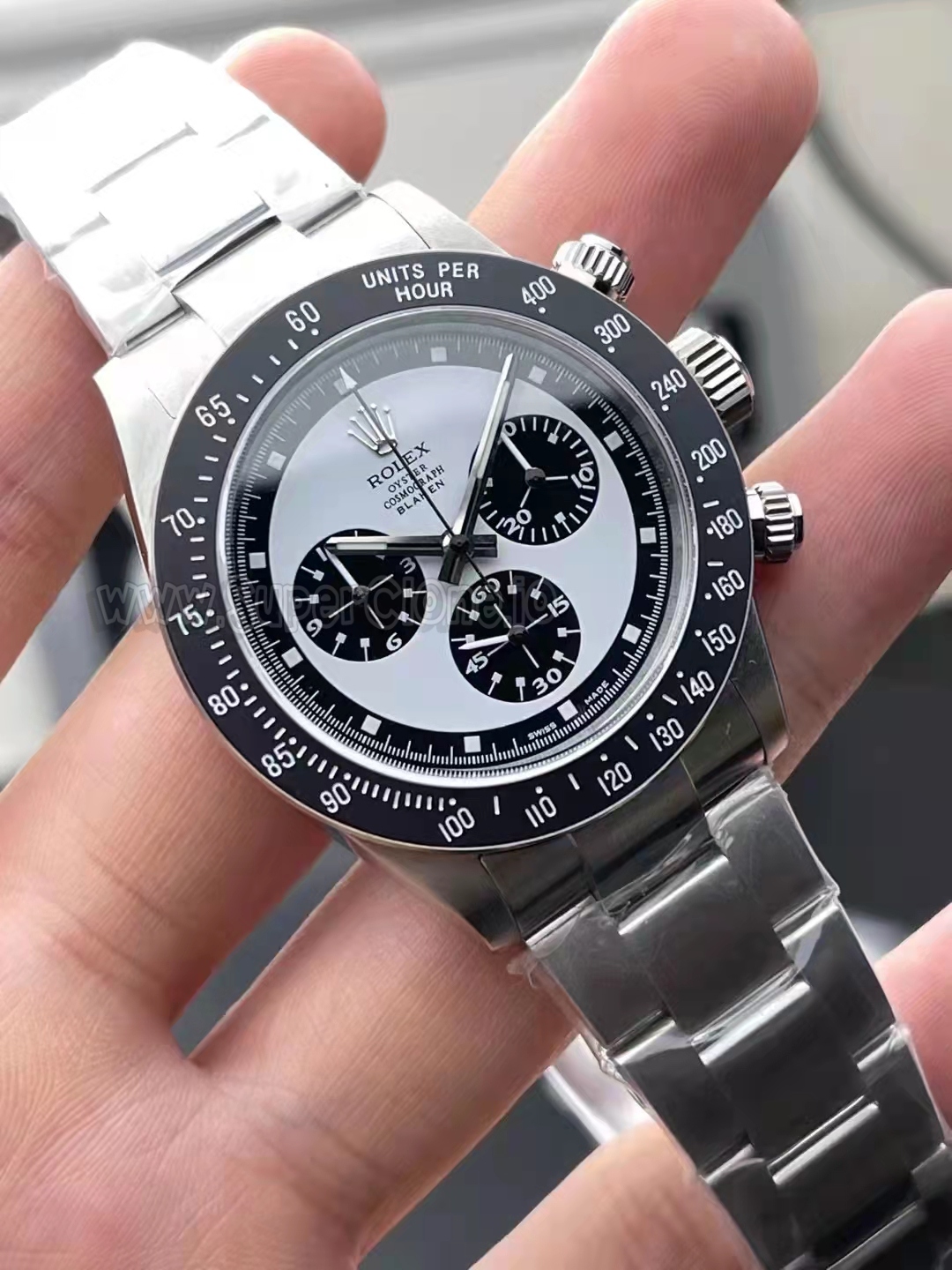
This particular watch clearly belongs to that hybrid category. The “BLAKEN” text on the dial is a statement of intent—it reveals that this is not attempting to be a historically accurate vintage Daytona recreation. Instead, it represents a customized reinterpretation inspired by both vintage Paul Newman styling and modern modified Rolex culture.
Blaken itself became well known among Rolex enthusiasts for producing heavily customized black-themed Rolex designs that combined stealth aesthetics with modern luxury finishing. Replica factories borrowed those concepts and applied them to Daytona projects, creating watches that feel far more contemporary than traditional Paul Newman references.
That decision dramatically changes the personality of the watch. Traditional Paul Newman Daytonas are attractive partly because of their warmth and imperfection. Acrylic crystal distortion, thin steel bezels, vintage dial textures, faded lume coloration, and compact case proportions all contribute to the emotional charm collectors associate with classic Rolex chronographs.
This replica approaches the concept from the opposite direction. The black DLC bezel, darker case finishing, modern bracelet structure, and aggressive visual contrast create a much newer appearance. Even though the dial still references the Paul Newman layout, the overall watch no longer feels truly vintage once worn on the wrist.
Purist Emotion vs. Modern Durability: The Collector’s Divide
Some buyers actually prefer this combination. They enjoy the vintage-inspired dial design but do not want a watch that feels fragile or historically constrained. For them, a hybrid modernized Paul Newman Daytona creates a more wearable everyday experience while still maintaining a connection to vintage Rolex culture. Collectors focused on historical atmosphere, however, react differently. To them, the modernized finishing strips away the emotional authenticity that made the original Paul Newman Daytonas special in the first place.
This difference in perspective explains why customized vintage-inspired Daytona replicas remain highly controversial within the scene. The technical quality may actually be excellent, but emotional expectations around vintage watches operate differently from normal quality evaluation. A modern Submariner replica can still feel successful even if it slightly exaggerates finishing sharpness or bracelet solidity. Vintage Rolex replicas are judged by a different barometer—restraint, subtlety, and proportion matter far more than pure technical perfection.
That is why many experienced vintage enthusiasts still prefer imperfect but historically convincing builds over highly polished hybrid projects. In some cases, a softer case edge or slightly less aggressive finishing can actually create a more believable vintage character. At the same time, newer collectors entering the hobby through modern super clone watches frequently appreciate these upgraded interpretations because they offer better mechanical reliability and stronger everyday durability.
The divide between those two groups continues shaping the direction of the replica market today. Factories increasingly understand that the audience for vintage-inspired replicas is no longer a small niche. Many younger buyers want something visually unique but mechanically modern. As a result, hybrid projects like this Blaken Paul Newman Daytona have become more common over the past few years.
Which Philosophy Matches Your Wrist?
Whether that evolution is positive or negative depends entirely on what a collector expects from a replica watch. If the goal is owning a reliable Daytona with strong movement performance, high-quality finishing, and a dial inspired by the famous Paul Newman layout, this watch performs surprisingly well compared with older vintage Daytona replicas.
If the goal is recreating the exact emotional hit of a genuine vintage Paul Newman Daytona from decades ago, then this watch moves too far into modern customization territory to fully satisfy traditional vintage enthusiasts.
In many ways, this watch represents a larger transition currently happening throughout the replica industry. Earlier generations of replica watches mainly focused on basic visual imitation. Today, factories increasingly prioritize movement architecture, machining quality, bracelet tolerances, and long-term wearability. That shift naturally pushes some designs closer to modern luxury interpretations rather than strict historical reproductions.
For buyers entering the vintage Daytona segment today, understanding this distinction is extremely important before making a purchase. Not every “Paul Newman” replica is trying to achieve the same goal. Some attempt historical accuracy. Others prioritize mechanical reliability. Some focus on visual drama and customized styling. A few try balancing all three, though that remains difficult even for experienced factories.
Because of that, buyers should evaluate vintage-inspired Daytona replicas based not only on movement quality or exterior finishing, but also on whether the overall atmosphere matches what they personally expect from a vintage Rolex experience. And in the case of this Blaken-inspired Paul Newman Daytona, the answer depends entirely on whether you prefer vintage emotion or modern execution.
