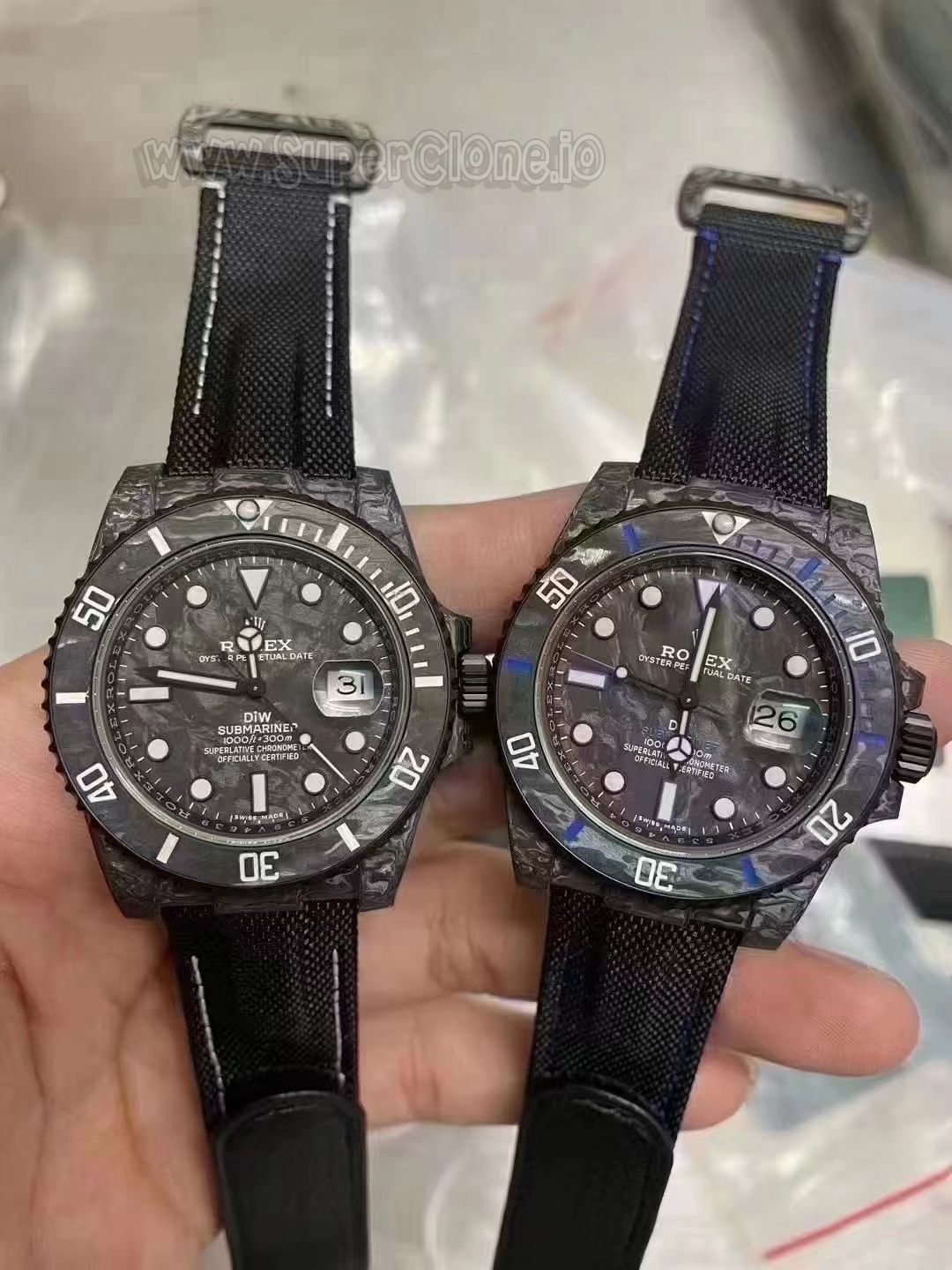
Material innovation consistently injects new vitality into historical reference silhouettes. Over recent production cycles, luxury watch customizers have fully embraced ceramics, bronze, and sapphire crystal. The specialized replication market has followed suit, driven by notable shifts at leading manufacturing facilities like VS Factory. Following temporary production slowdowns focused heavily on clearing backlogs for Panerai and Omega product lines, the sudden arrival of two forged carbon Rolex Submariner timepieces marks a distinct tactical turn. This release moves away from standard historical catalog configurations, capturing the growing demand for avant-garde carbon modifications.
Our Hands-On Testing and Inspection Benchmarks
Evaluating high-end carbon composite timepieces requires looking past marketing aesthetics to verify structural execution. In analyzing this custom Submariner iteration, our evaluation focused on case weight distribution, bezel click resistance, and the visual consistency of the composite grain compared to genuine carbon modifications. Furthermore, we checked component alignment across various assembly batches to establish a realistic baseline for potential buyers who prioritize mechanical and aesthetic alignment.
Anatomy of the Forged Carbon Case and Architecture
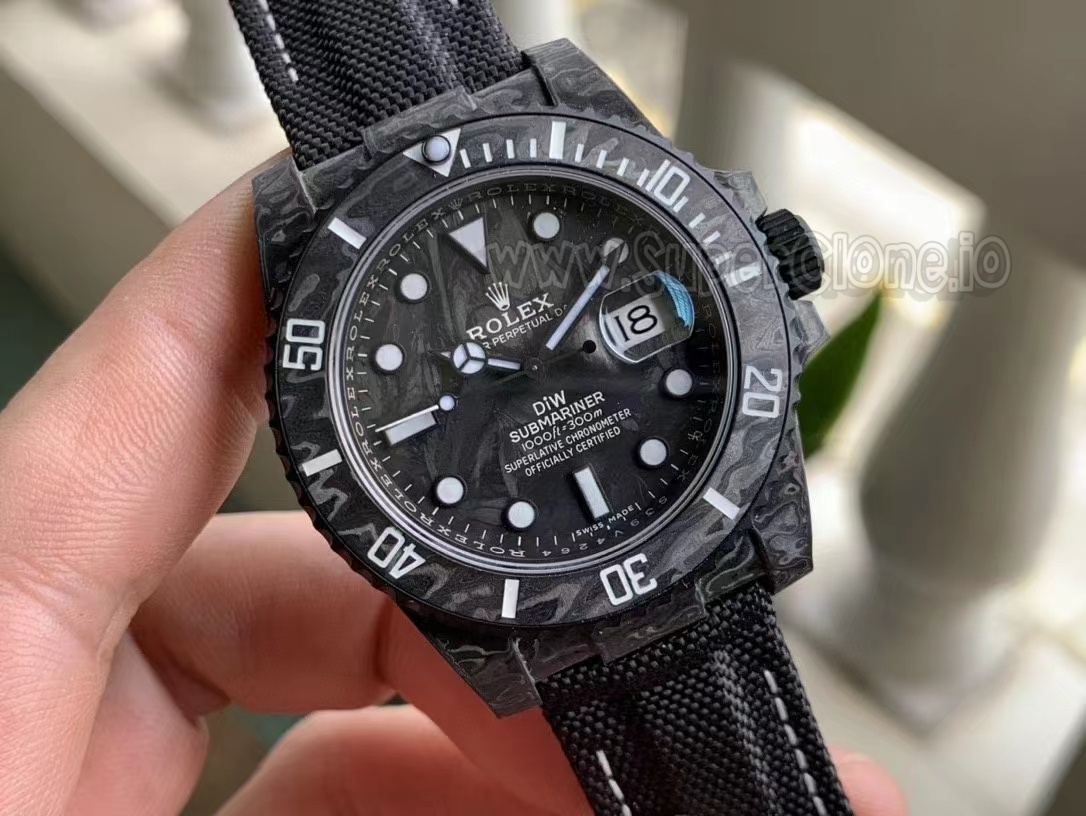
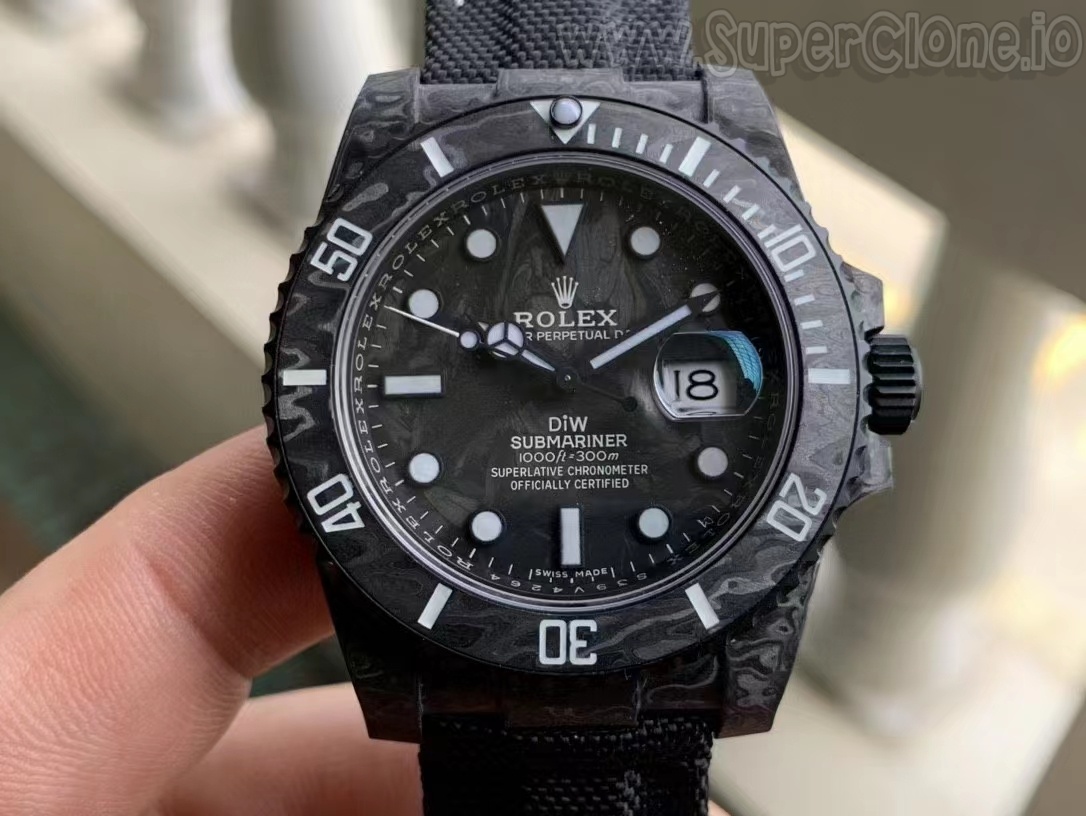
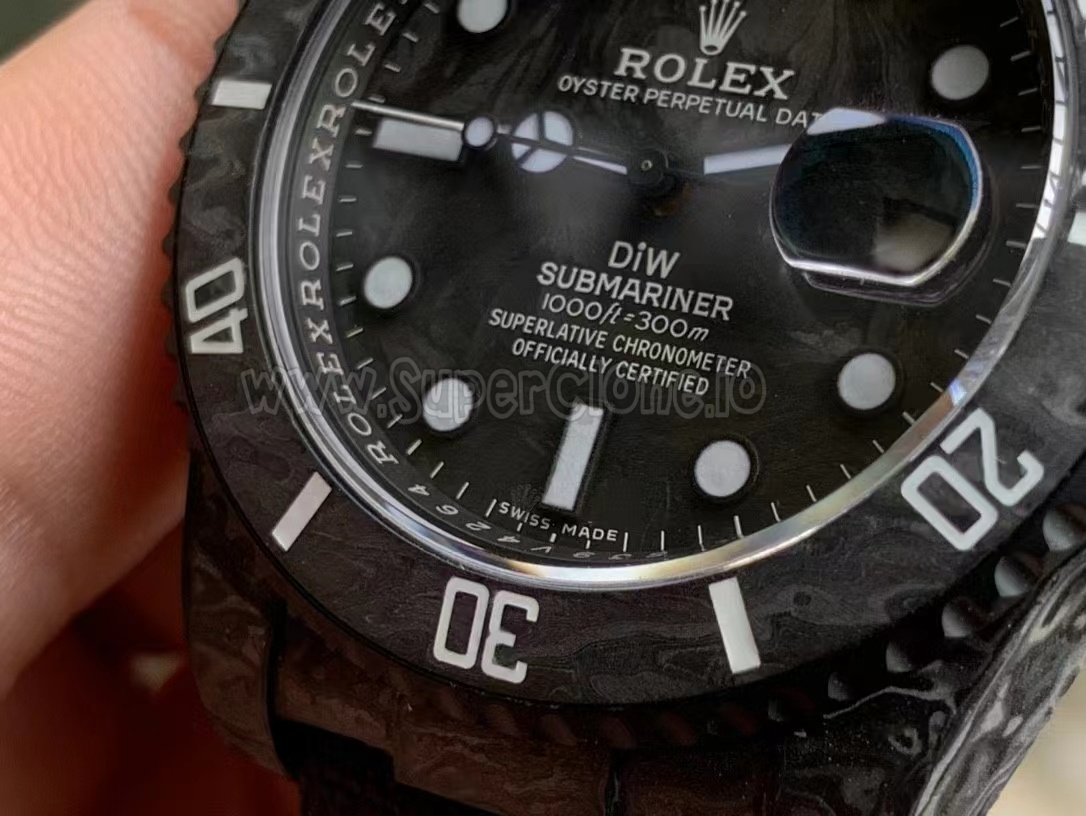
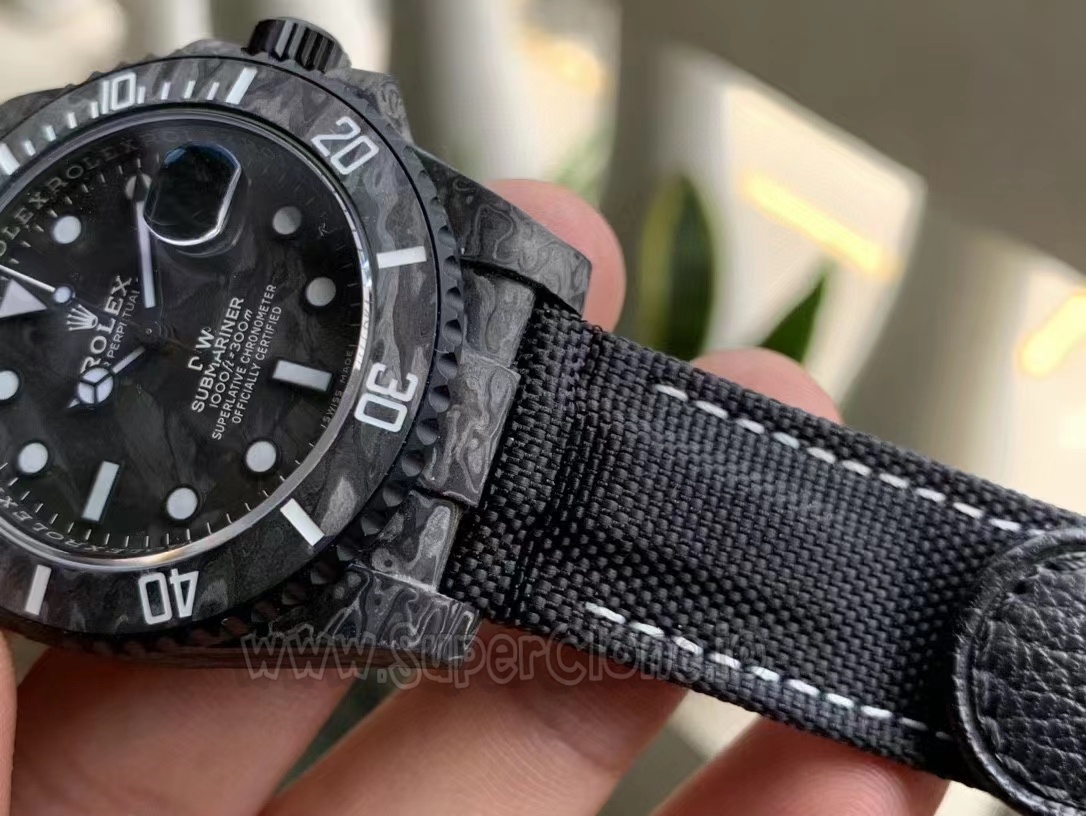
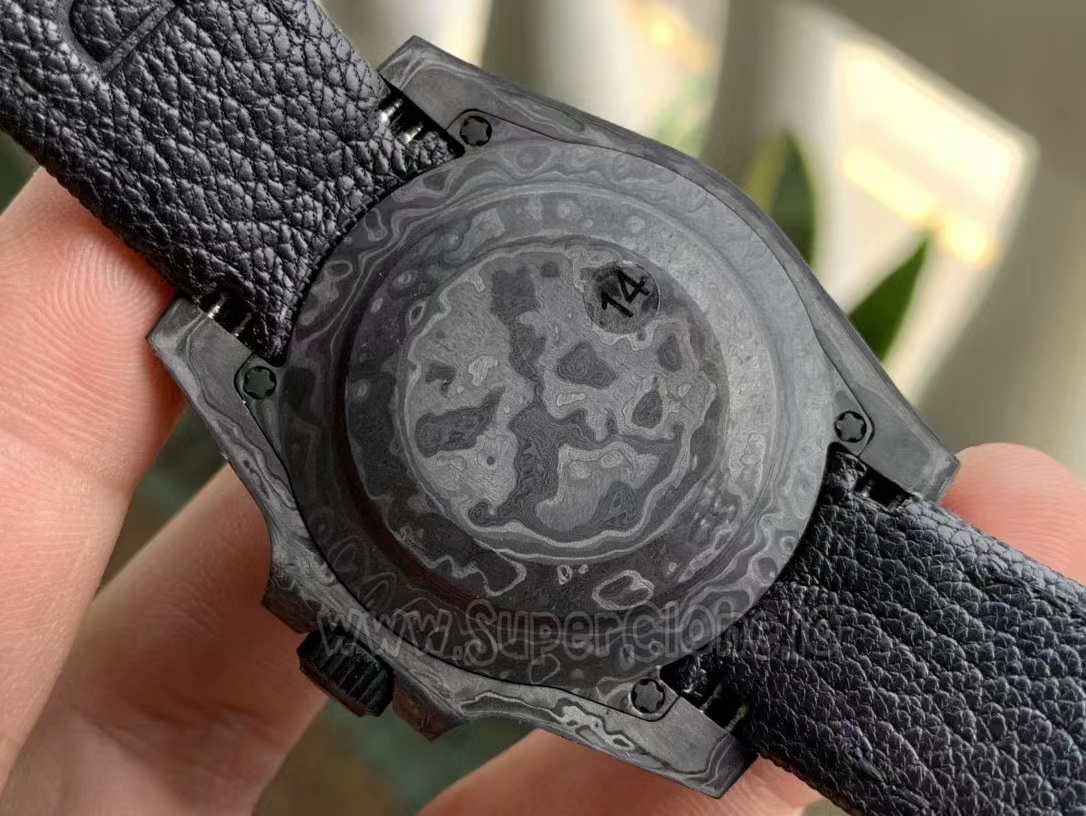
The core draw of this edition rests entirely on its comprehensive forged carbon construction. Diverging from traditional 904L stainless steel Submariner builds, the entire mid-case, unidirectional rotating bezel, and case back are machined from carbon blocks. This substitution offers an immediate ergonomic advantage on the wrist by drastically lowering the overall weight profile. The unique visual texture—characterized by irregular, organic flowing ribbons of interlocking gray and black composite layers—stands out sharply. Under direct inspection, the fiber density and surface finishing appear noticeably tighter and more refined than earlier aftermarket carbon attempts, closely mimicking the high-contrast aesthetic of genuine bespoke modifications.
In terms of scale and geometry, the timepiece respects classic 116610 series proportions. The case measures 40mm in diameter with a thickness stabilized right around 12.5mm. This allows it to retain the wearability and wrist presence expected of an Oyster case profile while introducing a stark, tactical appearance that alters how the watch interacts with ambient light.
Dial Integrity and Customization Elements
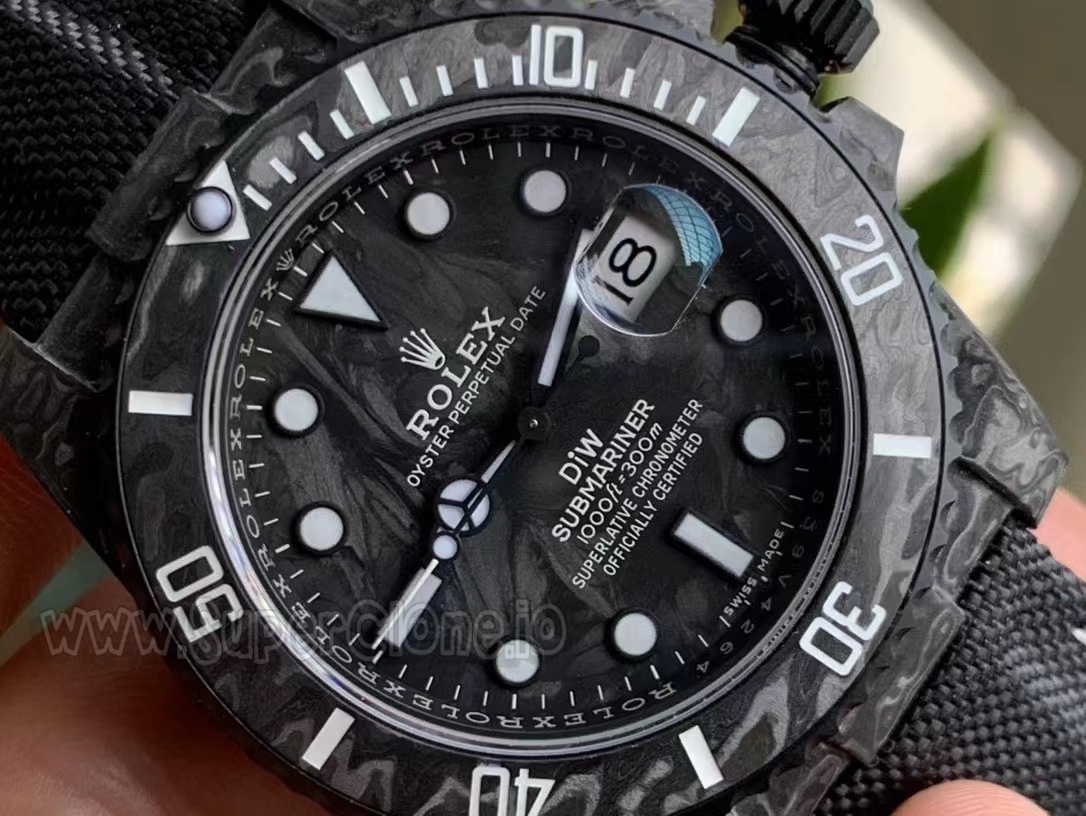
The dark aesthetic carries over to the dial, which is likewise pressed from black carbon fiber sheet. Rather than a flat, uniform black surface, the dial reveals subtle variations in weave pattern under magnification. Positioned explicitly above the 6 o’clock mark is the distinct “DiW” signature, denoting its design lineage from the specialized customization atelier Designa Individual. A crucial detail to note involves the inner engraving ring, or rehaut. Ensuring the laser-etched coronet lines up dead-center with the 12 o’clock triangle requires careful individual selection. Due to standard factory assembly tolerances, subtle misalignments can happen, making it highly advisable to have your dealer verify alignment details prior to fulfillment.
Protecting the composite dial layout is a synthetic sapphire crystal featuring a micro-etched crown logo at the 6 o’clock boundary. This subtle detail is placed cleanly within the lower crystal structure, requiring proper lighting angles and magnification to observe clearly, consistent with standard luxury watch configurations.
Movement Architecture and Tactical Hardware
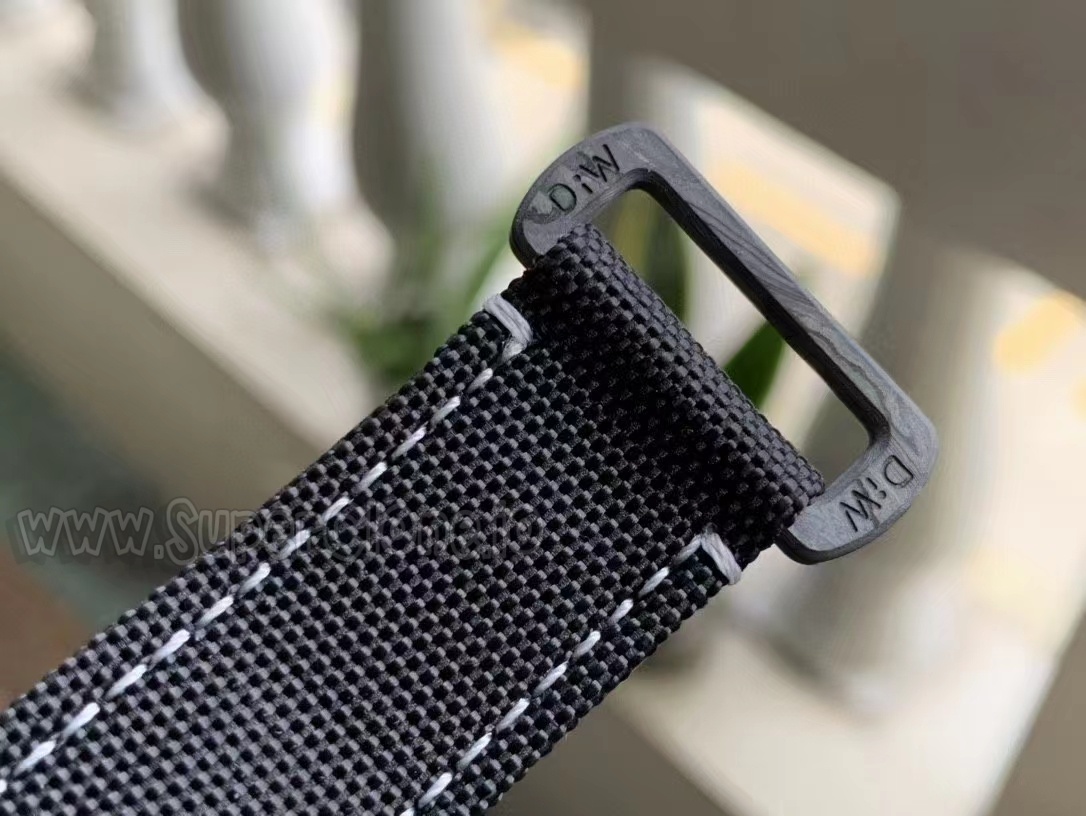
Beating inside the case is a custom clone 3135 automatic movement, engineered as a proprietary powerhouse specifically for the maker’s premier sports watch variants. Widely regarded across the modification sector as a stable 3135 replica caliber, it effectively matches the physical winding feedback, operational direction, and overall structural depth of its genuine counterpart. The mechanical layout can be appreciated beneath the customized carbon case back assembly. Carrying the theme forward, the watch skips the traditional heavy metal oyster link bracelet in favor of a black woven nylon tactical strap. This strap is paired with a matching forged carbon tang buckle, creating a unified, high-performance styling profile.
Luminescent Execution and Low-Light Utility
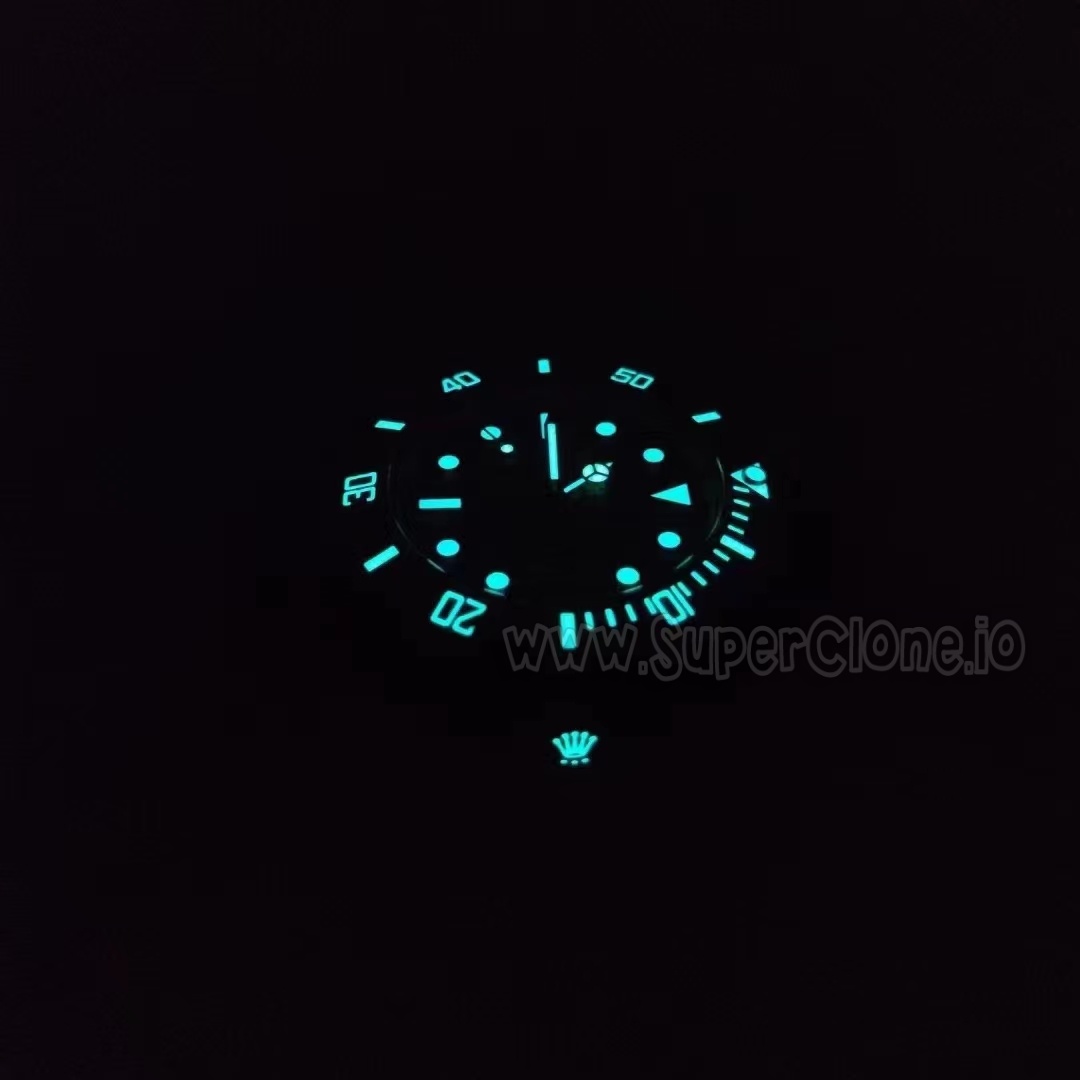
Low-light performance serves as another vital metric for customized diving sports watches. The hand configurations and applied hour markers are treated with deep layers of premium luminescent material, casting an intense, long-lasting blue signature in dark conditions. In a departure from standard production models, the crown insignia itself features an integrated luminous compound. Both the central crown branding and the triplet of underlying pressure-proofing dots illuminate clearly, adding an unexpected, modern visual detail to the winding hardware profile.
The Pros and Cons of Carbon Customization
Choosing an unconventional carbon build involves balancing unique material benefits against specific practical ownership trade-offs.
Pros: Massive reduction in total carry weight for upgraded wrist ergonomics; highly distinct and individualistic marbled grain patterns; unique multi-point crown luminescence.
Cons: Commands a noticeable pricing premium over baseline stainless steel models; aggressive aftermarket tactical styling may alienate traditional vintage purists.
Value Analysis and Collector Segment Fit
The specialized processing requirements and manufacturing costs of forged carbon naturally place this model at a higher market tier than standard steel editions. For buyers seeking a highly individualized look, lightweight handling, and a custom boutique feel, the watch provides a well-rounded option that breaks from standard catalog fatigue. Conversely, collectors focused on the raw weight and traditional finishing of polished steel will find better value remaining within standard factory steel dive lines.
Alternative Carbon References: Forged Carbon Daytona Breakdown
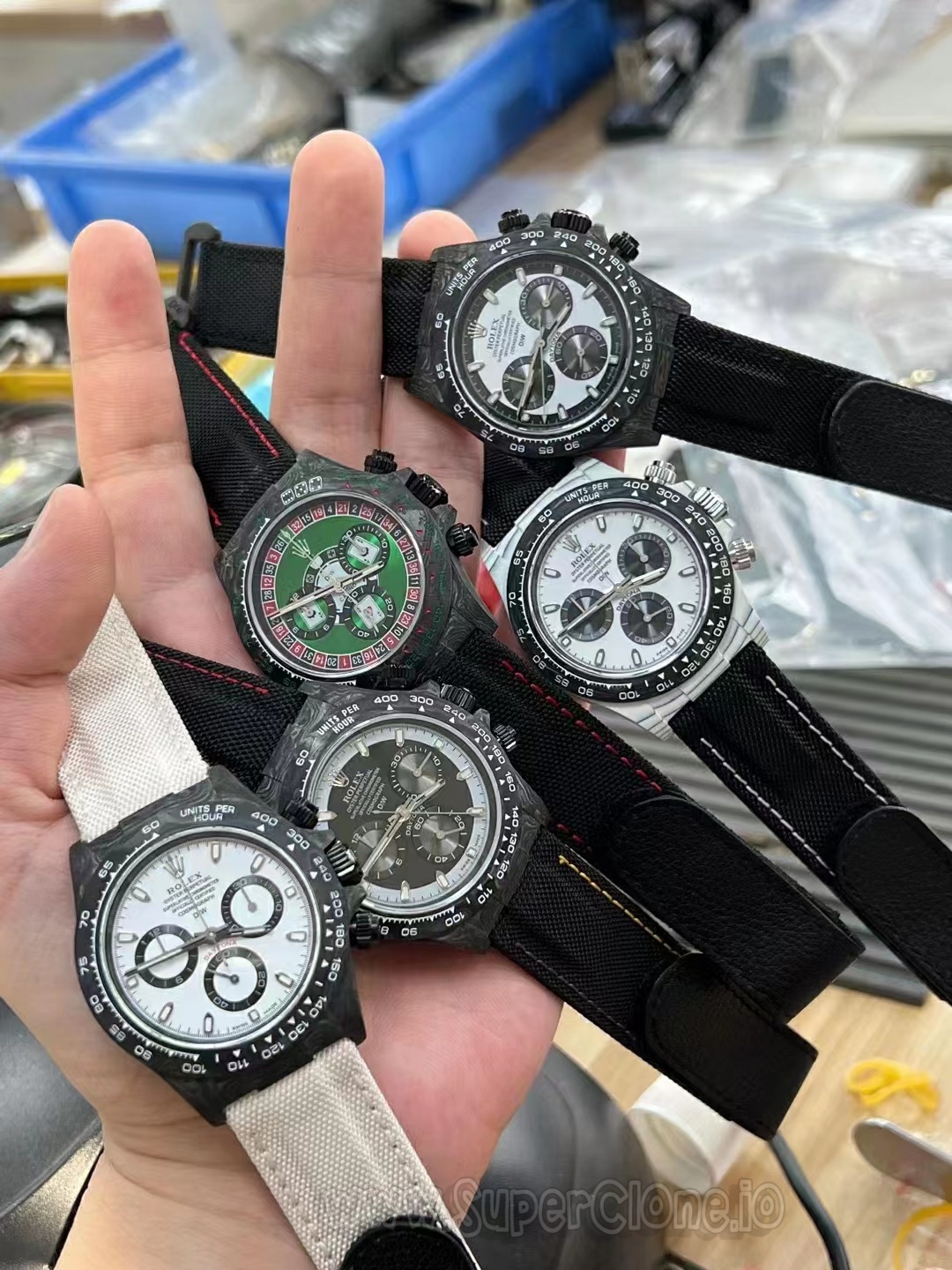
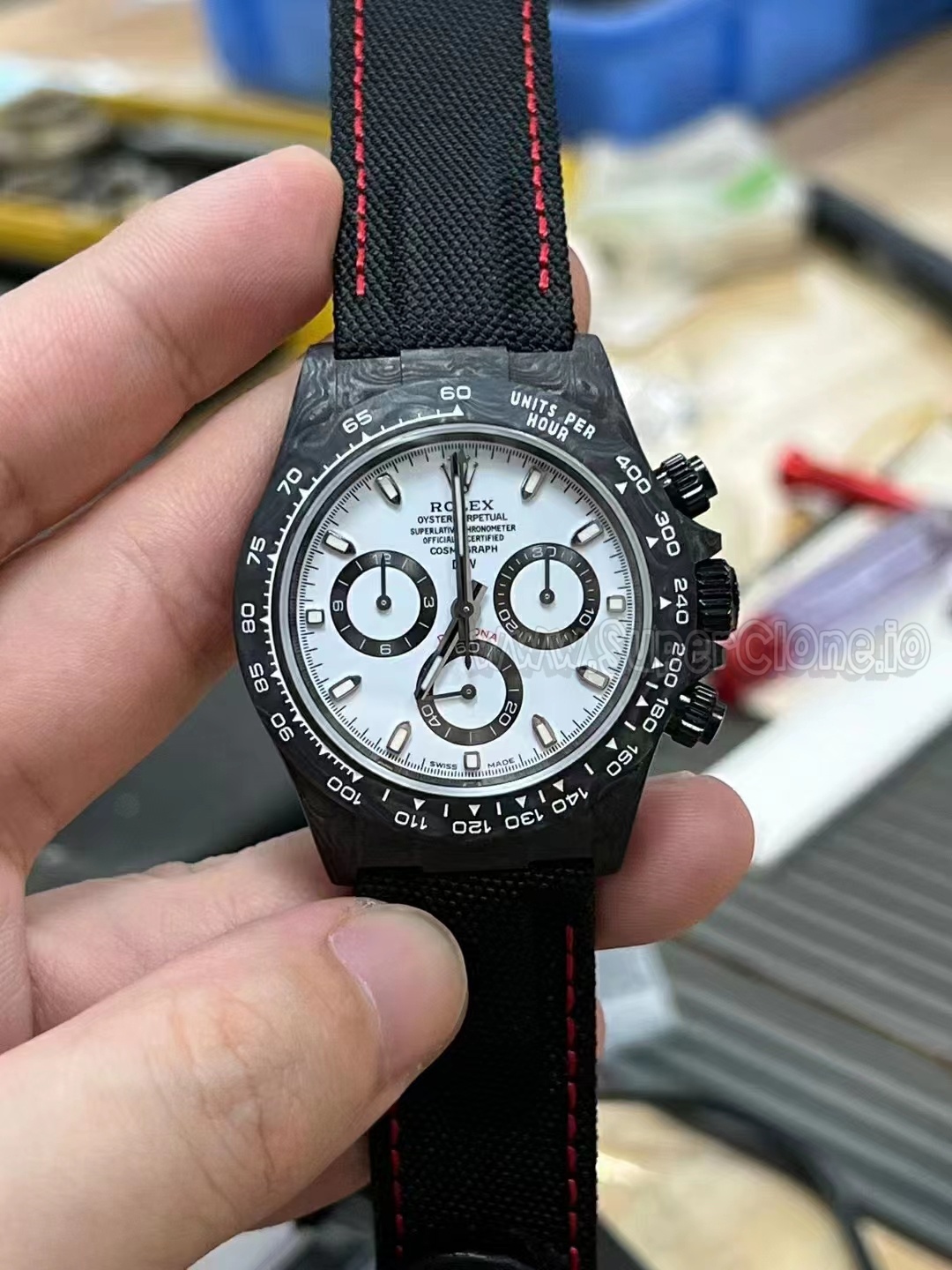
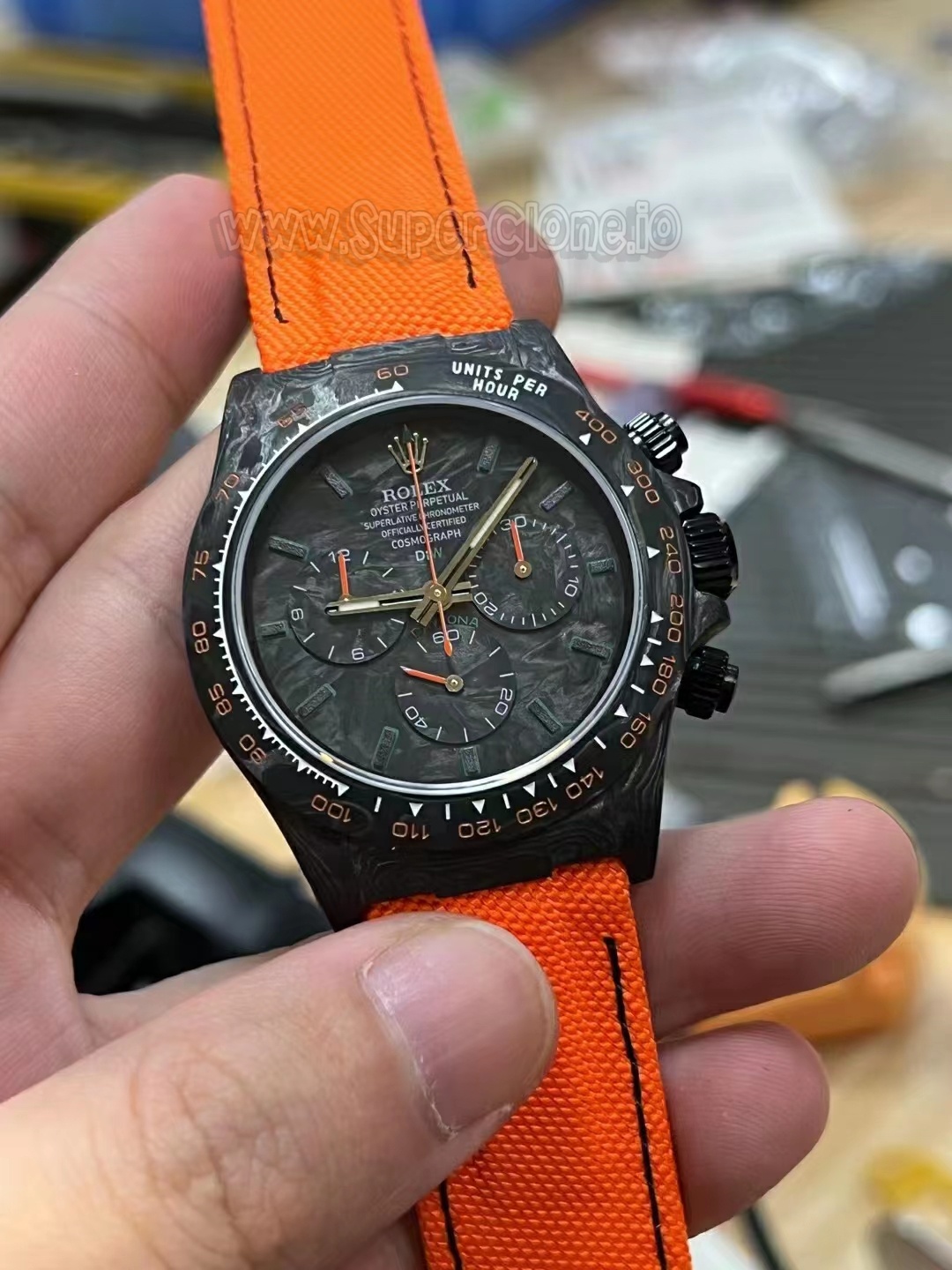
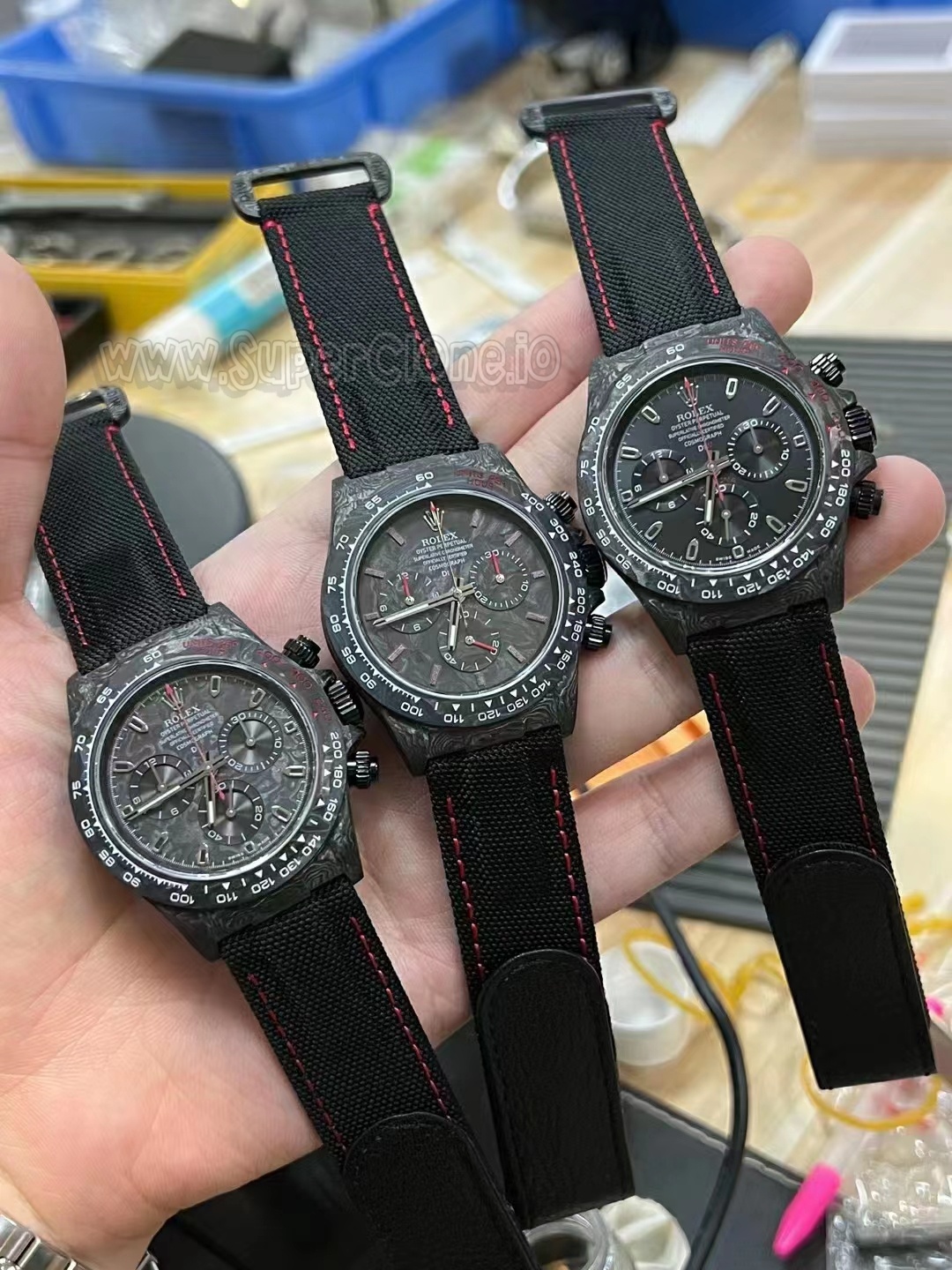
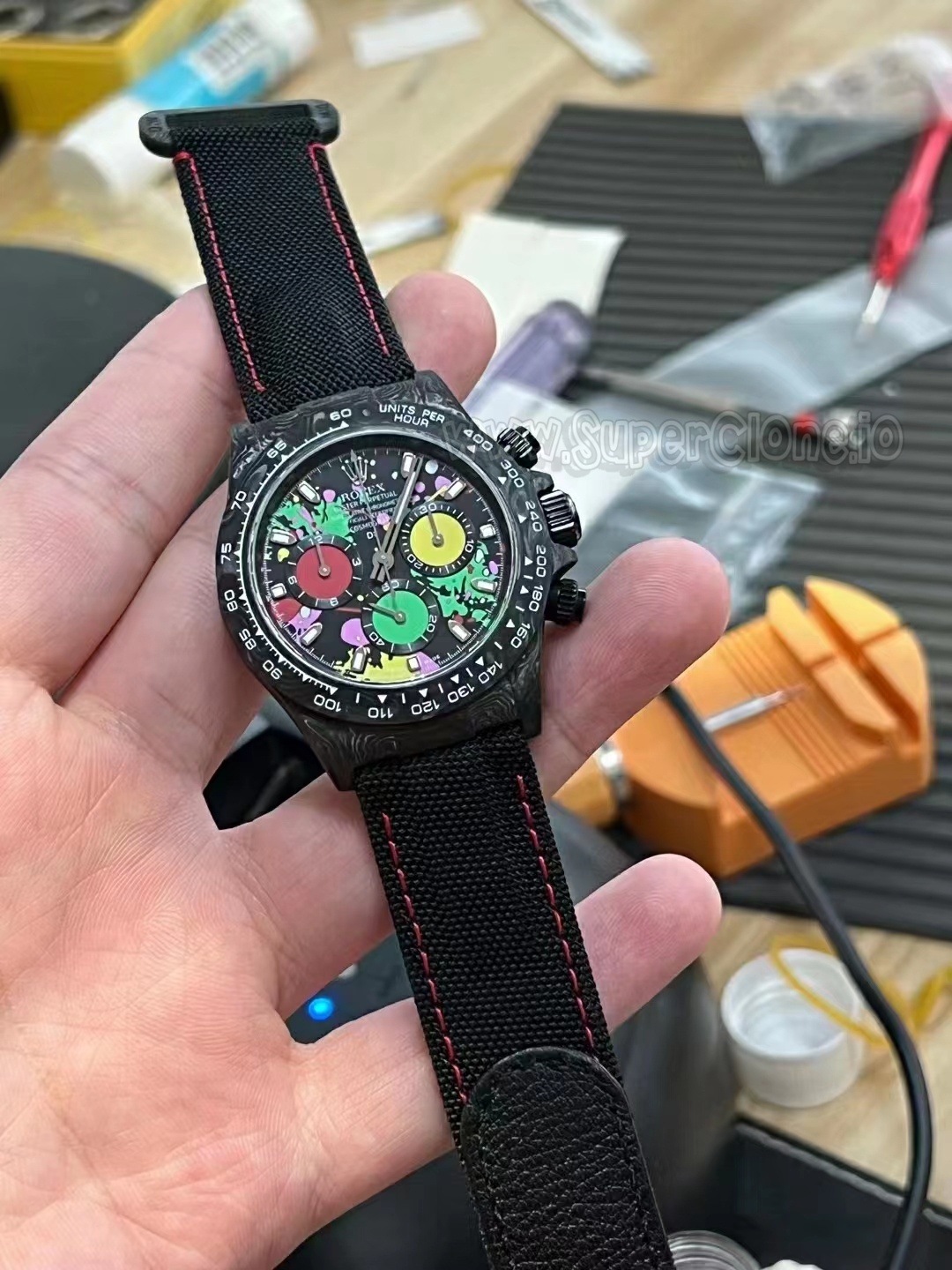
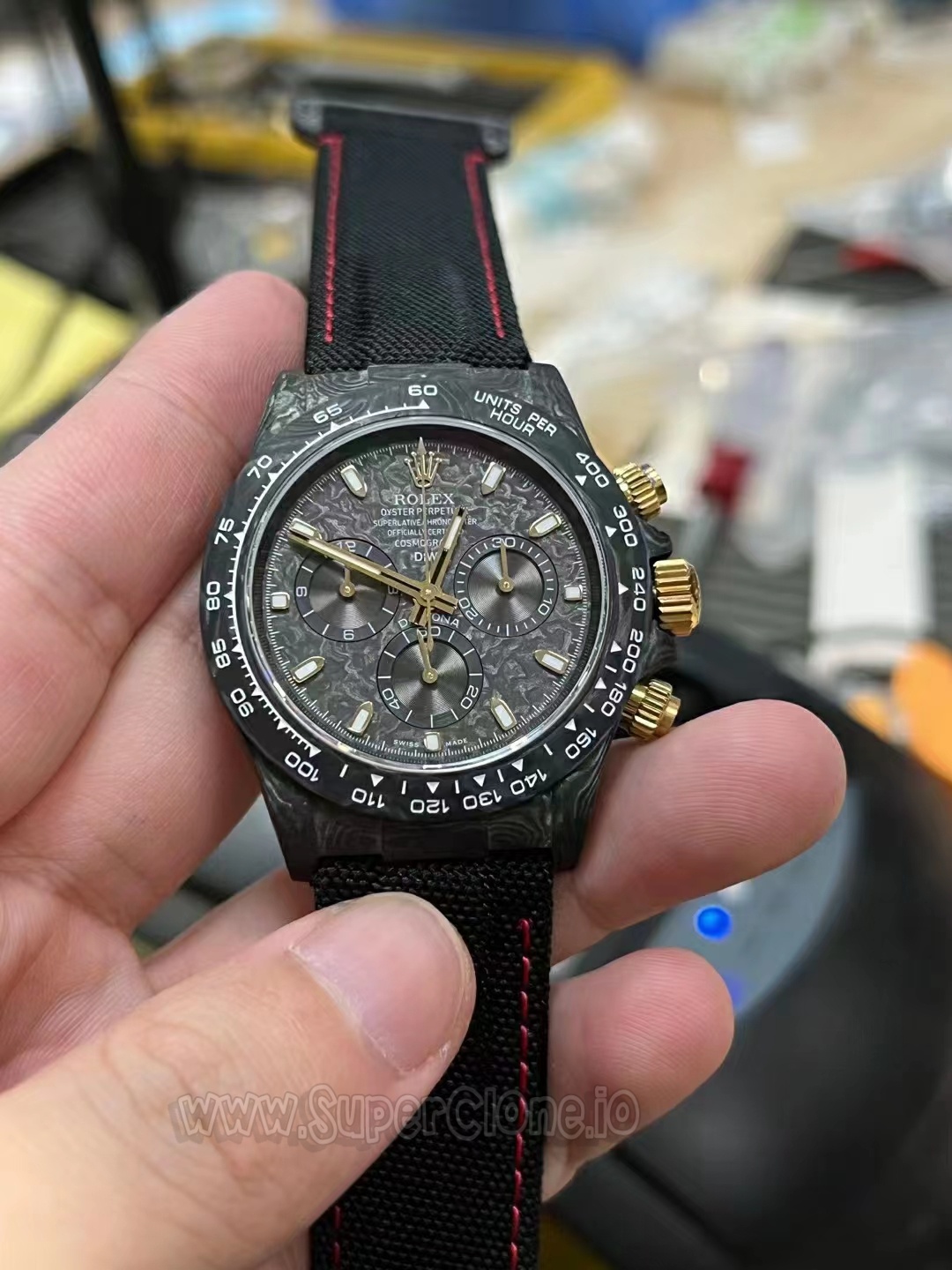
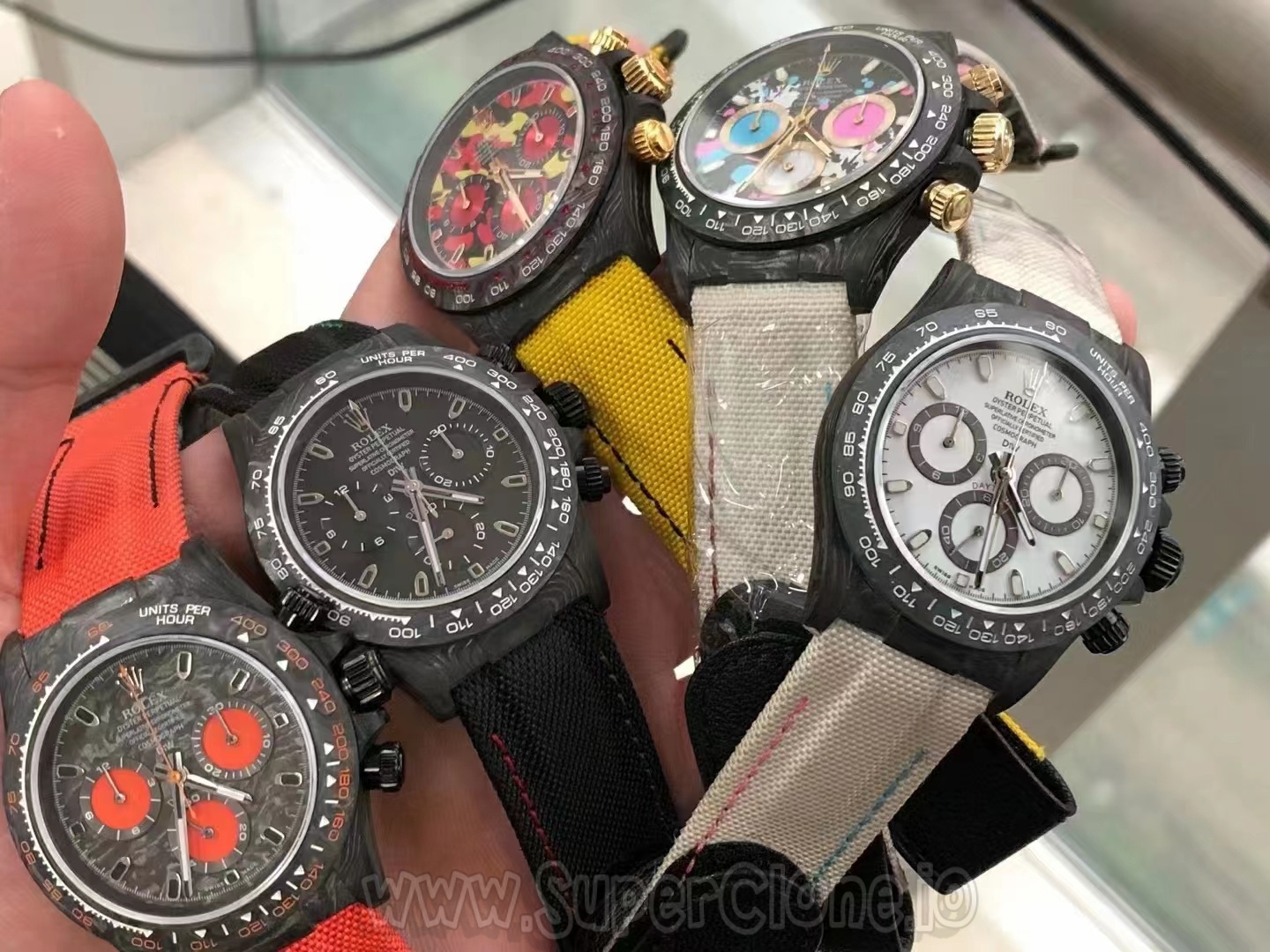
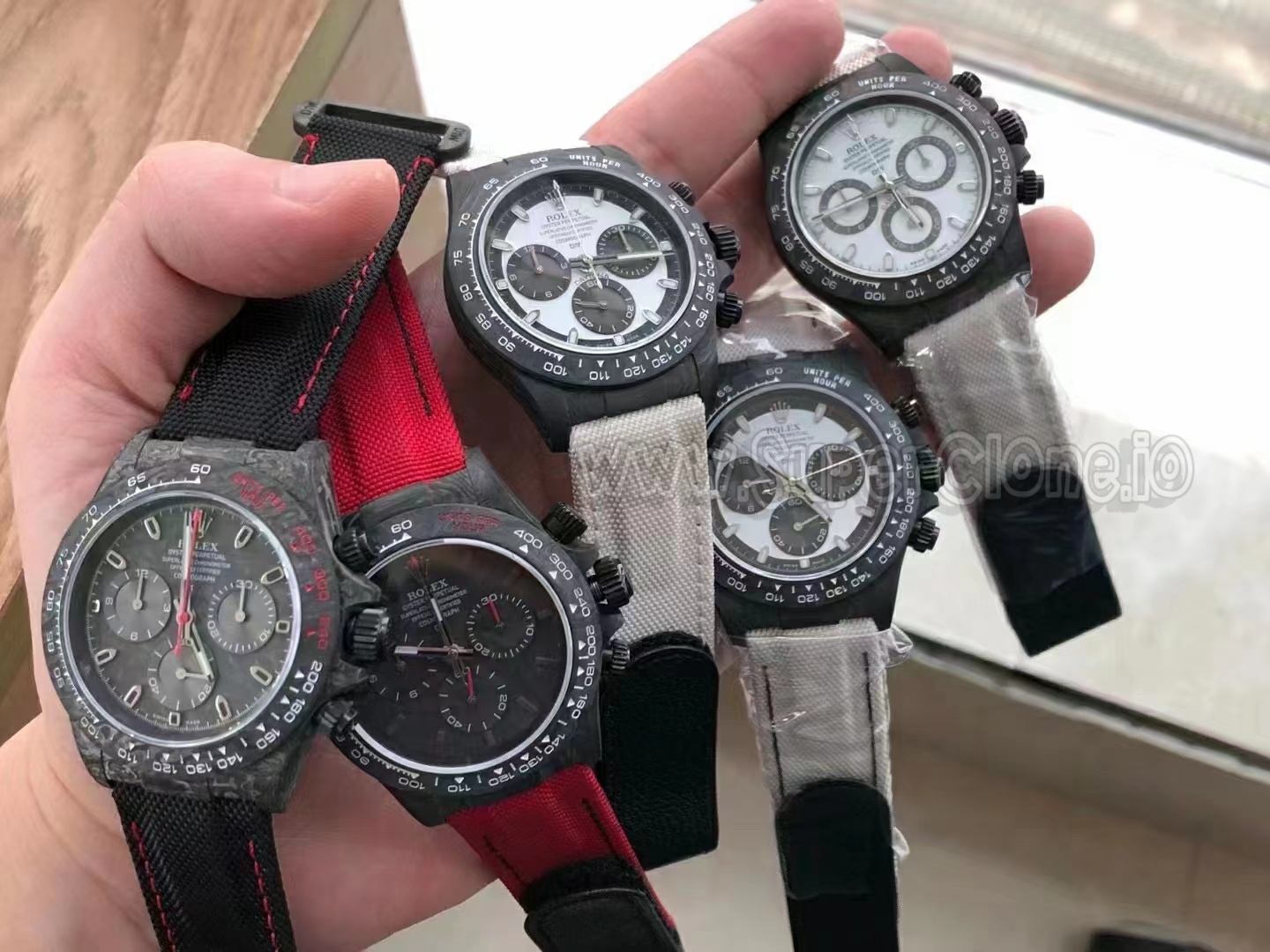
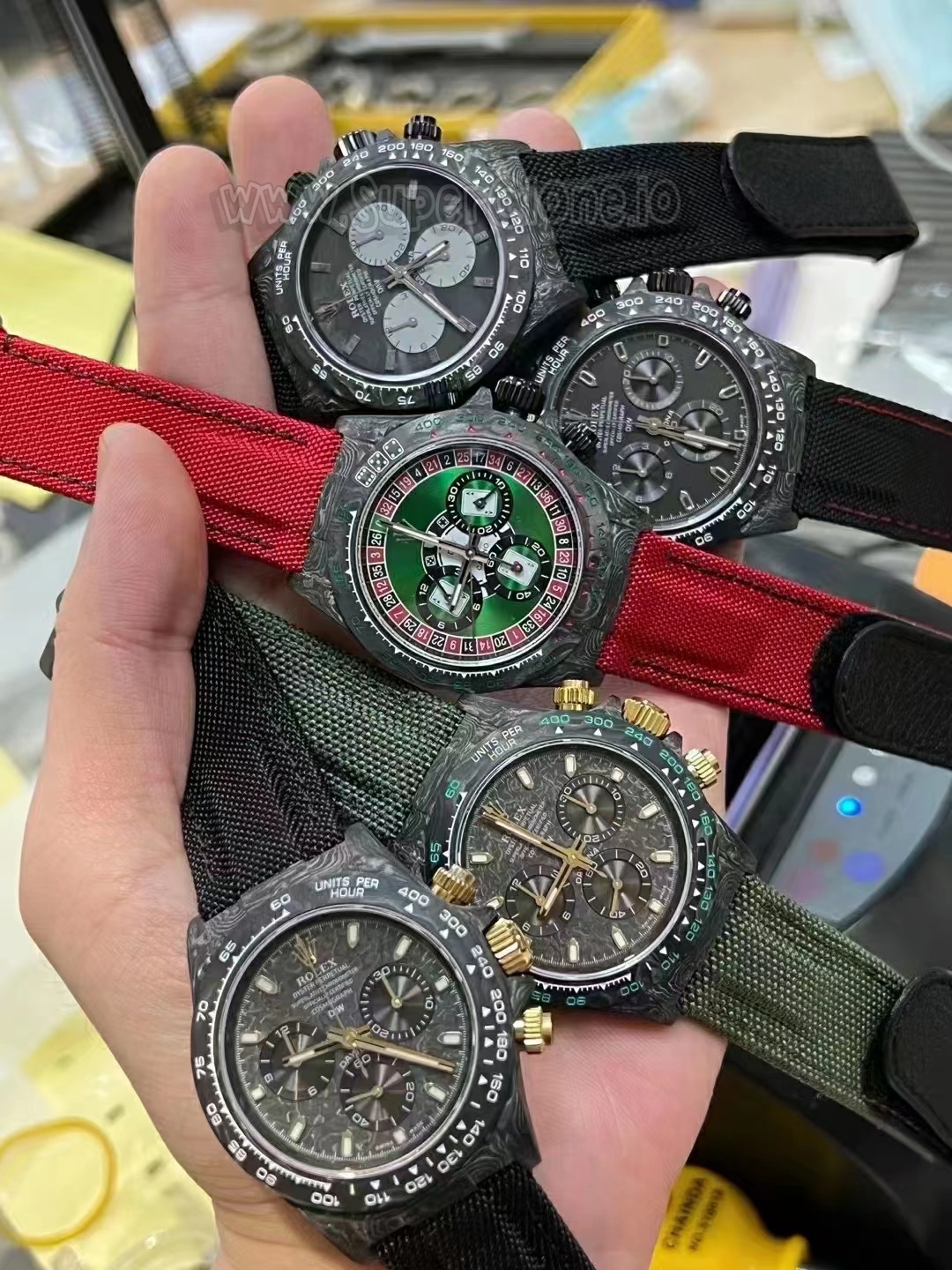
To provide wider context regarding how technical carbon looks across other premium sports models, the following gallery details various forged carbon Daytona references. These references illustrate how alternative dial sub-counters, stationary tachymeter bezels, and pusher integration adapt to the unique textures of carbon composite engineering.
Ultimately, the inclusion of carbon composite options introduces a fresh, technical conversational branch to the historical diving reference landscape. As demonstrated by these recent iterations, tracking manufacturing developments remains highly practical for assessing how closely alternative materials mirror the fit, weight, and visual execution seen within high-end custom timepiece circles.