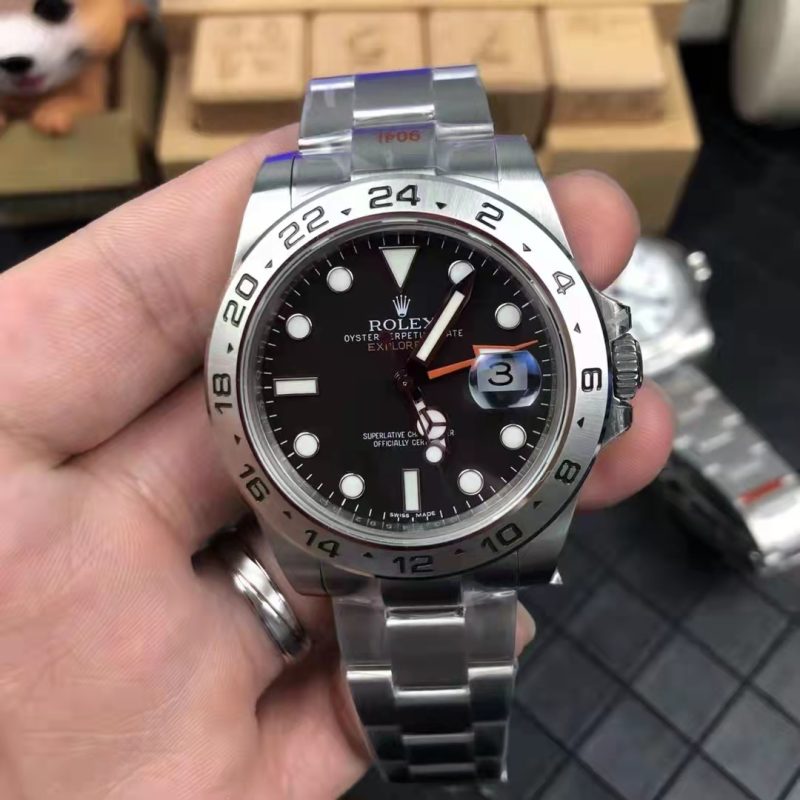
Among modern Rolex sports models, the Explorer II has always occupied a strange position. It has never generated the same level of mainstream attention as Submariner, Daytona or GMT-Master II, yet inside long-time collector communities, especially among people who actually wear their watches daily instead of treating them as status objects, the Explorer II has maintained a surprisingly loyal following for years. That situation also exists inside the super clone watch market. While most factories compete aggressively around Daytona and ceramic Submariner production, only a small number of manufacturers have seriously attempted to perfect the Explorer II 216570.
There are several reasons for this. First, the Explorer II is more difficult to replicate correctly than many buyers initially assume. Second, the people buying this watch are usually more detail-oriented than average replica customers. Third, the genuine Explorer II itself is a very balanced watch. Small mistakes become immediately visible because the design relies less on flashy materials and more on proportion, symmetry and finishing consistency.
That is why the GM Factory V4 Explorer II 216570 became an important release inside the current super clone market. This was not simply another “updated batch” announcement. For many collectors, it represented one of the first Explorer II replicas that finally began approaching modern super clone standards in multiple areas simultaneously instead of succeeding in only one category.

Before discussing the V4 version itself, it is important to understand why Explorer II replicas historically struggled in the first place. Earlier factories often underestimated how technically demanding this watch actually is. On paper, the Explorer II looks relatively simple. Steel bezel. Matte-style dial. Oyster bracelet. GMT hand. No ceramic bezel. No complicated chronograph layout. Yet nearly every visible component on the genuine watch contains small details that expose replica weaknesses very quickly.
The bezel is one example. Unlike ceramic GMT bezels where gloss can partially hide imperfections, the brushed steel bezel on Explorer II reflects light in a much more unforgiving way. Incorrect brushing direction, uneven engraving depth or poor paint filling instantly change how the entire watch feels on the wrist. Many earlier Explorer replicas looked acceptable in dealer photographs but immediately appeared flat or artificial under outdoor lighting.
The dial structure created another problem for factories. Explorer II relies heavily on balance. The oversized orange GMT hand, large lume markers, long minute hand and cyclops date window all interact visually. If one element is slightly wrong, the entire dial begins feeling unstable. Earlier replica versions from several factories suffered from date wheel alignment issues, incorrect GMT hand color, weak lume surrounds or poorly centered marker spacing.
Perhaps the biggest technical challenge involved the movement itself. The genuine Rolex Explorer II 216570 uses caliber 3187, a movement designed around independently adjustable local hour functionality. For years, many factories either ignored this completely or used modified movements that only partially reproduced genuine hand-setting behavior. Serious collectors noticed immediately.
This is why Explorer II replicas never became as common as Submariner replicas despite the watch itself having strong demand among enthusiasts. Most factories preferred producing easier Rolex models where cosmetic accuracy mattered more than mechanical functionality.

GM Factory entered this category at a very interesting time. When the factory initially became known inside the replica market, most buyers associated them primarily with GMT-Master II models. Their early reputation came from relatively stable case finishing, solid bracelet construction and cleaner overall assembly compared with many mid-tier factories. Over time, GM expanded aggressively into other Rolex lines including Datejust, Oyster Perpetual, Explorer and Sea-Dweller.
One reason GM gained traction so quickly was consistency. Even before achieving perfect accuracy, their watches generally felt complete. Dealers performing QC checks often found fewer obvious assembly defects compared with cheaper competitors. Bracelet brushing looked more controlled, crystal installation was cleaner and case proportions remained relatively stable between batches.
The Explorer II project became particularly important after several major factories either disappeared or reduced production. Noob Factory’s absence changed the entire replica landscape. AR Factory slowed dramatically. BP continued producing Explorer models but remained positioned closer to entry-level territory in the eyes of many collectors. This created an opportunity for GM to establish itself as the dominant high-end Explorer II manufacturer.
The V4 release was therefore not only about improving one watch. It was also about GM attempting to secure long-term credibility inside a category where serious buyers pay close attention to detail.

The first major talking point surrounding this V4 edition was the clone 3187 GMT movement. Inside the current super clone market, movement discussion has become increasingly important because collectors now expect more than cosmetic similarity. Ten years ago, many buyers accepted inaccurate hand functions as long as the watch looked visually convincing. That standard has changed significantly.
A proper Explorer II experience depends heavily on GMT functionality. On genuine Rolex Explorer II models, the local hour hand adjusts independently without interrupting the running seconds hand. Cheap GMT replicas usually fail here. Some fake the functionality entirely while others use modified movements that create incorrect hand behavior during adjustment.
GM’s clone 3187 movement attempts to replicate genuine operational logic much more closely. The independently adjustable hour hand works in a way that finally feels consistent with the Explorer II’s original tool-watch identity. The tactile feeling during adjustment is still different from genuine Rolex caliber 3187, especially when comparing crown resistance and gear smoothness, but the functional architecture is now far more convincing than older Asian GMT solutions.
Inside collector communities, this distinction matters more than casual buyers often realize. Explorer II owners are usually less interested in showing off and more interested in daily usability. A GMT watch that behaves incorrectly immediately damages immersion for experienced users.
The movement also contributes to why many collectors now consider the GM V4 Explorer II a true “super clone” rather than simply another high-quality replica. In today’s market, the term super clone increasingly implies correct function, correct visual architecture and correct wearing experience together.

Case finishing is another area where GM Factory quietly improved over several generations. Many newer buyers underestimate how important finishing quality becomes during real-world wear. Under studio lighting, almost every modern replica can look impressive. Daily use exposes weaknesses much faster.
The Explorer II case depends heavily on transition sharpness between brushed and polished surfaces. Genuine Rolex sports watches maintain extremely controlled edges around the lugs and crown guards. If those transitions become overly soft, the watch loses its mechanical appearance and starts feeling cheaper immediately.
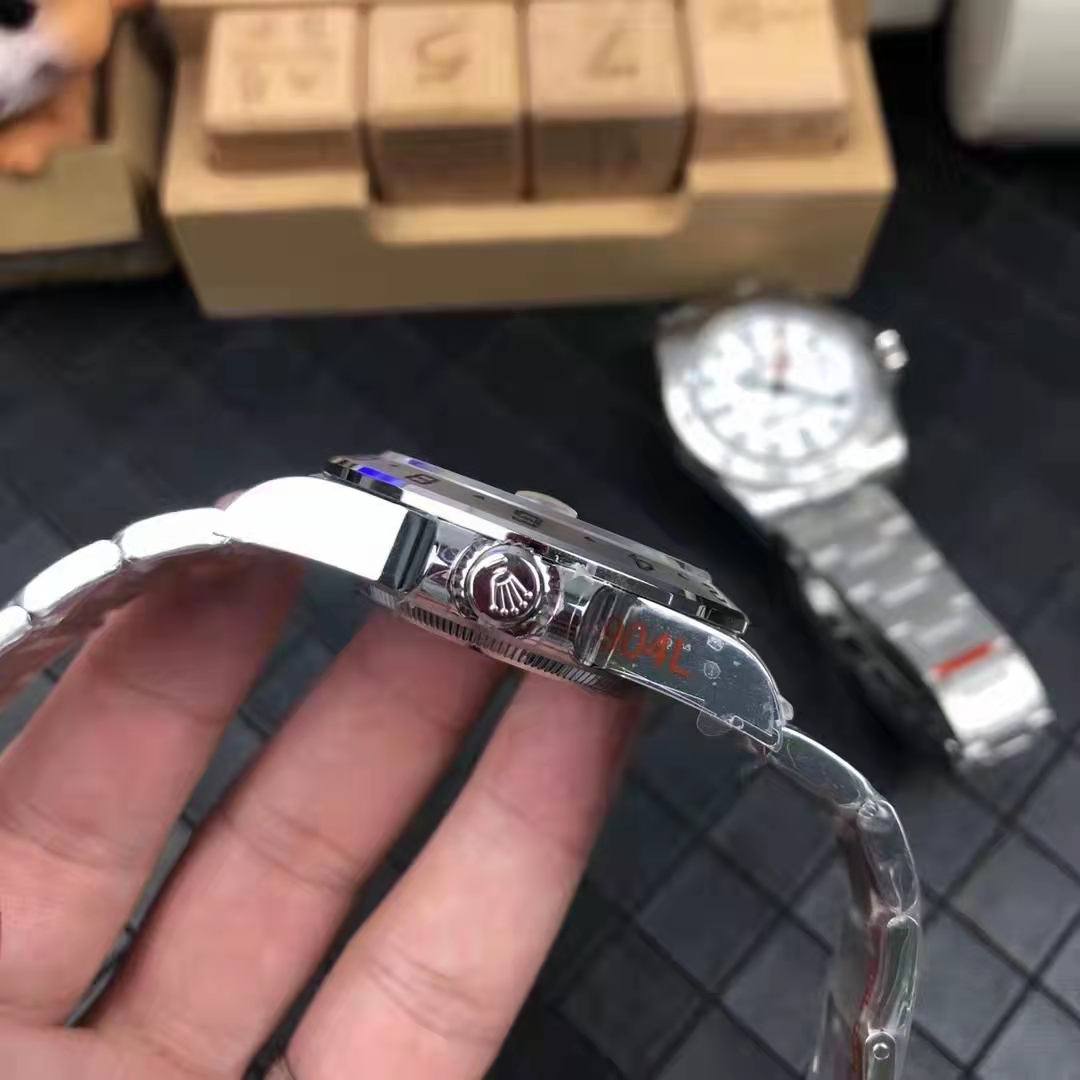
GM’s V4 Explorer II now has noticeably cleaner lug definition than earlier Explorer replicas from several competing factories. The brushing direction across the top surfaces appears more uniform, while polished edges remain sharper under side viewing angles. Crown guard shaping also feels closer to genuine Rolex proportions instead of the rounded appearance seen on older replicas.
The bracelet itself reflects GM’s broader manufacturing strengths. Over the last several years, bracelet quality has become one of the clearest indicators separating serious super clone factories from lower-tier producers. Poor bracelets create rattling sounds, inconsistent flexibility and weak clasp engagement.
On the V4 Explorer II, the Oyster bracelet feels significantly denser than many previous Explorer replicas. Link articulation is smoother without excessive looseness, and the clasp closes with a more stable mechanical click. While still not identical to genuine Rolex bracelet refinement, the overall wearing experience now feels coherent instead of compromised.
Another subtle improvement appears in bracelet brushing texture. Earlier Explorer replicas sometimes displayed rough horizontal grain patterns that reflected light unnaturally. GM’s newer brushing looks finer and more directional, especially under daylight.

Dial execution is probably where the V4 version improved most noticeably compared with older Explorer II replicas. Because the genuine watch has such a balanced dial layout, even small mistakes become highly visible. Earlier batches from multiple factories struggled with date alignment, marker spacing and GMT hand tone.
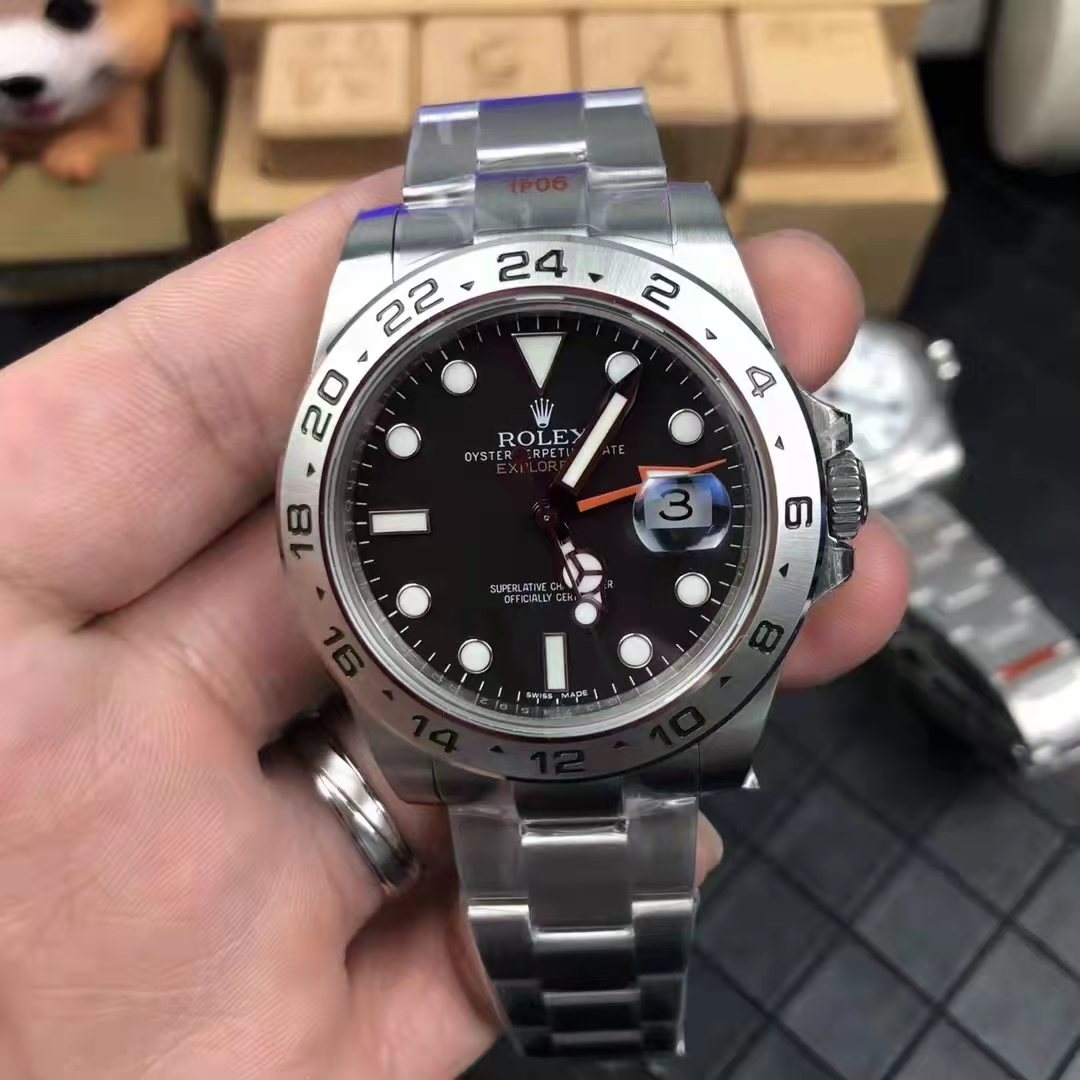
The date window on the GM V4 now appears deeper and more centered. Date numerals sit more naturally inside the aperture instead of drifting slightly upward or downward during transitions. Font thickness also feels closer to genuine Rolex printing standards.
One detail experienced collectors immediately inspect on Explorer II replicas is the orange GMT hand. Earlier factories often produced the hand using overly bright orange paint that looked artificial under natural lighting. GM appears to have adjusted this significantly on the V4 version. The orange tone now feels more muted and tool-oriented rather than decorative.
The lume marker surrounds are cleaner as well. On lower-quality Explorer replicas, marker borders sometimes appear too thick or uneven, especially on the Polar dial version where contrast becomes stronger. GM’s marker finishing now looks much more controlled.
The bezel numerals also received attention. Explorer II bezels are deceptively difficult because engraving depth and paint consistency dramatically affect realism. Cheap paint filling eventually degrades unevenly after contact with sweat or moisture. GM’s V4 bezel appears more resistant to that issue thanks to cleaner engraving and better numeral filling consistency.
These upgrades may sound minor individually, but together they change how the watch feels during actual ownership. Modern super clone quality is rarely about one dramatic feature. Instead, it depends on reducing many smaller flaws simultaneously.

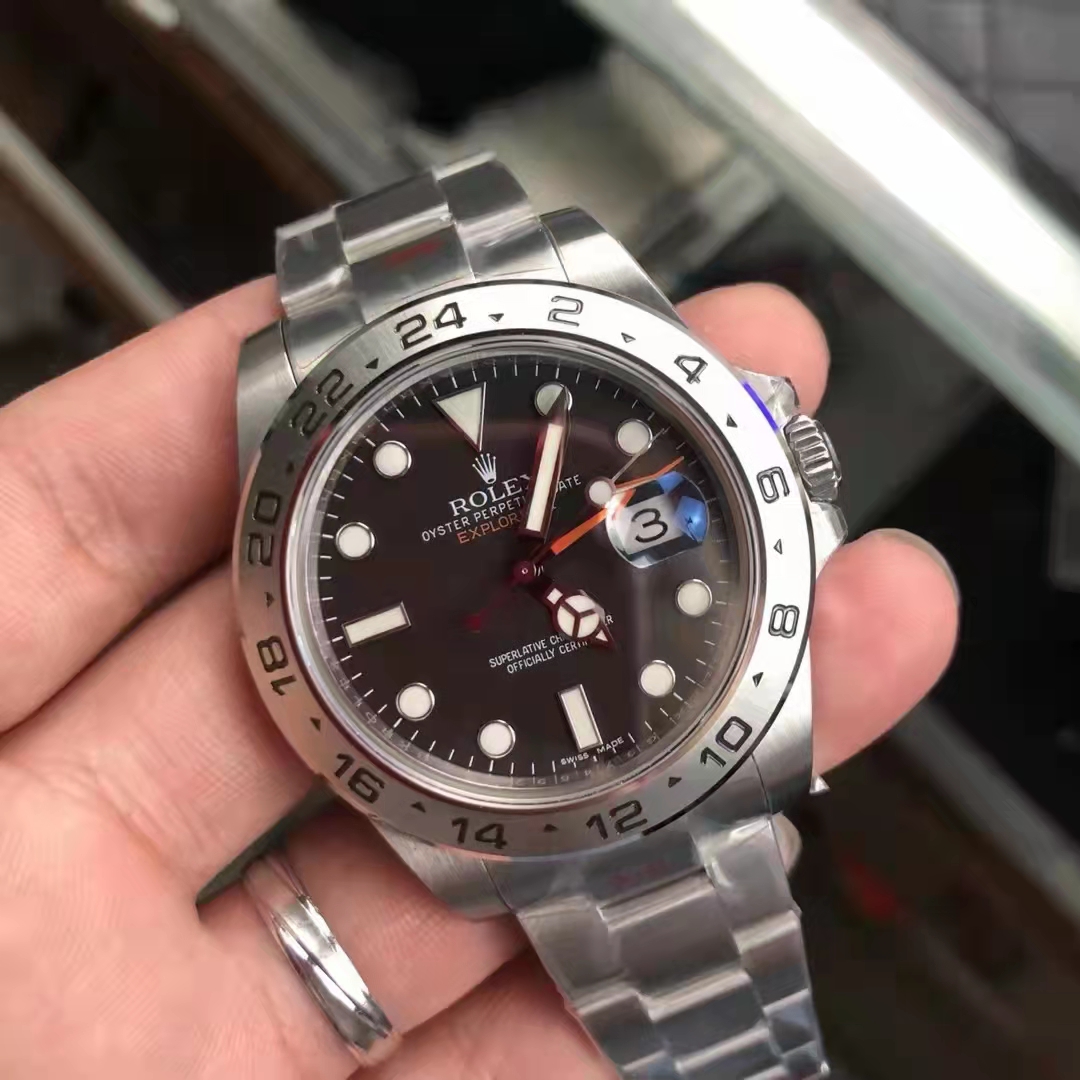
The black dial Explorer II remains the more understated option between the two configurations. Compared with ceramic sports Rolex models, it attracts surprisingly little attention in public. That characteristic actually appeals to many experienced collectors. Explorer II has always been more associated with functionality than status display.
The black dial version emphasizes this personality even further. The matte-style visual balance between the steel bezel and dark dial creates a more technical appearance. Large lume plots remain highly legible without becoming flashy.
Under direct sunlight, the brushing texture across the bezel becomes especially important. Earlier Explorer replicas often failed here because the bezel reflected light too aggressively. GM’s V4 brushing now behaves much closer to genuine Rolex Explorer II references, producing softer directional reflections rather than mirror-like glare.
The crystal quality also deserves mention. Previous Explorer II replicas sometimes suffered from cloudy cyclops magnification or excessive blue anti-reflective coating. GM’s current crystal appears cleaner and more neutral, preserving dial clarity without creating artificial reflections.
One overlooked strength of the Explorer II platform is long-term wearability. Ceramic Rolex replicas can sometimes chip or develop edge wear under heavy use. The brushed steel bezel on Explorer II ages differently. Small scratches often make the watch look more natural rather than damaged.
This contributes to why many long-time replica collectors still consider Explorer II one of the safest daily-wear Rolex super clones available today.

The 42mm case size also wears differently from what specifications suggest. On paper, Explorer II sounds large, yet the bezel geometry and relatively slim profile distribute wrist presence more evenly than many oversized sports watches. GM replicated these proportions surprisingly well.
The watch sits flatter than older Explorer replicas and maintains a more balanced center of gravity during wear. Bracelet integration with the case also feels smoother, reducing the top-heavy sensation that affected some earlier generations.
Another area where GM improved is crown threading. Earlier Rolex replicas from various factories often revealed themselves immediately through rough or unstable crown engagement. On the V4 Explorer II, threading action feels noticeably cleaner. The crown screws down with more controlled resistance instead of grinding unpredictably.
Lume consistency is also stronger than before. Explorer II depends heavily on nighttime readability because of its original expedition-oriented identity. Uneven lume application instantly damages realism. GM’s lume plots now appear more balanced in both brightness and color tone.
Interestingly, many experienced collectors believe Explorer II is actually harder to perfect than Submariner despite receiving less mainstream attention. The reason is that Explorer II lacks distraction elements. There is no ceramic bezel shine, no chronograph complexity and no luxury-focused dial texture hiding imperfections. Accuracy becomes more exposed.
That is why the GM V4 release gained respect inside serious collector circles faster than many louder Daytona releases. It addressed multiple long-standing Explorer II problems at the same time instead of relying on marketing language alone.

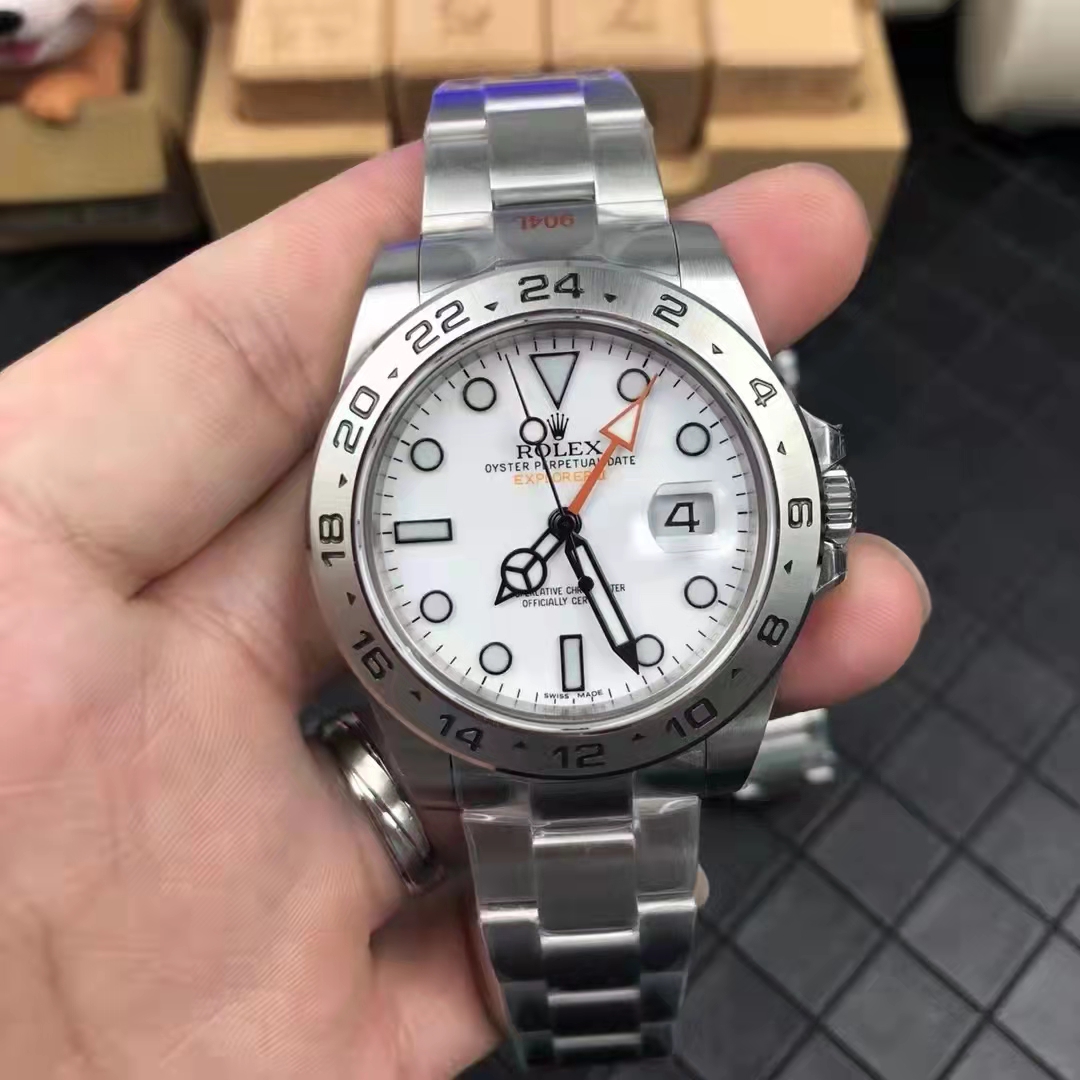
The Polar dial version creates a very different personality despite sharing the same architecture. White Explorer II references have always attracted a dedicated following because of their strong contrast and instrument-like appearance. The black marker surrounds against the white dial create a much more aggressive visual layout.
Historically, white Explorer II replicas were often harder for factories to perfect because white surfaces expose imperfections more clearly. Slightly uneven printing, incorrect marker borders or inconsistent dial tone become easier to notice immediately.
GM’s V4 Polar version performs much better here than earlier generations. The white dial now looks cleaner instead of slightly gray or creamy. Marker borders appear sharper, and the orange GMT hand integrates more naturally into the dial.
Under outdoor lighting, the Polar version probably delivers the closest emotional connection to genuine Explorer II aesthetics. The contrast between the white dial, orange GMT hand and brushed steel bezel captures the original spirit of the model extremely well.
Many collectors who originally intended to buy the black dial eventually switch to the Polar version after handling both side by side. The white dial simply gives the Explorer II a more distinctive identity compared with other Rolex sports watches.
Hand stack arrangement on the GM V4 also looks cleaner than older Explorer replicas. Incorrect GMT hand stack height has exposed countless replica GMT watches over the years. GM’s assembly appears more controlled, especially when viewed from lower side angles.
The rehaut engraving depth is still not completely identical to genuine Rolex standards under macro photography, but during normal wear the difference becomes extremely difficult for casual observers to notice.

One reason the Explorer II continues maintaining strong demand inside the super clone market is changing buyer behavior. In recent years, many experienced collectors moved away from highly recognizable Rolex hype pieces and started preferring more understated sports references. Explorer II benefits from this shift because it still carries strong Rolex identity while feeling less common than Submariner or Daytona.
That lower visibility actually helps replicas as well. Casual observers are generally less familiar with Explorer II details, which naturally reduces scrutiny during daily wear. At the same time, serious watch enthusiasts often appreciate the model more because it reflects genuine tool-watch heritage instead of pure luxury branding.
From a market perspective, GM Factory’s Explorer II V4 also demonstrates how much the super clone industry evolved over the last decade. Earlier generations of Rolex replicas usually forced buyers into compromise. Good case finishing often meant poor movement functionality. Strong movement architecture usually came with weak dial execution. Factories rarely succeeded across all categories simultaneously.
Modern high-end replicas are increasingly becoming balanced products instead of isolated technical achievements. GM’s Explorer II V4 represents this transition clearly. The watch combines convincing movement behavior, improved dial execution, refined finishing and stronger bracelet quality inside one package.
That does not mean the watch is flawless. Genuine Rolex manufacturing still maintains superior consistency under magnification. Experienced collectors can still identify differences around hand finishing, bezel edge sharpness and microscopic printing details. Yet compared with the state of Explorer II replicas several years ago, the improvement is substantial.

The most important achievement of the GM V4 Explorer II is probably not any single specification. Instead, it is the fact that the watch finally feels coherent as a complete product. Nothing immediately breaks immersion during real-world wear. The GMT function behaves correctly, the dial proportions remain balanced, the bracelet feels stable and the case finishing no longer exposes obvious weaknesses under natural lighting.
This is exactly what separates modern super clone watches from ordinary replicas. The goal is no longer simply producing something visually similar from a distance. Buyers now expect watches that recreate the genuine ownership experience as closely as possible within realistic technical limits.
Explorer II is actually one of the best platforms for measuring whether a factory truly understands this philosophy because the watch itself depends so heavily on proportion and functionality. A factory cannot rely on flashy ceramic shine or decorative complexity to hide mistakes.
GM’s V4 version therefore represents an important stage in the evolution of Rolex Explorer II super clones. It shows how modern factories increasingly focus on refinement instead of only specification marketing. Small improvements around movement behavior, bezel execution, crystal clarity and bracelet density collectively create a much stronger watch overall.
For collectors specifically searching for a high-end Explorer II replica during the current generation of super clone production, GM Factory remains one of the strongest options available today. The V4 edition may not generate the same social media hype as Daytona releases, but among serious Explorer enthusiasts, it quietly became one of the more respected Rolex super clone projects in recent years.

More importantly, the watch feels designed for people who actually intend to wear it rather than simply photograph it for dealer advertisements. That distinction matters increasingly inside today’s replica market. Many watches look impressive in controlled studio pictures but reveal weaknesses quickly during daily use. The GM Factory Explorer II V4 performs differently. Its strengths become more obvious the longer the watch remains on the wrist.
For a model that spent years sitting quietly behind Submariner and GMT-Master II inside the replica world, the Explorer II 216570 finally feels like it has reached the level of refinement many collectors wanted from the beginning. The V4 release may not be perfect, but it is one of the clearest examples yet of how far modern Rolex super clone manufacturing has progressed.