
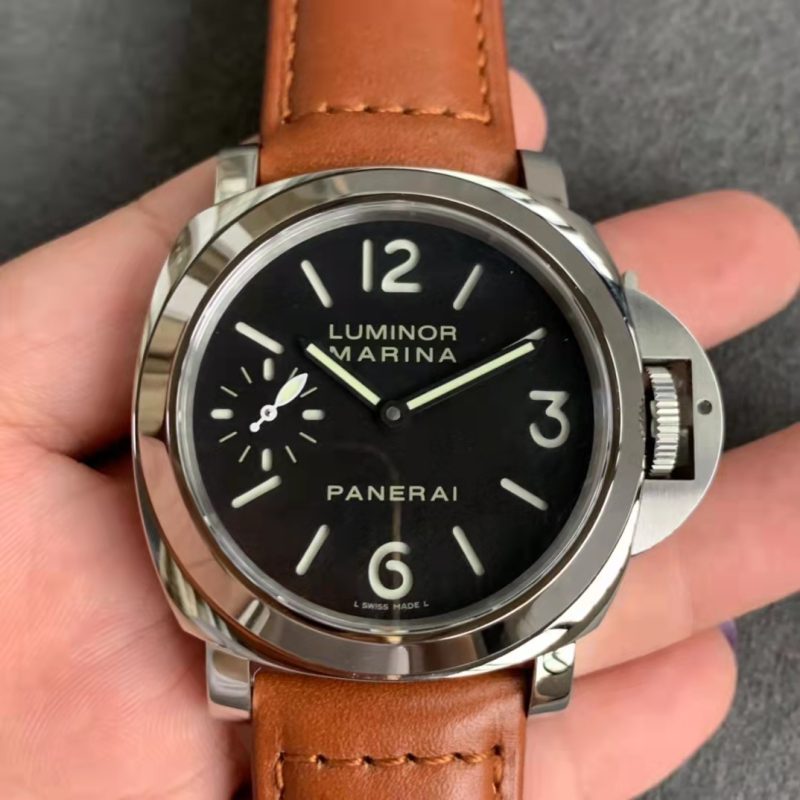
For years, Panerai occupied a niche corner of the replica watch market that behaved differently from mainstream Rolex or Audemars Piguet demand. Buyers were usually not chasing status recognition alone. They were chasing a specific design language built around oversized cushion cases, sandwich dials, crown guards, and hand-wound movements.
That difference matters because Panerai replicas are unusually sensitive to proportion errors. On a Submariner replica, small flaws can disappear inside a busy overall design. On a PAM 111, almost every visual element is exposed. Dial depth, crown guard geometry, bezel thickness, brushing texture, and hand shape all become immediately noticeable because the watch itself is so visually restrained.
When Noob and VS Factory disappeared, the Panerai replica segment lost more than two manufacturers. It lost factories that understood how subtle case geometry affected the entire character of these watches. Since then, most Panerai releases have felt inconsistent: acceptable from a distance, but disappointing under close inspection.
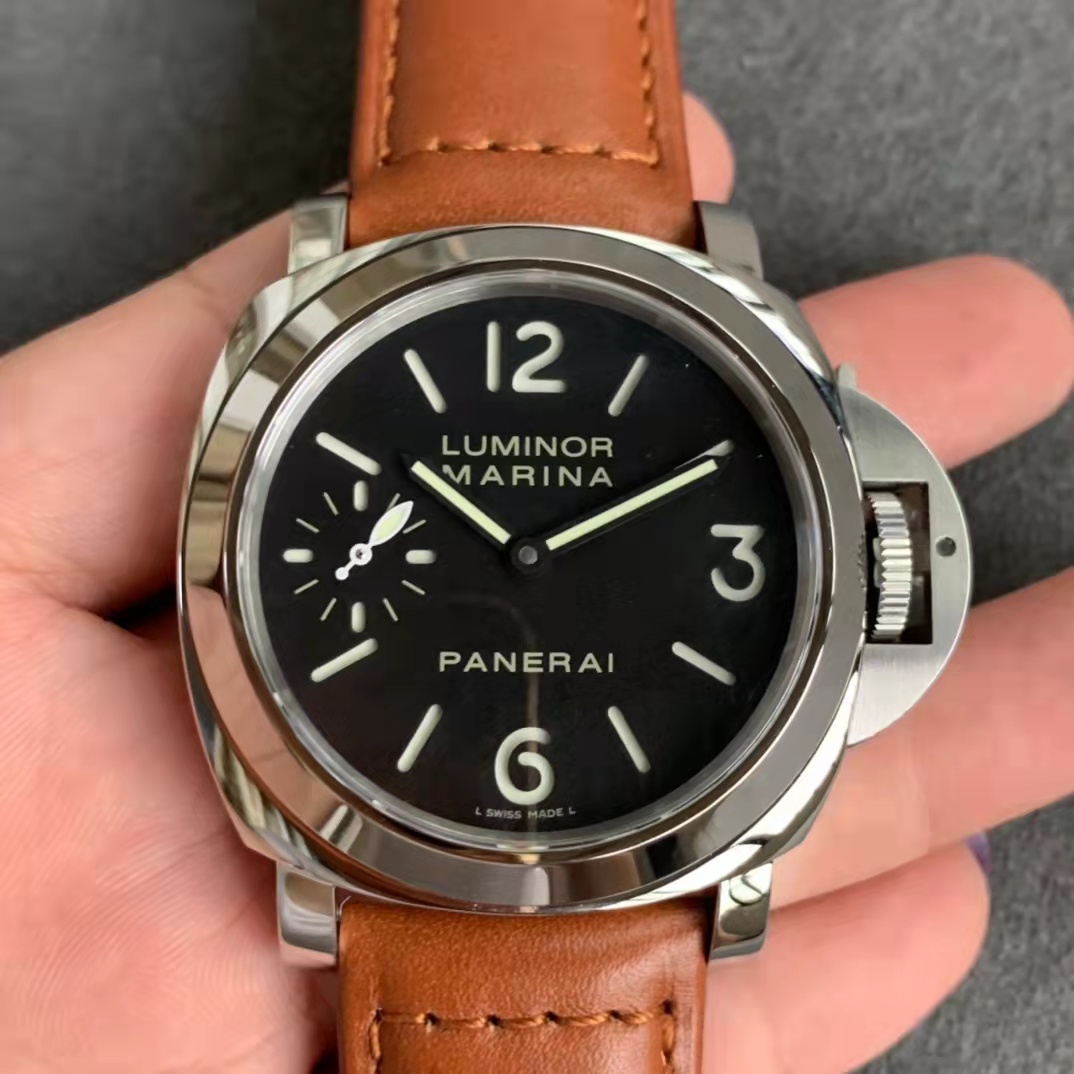
That is what makes the HW Factory PAM 111 more interesting than it first appears. The current market has very few manually wound Panerai replicas that still attempt to reproduce the older Pre-V and early Luminor atmosphere properly.
After spending time examining the watch directly, the conclusion is more nuanced than most forum discussions suggest. HW Factory gets several important fundamentals right, but there are also areas where cost-cutting becomes obvious once the watch is inspected closely.
The PAM 111 Still Represents The Core Panerai Formula
Even among genuine Panerai collectors, the PAM 111 remains one of the cleanest modern references the brand ever produced. The layout is simple:
- 44mm Luminor case
- Hand-wound movement
- Small seconds at 9 o’clock
- Sandwich dial construction
- No date window
- No polished ceramic or modern complications
That simplicity is exactly why the watch has aged well.
The manually wound movement changes the wearing experience significantly compared with automatic sports watches. The watch sits slightly flatter on the wrist, the case profile feels cleaner, and the daily winding routine becomes part of ownership rather than an inconvenience.
On the genuine PAM 111, the movement visible through the sapphire caseback is based on the ETA/Unitas 6497 architecture. Most replica factories also use variations of the same layout because the large bridge structure fills the display caseback correctly.
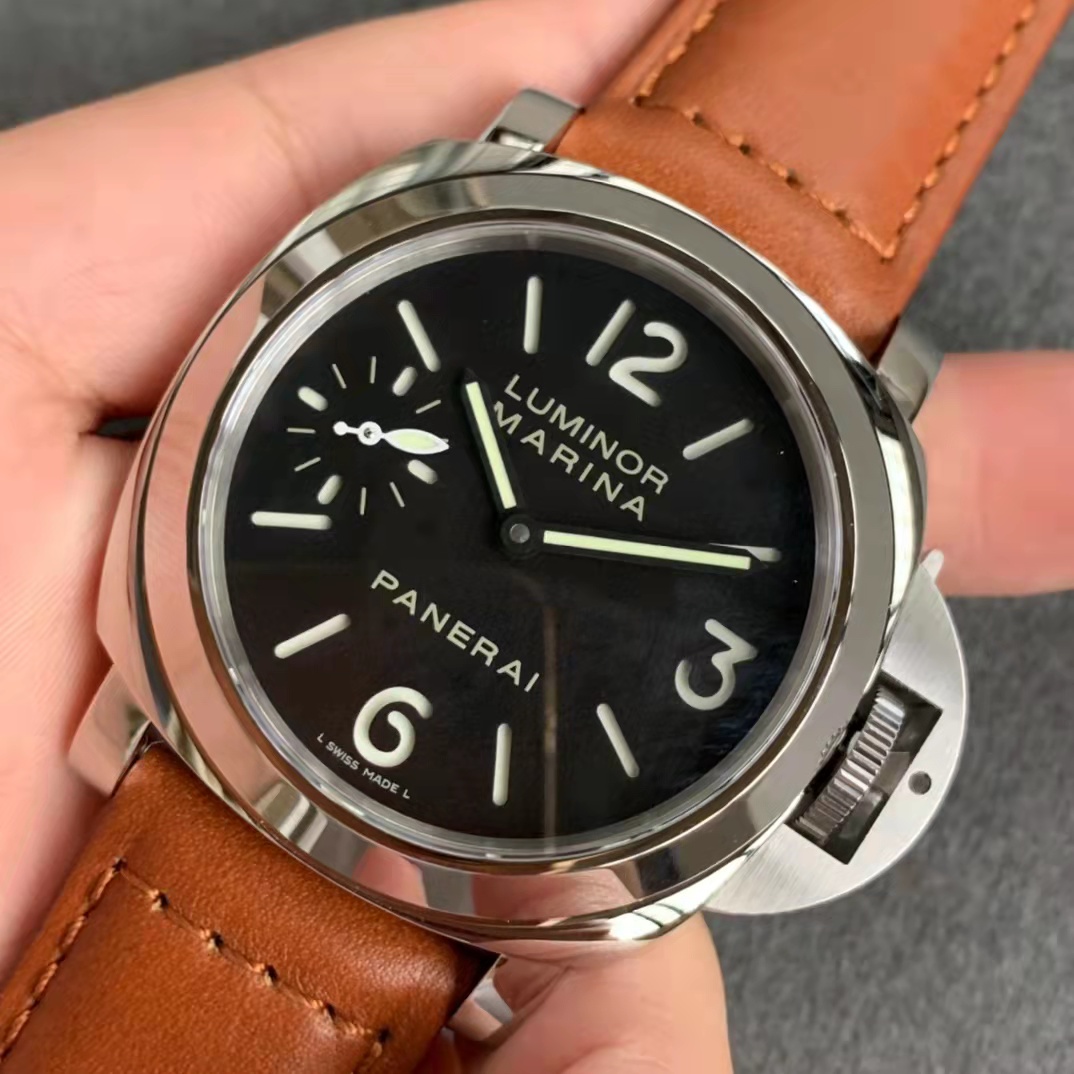
What makes the PAM 111 difficult to replicate is not mechanical complexity. It is visual balance.
The dial contains very few distractions. Once the design is stripped down to oversized numerals, a seconds subdial, and a crown guard, even small proportion mistakes become easy to notice. If the sandwich cutouts are too shallow, the dial loses depth. If the lume color is too white, the watch starts looking sterile. If the hands are slightly too polished, the entire watch begins feeling modern instead of military-inspired.
HW Factory understands most of these details better than many current Panerai competitors.
Case Dimensions And Wrist Presence
The case diameter measures approximately 44mm, which remains true to the original PAM 111 profile. More importantly, the lug curvature prevents the watch from wearing as large as the numbers suggest.
Measured dimensions on the HW version are approximately:
- 44mm diameter excluding crown guard
- 53.5mm lug-to-lug
- 15.5mm total thickness including crystal
- 24mm strap width
The thickness is still substantial, but the curved caseback helps distribute weight reasonably well across the wrist. Compared with many modern integrated-bracelet sports watches, the PAM 111 wears more like a compact instrument than a luxury jewelry piece.
The steel finishing is one of the better aspects of the watch. The upper case brushing runs consistently across the lugs without obvious directional inconsistency. Lower-tier Panerai replicas often show uneven brushing patterns near the crown guard transition, but HW avoids most of those problems.
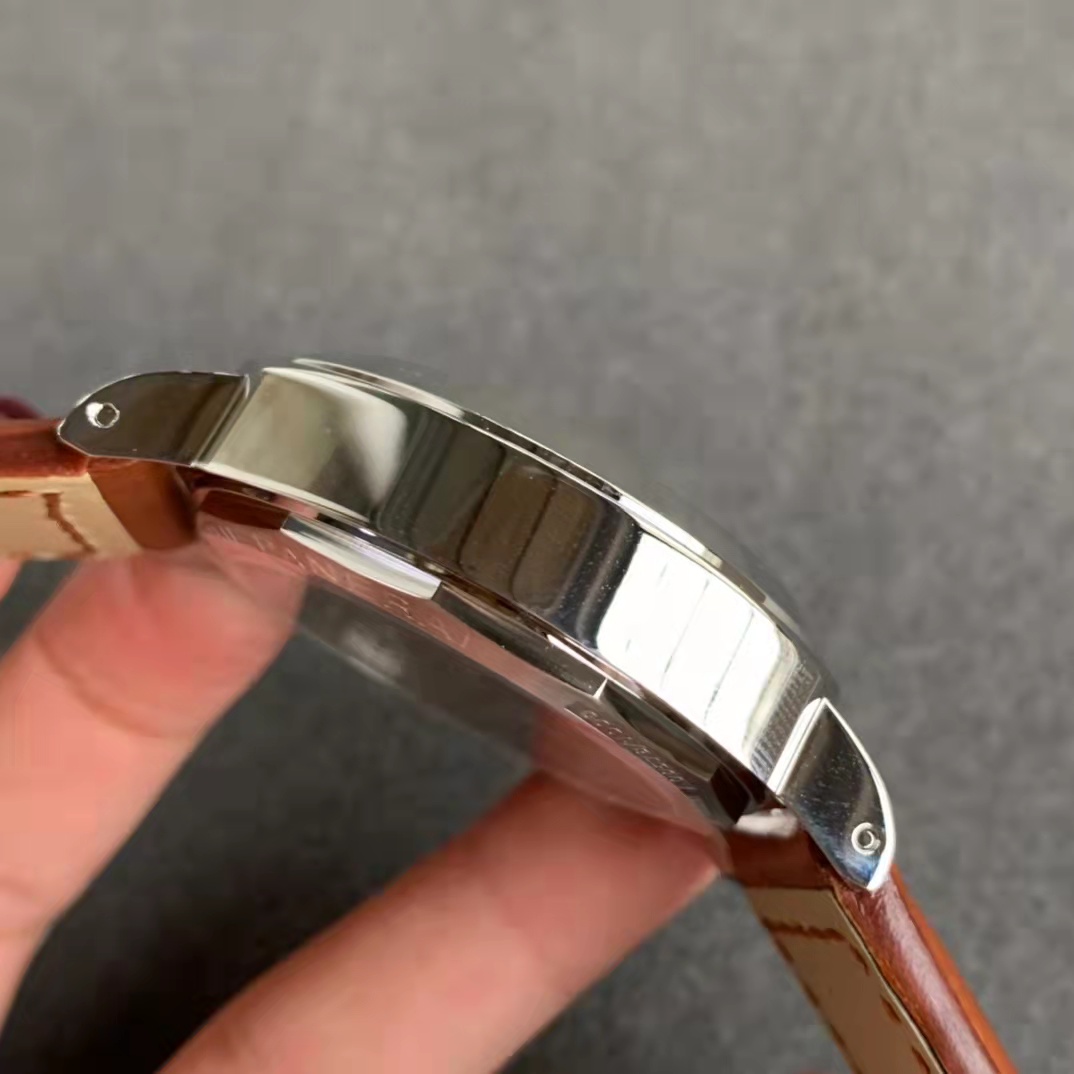
The polished bezel also deserves mention because many replica factories either over-polish the surface or leave the bezel edges too sharp. Here, the transition between brushed and polished surfaces looks reasonably natural under direct lighting.
There are still flaws. Under magnification, the bezel edge finishing is softer than genuine examples, and the mid-case lacks some of the crisp machining definition seen on older Noob V12 executions. But on the wrist, the overall silhouette remains convincing.
The Crown Guard Is Better Than Expected
On a Panerai, the crown guard is not a secondary detail. It defines the watch visually from almost every angle.
Many lower-quality replicas fail here in predictable ways:
- Lever sits too loose
- Bridge shape becomes too rounded
- Crown opening cutout appears oversized
- Lever pin finishing looks rough
HW Factory handles the crown guard surprisingly well.
The lever tension feels firm without becoming excessively stiff. The bridge profile also stays relatively close to older Panerai proportions instead of exaggerating the shape. Most importantly, the crown guard integrates naturally into the side profile of the case rather than appearing attached as a separate component.
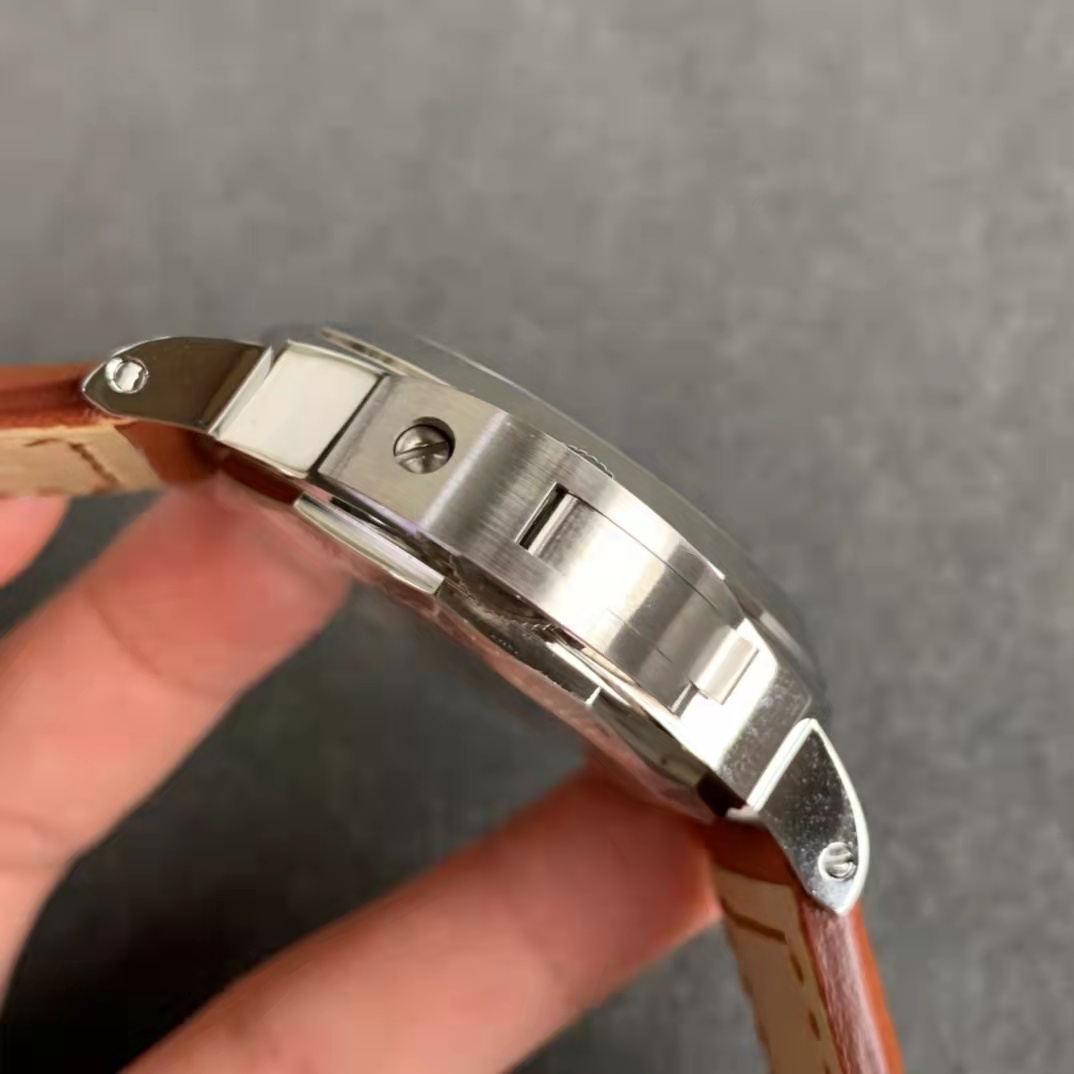
Functionally, the winding action feels acceptable for daily use. Crown engagement is slightly rougher than genuine ETA-based Panerai pieces, but there is no severe grinding or instability during winding.
That matters because hand-wound Panerai ownership involves direct mechanical interaction every day. Poor crown feel immediately damages the ownership experience.
The Sandwich Dial Is The Strongest Part Of The Watch
The dial execution is where HW Factory performs best.
The sandwich construction shows visible depth under natural lighting, especially around the oversized numerals at 12, 3, and 6. Some cheaper Panerai replicas simply print faux depth effects onto flat dials, but this watch uses proper recessed cutouts.
The lume tone also looks reasonably warm instead of bright artificial white. That small detail changes the personality of the watch significantly because Panerai designs rely heavily on contrast between matte black surfaces and aged luminous material.
Under low light, lume performance remains decent for this price category. Initial brightness is strong during the first 15 to 20 minutes after exposure. Long-duration retention is weaker than genuine Super-LumiNova, but still usable overnight for basic readability.
The small seconds subdial is also positioned correctly relative to the center stack. On many budget Panerai replicas, the seconds register sits too high because factories modify smaller movements to fit larger cases. HW avoids that issue here.
Dial printing is generally clean. Letter spacing remains consistent, and the minute markers do not show obvious bleeding under magnification. There are still small imperfections around some lume cutout edges, but nothing immediately distracting during normal wear.
The Weakest Area Remains The Movement Decoration
The biggest compromise appears once the watch is flipped over.
The movement architecture follows the expected 6497 layout, but the decorative finishing lacks refinement compared with older high-end Panerai replicas from Noob.
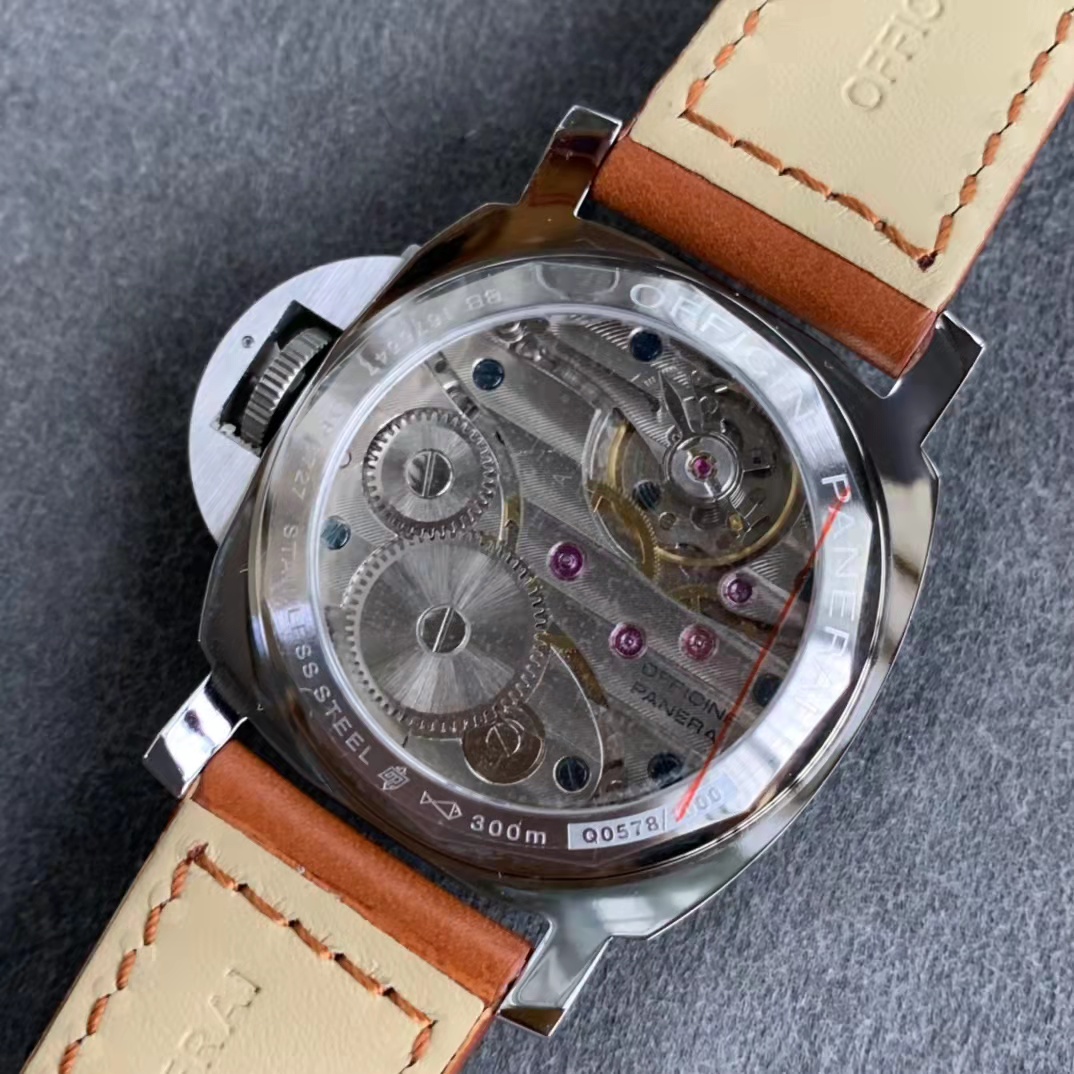
Several issues become noticeable under close inspection:
- Bridge finishing appears too flat
- Geneva stripe depth lacks variation
- Jewel coloration looks slightly artificial
- Screw polishing is inconsistent
- Engraving edges appear softer than genuine examples
None of these flaws affect basic functionality, but they reduce the emotional impact of the display caseback.
Timekeeping performance on the tested example remained acceptable:
- Approximately +9 seconds per day
- Power reserve around 43 hours
- No immediate amplitude instability observed during short-term testing
That performance is perfectly wearable for a replica hand-wound movement. The issue is visual rather than functional.
This is also why older Noob versions still maintain such strong reputation inside the Panerai community. Noob managed to create movement finishing that looked coherent with the overall vintage-mechanical personality of the watch. HW Factory gets close externally but stops short internally.
The Leather Strap Fits The Watch Better Than Rubber
One smart decision from HW Factory was pairing the watch with brown leather instead of rubber.
The distressed leather texture matches the industrial design language of the PAM 111 far better than modern sporty rubber straps. Panerai watches often look best when they appear slightly worn-in rather than pristine.
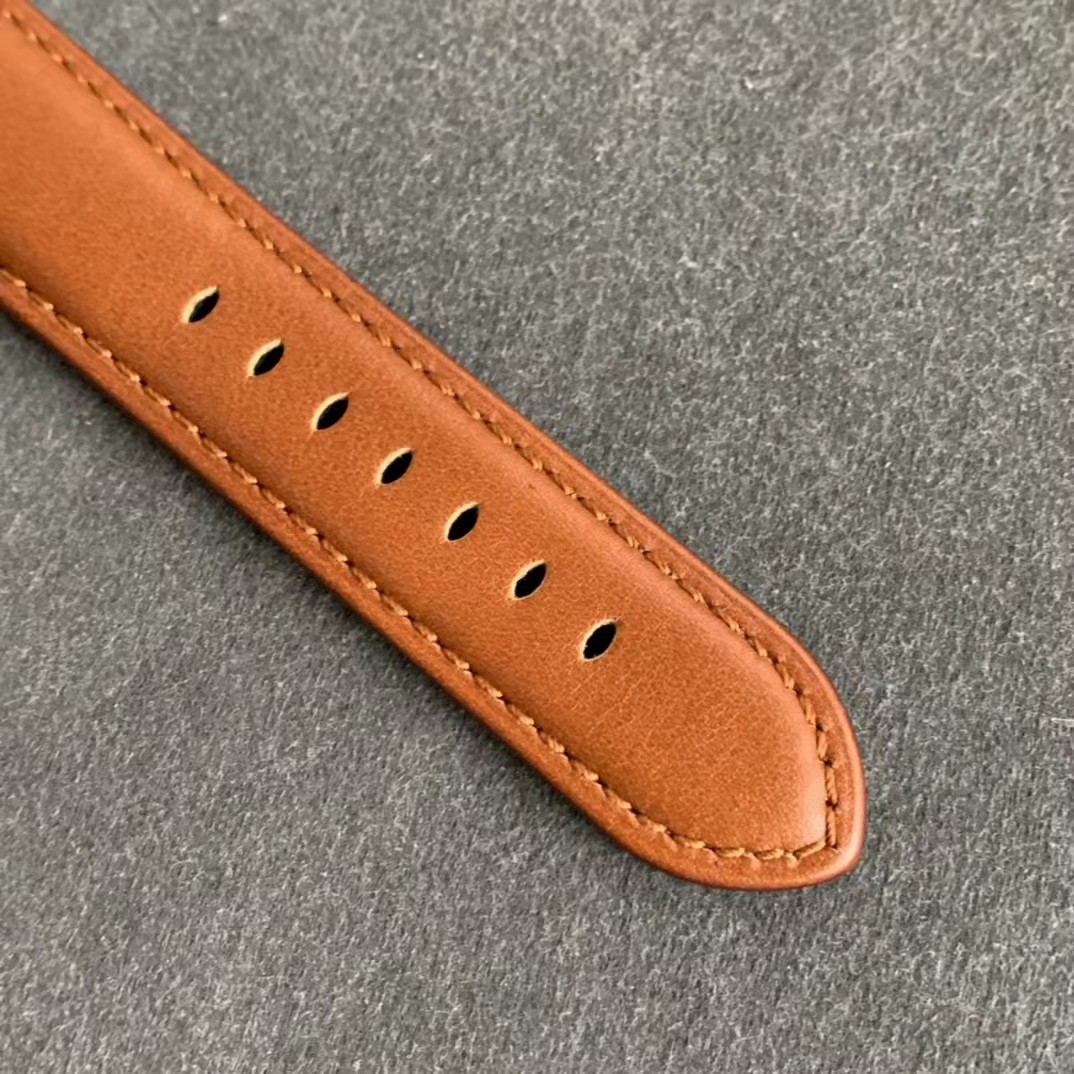
The strap itself is moderately stiff out of the box but softens noticeably after several days of wear. Stitching consistency is acceptable, although edge finishing remains simpler than genuine Panerai leather straps.
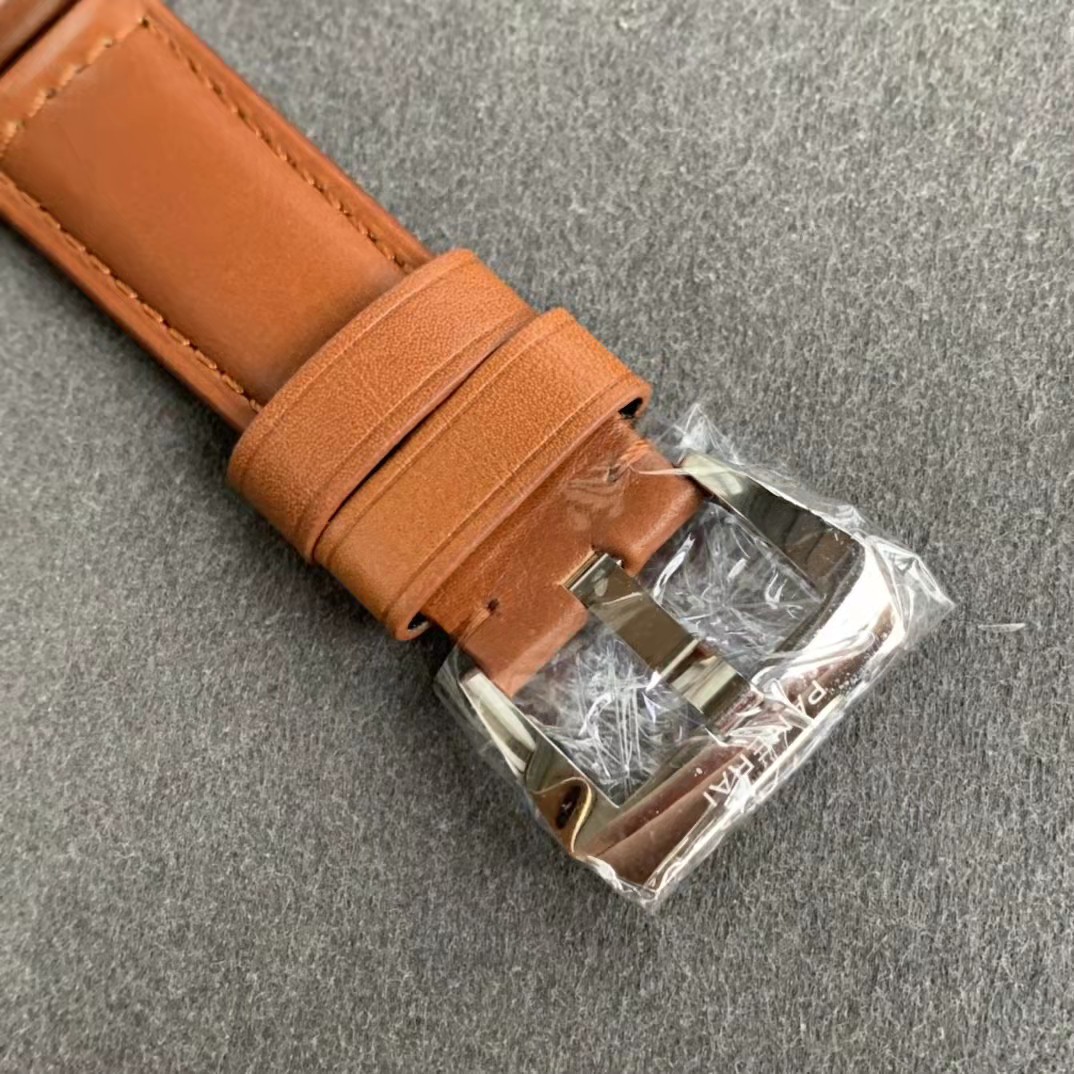
The included Pre-V style buckle also suits the watch visually. Buckle engraving depth is not perfect, but the overall shape feels proportionally correct.
In practical daily wear, the leather strap changes how the watch integrates into clothing. Instead of looking like a glossy luxury sports watch, the PAM 111 starts feeling closer to a military-inspired tool watch with vintage influence.
How Good Is The HW Factory PAM 111 Overall?
The answer depends entirely on the standard being used.
If the comparison is against peak-era Noob Panerai replicas, HW Factory still falls short in movement decoration and certain machining details. The watch does not fully recreate the level of refinement that made older Noob V12 models so respected.
But if the comparison is against the current Panerai replica market, the HW PAM 111 becomes much more competitive.
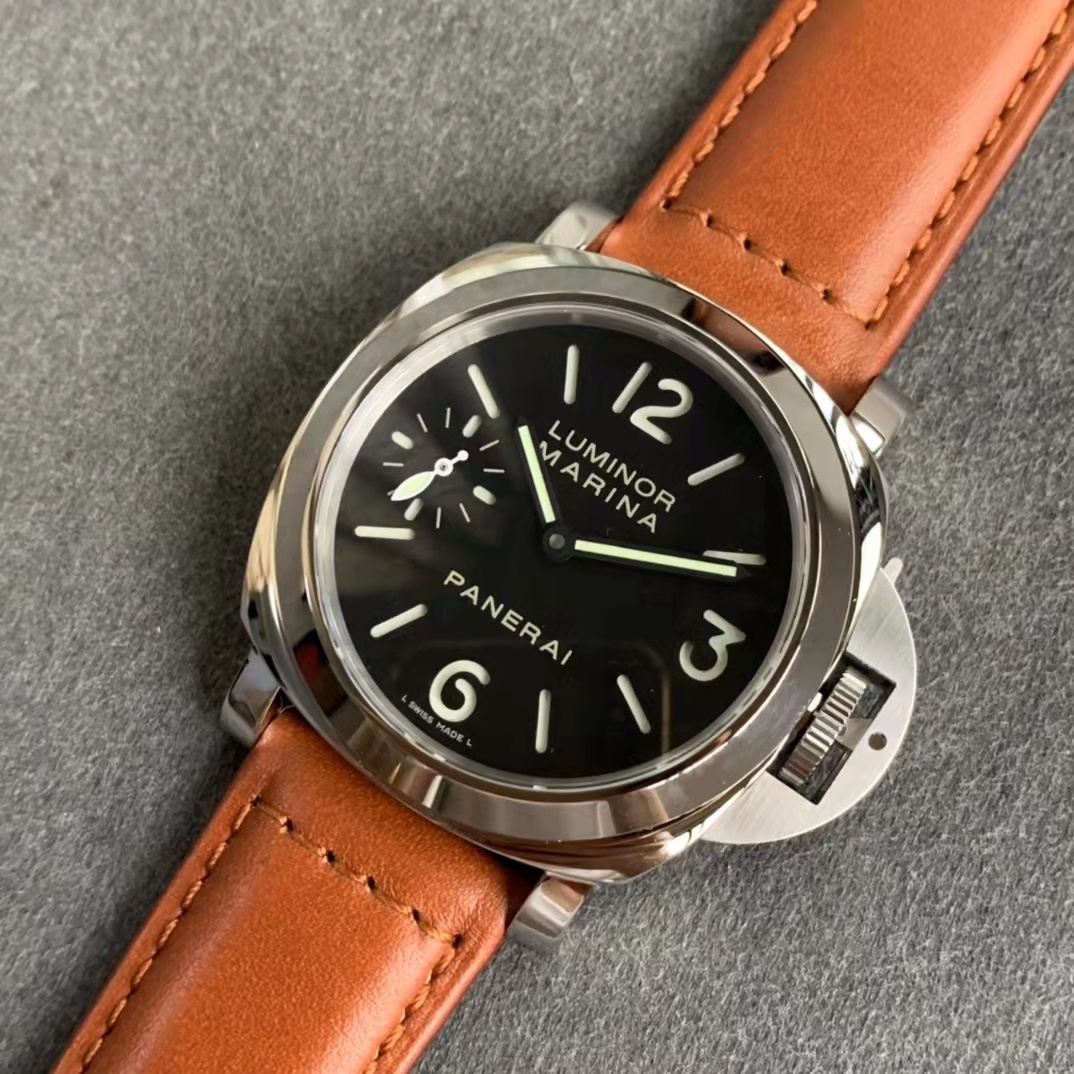
Most importantly, the watch captures the correct overall character of a PAM 111. The case proportions feel believable, the sandwich dial has proper depth, the crown guard works well, and the hand-wound format preserves the slower mechanical experience that originally attracted many collectors to Panerai.
It is not a flawless replica. Experienced Panerai enthusiasts will still recognize weaknesses in the movement finishing and certain case details. But unlike many recent Panerai releases, this watch feels like it was designed by people who actually understood why collectors liked older Luminor references in the first place.
That alone already separates it from a large percentage of the current market.
