
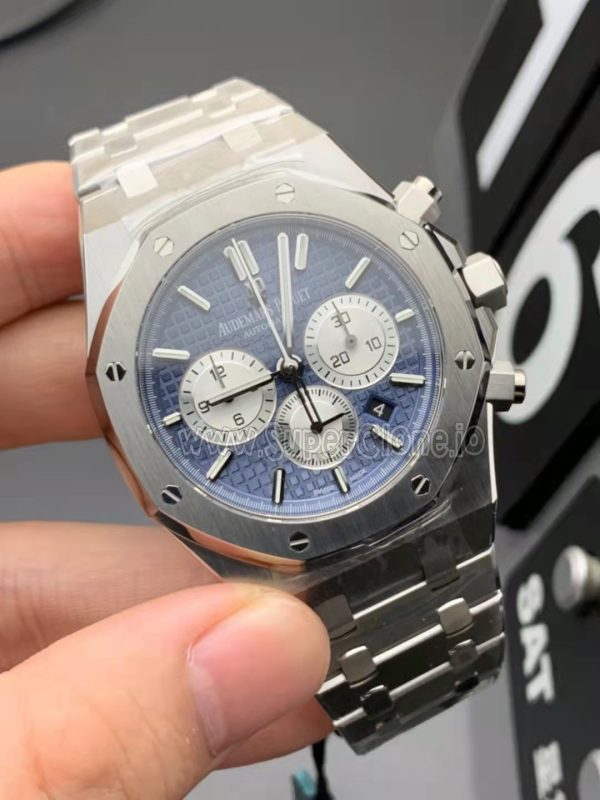
OM Factory AP Royal Oak Chronograph Review: The Dial Looks Right But The Chronograph Debate Remains
The Royal Oak Chronograph is one of those watches that looks simple from a distance but becomes difficult the moment a replica factory tries to reproduce it seriously. The case shape is familiar, the octagonal bezel is familiar, and the integrated bracelet is familiar, but the chronograph layout exposes every shortcut. That is the reason this model has never been as easy to recommend as a Submariner, Seamaster, Nautilus three-hander, or even some basic Royal Oak replicas.
The Three-Fold Challenge: A premium Audemars Piguet Royal Oak Chronograph replica has to solve three major problems simultaneously: the intricate geometry of the Royal Oak case, the correct position and proportion of the sub-registers, and the severe mechanical limitations of available replica movements.
OM Factory understood part of the problem better than some competitors, but it also left one important question unresolved for serious watch enthusiasts.
—
Dial Aesthetics: OM Factory’s Core Competitive Advantage
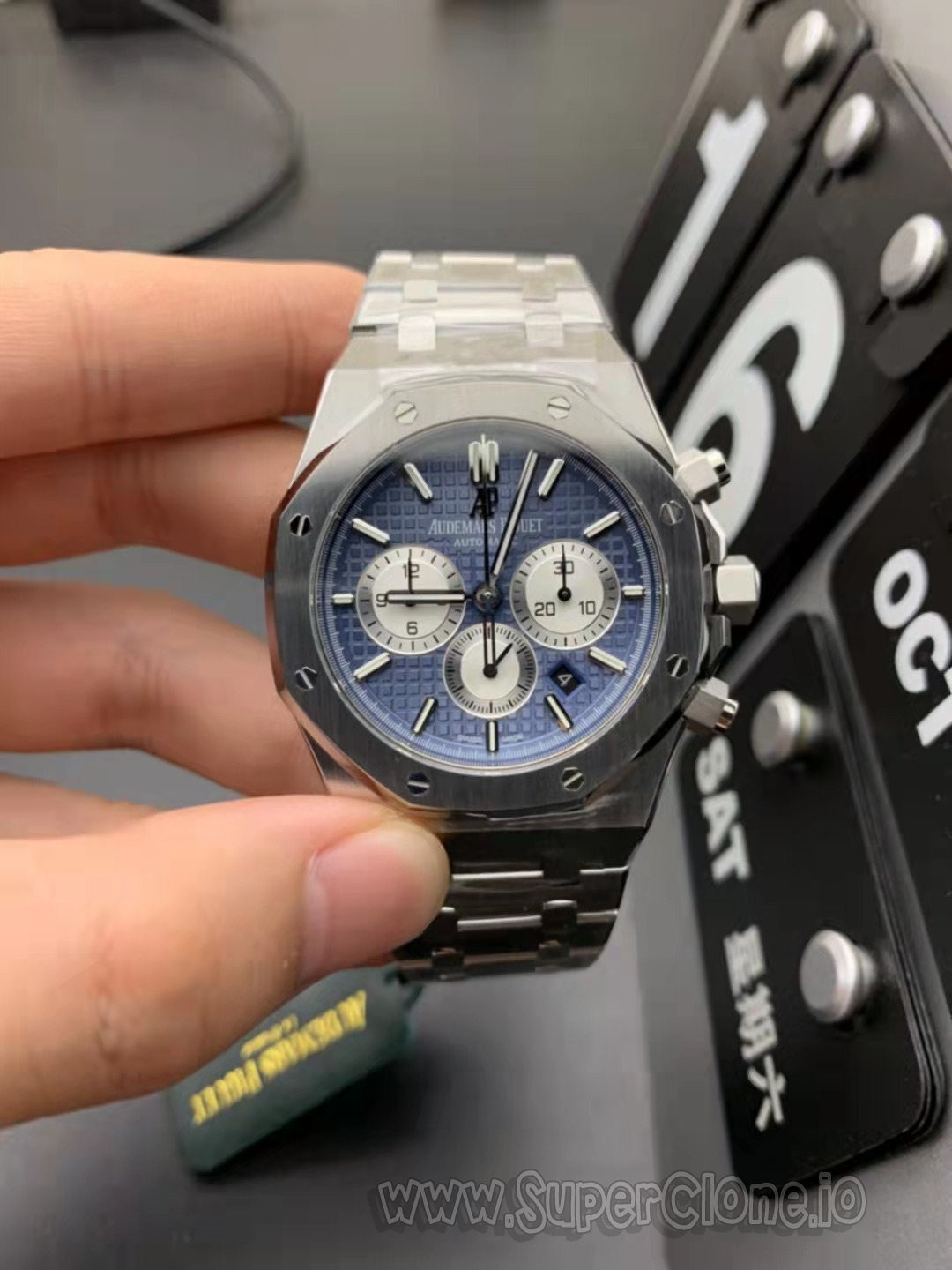
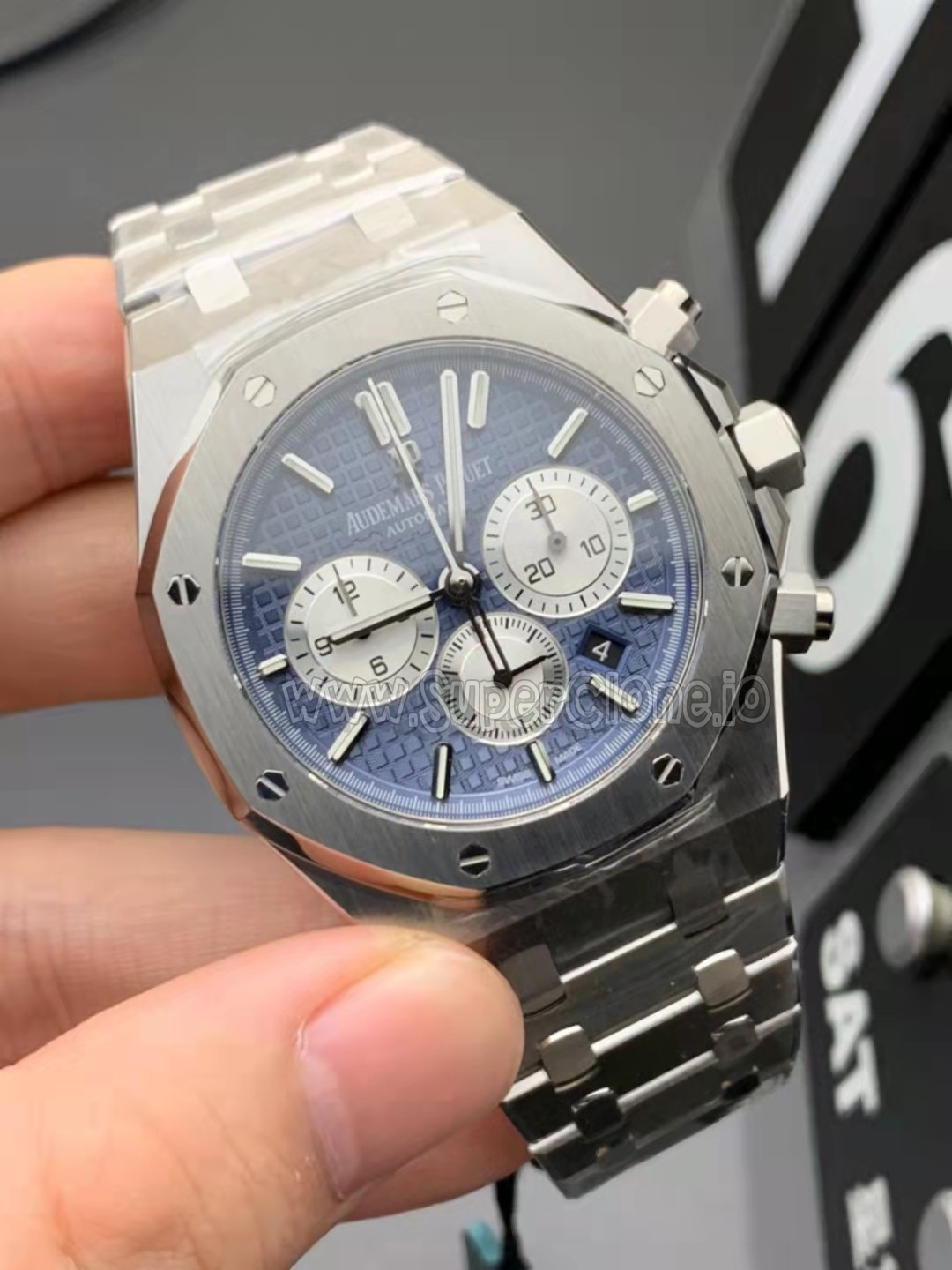
The blue dial version is probably the easiest one to understand first, because the Royal Oak identity is very direct here. The tapisserie-style dial, the brushed bezel, the hex screw layout, the bracelet shoulders, and the wide case profile all give the watch a strong AP presence before anyone even studies the chronograph function. This is exactly where OM Factory gains its first structural advantage.
Compared with some older Royal Oak Chronograph replicas, the dial layout on this version looks more acceptable at normal viewing distance. The subdials are not obviously misplaced in the way some BF versions were heavily criticized for in the forums. This matters a lot because the Royal Oak Chronograph is a dial-driven watch. On any luxury chronograph, a small shift in subdial spacing can make the whole watch look wrong even if the case finishing is decent.
That is also where the review should become more careful. The OM Factory Royal Oak Chronograph should not be judged only by front-facing photos of the dial. In the replica watch market, many watches look convincing in standard pictures, but the real weakness appears when the movement architecture, case thickness, bracelet feel, or pusher function is checked in hand.
For this model, the biggest issue is not whether the dial looks attractive. It does. The issue is whether the chronograph structure is acceptable for a buyer who already knows how the genuine Audemars Piguet Royal Oak Chronograph is supposed to work. OM’s version has the better-looking subdial placement compared with BF, but two of the subdials are decorative or fixed rather than fully functional in the same way as the genuine watch. That single detail changes the entire buying logic.
—
The Core Problem: Visual Accuracy vs. Mechanical Integrity
This is not a small subject in the super clone watches market. A three-hand watch can often reach a very high visual level if the factory controls the dial, case, bracelet, crystal, bezel, and movement decoration well enough. A chronograph is fundamentally different because the dial is not only decorative; it is a direct map of the mechanical movement underneath.
If the factory uses a base movement whose registers do not naturally match the genuine layout, it must choose between visual accuracy and mechanical function:
- The Working Subdial Compromise: Some factories choose fully working counters but end up with wrong, skewed subdial positions.
- The Frozen Subdial Compromise: Other factories (like OM) choose correct-looking subdial positions but sacrifice full chronograph function.
OM Factory took the second route on this Royal Oak Chronograph, and that is why the watch remains interesting but highly controversial among purists.
From a collector’s perspective, this choice is understandable. Most people who wear a Royal Oak Chronograph replica are not timing professional events every day. Many buyers care more about the external balance of the dial than whether the hour counter actually records elapsed time. In that sense, OM made the version that photographs better and wears more naturally from a visual standpoint.
However, experienced buyers also know that a fixed chronograph counter is not just a function issue; it becomes a confidence issue. Once the wearer knows that two of the subdials are not doing what they appear to do, the watch moves from “nearly complete clone” into a different category. It may still be a good-looking replica, but it is not a mechanically satisfying super clone.
—
Case Construction and Finishing: Handling the Edges
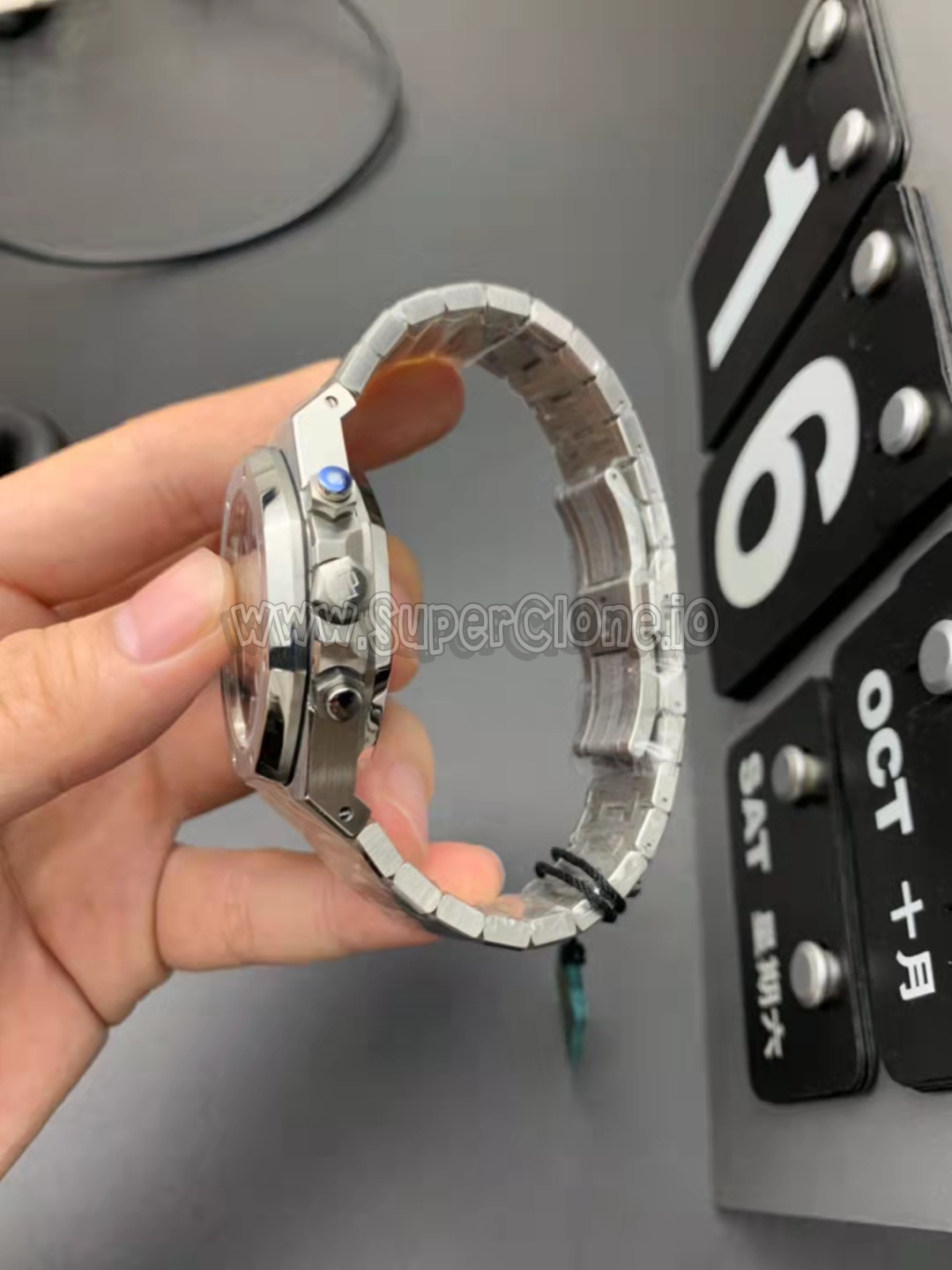
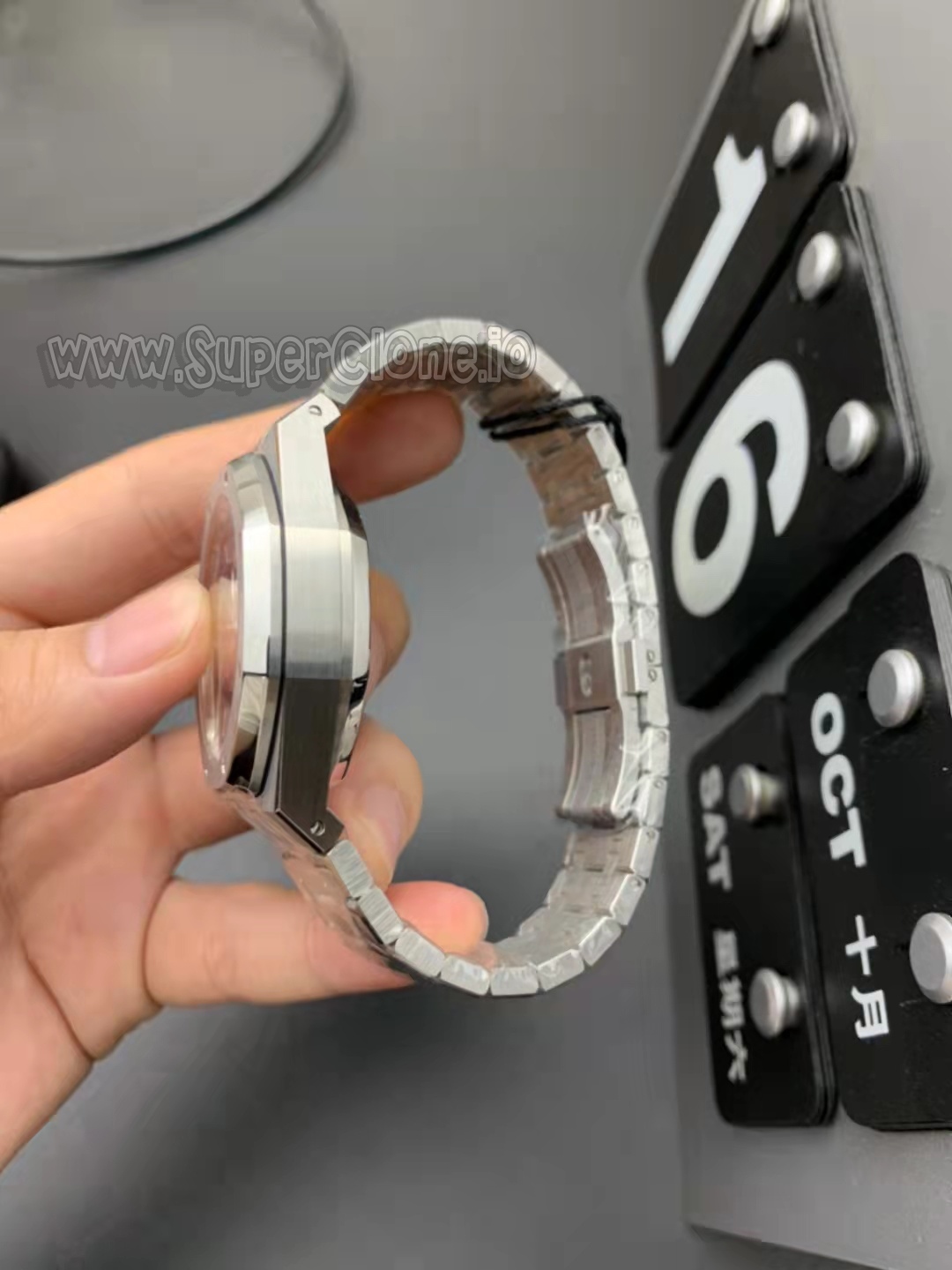
The crown and pusher side is worth looking at because Royal Oak cases are completely unforgiving. On many replica chronographs, the side profile immediately reveals whether the factory has paid attention to proportion. The Royal Oak Chronograph has a broad, architectural case, and its pushers should look integrated rather than simply attached to the case as afterthoughts.
OM’s case construction gives the watch enough presence, and the brushing direction creates the kind of industrial surface language people expect from AP. Still, this is not the same challenge as making a polished round chronograph case. Royal Oak finishing depends entirely on the transition between brushed planes and polished bevels, so the quality is not only about whether the surface shines; it is about whether the edges have discipline.
The Challenge of Case Thickness
The case thickness is another important topic. The listed size of this OM Factory version is 41mm by around 15mm, which means it has a strong, thick wrist presence. The genuine Royal Oak Chronograph is already not a thin dress watch, but replica versions using Asia 7750-based architecture often struggle to keep the case slim and natural.
Thickness is one of the easiest things to ignore in factory product photos and one of the easiest things to feel on the wrist. If the case becomes too tall, the Royal Oak bracelet no longer flows as cleanly from the lugs, and the watch starts to feel heavier and less refined. OM’s case is wearable, but it still belongs to the practical compromise category rather than the ultra-refined clone category.
The Daytona Benchmark
This is where the comparison with Rolex Daytona replicas becomes useful. When Noob and later other factories pushed Daytona replicas forward with cloned movements, the market became used to the idea that a chronograph super clone should not only look close but also function convincingly. That raised buyer expectations significantly.
In earlier years, false chronograph counters were tolerated more often because the market had fewer options and less technical knowledge. Today, buyers compare everything. If a Daytona can achieve better mechanical imitation, people naturally ask why an Audemars Piguet Royal Oak Chronograph replica still needs fixed subdials. The answer is not simple laziness. The AP layout, movement base, and cost of developing a closer bespoke movement solution all create a higher technical barrier. But the buyer still sees the final product on their wrist, not the engineering excuse.
—
The Integrated Bracelet: Executing the AP DNA
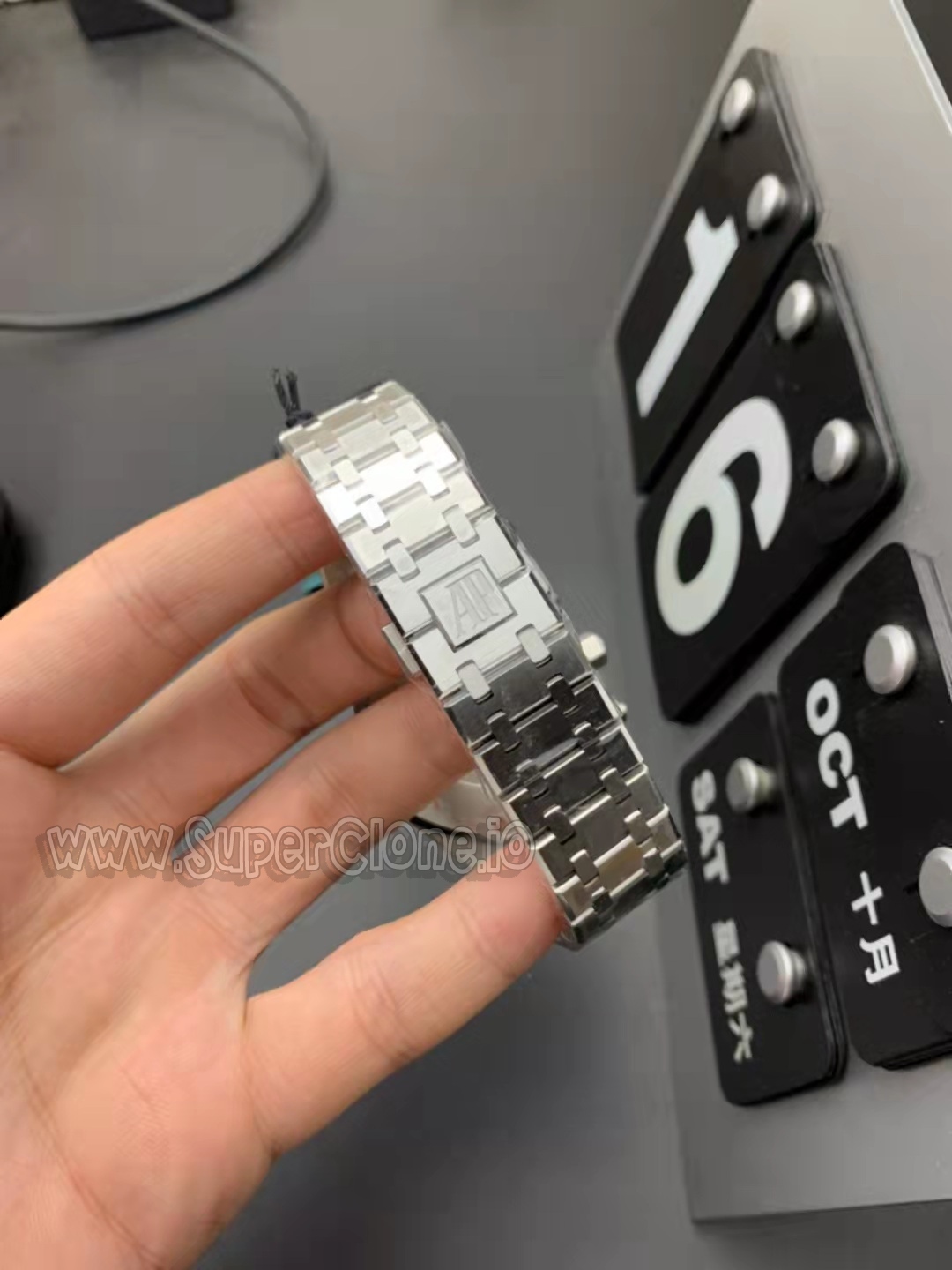
The bracelet is one of the strongest reasons people continue to consider Royal Oak replicas even when the movement has compromises. AP’s integrated bracelet is not just a strap; it is part of the design identity. A weak bracelet can destroy the watch faster than a slightly imperfect movement decoration.
OM Factory’s bracelet has the correct visual direction: brushed outer surfaces, shaped links, and a folding clasp structure that suits the case profile. For daily wearing, this matters more than many buyers expect. The Royal Oak does not wear like a conventional round watch. The bracelet must curve properly, the first links must not flare too aggressively, and the edges should not feel rough. When a factory gets the bracelet only halfway right, the entire watch feels cheaper than it looks in photos.
Factory Context and Historical Reputation
OM Factory had a stronger reputation in earlier periods, especially when its Omega Speedmaster-style chronograph replicas were discussed more often in the community. That background explains why many buyers paid attention when OM produced this Audemars Piguet Royal Oak Chronograph. The factory was not unknown, and it had some history with chronograph-style watches.
But reputation alone does not solve the AP problem. The market after raids, factory interruptions, and slower development cycles became more conservative. Factories were less willing to invest in difficult movement development unless the model had enough sales volume to justify the cost. The Royal Oak Chronograph has demand, but not the same broad demand as Rolex sports models. This may be one reason OM did not push a more complete movement solution for this watch.
Price and Value Perception
The price also needs to be understood in context. A price above 500 USD is not unreasonable for a well-made replica watch if the case, bracelet, dial, crystal, finishing, and movement decoration are strong. Many serious replica collectors accept that level easily when the watch feels complete.
The problem here is not the number alone. The problem is value perception. When a buyer pays that amount for a chronograph and learns that two counters are fixed, the watch feels expensive even if the visible construction is good. This is why the OM Factory Royal Oak Chronograph sits in a difficult position. It is too carefully made to dismiss as a cheap copy, but too compromised mechanically to be treated as a top-tier chronograph clone.
—
Movement Analysis: The Asia 7750 and Its Limitations
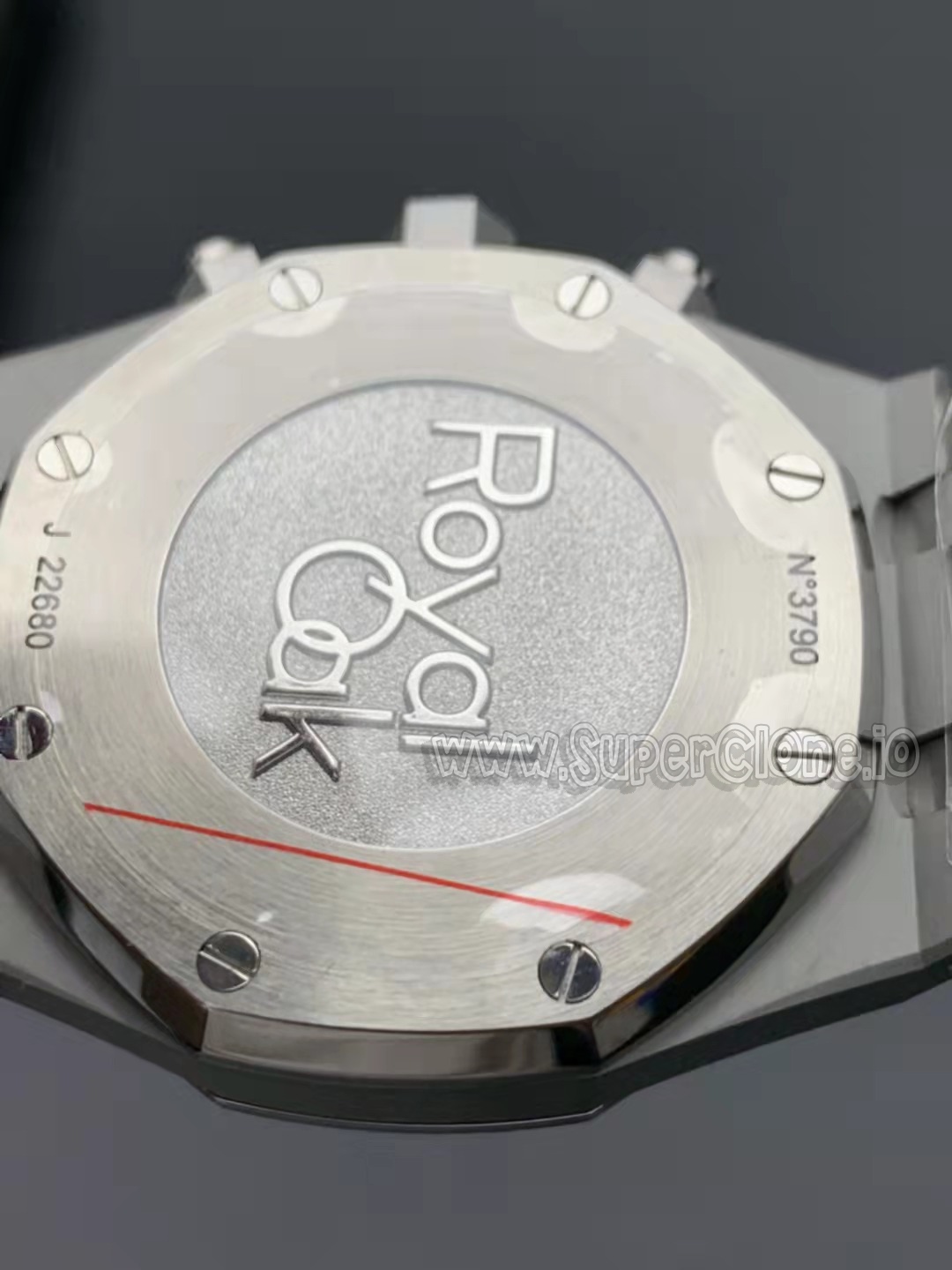
The case back and movement decoration help the watch visually, but they do not completely remove the functional concern. The movement is listed as an Asia 7750 automatic chronograph with a decorated plate and rotor made to resemble the AP 2385 appearance. This is a common strategy in complicated replica watches.
The factory uses a reliable and available base movement, then applies decoration to make the exposed view closer to the genuine watch. For buyers who only care about casual appearance, this may be enough. For experienced players, movement decoration is only one layer. They will ask whether the movement layout matches the dial, whether the chronograph counters work correctly, whether the pushers feel stable, and whether long-term service will be practical.
Asia 7750-based chronograph replicas have a complicated reputation. They made many chronograph replicas possible, but they also created many compromises. When used carefully and not abused, the movement can be serviceable, but it is not a magic solution for every chronograph layout. Factories often modify or decorate it to fit watches it was never designed to clone perfectly.
This is why some chronograph replicas become thick, some have incorrect subdial spacing, and some sacrifice function. The OM Factory Royal Oak Chronograph is a useful example of this larger industry problem. It shows that a watch can be visually attractive and still fall short of what serious buyers now expect from a modern super clone.
—
Deep Dive: The Three Dial Variants Compared
The OM Factory variant strategy relies on three main configurations, each altering the visual presence and forgiveness level of the watch on the wrist.
1. The Classic Blue Dial
The blue dial version may still be the most convincing option among the three shown here because the color gives the watch a stronger Royal Oak identity and hides some visual weaknesses better than lighter dials. Blue also matches the steel case and bracelet naturally. On a Royal Oak Chronograph, the dial texture and color depth matter because the watch has many visual elements competing for attention: tapisserie pattern, applied markers, three subdials, date window, hands, logo, bezel screws, and bracelet finishing.
If the dial color is too flat, the whole watch loses depth. If it is too bright, it becomes toy-like. OM’s blue version looks wearable, especially for buyers who want the classic Royal Oak Chronograph feeling without choosing the more contrast-heavy panda-style variants.
2. The White Dial with Blue Subdials
The white dial with blue subdials changes the personality of the watch. It is more graphic, more obvious, and more dependent on clean printing. Any misalignment or poor subdial finishing becomes easier to notice on a white dial. This is why light dial chronograph replicas can be risky. They may look attractive in promotional photos, but every small detail becomes more exposed in real use.
The blue subdials give the watch a sportier character, and the contrast makes the chronograph layout easier to read. For a buyer who values visual impact, this variant may be more interesting than the full blue dial. For a buyer who wants the safest daily-wear look, the blue dial still feels more forgiving.
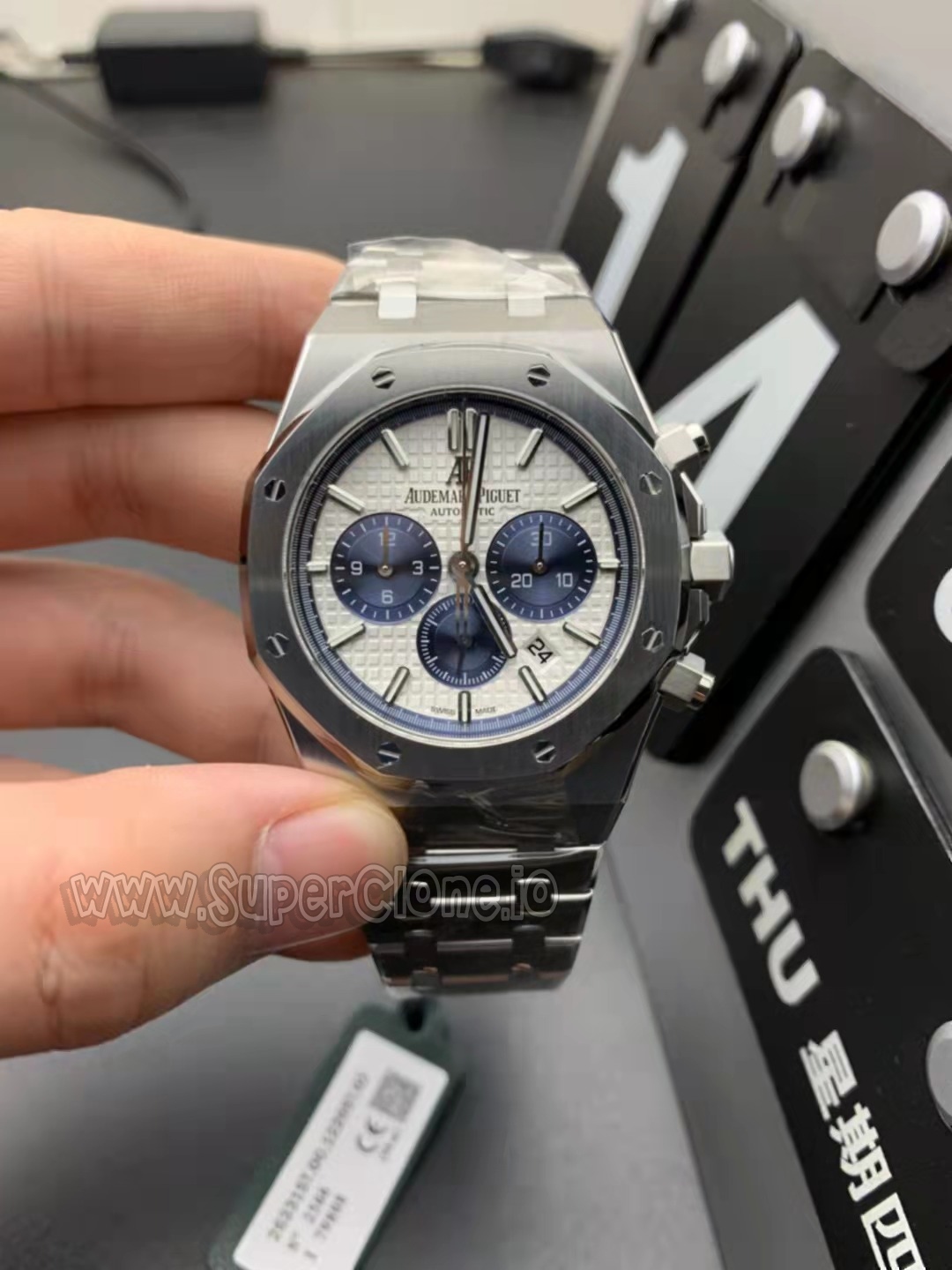
In the white dial version, the spacing of the registers becomes especially important. This is where OM’s decision to prioritize correct subdial position helps. Even if the movement function is not perfect, the watch avoids the immediate visual failure seen on some versions with wrong register placement.
A wrong subdial position on a Royal Oak Chronograph is not a small mistake because the entire dial is built around geometric order. The Royal Oak design language is about lines, angles, and measured spacing. When one part is off, the eye catches it quickly. OM deserves credit for understanding that a Royal Oak Chronograph replica must first survive visual inspection before the movement discussion even begins.

The blue subdial version also shows how much the chronograph registers control the character of the watch. On a three-hand Royal Oak, the dial texture is the main visual subject. On the Royal Oak Chronograph, the subdials become equally important. Their size, ring finish, hand length, and printing density all affect whether the watch feels balanced.
Replica factories often underestimate this. They focus on the big AP shape but miss the small dial rhythm. OM’s version looks more disciplined than many older attempts, but it still cannot escape the fact that the subdials are part of a mechanical story. If they are not all functional, the watch asks the buyer to accept visual correctness over operational truth.
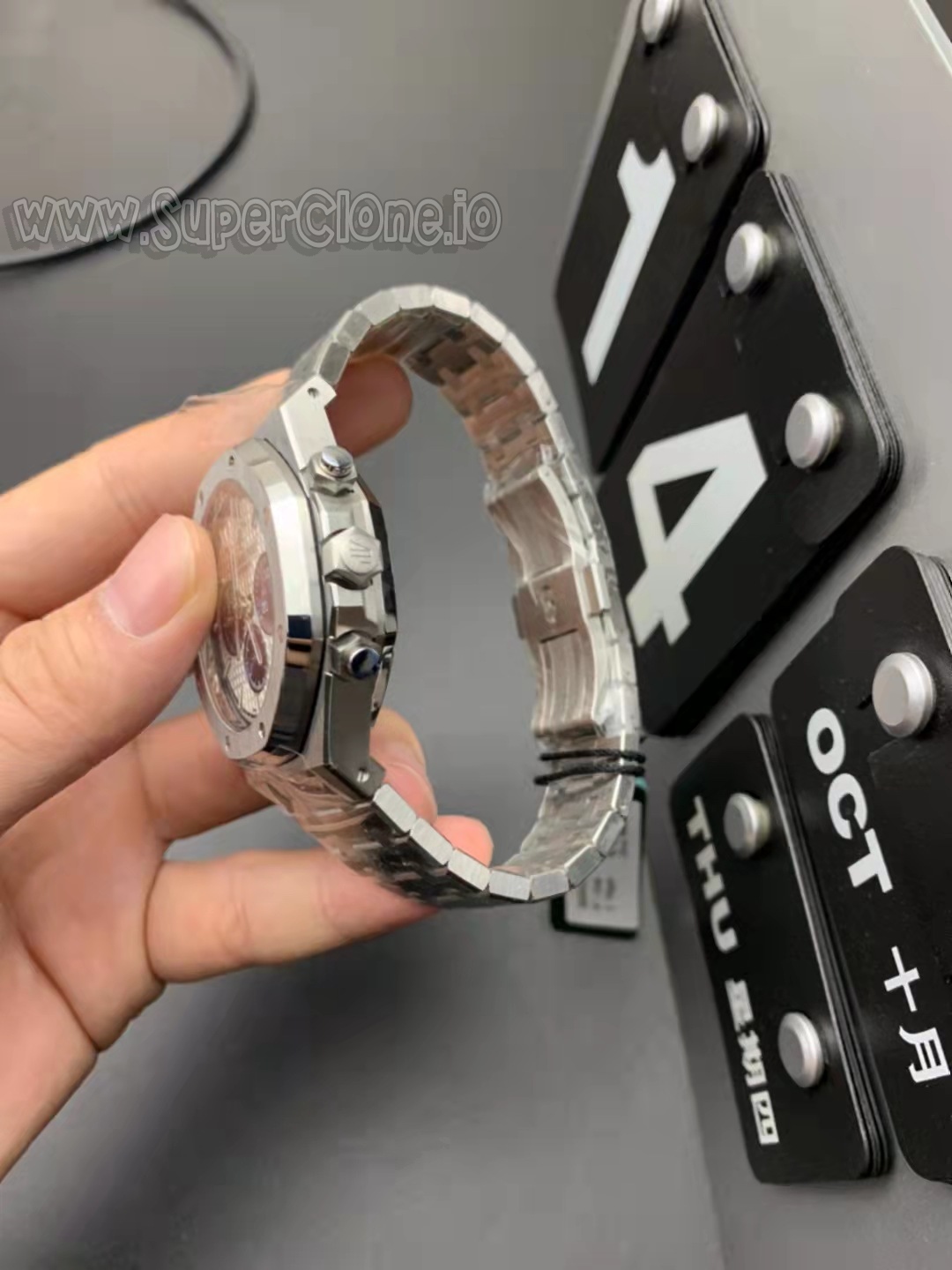
The crown-side view of the white dial version again reminds us that Royal Oak Chronograph replicas are not only judged from the dial. Pushers, crown guards, case flank brushing, and the transition into the bracelet all matter. A buyer who has handled many replicas will often check the side before checking the movement.
The side profile tells whether the watch has been built around a suitable structure or forced into shape around a movement compromise. OM’s watch looks solid, but the thickness and pusher architecture still place it in the traditional modified-7750 category. That is not necessarily bad, but it should be understood before purchase.
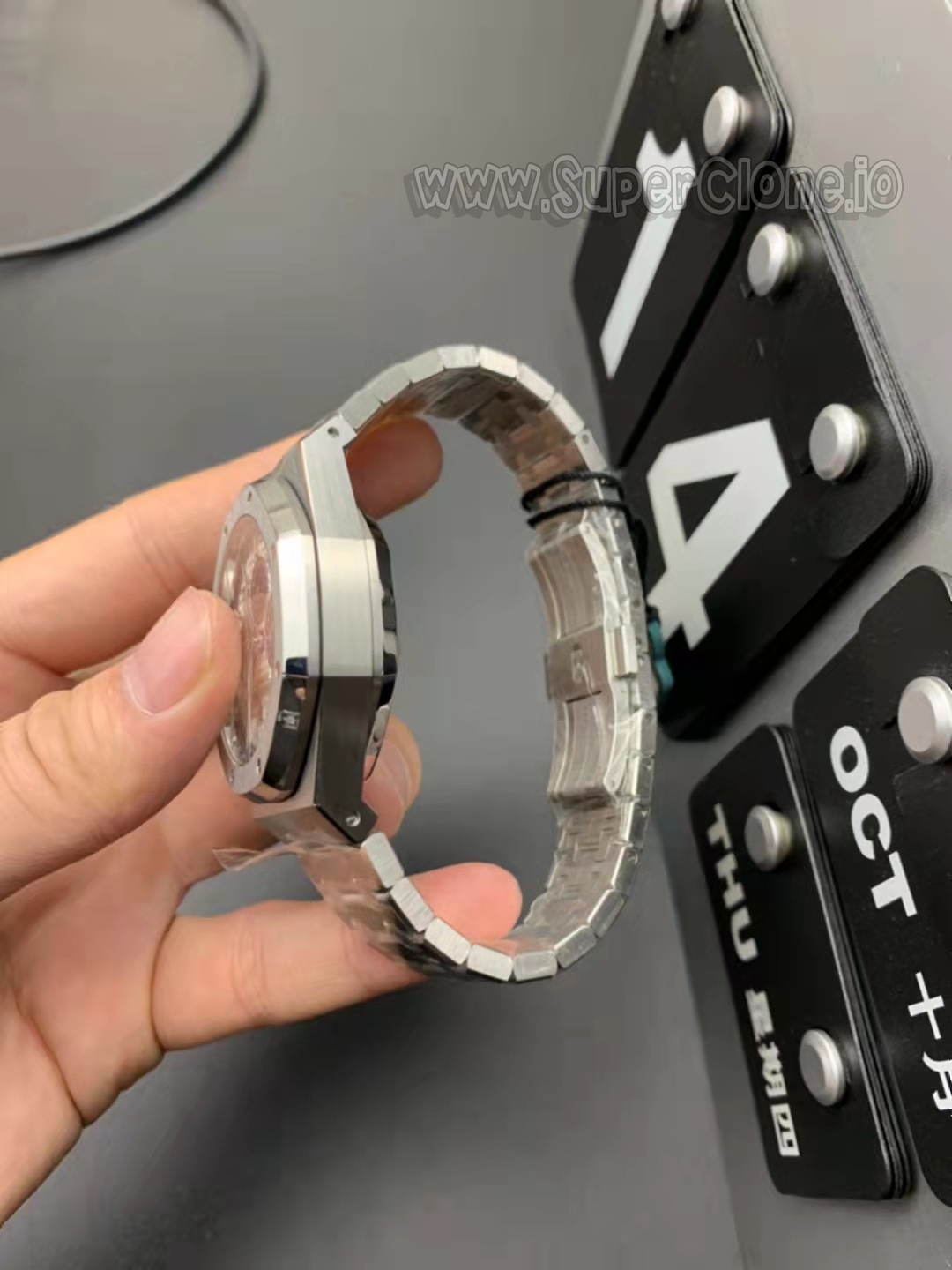
Case finishing is one of the areas where buyers should avoid exaggerated expectations. Some sellers describe every high-priced replica as if it has original-level brushing and polishing, but AP-style finishing is extremely difficult. The genuine Royal Oak is famous not only because of its shape but because of the precision of its surface transitions.
The bezel edge, screw seats, bracelet link bevels, and case shoulders all require clean finishing. A replica can look very good without reaching that original standard. The correct way to judge OM’s Royal Oak Chronograph is to ask whether it provides convincing wrist presence and acceptable detail for its market category, not whether it can survive side-by-side macro comparison with a genuine AP.
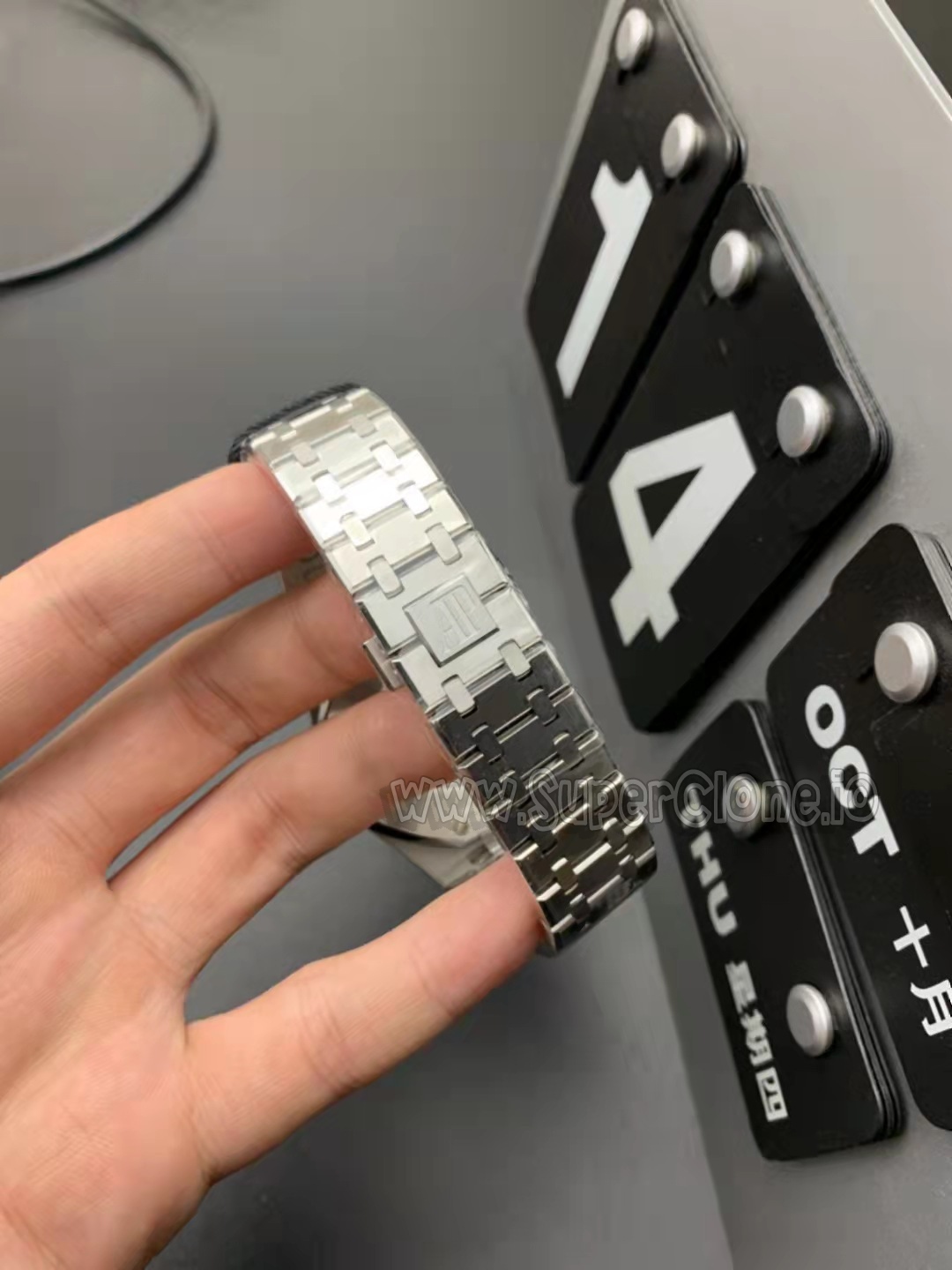
The bracelet finishing on the white dial version has the same importance as on the blue dial. In real wearing, a Royal Oak bracelet catches light constantly, especially because the links are broad and angular. If the brushing is rough, the watch looks flat. If the polished bevels are too wide or too soft, the case loses its sharp architectural character.
OM’s bracelet is acceptable for the category, but buyers should still manage expectations. The feel of the bracelet, clasp tension, and edge comfort may vary from piece to piece. This is one reason serious replica buyers often prefer real photos and handling comments instead of relying only on factory images.
3. The Black Subdial Version (The Panda Variant)
The white dial with black subdials may be the most traditional chronograph-looking variant. It has a stronger panda-style impression and may appeal to buyers who want high contrast more than subtlety. The black subdials give the watch a sharper face and help the registers stand out.
At the same time, this version also makes the chronograph identity more obvious, which means the fixed-counter issue may feel more psychologically important. When a watch visually announces itself as a chronograph, the buyer expects the chronograph system to matter. If the wearer rarely uses the function, this may not be a practical issue. If the wearer cares about mechanical honesty, it becomes difficult to ignore.
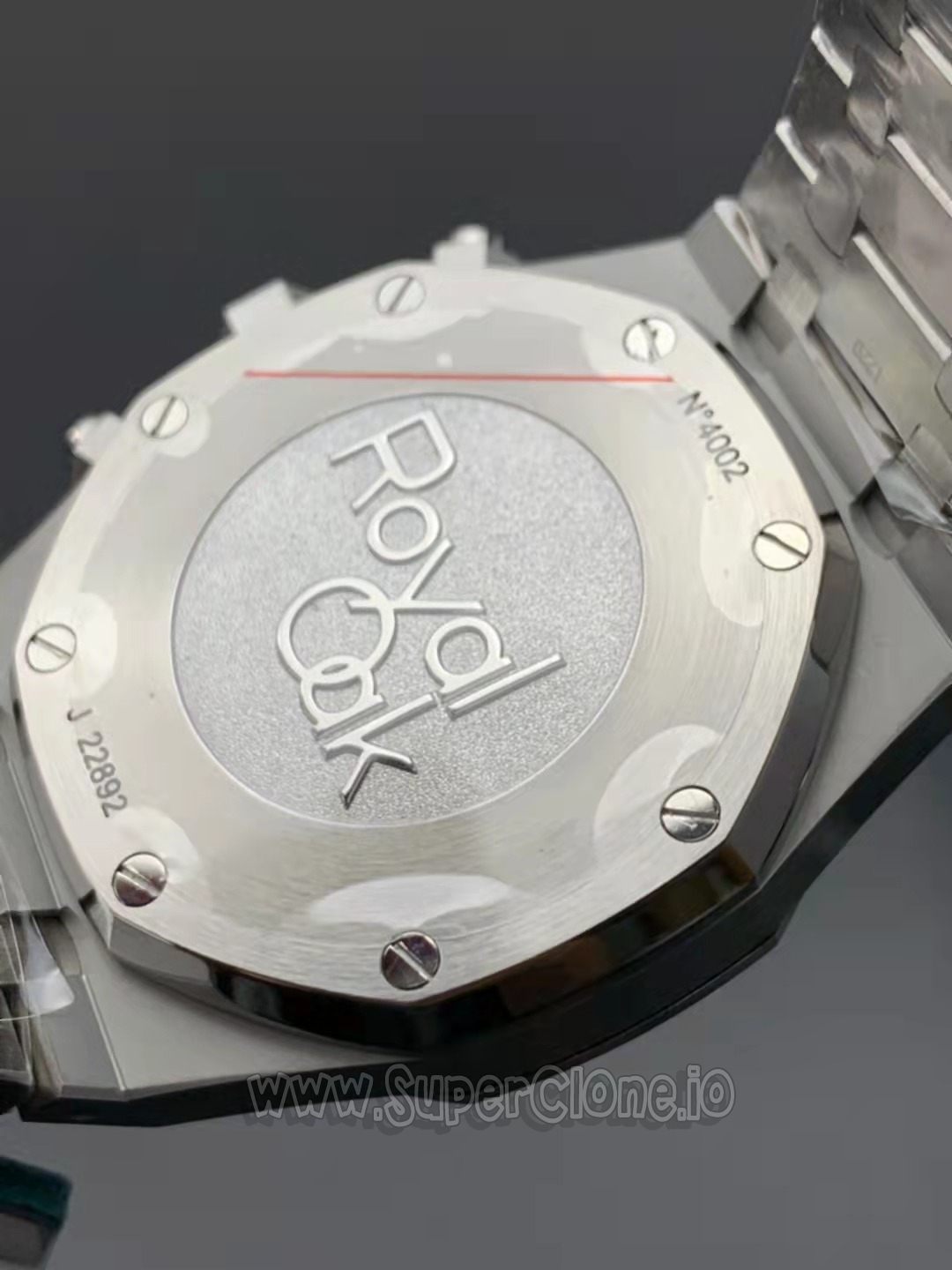
The case back of the white dial version again shows the decorated movement approach. This is not unusual, and it can be visually satisfying if the decoration is clean. However, the decorated rotor and plate should not be confused with a true cloned AP chronograph calibre.
The replica watch industry often uses movement decoration to close the visual gap, especially through display backs. That can be acceptable when the buyer understands what is inside. Problems begin when sellers describe the watch as if the movement architecture is fully equivalent to the genuine model. A more honest reading is that OM created a visually improved Royal Oak Chronograph replica around an available chronograph base, not a full mechanical clone of the AP 2385 structure.
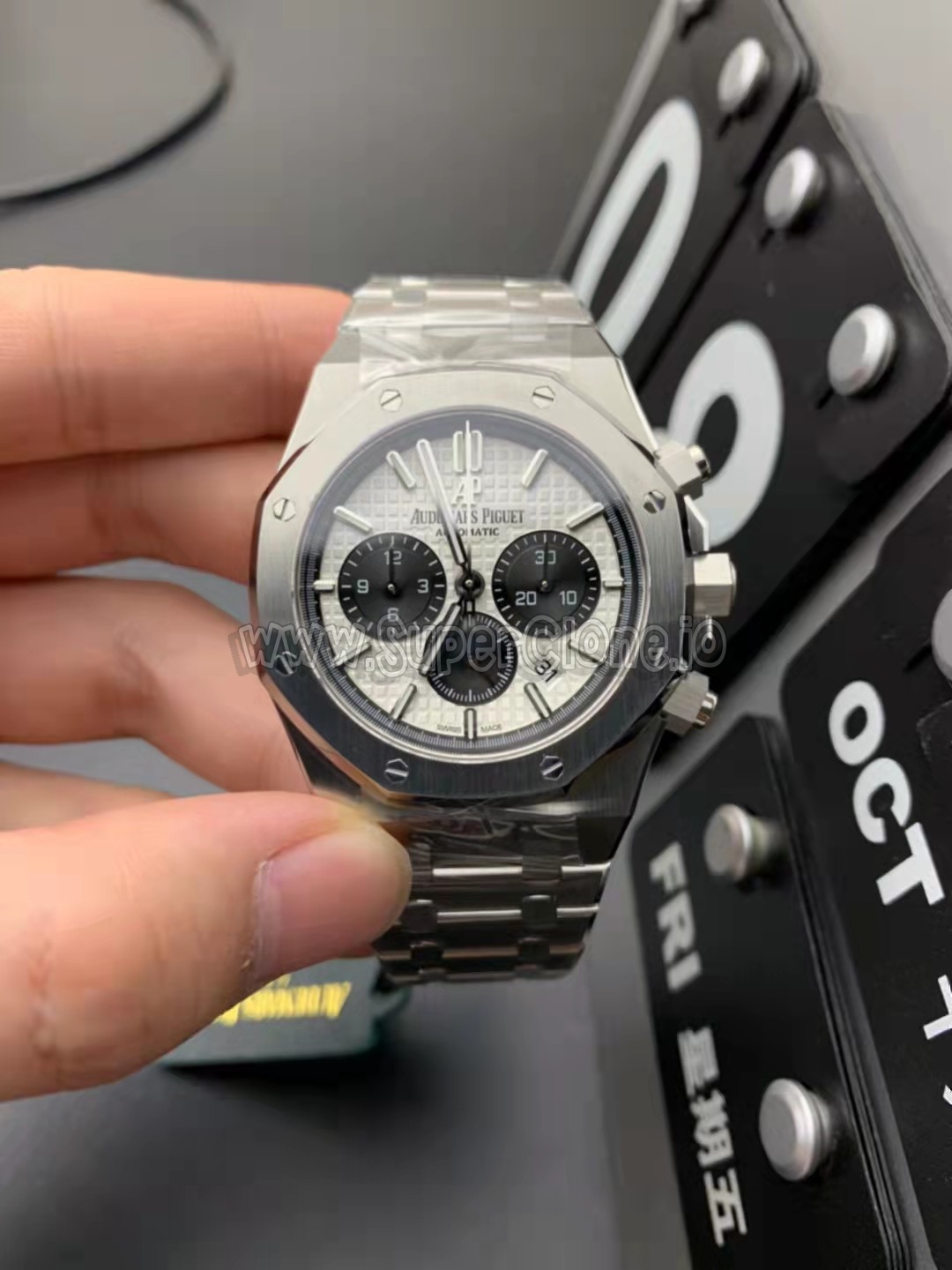
The black subdial version also gives the strongest visual separation between dial and registers. This helps readability, but it reduces forgiveness. On a high-contrast dial, hand length, subdial ring thickness, marker alignment, and printing quality become more visible. Buyers who choose this version should inspect the dial carefully.
The Royal Oak Chronograph does not have a simple dial where small errors disappear. It is a technical-looking sports watch with a highly organized face. If the replica has dust under the crystal, uneven printing, rough subdial texture, or misaligned markers, the problem will be easier to notice than on the blue dial version.

—
OM vs. BF: An Honest Side-by-Side Assessment
This is also a good place to compare OM and BF more directly. BF’s issue, according to long-time market discussion, was the incorrect dial design and subdial position. That kind of mistake is fatal for people who know the model. OM corrected the visual layout better, but the functional compromise remained.
So the choice is not simply “OM is good and BF is bad.” The better way to say it is that BF failed more visibly on the exterior geometry, while OM compromised more internally on the movement layout. For many buyers, OM is the better choice because the watch looks more correct when worn in daily life. For movement-focused collectors, neither version solves the Royal Oak Chronograph problem completely.
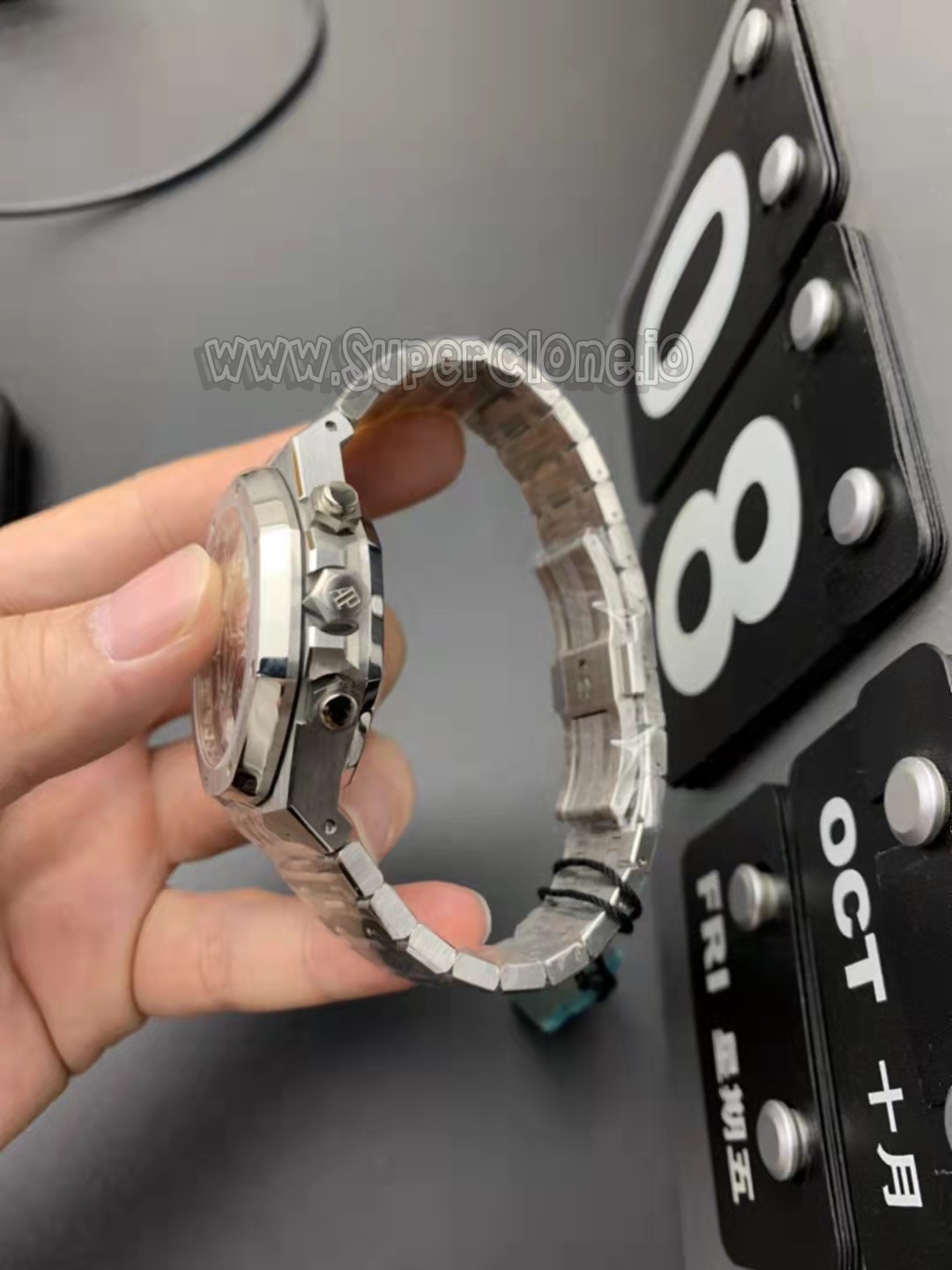
The crown and pusher execution on the black subdial version continues the same story. It looks convincing enough for daily wear, especially if the buyer is not comparing it directly with a genuine AP under strong light. The pusher feel on modified 7750-style replicas can vary, and this is something buyers should not ignore.
Chronograph pushers should not feel loose, gritty, or unstable. A watch can look attractive but still feel disappointing if the pusher action is poor. Since this model already has limited chronograph function, the tactile quality of the pushers becomes less important for actual timing but still crucial for perceived build quality.
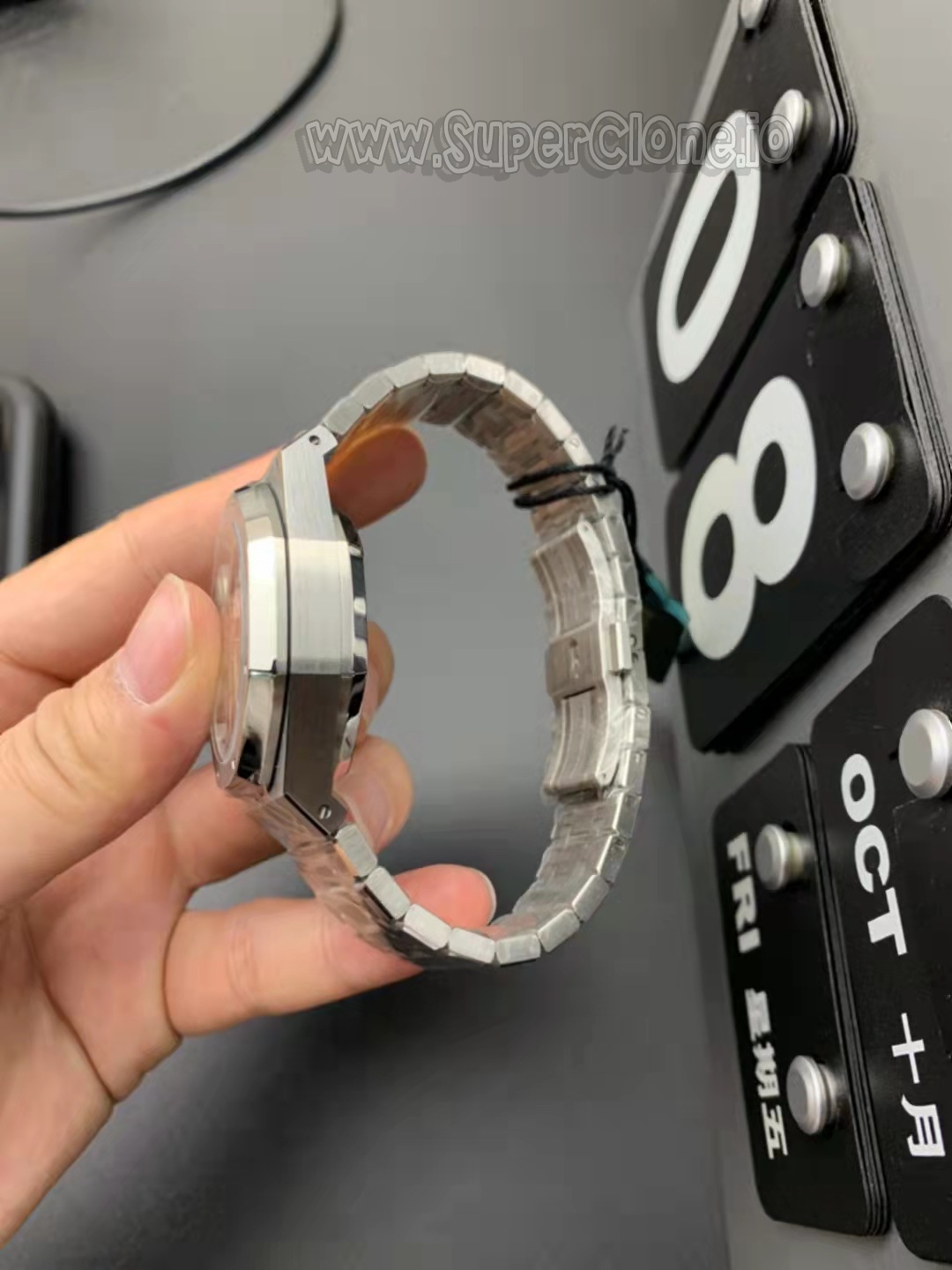
The case view shows why this watch continues to attract attention despite its flaws. The Royal Oak case is powerful. Even a compromised chronograph replica can be tempting if the case and bracelet have the right attitude. The watch has presence without relying on a huge diameter.
The 41mm size wears larger because of the integrated bracelet and angular case. This makes it visually stronger than many round 41mm chronographs. Buyers who like AP usually understand this. They are not only buying a dial or a movement; they are buying the iconic Royal Oak shape. OM’s version delivers enough of that shape to remain relevant in market discussion.
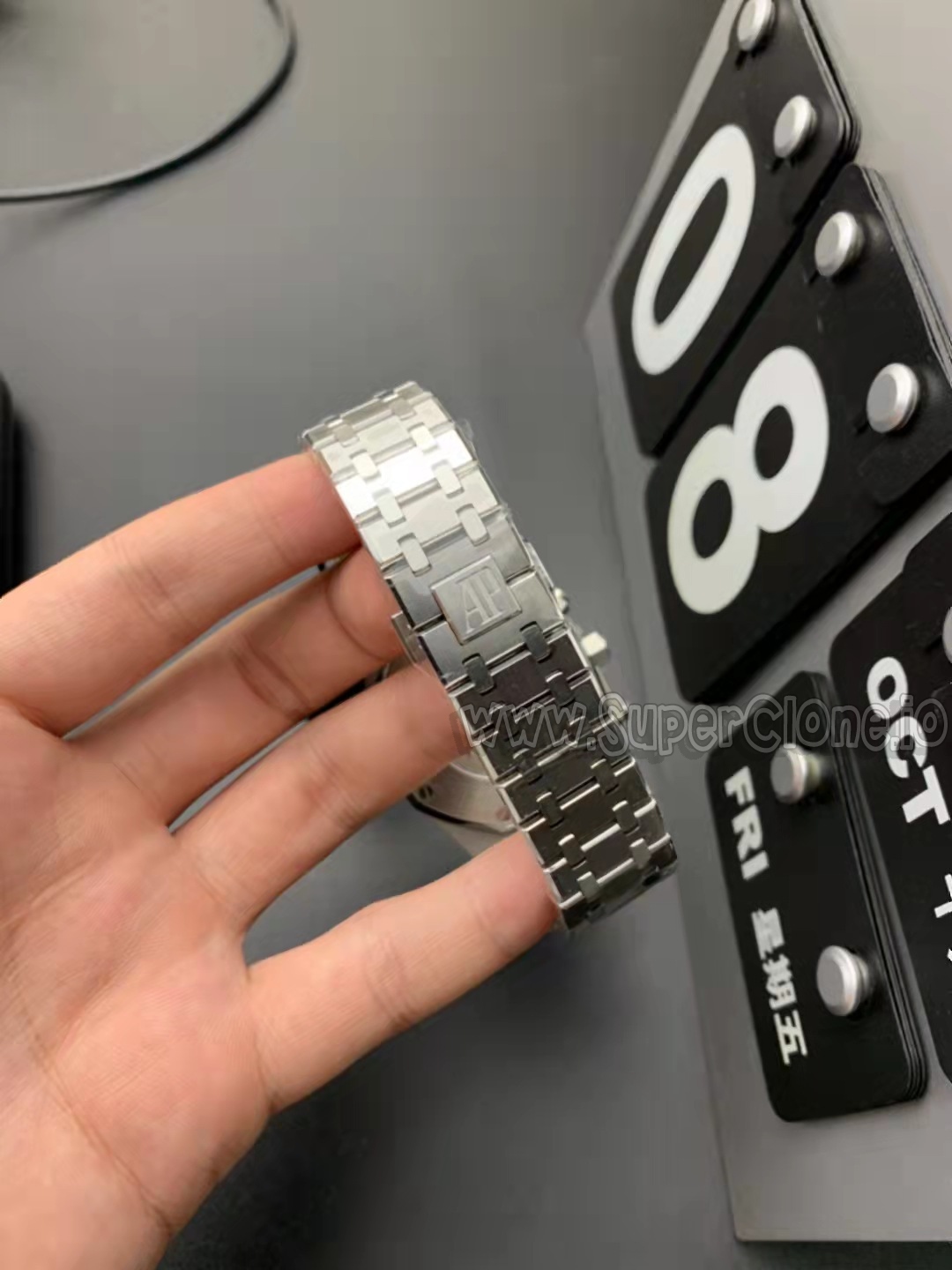
The bracelet again becomes part of the value calculation. A buyer may forgive the movement compromise if the bracelet feels solid and the watch sits well. This is not irrational. Many replica buyers prioritize wrist experience over technical completeness, especially when the genuine watch is far outside normal financial reach.
The key is honesty. If someone buys the OM Factory Royal Oak Chronograph expecting a complete AP chronograph clone, disappointment is likely. If someone buys it as a visually strong Royal Oak Chronograph-style replica with known functional limits, the watch makes more sense. The same product can be judged very differently depending on wearer expectation.
Commercial Realities in Replica Chronograph Development
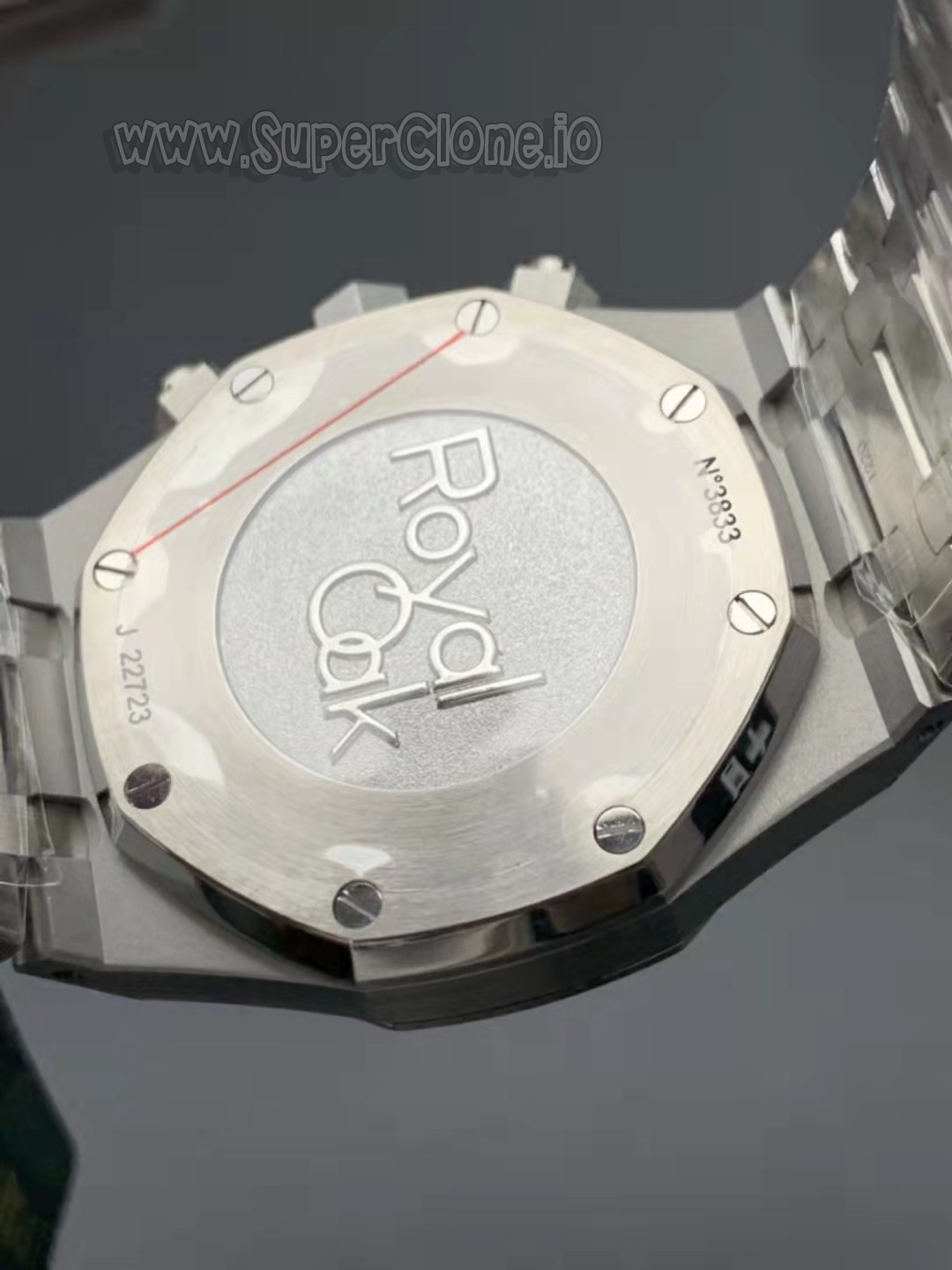
The final case back image reinforces the larger conclusion of this review without needing a dramatic verdict. OM Factory built a watch that solves one of the most visible problems in Royal Oak Chronograph replicas: the dial layout. It did not solve the deeper problem: fully convincing chronograph function. That makes the watch a useful study piece in the replica market. It sits directly between ordinary decorative replicas and true high-level super clone watches. It is better than many casual copies, but it does not reach the mechanical completeness that modern buyers increasingly expect from expensive replica chronographs.
For someone studying factory comparison, this model is more valuable than it first appears. It shows how factories make decisions under technical and commercial pressure. A factory can invest in case and dial accuracy because those parts sell the watch in photos and first impressions. Developing or modifying a movement to support correct chronograph behavior is much more expensive and risky.
If sales volume is uncertain, the factory may choose not to do it. This explains many decisions in the replica watch industry. The watches that receive the most movement development are usually the models with the largest and most stable demand. Rolex Daytona, Submariner, GMT-Master II, Datejust, and certain Patek Nautilus models receive more investment because the market can absorb the cost. AP chronographs are desirable, but they sit in a narrower buyer segment.
That does not mean the OM Factory AP Royal Oak Chronograph should be ignored. It should be judged accurately.
- The Ideal Buyer: Someone who wants the classic Royal Oak Chronograph look on the wrist, understands the fixed subdial limitation, and values proper dial proportion more than full mechanical function.
- The Unsuited Buyer: Someone who demands a no-excuse super clone chronograph with all sub-registers working seamlessly like the genuine model.
Those two buyers will reach opposite conclusions about the same watch. This is why serious reviews should not only say whether a replica is “good” or “bad.” The better question is always: good for whom, at what price, and with which compromise?
If choosing among the three dial variants, the blue dial remains the most balanced option for most people. It gives the strongest AP identity, hides minor dial imperfections better, and feels less dependent on subdial contrast. The white dial with blue subdials has more personality and may look more interesting in photos, but it requires cleaner printing and stronger confidence in the dial execution. The white dial with black subdials has the clearest chronograph look and the most contrast, but it also makes every chronograph-related compromise more visible. None of these choices removes the movement issue. They only change how the watch presents itself visually.
Technical Specifications Quick View
The specification sheet below details the technical dimensions and build components of the OM Factory Royal Oak Chronograph for easy reference.
| Component / Specification | OM Factory Execution Details |
|---|---|
| Movement Architecture | Asia 7750 Automatic Chronograph (with decorated plate & rotor mimicking AP Calibre 2385) |
| Case Dimensions | 41mm Diameter x approximately 15mm Thickness |
| Material Composition | Solid 316F Stainless Steel (Case, Bezel, and Integrated Bracelet) |
| Crystal | Scratch-Resistant Sapphire Crystal |
| Dial & Hands | Tapisserie Pattern Dial with Luminous Treated Hands and Hour Markers |
| Clasp Mechanism | Signature AP Folding Deployant Clasp |
| Water Resistance Rating | Factory-Claimed 30m (Independent pressure testing highly advised before any water exposure) |
Factory water resistance claims should always be treated cautiously unless the watch has been pressure tested after purchase. The movement should also be treated carefully because chronograph replicas with modified layouts are more sensitive to misuse than simple automatic watches. Starting, stopping, and resetting the chronograph repeatedly for no reason is not wise on any questionable chronograph build.
—
Placing OM Factory in the Modern EEAT Context
From an EEAT (Experience, Expertise, Authoritativeness, Trustworthiness) perspective, the most important thing about this watch is not using marketing phrases like “best replica” or “top quality.” Those words do not help buyers understand the true nature of the product.
The useful knowledge is the exact trade-off: OM Factory made the Royal Oak Chronograph visually more convincing than versions with wrong subdial placement, but it did not produce a fully functional chronograph clone. That single sentence explains the watch better than any marketing description. It also explains why this model never became as dominant as some Rolex or Omega replicas. The market can forgive many small visual differences, but it has become less patient with expensive replica watches that look mechanically complex while leaving parts of that complexity inactive.
For superclone.io readers, the OM Factory Royal Oak Chronograph is best treated as a case study in replica chronograph development rather than a simple recommendation. It belongs to a specific period when factories were aggressively improving visual accuracy but still avoiding difficult, expensive movement investment on certain complicated models.
It also shows why modern buyers need to separate three distinct layers of quality: visual layout, external finishing, and mechanical behavior. OM performs reasonably well in the first two layers for its time and category, but the third layer remains the center of debate. That is not a small weakness, but it is also not enough to erase everything the watch factory does correctly.
The replica watch market has moved toward significantly more demanding standards. Buyers now ask about movement source, factory version, case material, crystal quality, bracelet feel, weight, hand stack, date font, bezel shape, and even batch changes. Under that level of attention, a watch like this cannot be described with simple praise. It needs context.
OM Factory’s AP Royal Oak Chronograph is a visually serious replica with a known, structural chronograph limitation. It can easily satisfy someone who wants the undeniable AP Chronograph appearance and accepts the internal compromise openly. It will not satisfy someone who wants a modern no-compromise super clone chronograph. That honest distinction is the only fair way to place it in the current market.
