
The Strange Silence Around Panerai Replica Watches After VS Factory
For seasoned replica watch collectors, Panerai was never just another Swiss luxury brand sitting behind a glass counter. Before the market became saturated with ultra-thin clone movements, precision-weighted Daytona cases, and an endless parade of Rolex variations, Panerai occupied a genuinely singular position among enthusiasts. Its distinctive oversized cushion-shaped case, military-inspired dial layout, and patented crown bridge system forged a completely different visual identity — one instantly recognizable from across a room without squinting. Even those entirely unfamiliar with horology could immediately spot a Panerai on someone’s wrist. That level of instant recognition is rare in a market now flooded with designs that blur together.
Years ago, when the replica watch landscape was still dominated by low-grade Asian movements and crudely finished cases, Panerai replicas already commanded a surprisingly fervent following. The reason was inherently structural: the industrial design proved simpler to replicate convincingly compared to the highly polished, mirror-finished aesthetics of brands like Rolex or Patek Philippe. Panerai’s brushed surfaces, robust case dimensions, and minimalist dial configurations allowed factories to achieve a remarkably believable result far earlier in the market’s development. There was less visual perfection to chase, and in a hobby where tiny imperfections under a loupe destroy credibility, that forgiving quality mattered enormously.
For an entire generation of old-school collectors, the first truly iconic Panerai replica was undoubtedly the PAM 111. This particular timepiece marked a pivotal moment in the broader market, introducing enthusiasts entering around 2012 and 2013 to the revolutionary idea that a replica watch could feel solid, eminently wearable, and mechanically satisfying — rather than merely disposable. The weight felt deliberate, the crown bridge locked with a satisfying resistance, and the sandwich dial possessed actual depth rather than looking like a flat printed sticker under a sapphire crystal. To this day, veteran collectors invariably invoke the PAM 111 whenever classic super clones are discussed in private forums, usually with a tone balancing pure nostalgia and mild frustration that modern releases rarely recapture what that reference got right.
In that bygone era, the market operated on entirely different rhythms. Factories prioritized the meticulous production of a few iconic references, refining them over multiple production runs rather than unleashing a monthly deluge of dozens of color variations to chase algorithm traffic. Panerai replicas were stable, reliable products characterized by extended development cycles. Certain models retained their commercial relevance for years, fueled by sustained demand from enthusiasts who deeply appreciated the distinctive design language rather than chasing fleeting trends or short-term hype around whatever dropped that week.
Then, an undeniable shift occurred in the market dynamics — not gradually, but with an abruptness that caught even experienced dealers completely off guard.
By 2021, the entire Panerai replica segment had plunged into one of its weakest and most challenging periods in recent memory. Sales figures plummeted noticeably across major distribution channels, and new models became a absolute rarity on trusted dealer listings. Inventory levels contracted sharply, and the waiting periods that once indicated strong demand simply vanished because demand itself had softened. More critically, the very factories that had previously anchored Panerai production either closed operations entirely or strategically reallocated their engineering resources toward more lucrative Rolex, Audemars Piguet, and Richard Mille projects. These lines promised swifter profits and broader international appeal from mainstream buyers who care more about instant status visibility than design philosophy.
The most profound disruption arrived with the pervasive rumors surrounding the fate of VS Factory. What followed was not a dramatic collapse, but an eerie, strange silence throughout the community. No announcements, no final batches, no explanations — VS simply faded, and the heartbeat of high-end Panerai manufacturing seemed to stop.
For a multitude of collectors, VS was far more than just another manufacturer on a long list of interchangeable workshops. The factory had meticulously cultivated an unparalleled reputation, initially through its exceptional Omega Seamaster replicas, and subsequently with several highly regarded Panerai models. These offerings were notably equipped with clone movements that delivered a level of performance and architectural accuracy vastly superior to anything previous generations could offer. VS epitomized stability, unwavering consistency, and institutional confidence within the community. While their Panerai watches weren’t completely flawless, they represented a massive leap forward, feeling demonstrably more mature and refined compared to older generations from Noob or lesser-known regional workshops.
When news of VS’s permanent closure took hold, a widespread assumption spread among collectors: the Panerai replica category was destined for a slow, inevitable decline. This concern was entirely rational, given that Panerai presents a unique commercial challenge within today’s replica environment. Modern buyers, by and large, exhibit a strong preference for instantly recognizable luxury sports watches that confer immediate status across a room. Panerai, despite its potent identity, steadfastly remains a choice for a more discerning, niche enthusiast.
Unlike the ubiquitous Rolex Submariner replicas, which effortlessly attract both novice and seasoned collectors alike, Panerai watches appeal to a more circumscribed audience. This demographic specifically appreciates the distinctive military aesthetics, substantial dimensions, and a utilitarian design philosophy that refuses to conform to conventional fashion. Such a smaller, highly specialized audience inherently renders development investments significantly riskier for factories calculating returns on new caliber tooling and case engineering costs.
The Intricacies of Panerai Replica Production: Why High-Level Replication Proved Challenging
Many newcomers to the hobby mistakenly assume that Panerai replicas should be among the easiest categories to manufacture convincingly, primarily because the dial design often appears deceptively simple at first glance. Fewer complications, less surface decoration, and no elaborate bracelet engineering lead to a false sense of simplicity. In stark reality, producing a Panerai replica that satisfies experienced collectors demands exacting precision in several critical areas that are surprisingly difficult to execute with consistent quality at scale.
The iconic sandwich dial structure serves as a prime example. Unlike conventional printed dials where luminous material sits flat on a single surface, most serious Panerai references employ a sophisticated layered dial system. Luminous compound is meticulously positioned beneath a precisely cut-out upper dial layer. The physical gap and depth between these two layers profoundly influence shadowing around the numerals, the appearance of the lume, and the overall visual texture of the dial. In lower-quality replicas, this crucial element often falls short, resulting in a flat, compressed, and lifeless dial because the layers are either too thin or poorly aligned during assembly. Getting the depth ratio correct requires tooling precision that smaller workshops historically struggled to achieve consistently.
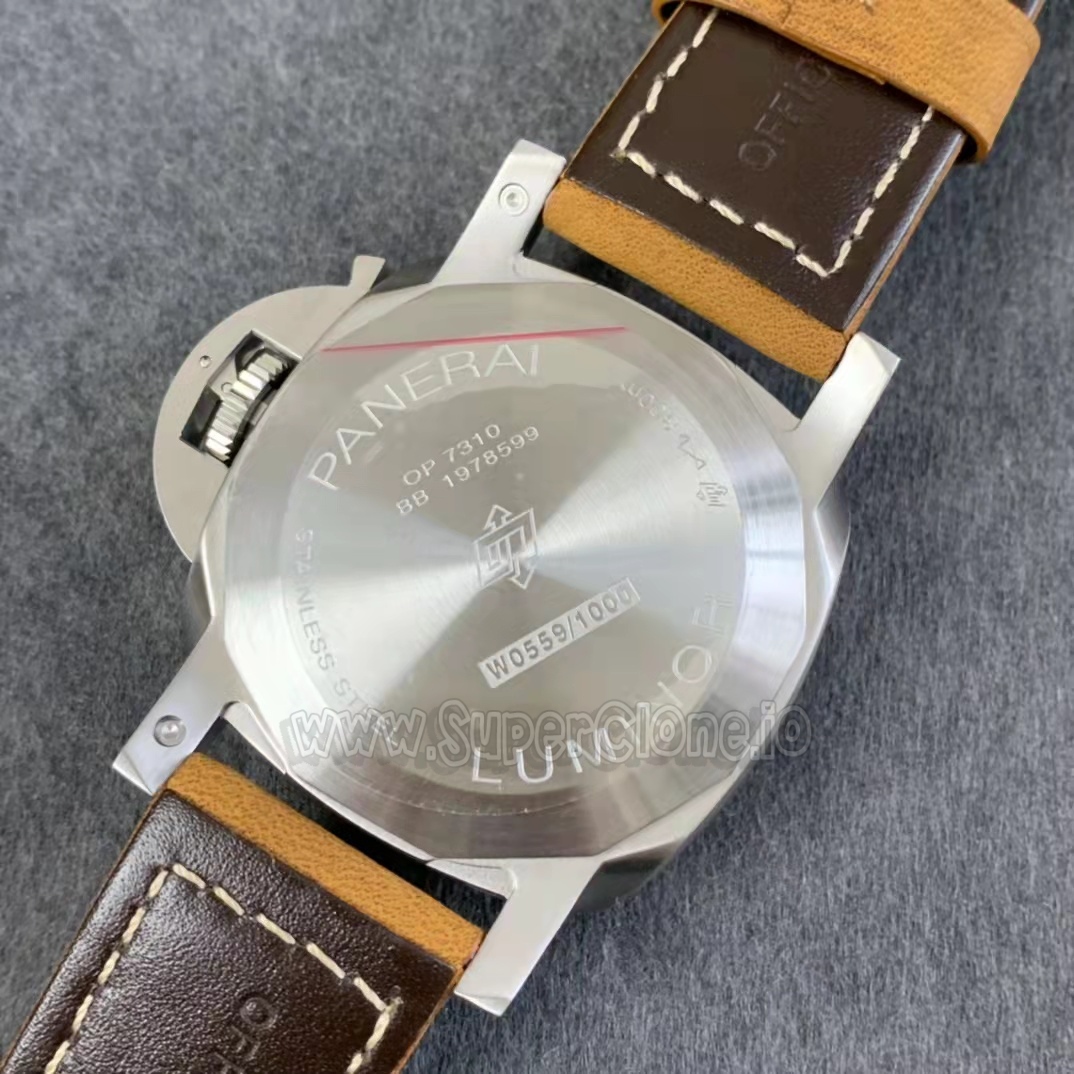
The crown bridge system represents another formidable challenge. Genuine Panerai watches feature an exceptionally precise locking mechanism characterized by carefully machined tolerances that create a distinct tactile and visual signature. The lever travel feels deliberate, locking down with a mechanical resistance that feels worlds apart from a simple push-button crown. Inexpensive replicas almost invariably falter here. The lever feels loose or vague in its detent, the engraving depth along the bridge looks visually incorrect, or the proportions of the bridge itself appear disproportionately thick relative to the case. Experienced Panerai collectors invariably scrutinize the crown bridge before examining any other component, making it one of the highest-stakes details on the entire watch.
Case finishing is of equal importance. Panerai watches derive much of their visual integrity from the quality of their brushing, surface consistency, and the sharpness of their edge definition across complex geometrical transitions. Given that most traditional Panerai models deliberately eschew highly reflective polished surfaces, flaws in the brushing pattern become glaringly apparent under direct lighting rather than hidden by reflections. Uneven brushing direction, softened case edges where the lugs meet the case body, or inaccurately curved lugs immediately compromise the watch’s authenticity for anyone who has handled a genuine example. These are details that require skilled finishing handiwork rather than simply raw material upgrades.
Furthermore, movement architecture emerged as a major compounding hurdle once collectors began to vociferously demand visually authentic clone calibers, moving far beyond mere generic decorated movements.
Historically, earlier Panerai replicas frequently utilized straightforward Asian Unitas manual-winding movements. This approach was highly viable and defensible because many historic Panerai references featured solid case backs that completely concealed the movement inside. A collector wearing a Panerai replica in 2014 rarely had occasion to flip the watch over and scrutinize the mechanical layout; the experience was entirely about wrist presence and dial atmosphere. However, contemporary Panerai references increasingly incorporated automatic calibers paired with display backs, sophisticated power reserve indicators, and intricate architectural layouts. Factories were suddenly confronted with the imperative to develop movements that not only functioned flawlessly but also visually mirrored genuine Panerai calibers through a transparent sapphire back. This level of development necessitated substantial investment in tooling and prototyping — an investment that many smaller workshops simply could not justify against an uncertain market.
A New Dawn: The Emergence of Niche Factories Like HW and TTF
Following the pronounced contraction of major Panerai production lines, a new wave of smaller, more specialized factories cautiously began to re-test the market. Operating at scales significantly smaller than VS, workshops like HW Factory and TTF began demonstrating a genuine commitment to the category.
Crucially, neither factory immediately sought to position themselves as a direct VS replacement. That restraint reflected a realistic assessment of both current market conditions and their own manufacturing capabilities, choosing a circumspect and strategic approach instead.
HW Factory concentrated its production resources primarily on classic manual-winding references, focusing heavily on the revered PAM 005 and PAM 111 variants. From a manufacturing and commercial standpoint, this strategy was eminently sensible: older manual Panerai models are mechanically less complex to reproduce — featuring no automatic winding rotors or display back complications to engineer — and they inherently appeal to traditional collectors who prioritize vintage aesthetics, historical fidelity, and military atmosphere over modern mechanical theater. Serving this audience allowed HW to enter the market without immediately confronting the most technically demanding aspects of modern caliber replication.
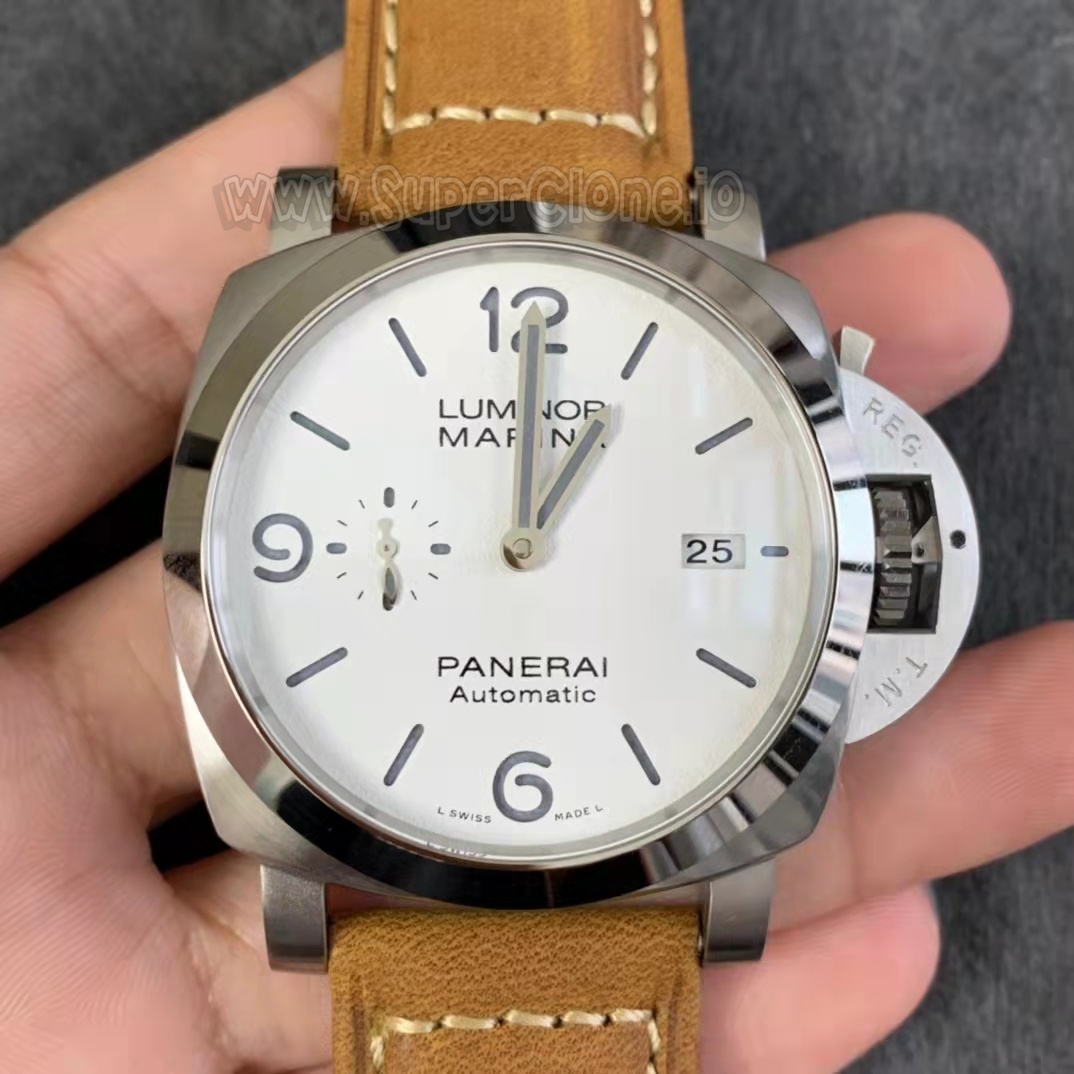
TTF, conversely, charted a completely distinct course by venturing directly into the contemporary Luminor Marina category, focusing heavily on references like the PAM 1312 and PAM 1314.
These particular watches represented a much newer, more refined interpretation of Panerai’s classic design language. Compared to their older manual counterparts, they presented a cleaner, subtly more polished, and commercially oriented aesthetic. Predictably, this strategic pivot also engendered a degree of division within the community. Long-standing Panerai enthusiasts who entered the hobby specifically because of the brand’s raw, uncompromising military character often find modern references like the PAM 1314 too softened, too contemporary, and too willing to trade heritage atmosphere for mainstream luxury appeal.
The PAM 1314 stands as a compelling exemplar of this transitional period.
At first glance, the watch unequivocally retains the quintessential Panerai DNA. Its imposing 44mm Luminor case continues to assert a dominant, oversized presence on the wrist — a bold statement in an era where genuine luxury trends run increasingly smaller to 40mm. The signature crown bridge system still defines its distinctive side profile from a distance, and the sandwich dial structure meticulously preserves the characteristic depth and luminous layering that serious collectors consider non-negotiable. The overall proportions feel correct, heavy, and deliberate rather than approximated.
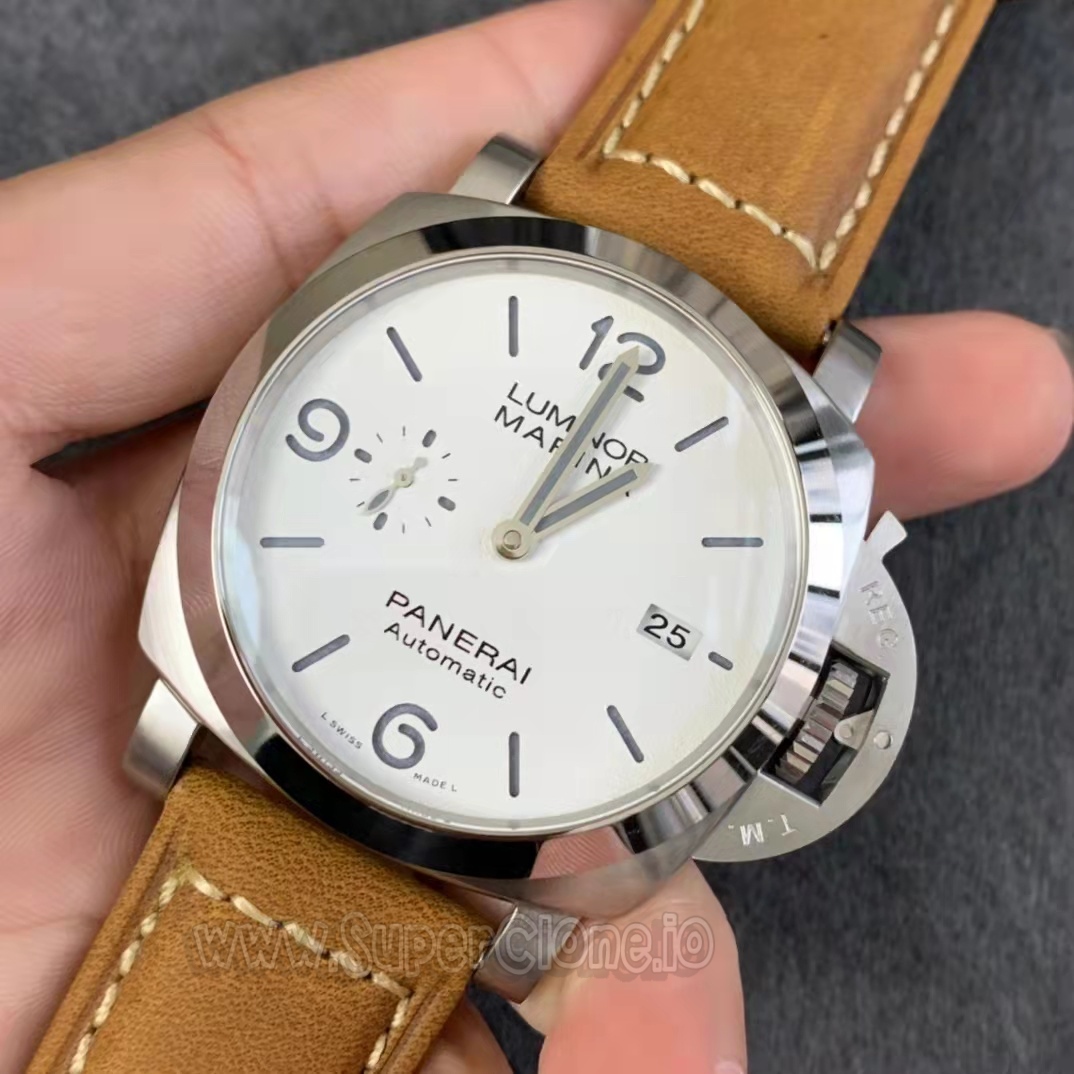
Yet, the overall ambiance of the PAM 1314 feels distinctly different when juxtaposed with older references like the PAM 312 or PAM 111. The introduction of a stark white dial dramatically transforms the watch’s visual character. Traditional Panerai models powerfully underscored their military heritage by relying on matte black dials paired with warm, vintage-toned lume, evoking the historical supply contracts for the Italian Navy. The darkness of those dials and the gravity of the aged luminous material were inseparable from what made a classic Panerai feel special.
The PAM 1314, in contrast, steers directly towards a brighter, more overtly contemporary aesthetic that feels more comfortable alongside modern fashion than alongside field equipment or dive gear.
Some collectors enthusiastically embrace this new direction, highly appreciating its enhanced versatility and the cleaner, sharper appearance it lends to the watch when paired with casual everyday attire. It reads as less specialized and more adaptable. Others, however, contend that this design choice sacrifices a measure of the aggressive, unapologetic personality that originally captivated them about the brand in the first place.
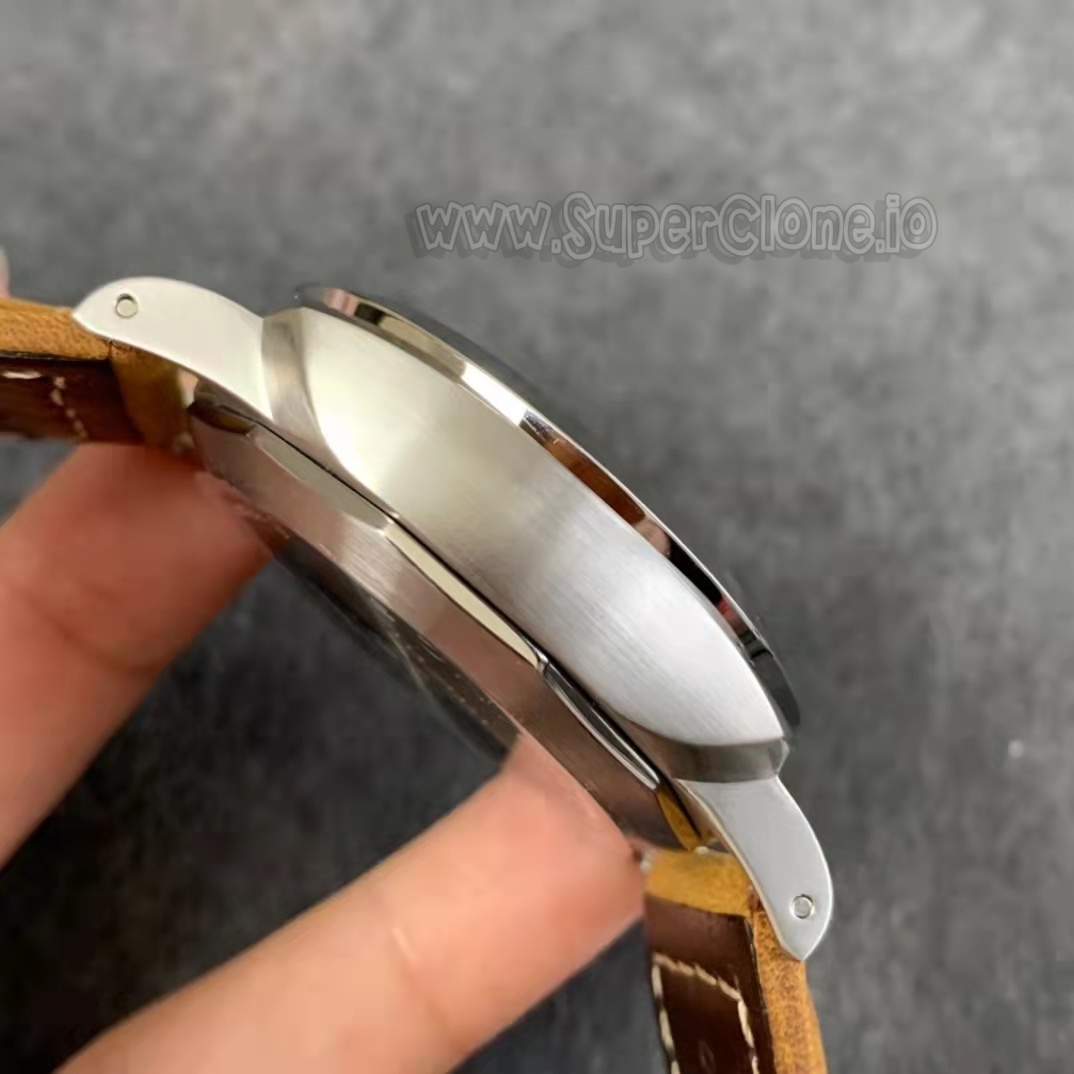
In terms of structural execution, the replica itself adheres remarkably closely to genuine specifications. The case, measuring a substantial 44mm, maintains considerable thickness, imparting the weighty, serious wrist presence expected from a modern Luminor. The lugs curve gracefully downwards, effectively distributing the watch’s considerable mass comfortably across the wrist despite its generous dimensions.
One particular detail that warrants meticulous attention is the nuanced interplay between brushed and polished surfaces across the case architecture. The expertly brushed case body steadfastly preserves the watch’s tool-oriented identity, while the highly polished bezel surfaces introduce a more luxurious and refined visual element. This sophisticated combination is a hallmark of contemporary genuine Panerai production, yet it also cultivates a distinctly modern visual profile when compared to older, uniformly brushed models that felt more uniform and purposeful in their industrial finish.
Dial Aesthetics and the Enduring Appeal of Classic Panerai Models
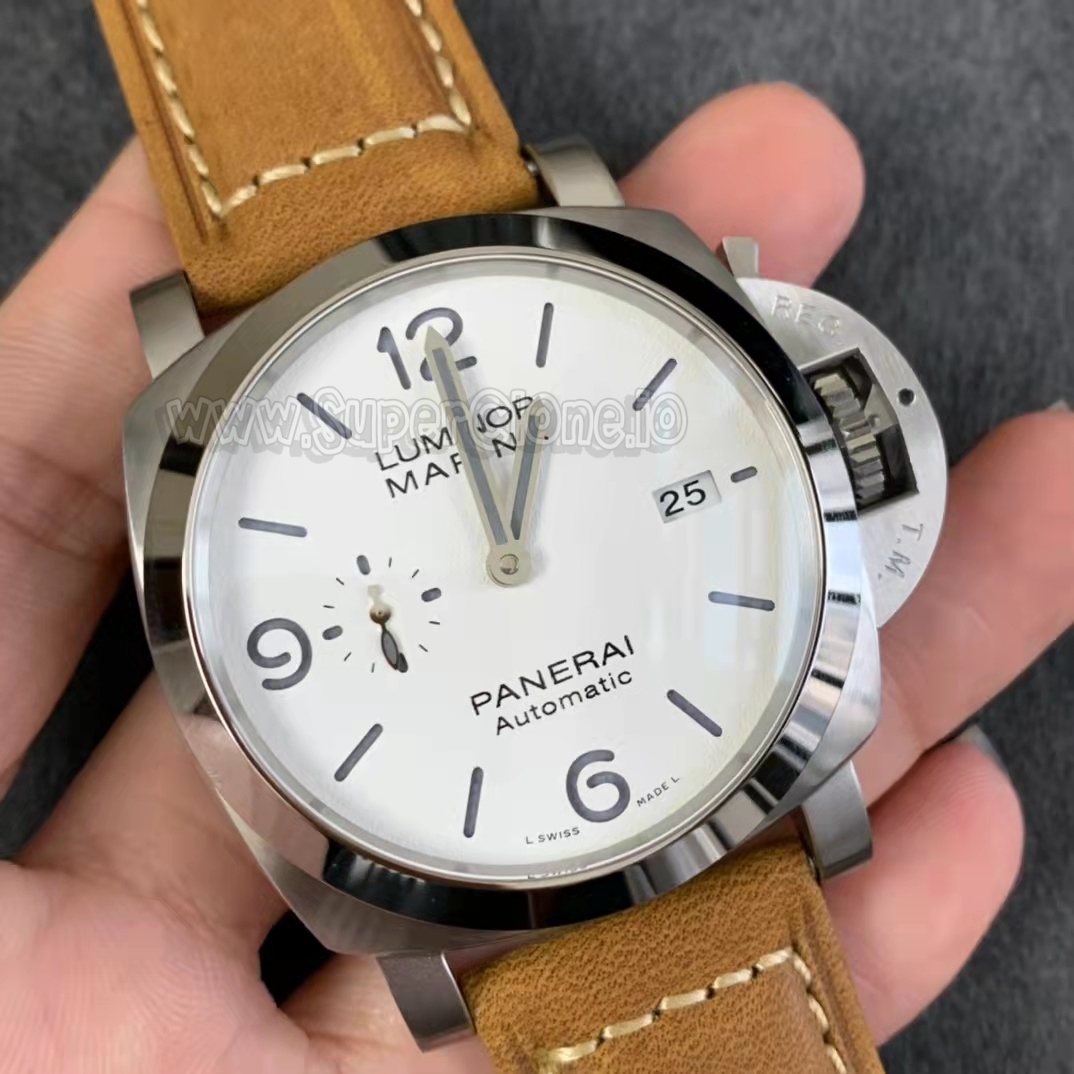
The dial of the PAM 1314 is arguably its most contentious and intensely debated feature among serious Panerai collectors, and the discussion reveals a lot about how different generations of enthusiasts value the brand.
From a purely technical perspective, the replica commendably executes several crucial dial elements. The signature sandwich construction is faithfully present, showing proper depth rather than the compressed flat appearance seen on low-tier batches. The small seconds sub-dial at 9 o’clock maintains impeccable balance and correct positioning relative to the overall layout. Date legibility is incredibly robust, thanks to the stark contrast of clean black numerals sitting against the crisp white background. Furthermore, the overall printing quality across the dial text appears remarkably crisp and sharp at normal viewing distances, showing none of the ink bleeding or inconsistent density that plagued early-generation replicas.
Aesthetics, however, are inherently subjective and entirely separate from mechanical or technical execution.
A significant cohort of discerning collectors express the sentiment that the silver-grey luminous material does not seamlessly or naturally integrate with the white dial environment. Under certain warm, incandescent lighting conditions, the lume can appear slightly disconnected from the background rather than feeling like a unified design decision. It lacks the deep visual coherence of older references where the dark dial faces and warm lume tones worked together as a cohesive visual system.
This is precisely where individual taste becomes the ultimate arbiter of the conversation.
Older Panerai references consistently exuded a more potent vintage military energy that felt deeply connected to actual tactical function. Timepieces like the PAM 111 or PAM 312 featured darker dials, warmer lume tones, and a more austere visual composition that felt historically anchored to underwater operational requirements. That communication was a massive part of the appeal for the enthusiasts who built the Panerai community.
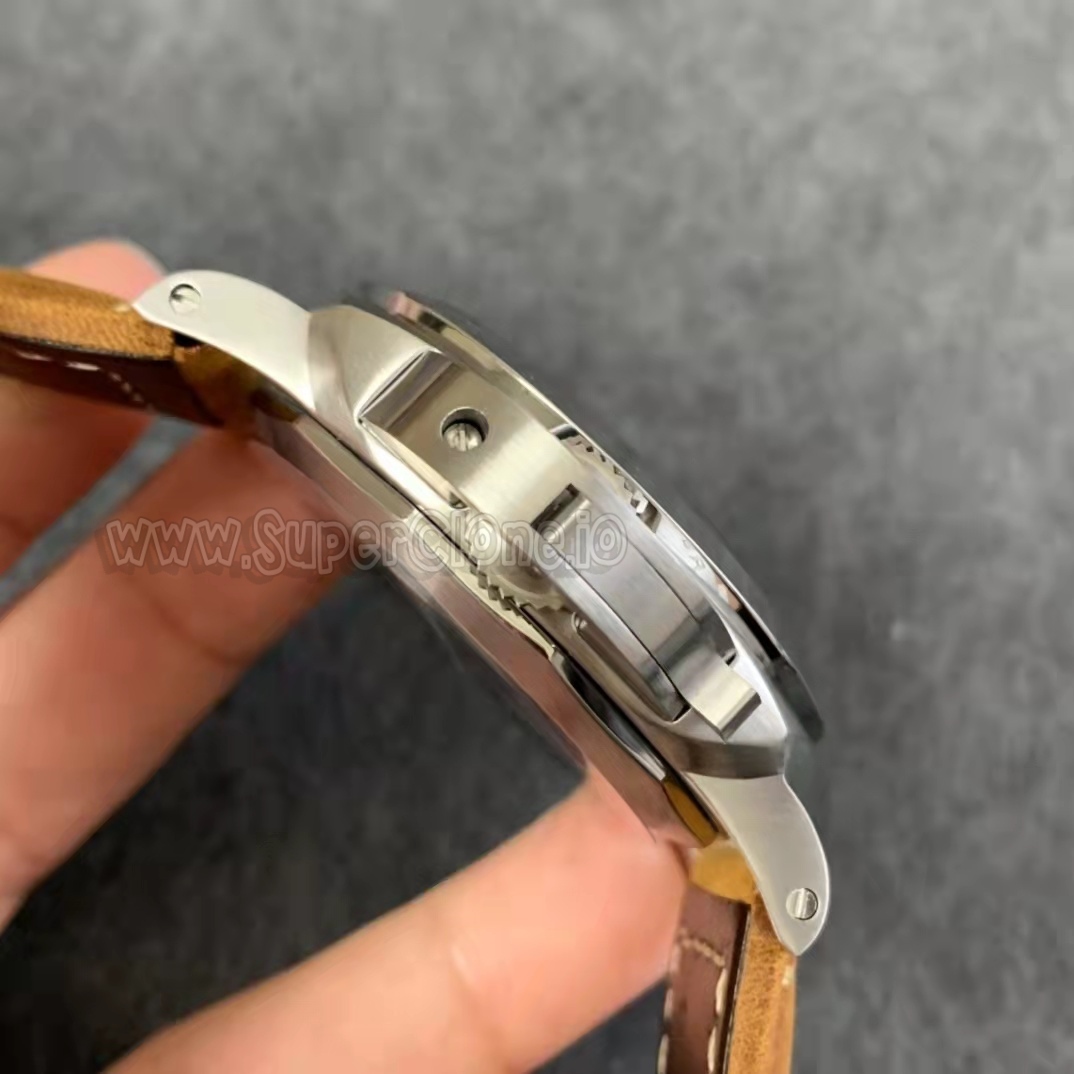
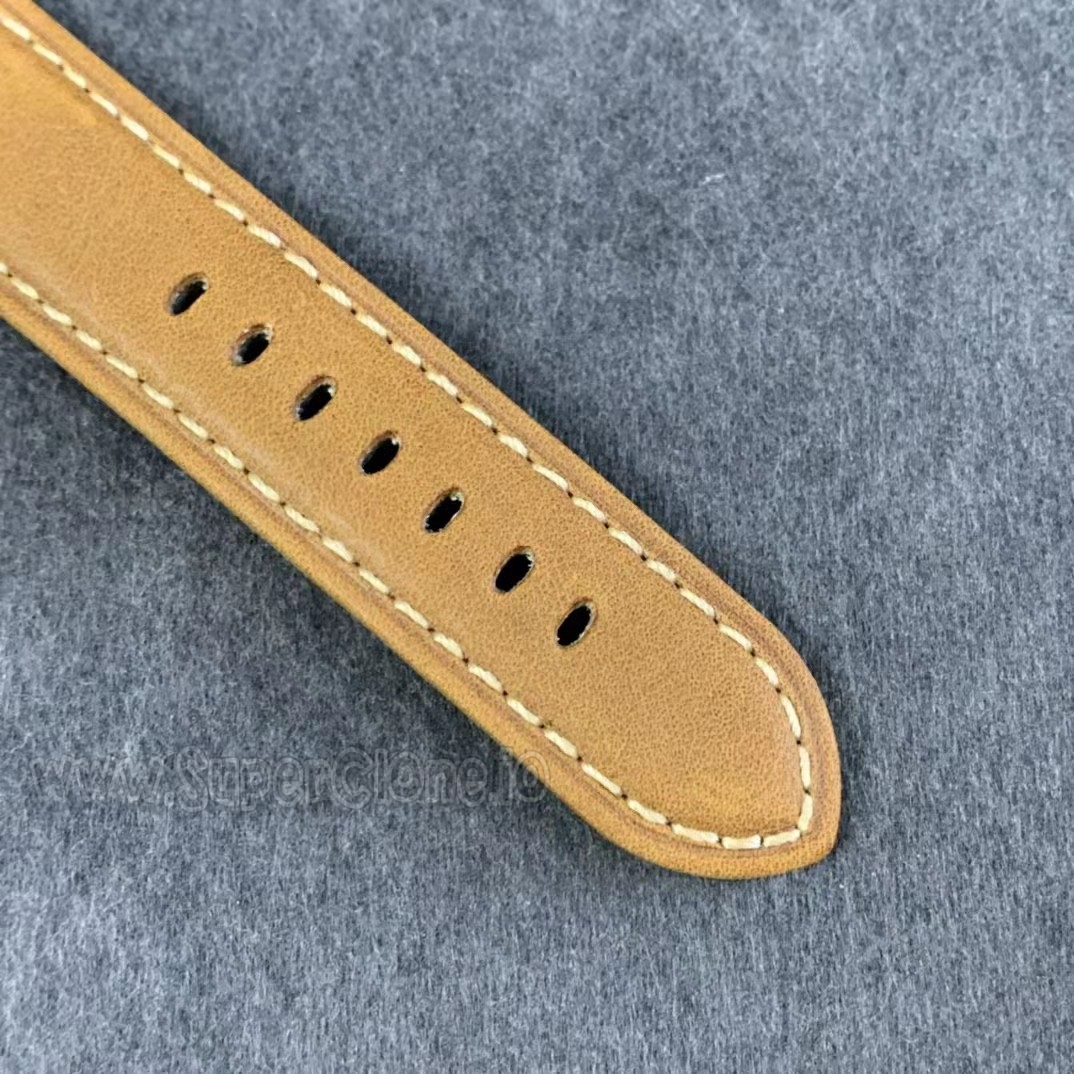
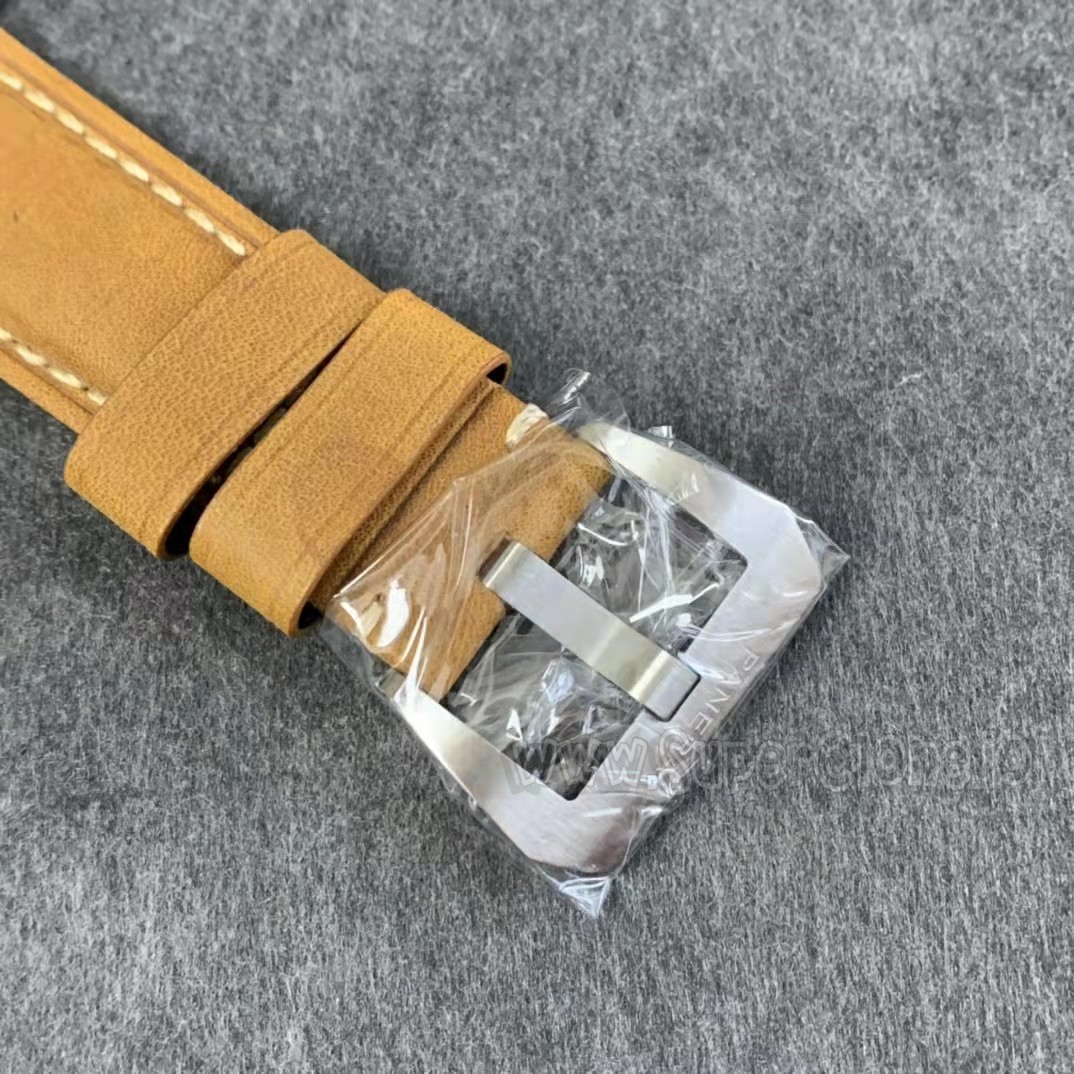
The PAM 1314, by contrast, deliberately diverges from that established historical formula. It introduces a cleaner, brighter, and distinctly more fashion-forward approach, aligning more closely with prevailing modern lifestyle luxury trends. The choice of an accompanying brown leather strap further accentuates this aesthetic transition. When paired with the white dial, the strap cultivates a much softer visual effect, one that feels less overtly aggressive and more casually elegant than traditional black-dial configurations. While many collectors appreciate this combination for its enhanced wearability in everyday corporate or social scenarios, others believe it subtly dilutes the rugged, unapologetic personality historically associated with the Luminor line.
Intriguingly, this evolution within the replica market perfectly mirrors a broader transformation occurring within Panerai itself at the brand level. Over the past decade, genuine Panerai has consistently shifted its focus away from purely military-inspired tool watches towards lifestyle-oriented luxury sports timepieces, utilizing new materials, unexpected complications, and high-fashion collaborations. The replica market, by its very nature, has naturally mirrored this trajectory, as factories prioritize the replication of commercially successful modern references over preserving historical aesthetic positions for purely sentimental reasons.
The Evolving Landscape: The Future of Panerai Super Clones
Panerai replicas currently occupy a truly anomalous, somewhat precarious position within the contemporary super clone market — strongly sustained by dedicated enthusiasts but perpetually threatened by the massive commercial gravity of broader luxury categories.
Rolex replicas, for instance, continue to evolve at an astonishing, relentless pace driven by insatiable global demand. Daytona, GMT-Master II, and Submariner replicas receive non-stop refinement cycles encompassing meticulous weight correction, enhanced crystal clarity, refined ceramic bezel execution, and increasingly sophisticated clone movement architectures. Development investment is easy for factories to justify when the customer base spans multiple continents and massive price brackets.
Panerai development, in stark contrast, proceeds at a far more deliberate, intermittent rhythm — driven by smaller demand signals from a highly specialized, niche audience.
This slower tempo is not necessarily a detriment to collectors who genuinely care about the brand. In many respects, it serves to preserve the enthusiast-centric, pure nature of the category. Panerai collectors often exhibit less concern for fleeting internet hype cycles and a far greater appreciation for the tangible wearing experience, historical gravitas, and the commanding, physical case presence of these timepieces on the wrist. That set of core values is less compatible with rapid, trend-chasing manufacturing than with patient refinement over time.
Factories such as HW and TTF may never achieve the sweeping market dominance once wielded by VS, yet their continued willingness to invest in Panerai replica production remains profoundly significant for the hobby’s existence. Without these smaller workshops diligently absorbing the risk of experimenting with niche references, the entire Panerai replica segment could conceivably vanish under the relentless commercial pressure of more immediately profitable projects.
Moreover, there exists a compelling structural rationale for why Panerai replicas might eventually reclaim a greater degree of mainstream popularity.
The current super clone market has become heavily saturated with an abundance of highly polished, integrated-bracelet luxury sports watches that, from a distance, appear remarkably similar. Royal Oak clones, Nautilus clones, and various Submariner variants now occupy so much shelf space and collector attention that visual differentiation has become genuinely difficult. Panerai, however, steadfastly offers something fundamentally distinct: oversized proportions, an inherent industrial simplicity, deep military roots, and an unmistakable wrist presence that reads as completely different from the dominant aesthetic.
That singular uniqueness has historically driven collector interest in distinct cycles. Enthusiasts who grow weary of conventional Rolex homages or highly polished sports watch trends frequently find themselves gravitating straight back to Panerai, precisely because the wearing experience feels profoundly different. A Panerai makes no attempt to project traditional Swiss elegance or sleekness. Its profound appeal stems from its distinctive proportions, tactile textures, direct readability, and undeniable mechanical presence — the sense that you are wearing an instrument designed for pure function rather than outward appearance. That appeal doesn’t expire; it simply recedes when other trends take over and returns when those categories become entirely predictable.
The replica industry operates in discernibly historical cycles. Certain manufacturing segments may temporarily recede when commercial conditions shift, only to re-emerge years later bolstered by vastly superior manufacturing capabilities when demand signals recover. This exact phenomenon has been observed with vintage Submariner projects and integrated-bracelet lines. The technical knowledge doesn’t disappear when a factory pauses production; it accumulates in the background. There is a highly realistic possibility that Panerai replicas could ultimately experience a similar massive resurgence once factories perceive sufficient market demand to once again justify the substantial tooling investment required for advanced movement development.
Should such a revival fully materialize, future Panerai super clones will likely place an intense focus on achieving total movement authenticity — engineering clone calibers that visually and mechanically mirror genuine Panerai movements rather than applying decorative plates to generic alternatives. Case geometry refinement on the crown bridge levers and lug transitions will receive higher engineering priority, and dial textures will improve as factories apply advanced lessons learned from manufacturing other high-end categories.
Modern collectors have become considerably more technically sophisticated and discerning than they were a decade ago. Today’s serious buyers systematically compare crown bridge machining tolerances, the accuracy of lume tone under different light sources, the thickness of hand stacks, the clarity of sapphire anti-reflective coatings, and the intricacies of movement architecture — all with remarkable attention to detail. Online communities have permanently raised the acceptable quality thresholds. Factories are acutely aware of this heightened scrutiny, which is why even smaller workshops entering the Panerai category now feel compelled to prioritize immediate improvements in finishing quality out of the gate, rather than solely relying on a vague visual resemblance.
The Enduring Legacy: Why Classic Panerai References Retain Their Significance
Despite the continuous influx of new releases and contemporary styling experiments within modern production, a significant cohort of experienced collectors consistently gravitates back to venerated older references such as the PAM 111, PAM 005, and PAM 312 as the ultimate touchstones against which everything else is measured. This isn’t driven by pure nostalgia, though sentimentality certainly plays a role. These particular timepieces encapsulate an era when Panerai’s design decisions were fundamentally dictated by function and military heritage rather than commercial lifestyle positioning.
Their dial layouts were characterized by a starker simplicity because simplicity served legibility under harsh operational conditions. Their straps exuded a highly utilitarian aesthetic because they were designed for real-world use rather than a polished boutique display. Their overall personality felt less processed, less concerned with contemporary fashion signals, and more directly connected to the actual origins of Italian Navy dive procurement. That inherent purposefulness remains explicitly visible in the watches themselves.
Within the intricate world of replicas, these classic references have also ascended to symbolic status, representing a bygone manufacturing era when factories dedicated themselves to the painstaking, long-term refinement of a single model, rather than succumbing to the pressures of rapid, high-velocity release cycles. Many enthusiasts still fondly recall the years spent observing a single Panerai replica slowly but steadily improve, generation after generation. Crown guards achieved greater dimensional accuracy, case shapes were meticulously refined toward genuine specifications, sandwich dials acquired more realistic depth, and lume colors gradually converged with genuine application. That evolutionary process took years rather than weeks.
The accumulated refinement created something that rapid modern release cycles rarely generate: genuine emotional investment from the collector community. Enthusiasts who followed a reference through multiple generations knew its history — what had changed, what remained difficult to get right, and what specific production batch finally nailed a elusive detail. That shared knowledge created a true sense of community.
Contemporary replica culture, regrettably, often progresses with excessive haste. New references inundate the market on a weekly basis, and factories engage in a relentless, frantic race to produce trending models before their competitors can copy them. In stark contrast, classic Panerai replicas matured with a patient, unhurried grace. Perhaps this is precisely why so many collectors still experience a profound sense of nostalgia when reminiscing about the venerable VS era.
The PAM 1314, while perhaps not fully satisfying every traditional Panerai enthusiast — especially those whose connection to the brand is rooted in the darker, more historically grounded references of earlier decades — nevertheless represents something profoundly important for the category’s continued existence. It unequivocally demonstrates that certain factories remain fully committed to investing engineering resources into Panerai production, even amidst a contracting market. For the legions of collectors who have patiently awaited the reappearance of high-end Panerai replicas for years, even incremental progress from smaller factories moving cautiously back into the space carries immense significance.
The segment isn’t back to the absolute peak of the strongest VS years, and it may never return to exactly that form. But the quiet persistence of smaller factories working through difficult commercial conditions to keep Panerai replica production alive means the conversation hasn’t ended. The strange, eerie quiet that followed VS Factory’s departure is finally breaking — one small, dedicated factory release at a time.
