
The Quiet Seasonal Cycle Behind Replica Watch Production and Discounts
Every year, typically between early January and mid-February, the high-end replica watch market shifts into a state of flux that catches many newcomers off guard. If you have been browsing forums like RWI (Replica Watch Info) or subreddits like RepTime lately, you might have noticed a recurring theme: delayed replies from Trusted Dealers (TDs), erratic shipping updates, and the dreaded “out of stock” notification for models that were supposedly available just 48 hours ago. To the uninitiated, this looks like poor service; to the seasoned collector, it is the unmistakable signature of the Chinese Lunar New Year (CNY) countdown.
The weeks leading up to the Spring Festival are historically the most volatile period for the super clone industry. It is not just a holiday; it is a total systemic pause. Production schedules at major workshops become fragmented, assembly lines lose their rhythm as workers begin their migration back to rural provinces, and the delicate network of movement suppliers—those responsible for the intricate plates and balance wheels—simply stops delivering parts on time. Many top-tier factories, fearing both the logistical nightmare and the increased risk of seasonal market raids or inspections, choose to clear their remaining inventory and shutter their doors weeks before the official holiday begins.
Unlike the predictable, corporate world of Swiss horology with its synchronized global distribution networks, most replica watch factories operate through tightly connected local supply chains concentrated in Guangdong and nearby manufacturing hubs. When the “world’s factory” goes dark for the Lunar New Year migration, the entire ecosystem quietly grinds to a halt. Some workshops might resume operations within ten days after the holiday, but others—especially those dealing with high-demand custom movements like the Dandong calibers—may stay offline until March. This creates a chaotic information gap where one dealer might claim a watch is “in stock” (referring to their own local stash), while another correctly identifies it as discontinued or unavailable until post-holiday.
Currently, the market is entering the “clearance phase.” Many factories are aggressively offloading slower-moving inventory to liquefy their assets and secure cash flow before the long break. This is why we are seeing a sudden surge in promotional lists, particularly for elegant dress watches and classic silhouettes that usually do not see much price movement during the peak autumn months. It is one of the few moments in the year when genuine price flexibility appears in categories that normally see very little of it.
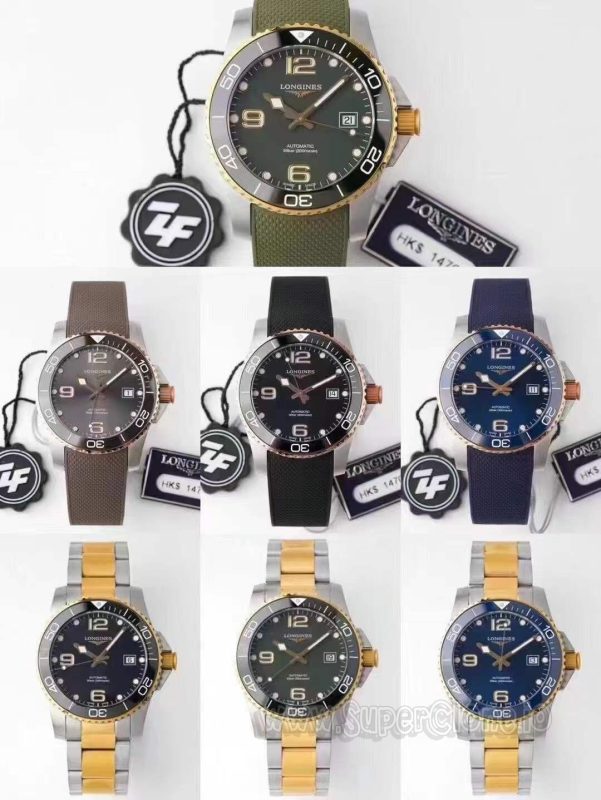
Several standout Cartier and Longines pieces from the heavy hitters—AF (Art Factory) and ZF (Z Factory)—have recently headlined these seasonal discount lists, offering a rare window for collectors to snag NWBIG (Not Worth Buying In Genuine) quality at a lower entry point than usual.
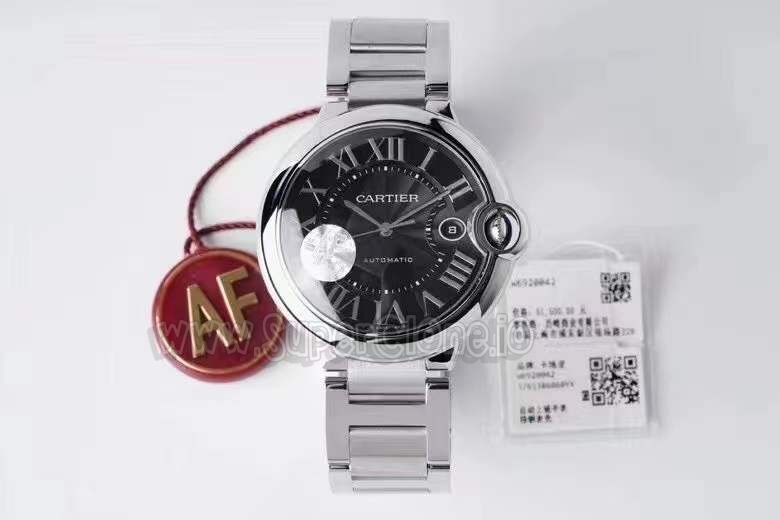
The Cartier Ballon Bleu has long been the “silent king” of the women’s and unisex replica segments. While the online community often obsesses over the latest V3 or V4 iterations of Rolex sports watches, the Ballon Bleu quietly maintains one of the highest accuracy-to-gen ratios in the entire industry. Its appeal lies in its jewelry-like elegance—the pebble-shaped case, the integrated sapphire cabochon crown, and that iconic distorted radial layout that offers a softer alternative to the aggressive tool-watch aesthetic of Omega or Rolex. It fits comfortably into a wider range of daily contexts without drawing the wrong kind of attention.
AF Factory has spent the better part of a decade perfecting the Ballon Bleu production line. In the early days, “super clones” of this model were plagued by flat dial printing, incorrect crown proportions, and a lack of the proper “fish-eye” magnification effect on the crystal. Today, AF’s production has reached a point where the smaller case sizes, such as the 28mm and 33mm variants, are virtually indistinguishable from the genuine article under a 10x loupe. They have mastered the specific “silver-white” hue of the dial and the delicate guilloché pattern that defines the classic Cartier look.
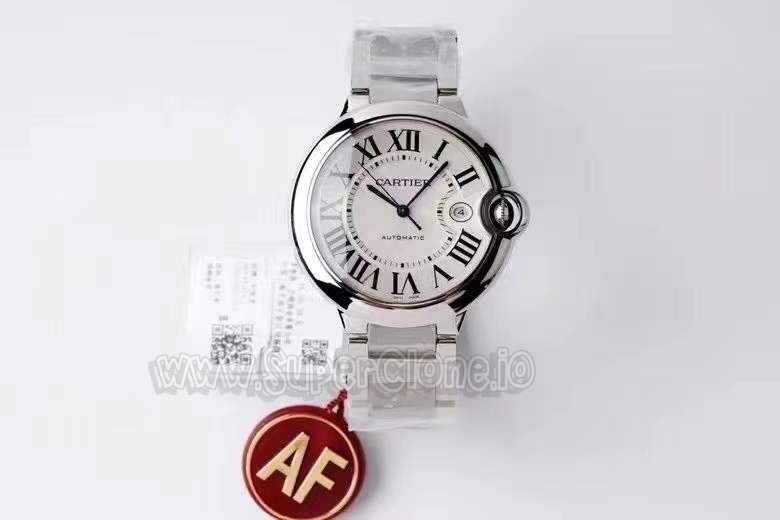
One might wonder why such a high-quality piece would end up on a seasonal promotion list. The reality of the Guangdong market is that sports watches—Submariners, Daytonas, Royal Oaks, and Nautilus models—are the high-volume movers that dominate factory schedules. Elegant dress watches, despite their flawless replication accuracy, often accumulate as “sitting stock” for factories that prioritize the massive global demand for steel sports models. As the holiday shutdown looms, inventory pressure forces workshops to move these pieces quickly to clear warehouse space and pay out year-end bonuses to their assembly staff.
For the tactical buyer, this is an undeniable advantage. Cartier replicas, particularly from AF, are among the most reliable “set and forget” watches in the hobby. Because they avoid the technical “timebomb” issues associated with overly complicated custom clone movements, they offer incredible long-term reliability. Most Ballon Bleu replicas utilize robust, high-beat automatic platforms like the Miyota 9015, decorated Seagull calibers, or high-end Swiss quartz movements for the smaller ladies’ models, reducing ownership risks and making the daily experience completely predictable.
Seasoned collectors often point out that replicating a Cartier is actually a rigorous test of exterior finishing rather than complex mechanical engineering. The challenge isn’t in creating an advanced caliber; it’s in the case curvature. Achieving the seamless, rounded transition from the lugs to the crown guard, ensuring the hands have the correct heat-treated flame-blued look rather than cheap paint, and getting the Roman numerals to “pop” without bleeding into the dial texture are where AF truly shines under close inspection in natural daylight.
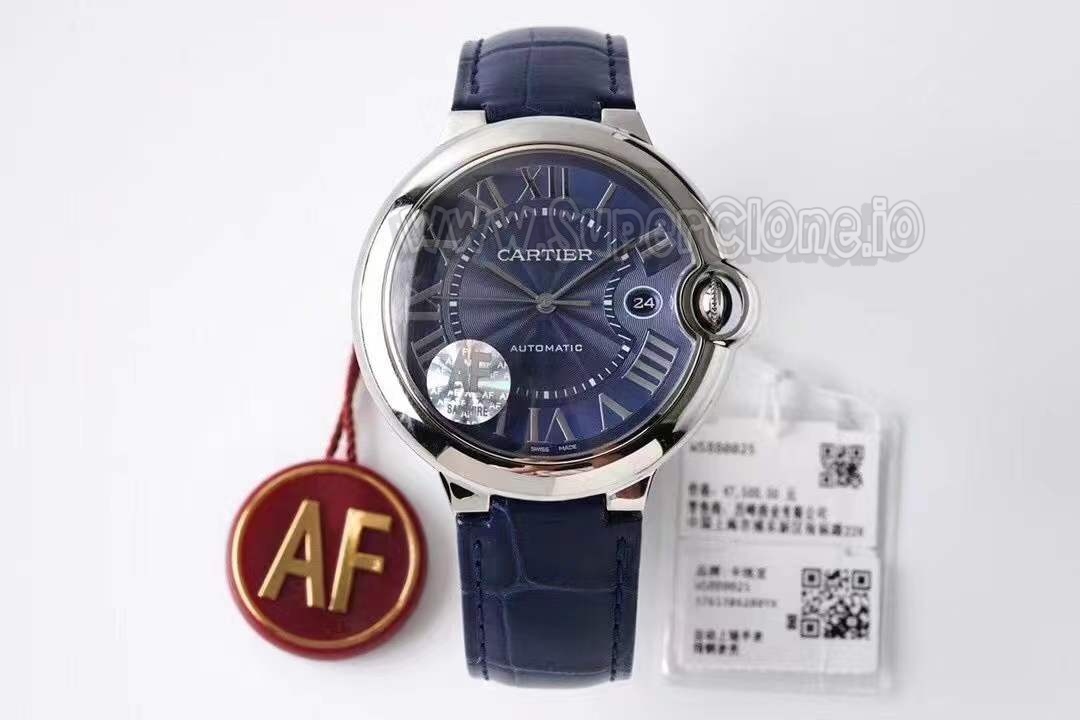
There is also a fundamental difference in how the replica market evaluates Cartier versus Rolex. A Rolex buyer will spend hours discussing the rehaut alignment, bracelet lug-width tolerances, or the solid end link (SEL) gap. A Cartier buyer operates from a different set of priorities, looking primarily for visual harmony. It’s about how the light plays off the curved sapphire crystal and whether the cabochon has that deep, translucent blue depth. AF Factory recognized this shift in consumer psychology early on, choosing to invest in superior exterior polishing and crystal clarity rather than marketing gimmicky custom movements that add no real value to a closed-caseback dress watch.

The Cartier London dial variations and other boutique configurations represent a somewhat different niche that has gained traction among more experienced collectors. These pieces cater to the “if you know, you know” crowd—buyers who want the deep Cartier heritage without the ubiquity of the standard catalog configurations. The replica industry was historically slow to embrace these vintage-inspired designs, but as the genuine luxury market pivots toward “quiet luxury” and restrained aesthetics, factories like AF have been quick to follow suit, producing specialized dials with incredible depth and historical accuracy.
A decade ago, the market was a sea of oversized Hublots, chunky Panerais, and massive tool watches. Today’s landscape looks considerably different. There is a genuine, sustained hunger for thinner profiles, smaller case diameters, and understated elegance. This evolution is a direct reflection of the broader horological world, where the “big watch” era is being replaced by a return to 36mm and 38mm classics. Factories monitor these collector trends with extreme precision; they know that a perfectly executed Tank or Ballon Bleu is now just as critical to their bottom line as a GMT-Master II.
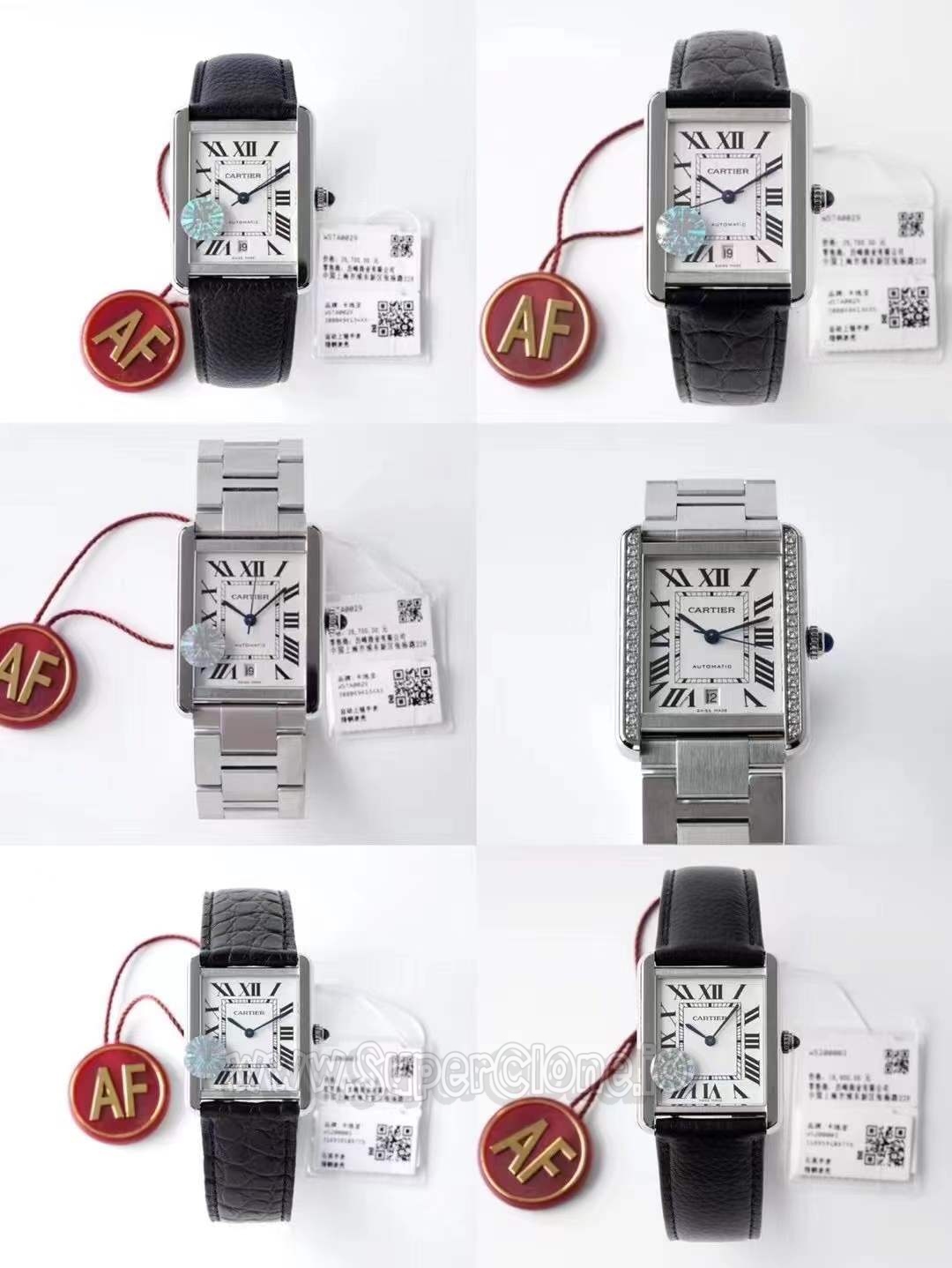
Speaking of classics, the Cartier Tank remains the ultimate “litmus test” for any factory, despite appearing deceptively simple at first glance. The strict rectangular geometry leaves almost zero margin for proportion errors. If the rail-track minute circle or the case width-to-height ratio is off by even half a millimeter, the entire aesthetic collapses and reads as wrong almost instinctively. The Tank is not a watch you buy for mechanical fascination; you buy it because the design has survived multiple generations without requiring fundamental revision. AF’s ability to maintain the crispness of the Tank’s edges while keeping the profile ultra-slim is why they remain the absolute go-to choice for this model.
While Cartier dominates the dress watch conversation in the current pre-holiday period, ZF Factory has also been making waves by discounting several of its Longines models ahead of the seasonal closure, and those discounts deserve equal attention from buyers who have overlooked this category.
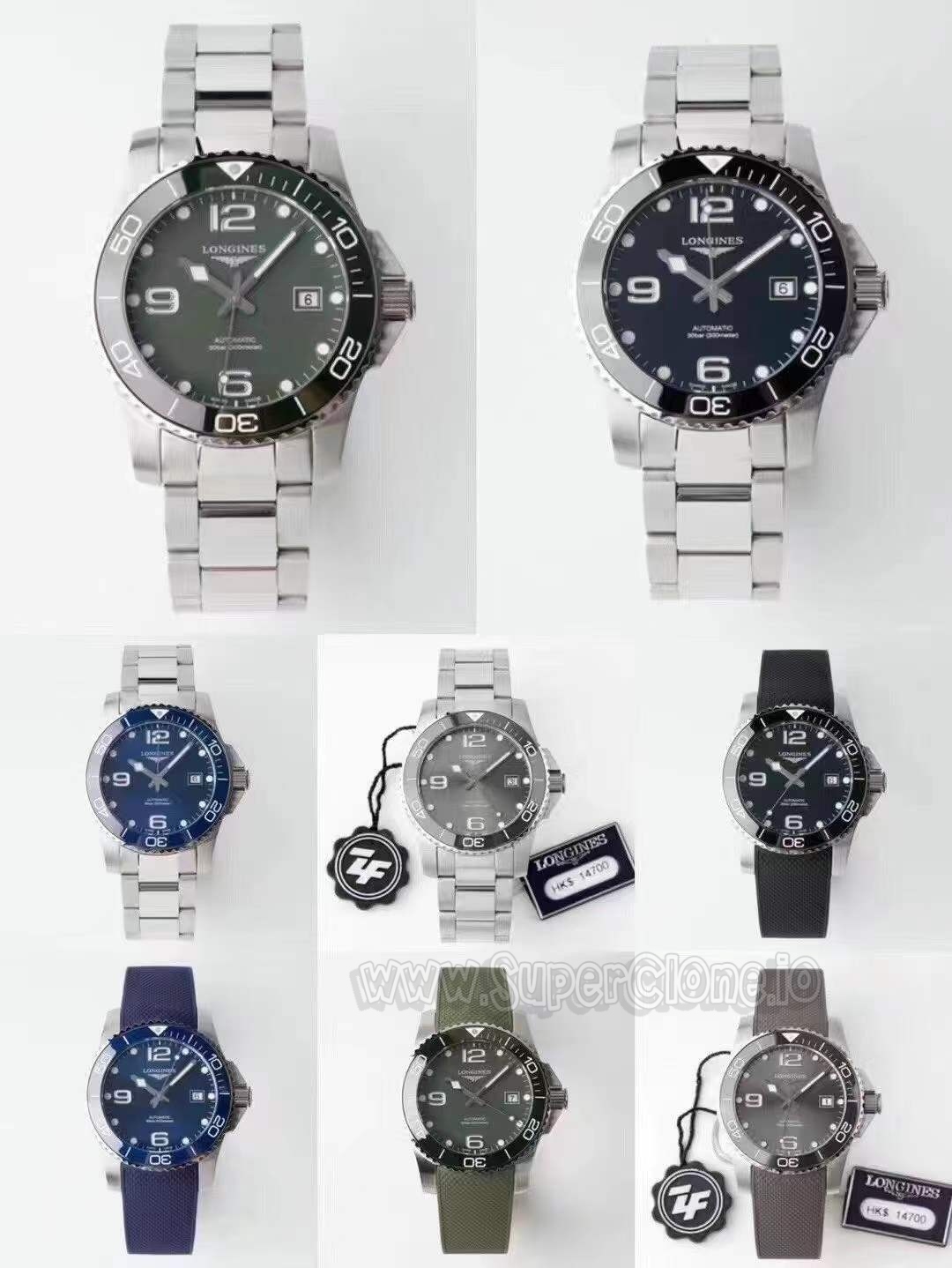
ZF is a powerhouse, usually synonymous with high-tier IWC Portugiesers, Tudor Black Bays, and Audemars Piguet Royal Oaks. However, their Longines lineup is one of the market’s best-kept secrets. The Longines category rarely generates the same online hype or forum discussion as a Patek Philippe or a Rolex replica, but it occupies a genuinely crucial position inside the market: the low-profile daily wear. For many professionals, wearing a $20,000 replica to the office feels risky, but a conservative $3,000 Longines? It is perfectly believable, understated, and sophisticated for daily use without attracting unnecessary attention.
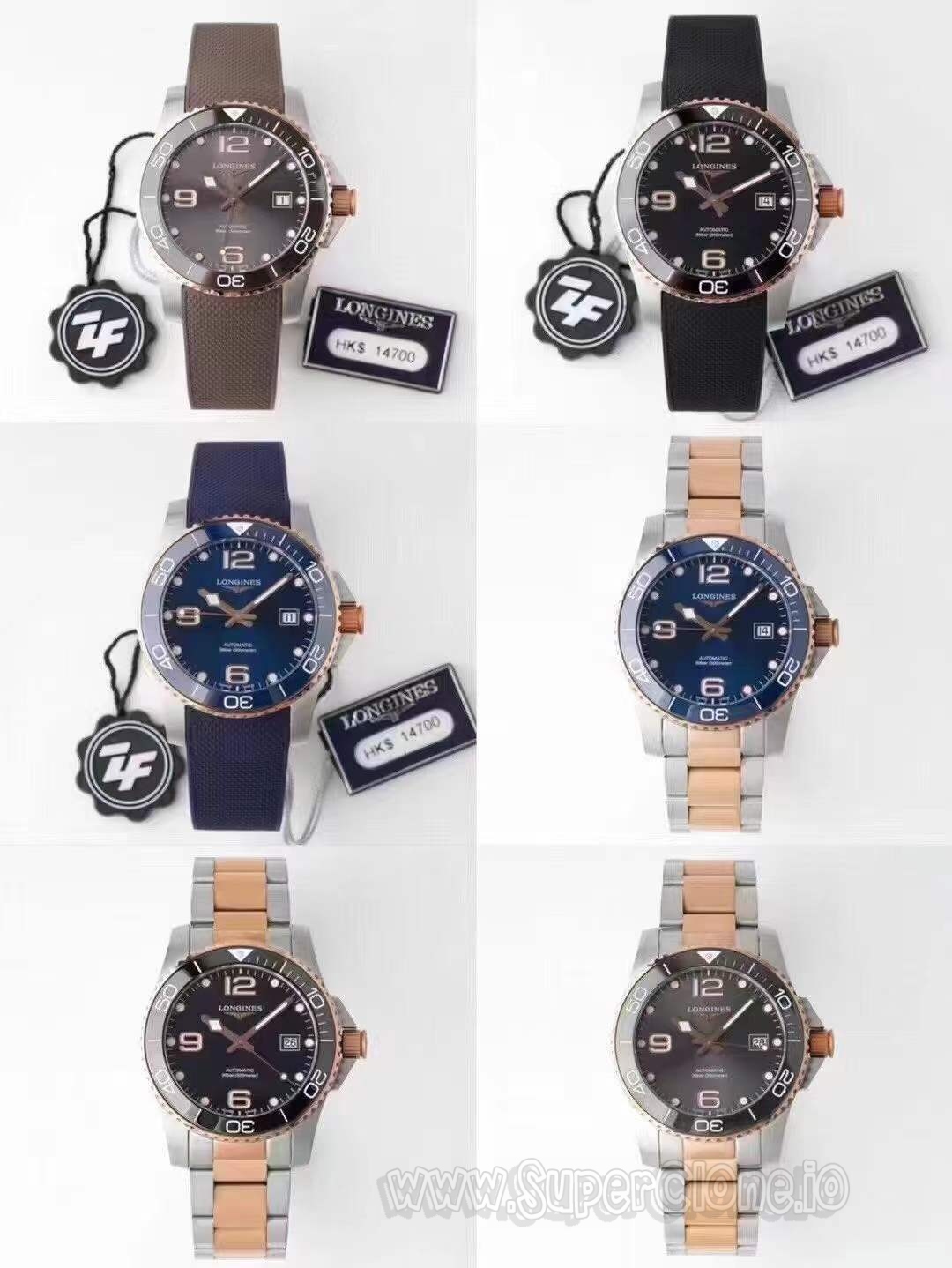
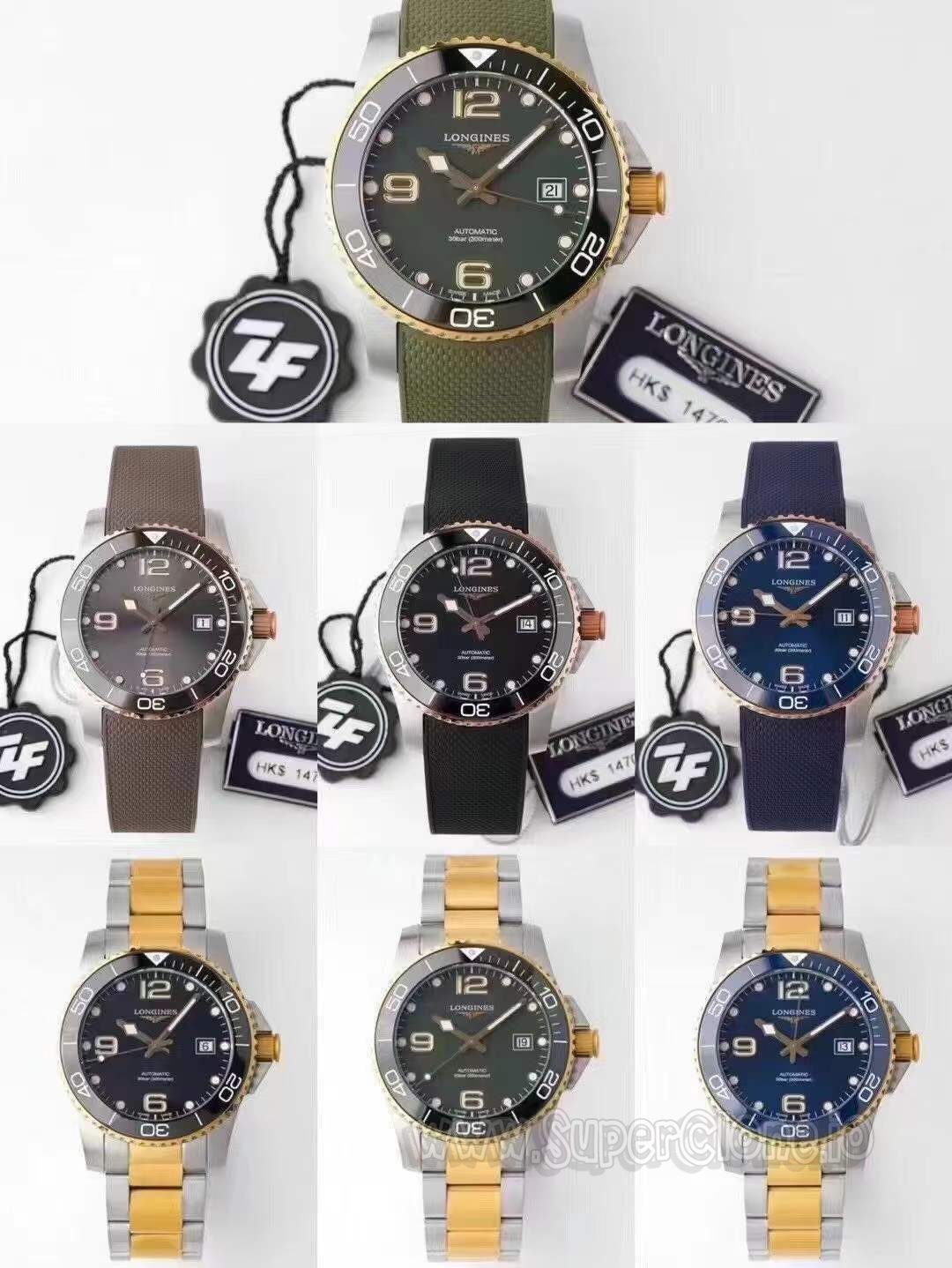
The ZF Longines pieces succeed because they don’t try to over-engineer the platform. They focus entirely on the essential aesthetics—the crisp sunburst texture of the dial, the needle-thin hands, and the comfortable, well-finished steel bracelets. The specific references ZF has been discounting include several from the Master Collection and Conquest lineups, featuring modest case diameters in the 38mm to 40mm range. When a factory reproduces these wearable proportions accurately, the resulting watch often feels more convincing on the wrist than heavily complicated replicas attempting to mimic ultra-high-end complications with inherently imperfect custom movements.
Navigating holiday discounts in the replica industry requires a bit of market literacy. A promotion doesn’t always mean a watch is inferior or overstocked inventory. Sometimes it’s simply a matter of cash flow. In this underground network, cash is king, especially before the new year when component suppliers must be settled and workers expect their year-end payouts before departing. However, it can also signal that a updated “V2” reference is in development for post-holiday release, and the factory wants to clear older stock before introducing the new version. All these situations exist simultaneously during the pre-holiday window, making real-time information incredibly murky.
This is one of the core reasons why market updates become genuinely unreliable around January. Rumors fly about which workshops are merging or closing early. Dealers themselves often receive incomplete updates from their factory contacts. A workshop may promise a February reopening, but if their primary movement supplier in a different region remains closed until March, that date means nothing. The replica industry is a tightly coupled house of cards where every single component manufacturer—producing plates, rotors, balance assemblies, and date wheels—must be active for the final product to exist.
For the veteran collector, this period is less about chasing hype and more about timing and patience. You have to weigh the benefit of a significant seasonal discount against the risk of a long shipping delay or overloaded export channels in the days immediately before the break. If you are eyeing a stable, well-perfected reference like the AF Ballon Bleu or the ZF Longines Master Collection, the risk is minimal because these models have already reached their peak development curve and require no further factory updates.
The most important takeaway for any newer buyer is understanding that this industry does not operate like a conventional retail business with predictable restocking cycles. It is a fragmented, decentralized network of independent workshops operating under immense pressure. The Lunar New Year doesn’t just pause the market; it completely resets it.
Some factories will return quickly after the holiday with groundbreaking new clones and improved reference updates. Others may remain silent for weeks as they work through restaffing problems and supplier delays. Occasionally, certain workshops never reopen at all, and their product lines fade from dealer lists without announcement. This cycle has repeated many times throughout the history of the modern replica watch market.
For those paying attention, the seasonal rhythm tells you more about the industry than any single product release ever could. Knowing when factories slow down, when suppliers temporarily disappear, and when genuine promotions are likely to surface is part of developing a true understanding of how the replica watch industry actually functions behind the scenes. And every year, once the final shipments leave and the factory lights across Guangdong begin to dim, the market enters its annual pause again—quiet, empty, and ready to restart the cycle from scratch.
