
BV Factory Bvlgari Octo Green Dial Review Living With a Geometric Sports Watch Replica
For a long time, most replica watch discussions in our market were heavily focused on Rolex sports models, Royal Oak replicas, or Nautilus super clones. Collectors were chasing familiar shapes because those watches had already proven themselves in daily wear, movement stability, and resale demand inside the replica community. However, over the past two years, another category has slowly started gaining attention among experienced buyers who are tired of seeing the same Submariner or Daytona everywhere. That category is the modern geometric luxury sports watch, especially designs with sharp architectural case structures.
Among them, the Bvlgari Octo stands out because it does not follow traditional Swiss sports watch design logic. Instead of relying on a round case or a typical integrated bracelet formula, the Octo series builds its identity through layered octagonal geometry, sharp transitions, and highly technical finishing surfaces. This design language also explains why many factories avoided it in earlier production years. The case is significantly harder to machine and finish than it appears in photos.
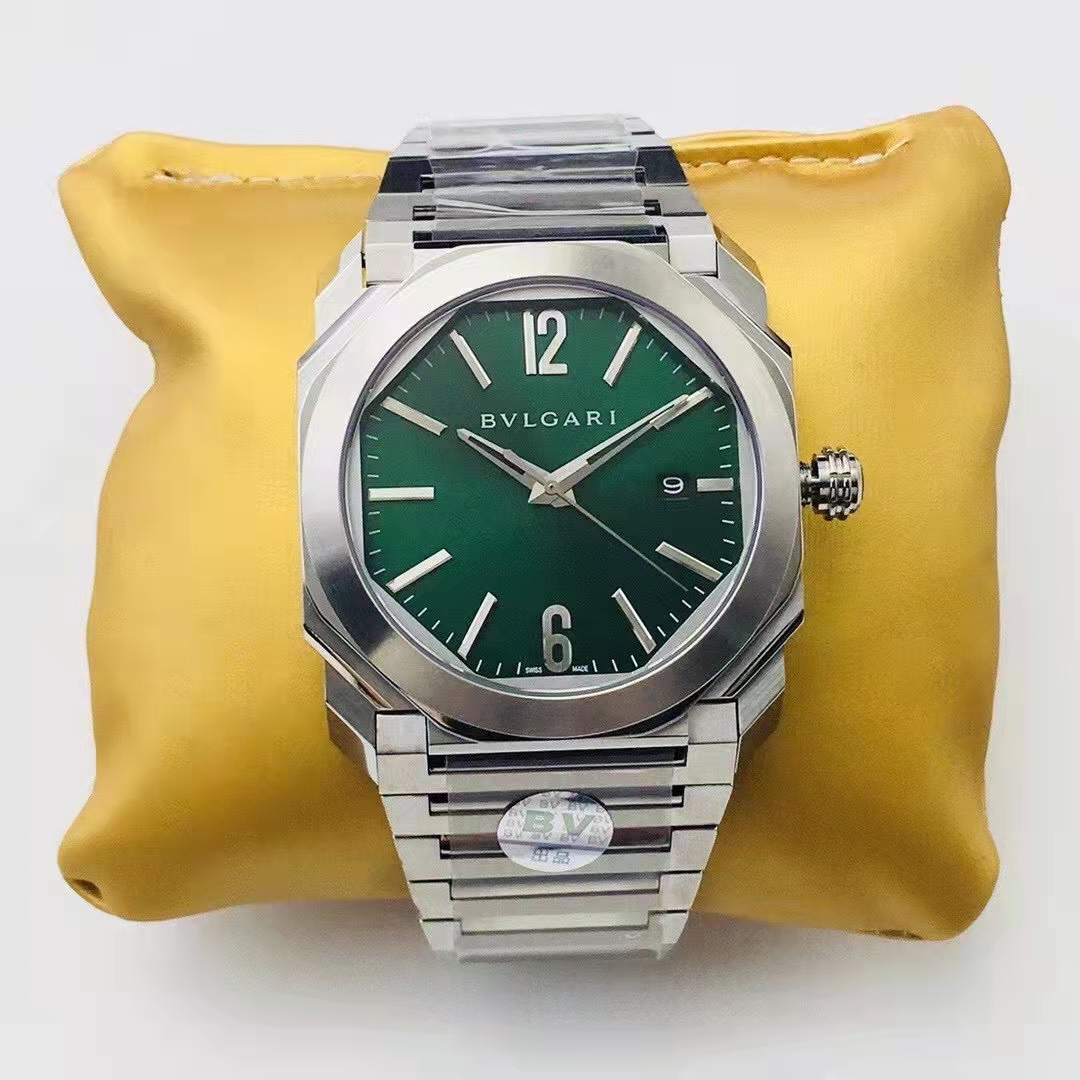
What makes the situation more interesting is the rise of green dials across the entire luxury watch industry. Once Rolex normalized green as a “modern luxury color,” other brands gradually followed. We saw it appear in Patek Philippe, Audemars Piguet, and eventually in more niche models like the Bvlgari Octo. For replica factories, green dials also serve a practical purpose: they refresh existing models without requiring a full redesign of the case or movement platform.
Personally, green dials were never my first choice for daily wear. Black, silver, and dark blue still feel more practical over time. However, after seeing the Octo green dial paired with modern casual outfits, it becomes easier to understand its appeal. It is not meant to be subtle. It is meant to be visually direct, especially in photos and social settings where wrist presence matters more than understatement.
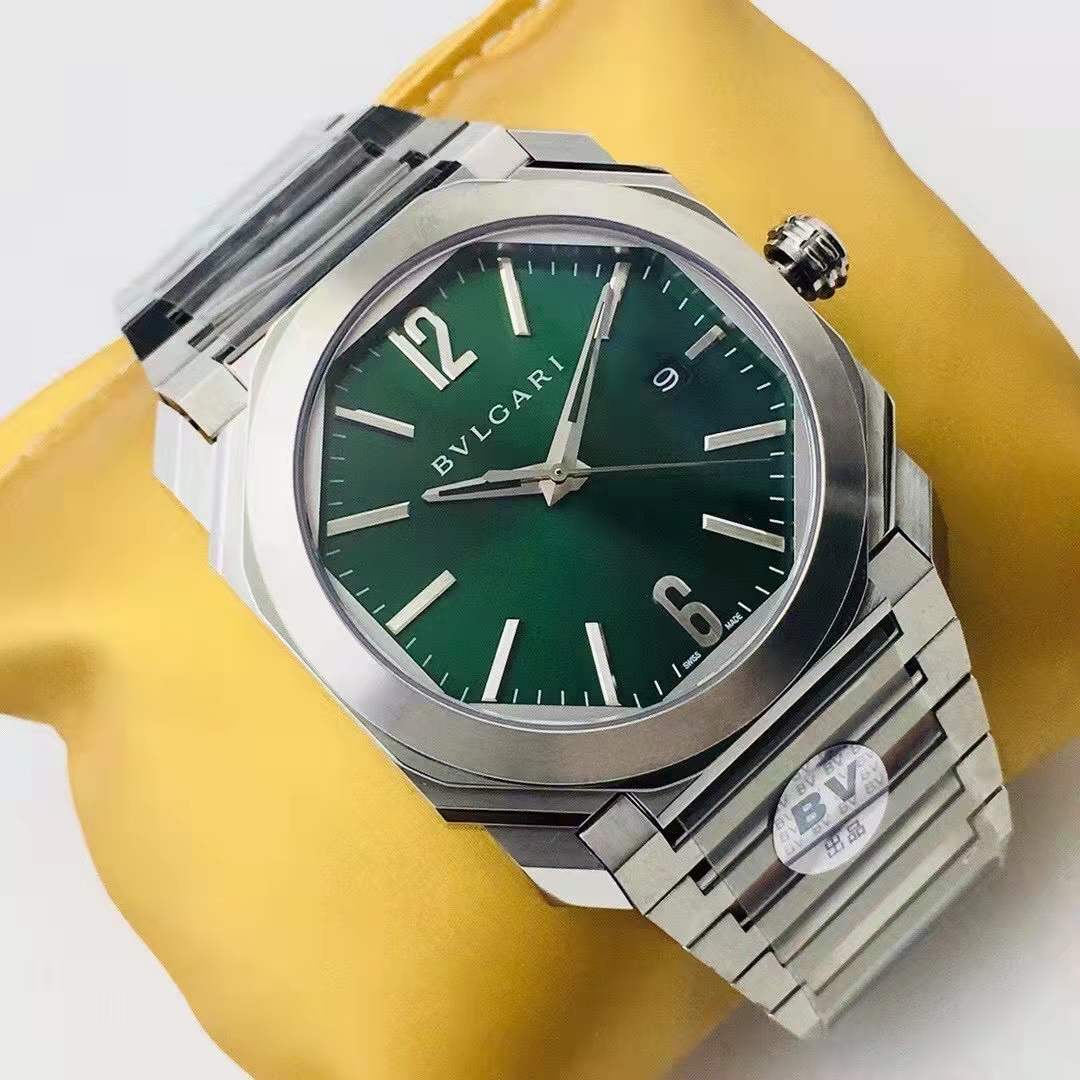
In today’s replica market, very few factories are willing to invest seriously in Bvlgari Octo production because demand is still limited compared to Rolex or AP. Most low-tier versions suffer from soft case edges, inconsistent brushing, and weak bracelet integration. The better versions mainly come from two factories: GF and BV Factory.
GF tends to focus on balanced finishing and overall consistency. BV Factory, on the other hand, puts more emphasis on sharp geometry and visual definition. On a watch like the Octo, this difference becomes obvious quickly. The Octo depends heavily on crisp edge transitions; if those edges become too soft, the entire design loses its architectural identity. In hand, BV Factory feels slightly more aggressive and visually accurate, while GF feels smoother but less dramatic.
BV Factory is also known for its Cartier Santos production, which likely helped them improve bracelet articulation and case-to-bracelet transition quality. Integrated bracelet watches like the Octo are extremely sensitive to small alignment issues. Even a slight inconsistency in brushing direction or link tension can break the visual flow of the entire watch.
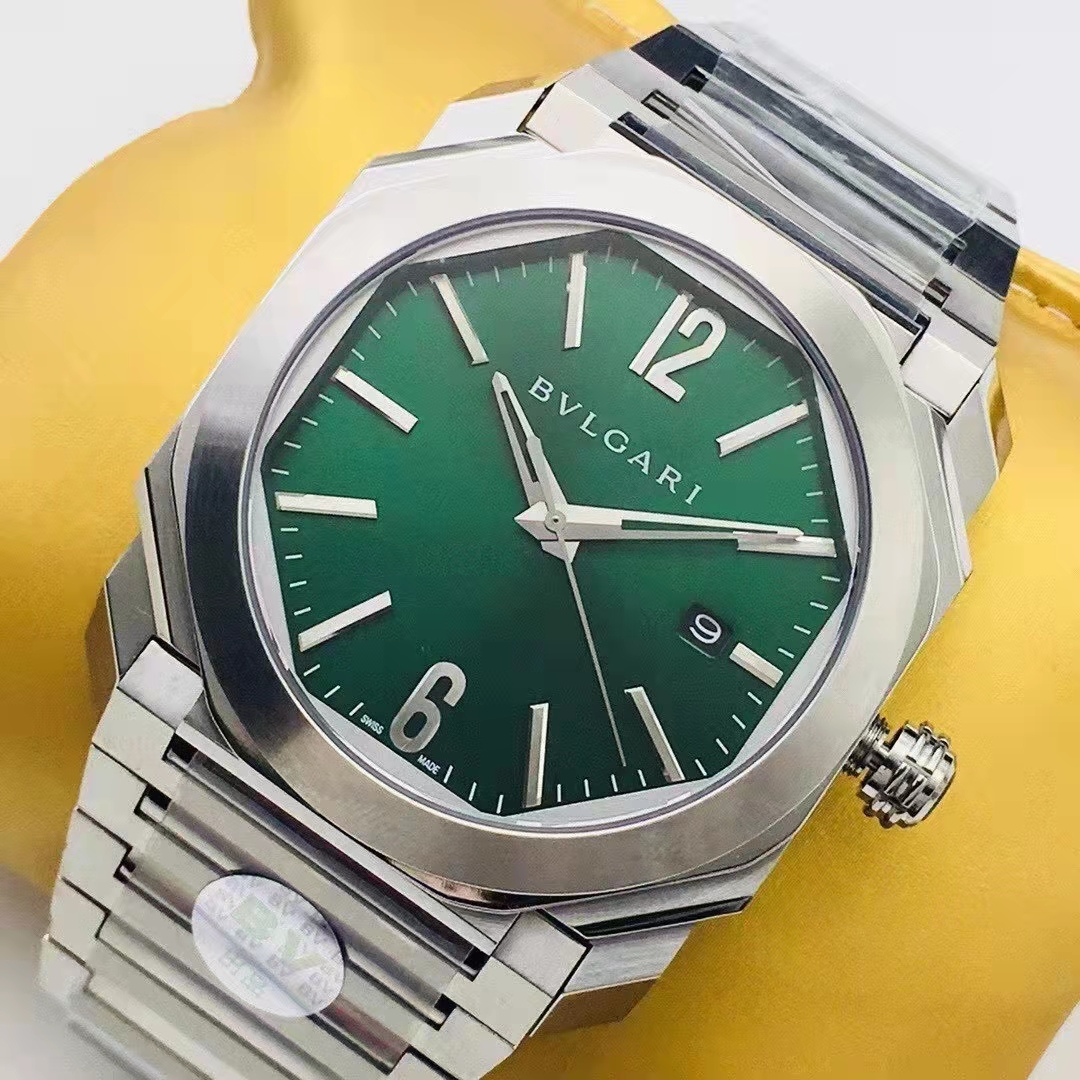
On the wrist, the first impression of this replica is the case architecture. Even after handling many sports watches, the Octo still feels visually dense under light. The multiple angles across the bezel and mid-case create shifting reflections depending on viewing angle. It does not aim for elegance in the traditional sense. It feels more like industrial design than classical horology.
Although the watch measures around 41mm, it wears slightly larger due to the outward expansion of its angular bezel. On a 17cm wrist, the watch sits flat but visually extends beyond its actual diameter. After wearing it for a few hours, one noticeable point is that the sharp case edges can feel slightly present on the wrist when bending the hand, especially compared to round-case watches like a Submariner.
One small drawback I noticed during longer wear is that the bracelet articulation takes a short “break-in” period. Out of the box, it feels slightly more rigid than expected, and only after a few days of wear does it start to move more naturally with the wrist. It is not uncomfortable, but it is noticeable compared to softer integrated bracelet executions.
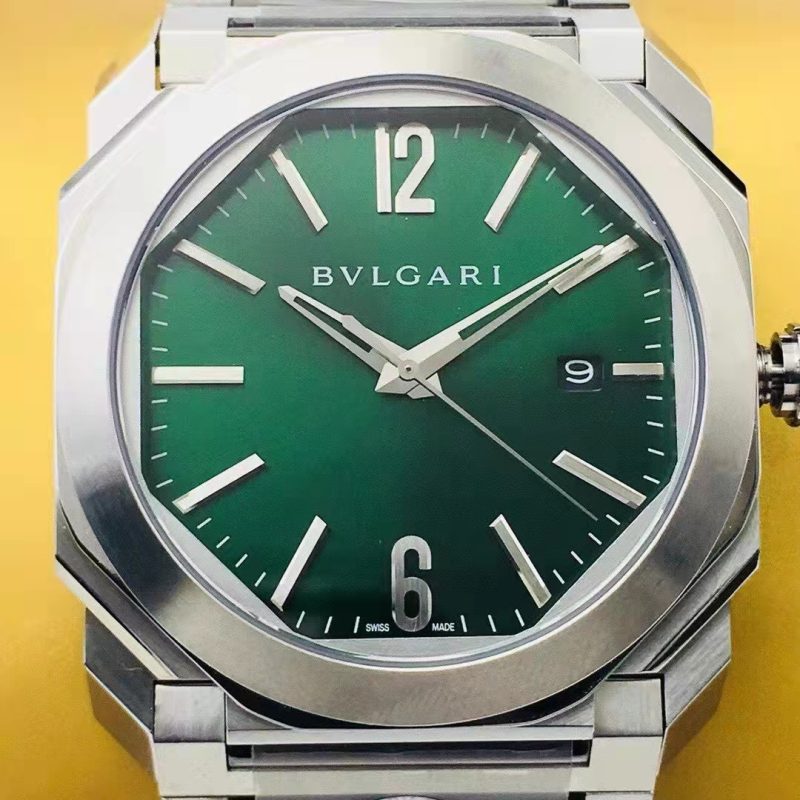
The green dial is more subtle than most promotional images suggest. Indoors, it often shifts toward a darker olive tone. Under direct sunlight, it becomes brighter but still avoids looking overly saturated. This is important because many factories struggle with green dial replication—either too dull or too fluorescent. BV Factory strikes a reasonable balance here.
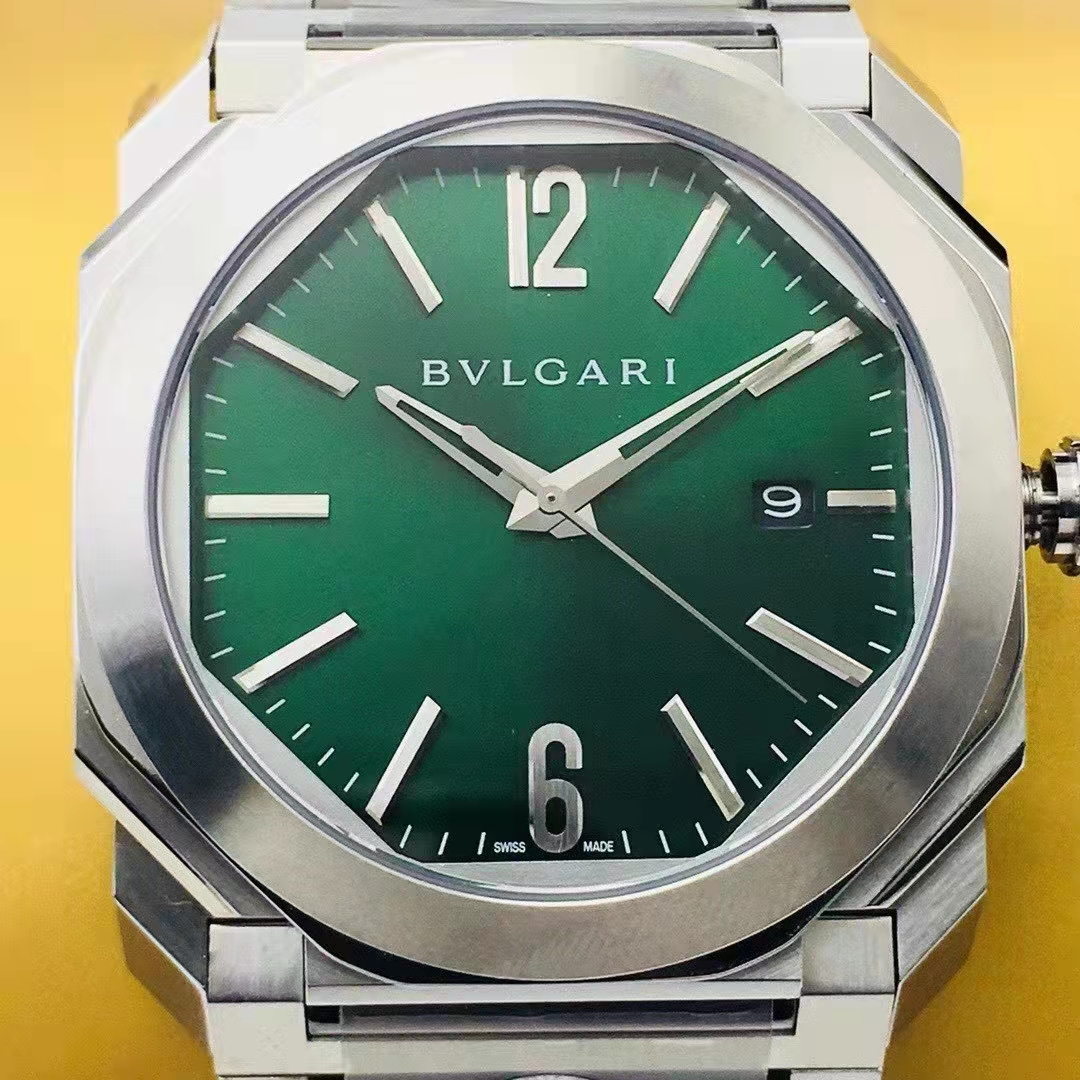
The horizontal dial texture also plays an important role. Without it, the green surface would appear too flat and visually heavy. The subtle pattern adds depth without distracting from the overall case geometry. The Octo is designed in a way where the dial supports the case rather than competing with it.
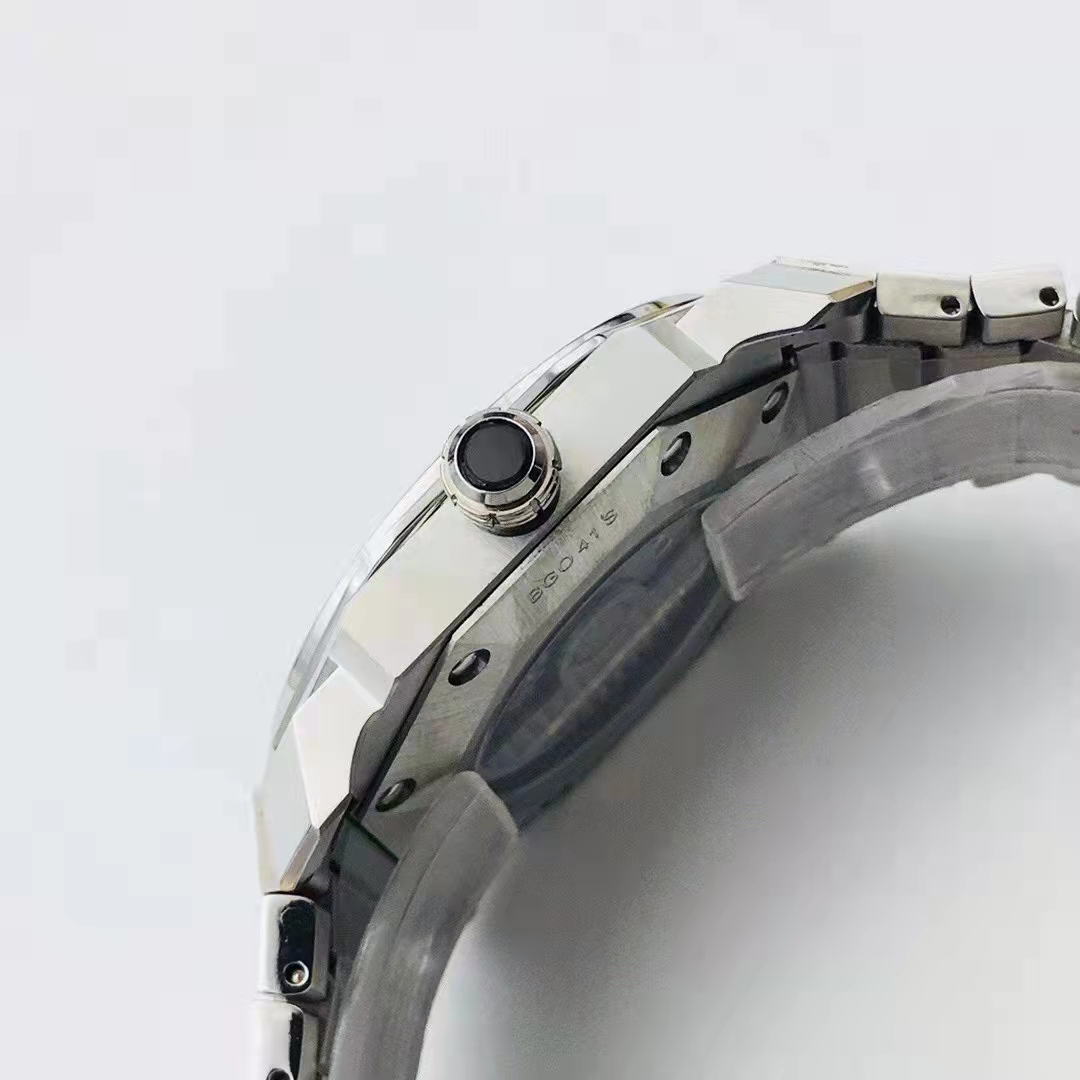
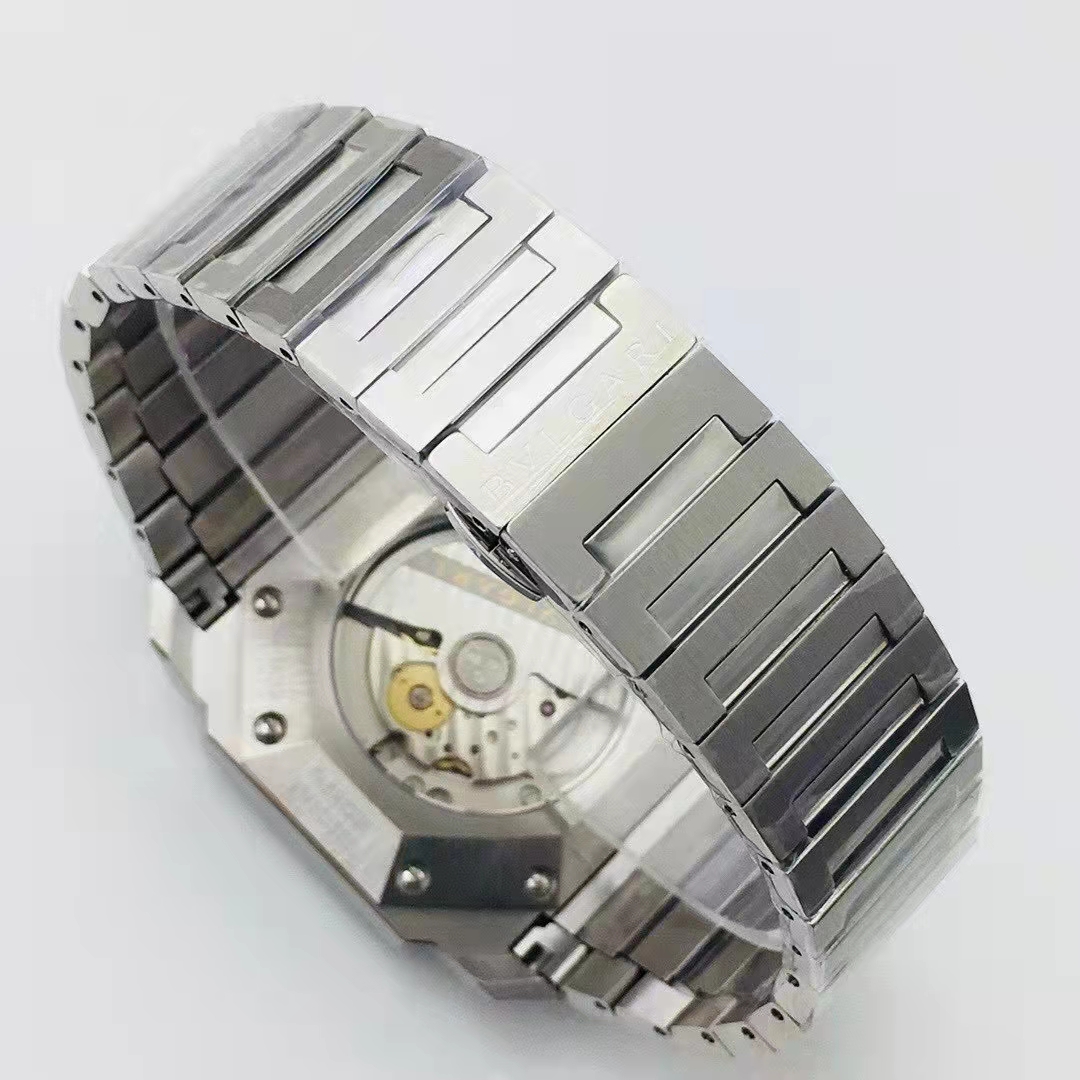
The bracelet is one of the most important quality indicators on this watch. Integrated bracelets leave no room for error. On cheaper replicas, you often see uneven brushing or slightly misaligned links near the case junction. BV Factory performs better than most in this area. The transitions are cleaner, and the articulation feels controlled rather than loose.
One detail worth noting is the first bracelet link connection to the case. This area is often where low-tier replicas fail. Here, the spacing is more consistent, and the flow from case to bracelet feels visually continuous. The clasp also closes with a more solid click than expected for this price segment, although the finishing of the inner clasp edges still feels slightly sharp under close inspection.
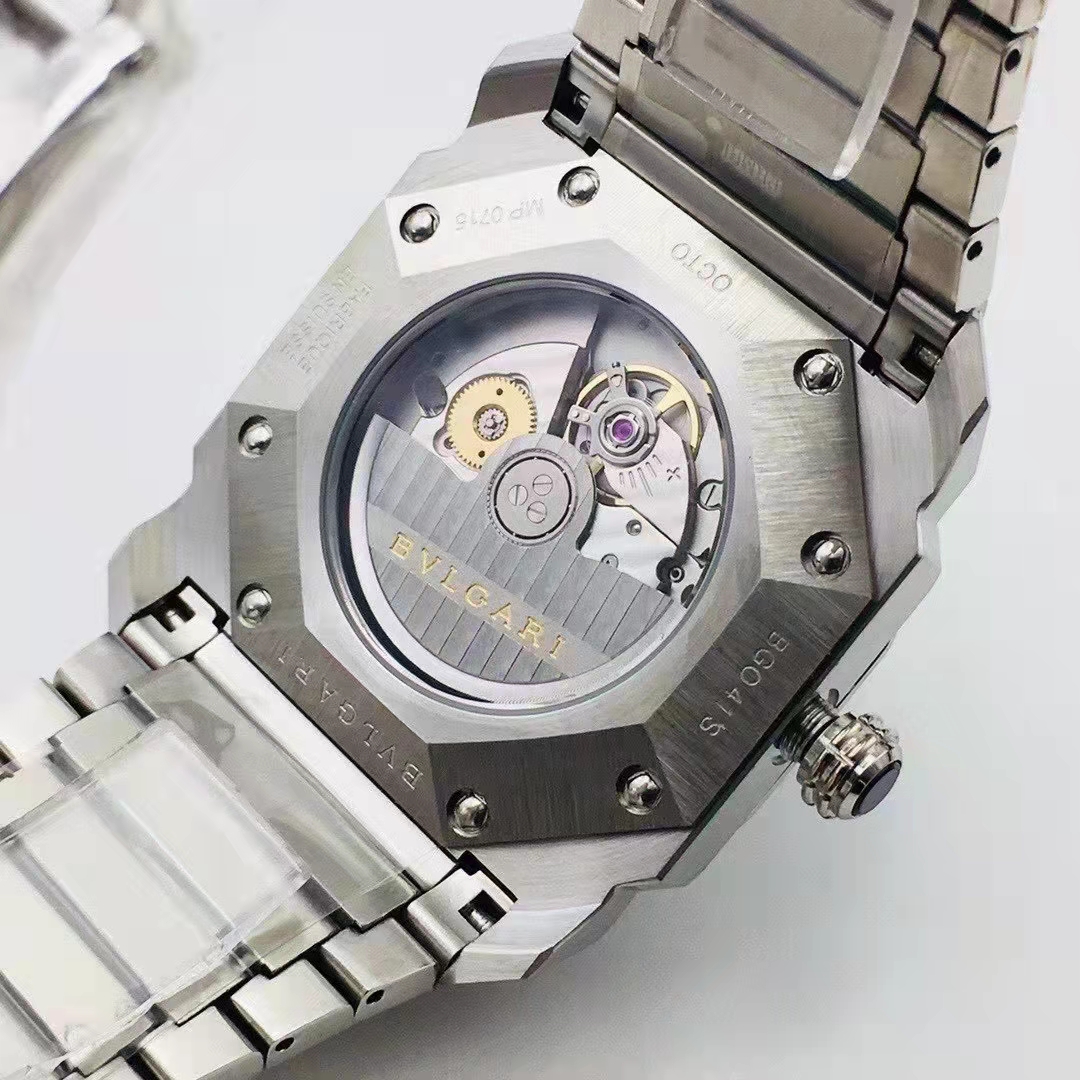
The movement used is the Japanese Miyota 9015. While some collectors prefer fully decorated clone movements for visual accuracy, the 9015 remains one of the most practical choices in this category. It is thin, stable, and easy to service, which matters more for long-term wear than decorative rotor finishing.
From a functional perspective, the slim profile of the 9015 helps maintain the Octo’s relatively thin case design. If a thicker movement were used, the watch would lose its balanced proportions and feel noticeably bulkier on the wrist.
Through the caseback, the decorated rotor and striped finishing provide a decent visual impression at arm’s length. Close inspection obviously reveals it is not a true in-house caliber, but for most users, reliability outweighs that detail.
Another reason watches like this are gaining attention is simple market saturation. After years of Rolex Submariner, Daytona, and GMT replicas dominating the space, many collectors begin looking for something visually different. The Octo provides that alternative without leaving the luxury sports category.
It also reflects a broader shift in watch taste. Younger buyers tend to value design identity more than historical legacy. That explains why more angular, architectural watches are becoming more accepted, even in the replica segment.
Still, the Octo remains a niche product. The production complexity is higher than standard round cases, and machining sharp geometry correctly requires more precise CNC work. This naturally limits how many factories can produce it at a consistent level.
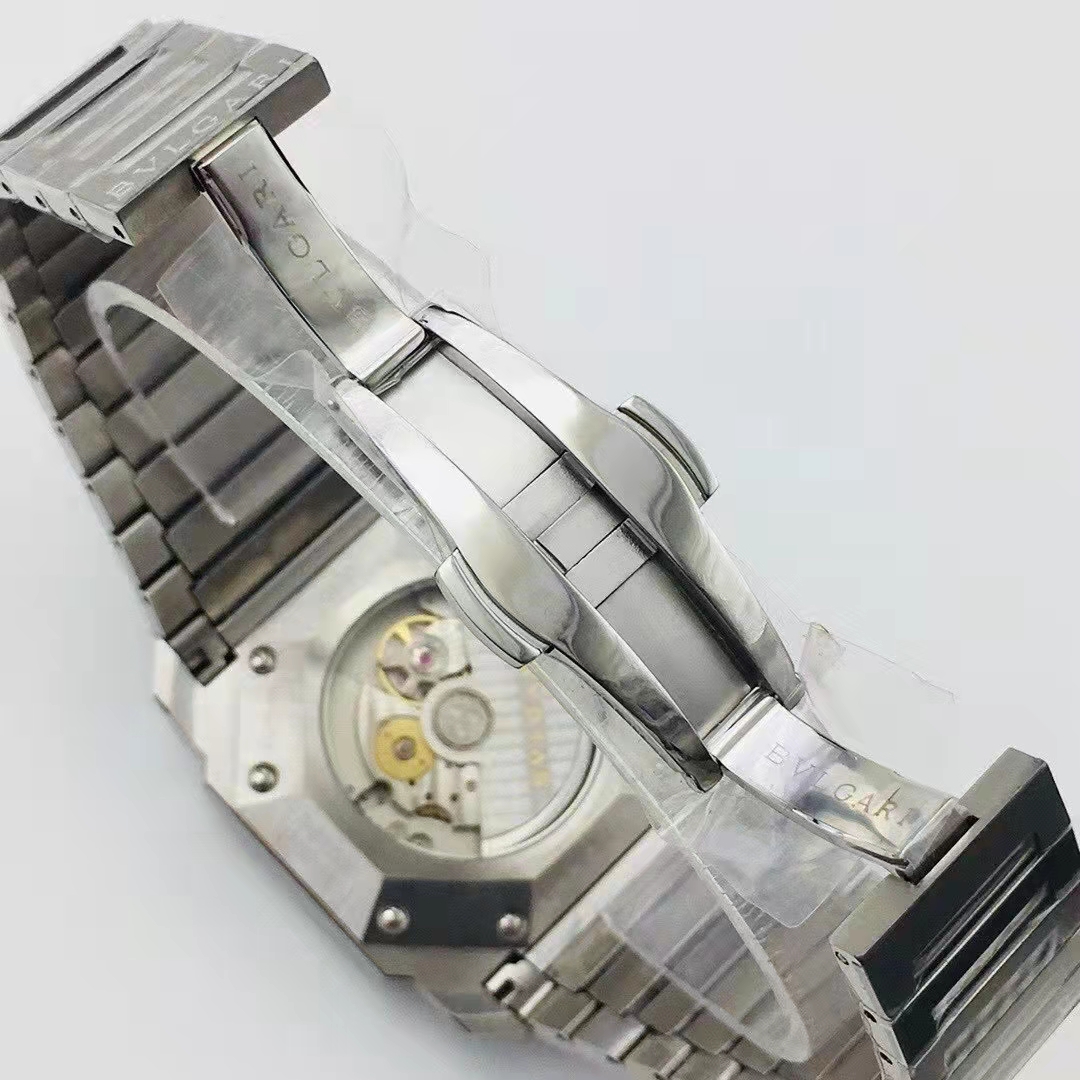
The clasp finishing is acceptable for daily use. It does not feel hollow, and the brushing direction matches the bracelet reasonably well. It is not flawless, but it does not break the overall visual continuity either.
In terms of wearability, the Octo performs better than its sharp design suggests. The flat case profile helps distribute weight evenly, and it does not feel top-heavy during extended wear. However, after a full day of wear, the sharp case geometry is still something you are aware of, especially when resting your wrist on a table or typing for long periods.
Under changing light conditions, the mix of brushed and polished surfaces creates constant visual variation. This is one of the strongest aspects of the Octo design. It rarely looks static; instead, it shifts depending on angle and environment.
BV Factory also produces other color variations such as black, white, and grey. Each version changes the character of the watch significantly. Black emphasizes geometry, white increases technical cleanliness, and green sits in between as a more expressive but still balanced option.
Overall, the Octo represents a shift in the replica market from simple visual copying toward more design-driven manufacturing. Instead of only replicating famous Rolex references, factories are gradually expanding into more complex architectural watches.
For buyers who want something different from the usual lineup of Submariner or Royal Oak replicas, the BV Factory Octo offers a distinct alternative. It is not perfect, and it does not try to imitate traditional Swiss elegance. Instead, it focuses on geometry, structure, and modern visual identity.
And that is probably why it stands out. Not because it tries to compete directly with mainstream icons, but because it follows a completely different design language in a market that often feels repetitive.
