Inside the APS Factory AP Royal Oak 15400 and Its Clone 3120 Movement
There was a period when almost every serious Audemars Piguet replica discussion revolved around only two factories. If somebody wanted a Royal Oak 15400, the answer was usually simple: buy JF if stock existed, buy ZF if you preferred the dial texture, or wait endlessly for the next production batch because the market was unstable again. That was the situation for several years inside the super clone watch industry.
Then the environment changed very quickly.
Factory raids disrupted supply chains, old inventories disappeared, familiar workshops stopped delivering consistently, and suddenly one of the most mature replica sports watches in the market entered an awkward phase where demand was still extremely high, but reliable supply was no longer guaranteed. This is also the reason why collectors started paying attention to newer names that previously stayed outside the mainstream spotlight.
APS Factory was one of them.
At first, many buyers did not take APS seriously. The factory was not as established as JF or ZF in the Royal Oak category, and most experienced collectors were cautious whenever a newer manufacturer claimed they had solved long-standing AP replication problems. But the release of the APS Royal Oak 15400 changed the conversation very fast, especially after more watch enthusiasts started opening the caseback and examining the movement architecture instead of only discussing the dial color.
The biggest reason was not the bracelet.
It was not even the case finishing.
It was the clone 3120 movement.
For people outside the replica watch industry, the importance of that movement may sound exaggerated. But for collectors who have followed Royal Oak replicas for years, the movement inside a 15400 has always been one of the clearest differences separating an average AP replica from a truly convincing super clone watch.

The Royal Oak 15400 occupies a very special position in the Audemars Piguet replica market because it sits exactly between modern sports luxury design and wearable daily practicality. Compared with oversized Offshore models or skeletonized Royal Oaks, the 15400 feels cleaner, thinner, and much closer to what most people actually imagine when they think about an Audemars Piguet sports watch.
That is why this reference survived for so many years in the super clone market.
Even today, despite newer references appearing constantly, many experienced buyers still consider the 15400 one of the safest first purchases when entering high-end replica watches. The proportions are balanced, the design language is timeless, and more importantly, factories have spent years studying every detail of the genuine watch. The result is that the best Royal Oak 15400 replicas now sit at a surprisingly mature level compared with many other luxury sports models.
APS clearly understood this before launching their version.
Instead of trying to redesign the formula completely, they focused on the areas where earlier generations still struggled: movement authenticity, dial depth, case thickness, and overall structural accuracy.

One reason the genuine Royal Oak 15400 is difficult to replicate properly is because the watch looks deceptively simple from a distance. Many people assume the iconic octagonal bezel and integrated bracelet are the only important elements. In reality, the challenge is far more technical.
The entire watch depends on proportion.
The bezel cannot appear too thick.
The bracelet cannot feel too rigid.
The brushing direction across the case and bracelet must transition naturally.
The polished bevels must catch light sharply without becoming overly reflective.
Even the dial texture itself creates problems because the “Grande Tapisserie” pattern changes visually depending on lighting conditions.
This is why lower-end AP replicas often look acceptable in photographs but immediately feel wrong on the wrist.
The geometry exposes mistakes very quickly.
APS appears to have spent significant effort correcting those visual proportions. The first thing many collectors noticed was the case thickness. Earlier Royal Oak replicas frequently became thicker because factories used modified movements with additional plates added on top. The dimensions looked close on paper, but once worn beside genuine pieces, the imbalance became obvious.
APS addressed this directly.
Their Royal Oak 15400 measures approximately 9.8mm thick, which places it extremely close to genuine specifications. That difference sounds minor to casual buyers, but experienced AP collectors know the Royal Oak wears entirely differently when the mid-case profile becomes too thick. The watch loses the slim integrated appearance that makes the original design so recognizable.

The case finishing is another area where APS surprised many people.
Historically, JF was considered one of the strongest AP factories because their brushing and polishing work created excellent light transitions across the case edges. Even years later, many collectors still remember JF Royal Oaks as some of the cleanest AP replicas ever produced.
APS clearly studied that finishing style carefully.
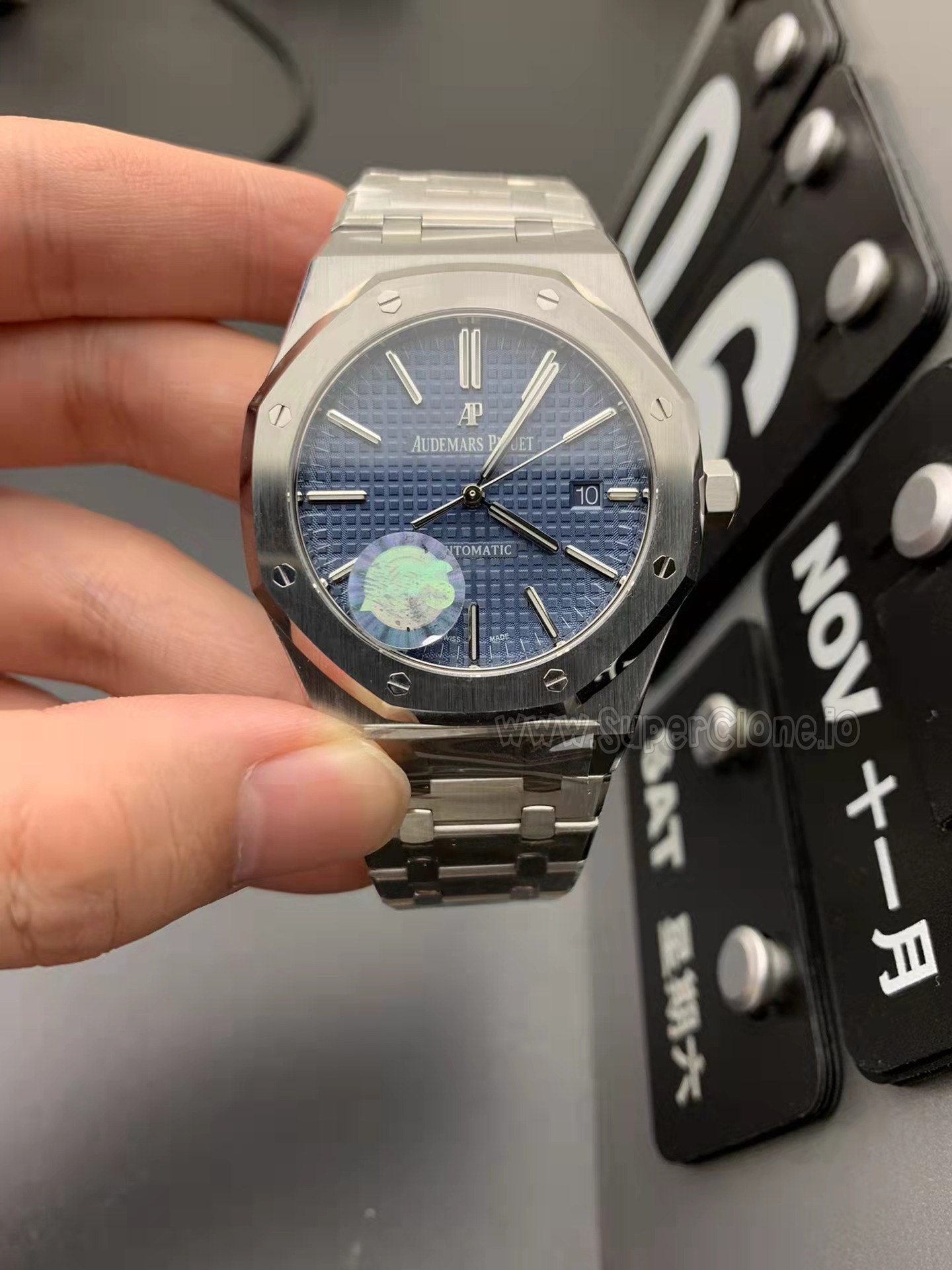
The brushing on the top surfaces appears straight and fine without becoming overly grainy, while the polished bevels maintain relatively sharp transitions between brushed and polished areas. This matters more on Royal Oak replicas than on most other watches because the Gérald Genta design relies heavily on light interaction. If the brushing becomes too soft or inconsistent, the entire watch immediately loses its visual depth.
The bracelet finishing also deserves attention because integrated bracelet sports watches expose manufacturing shortcuts very easily. On cheaper AP replicas, the bracelet often feels loose, hollow, or overly sharp along the edges. APS improved the articulation considerably. The links sit flatter against the wrist and maintain a more natural taper toward the clasp.

Still, the most discussed part of this watch remains the movement.
For years, one of the biggest limitations with many Royal Oak 15400 replicas was that factories used decorated movements that visually imitated the AP caliber 3120 without truly reproducing its architecture. Collectors accepted the compromise because there were few alternatives available, but anyone familiar with the genuine movement could immediately recognize the differences once the caseback was visible.
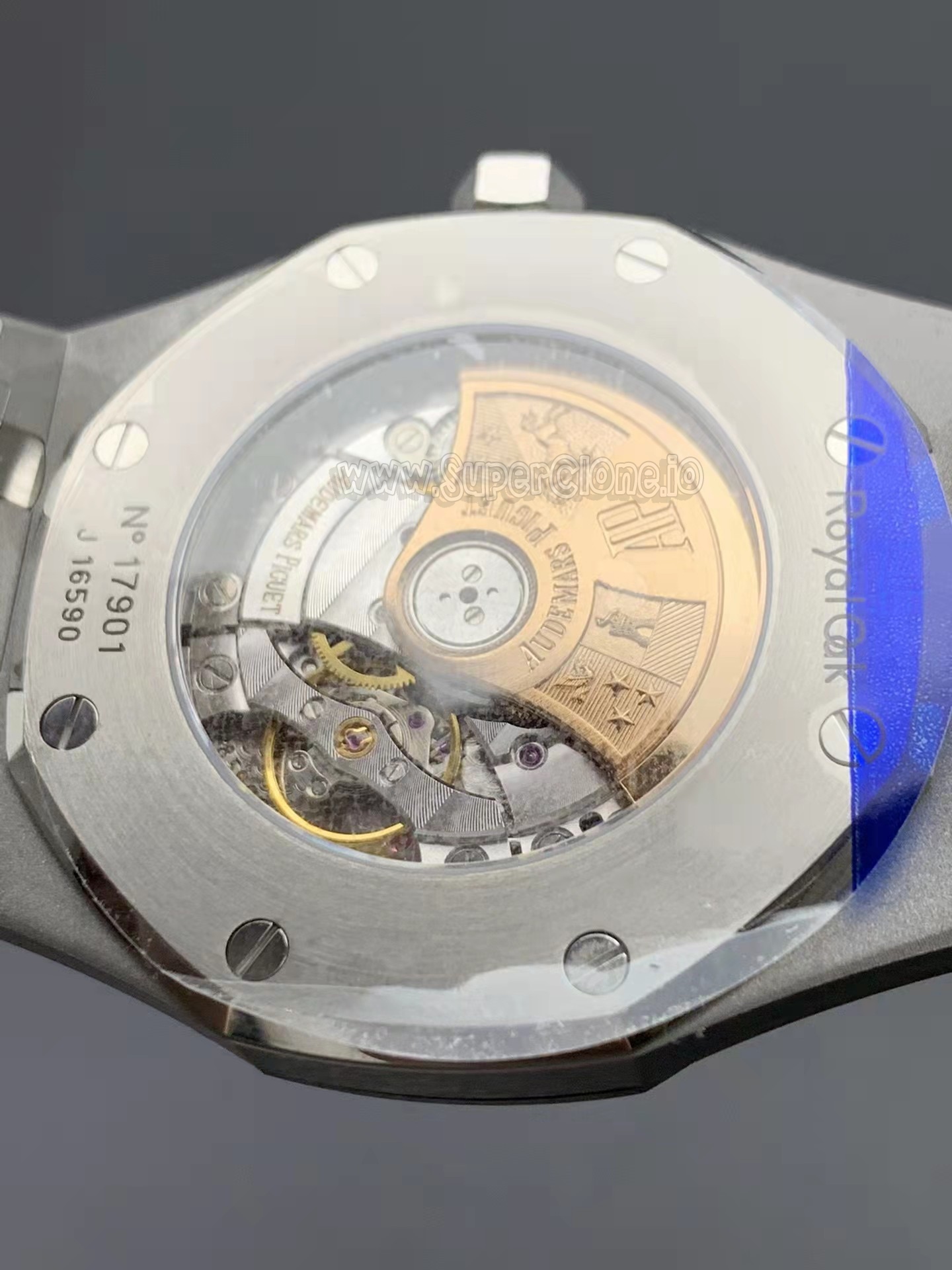
APS changed market expectations by introducing a clone 3120 movement that was developed specifically for this project.
Inside the replica industry, movement development is expensive and risky. Factories usually prefer modifying existing calibers because fully developing a new clone movement requires major investment, especially for lower-volume models like Audemars Piguet. Rolex clone movements receive most of the industry attention because demand is enormous. AP clone movement development has traditionally moved much slower.
That is why the APS release attracted so much attention.
Collectors finally saw a manufacturer willing to invest heavily into movement accuracy for the Royal Oak line instead of relying entirely on cosmetic decoration.

The visual layout of the APS clone 3120 is substantially closer to the genuine caliber compared with older generations. The rotor structure, bridge positioning, jewel placement, and engraving style all move closer toward authentic AP movement architecture. It is not simply a generic movement hidden beneath decorative plates.
This distinction matters because experienced collectors increasingly inspect replica watches beyond the dial side. Ten years ago, many buyers focused almost entirely on external appearance. Today, the super clone market has matured significantly. Buyers open casebacks, compare movement layouts, study winding feel, and examine rotor behavior.
In many ways, the replica watch market now resembles automotive tuning culture.
People are no longer satisfied with surface-level aesthetics alone.
They want mechanical credibility too.
APS recognized that shift earlier than many competitors.
Another detail frequently discussed among Royal Oak collectors is dial color consistency. Blue AP dials have always been difficult for replica factories because the tone changes dramatically depending on lighting. Under bright lighting, many replicas become too purple, too bright, or too flat compared with genuine watches.
APS improved this area noticeably.
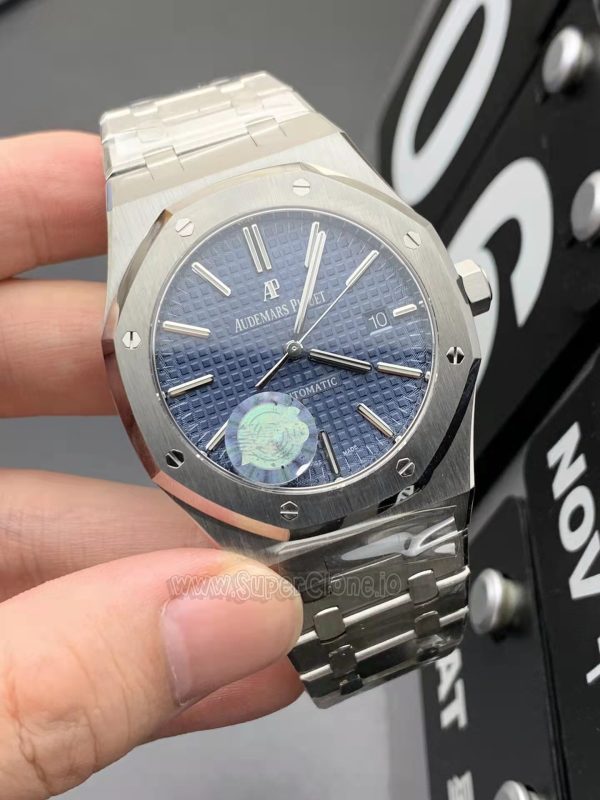
The blue dial version especially gained attention because the color tone appears deeper and more neutral under natural lighting conditions. The tapisserie texture also looks more dimensional than many earlier versions. On lower-end AP replicas, the dial squares sometimes appear shallow or uneven, causing the dial to lose the layered effect visible on genuine Royal Oaks.
Here, APS did a respectable job preserving depth across the grid pattern.

One interesting aspect about the Royal Oak 15400 market is how collectors evaluate “closest to genuine.” In the replica industry, this phrase gets abused constantly. Almost every factory claims their latest release is “1:1,” “best edition,” or “ultimate version,” even when improvements are minimal.
The reality is more nuanced.
No replica is perfect.
But certain models reach a point where the remaining flaws become increasingly difficult to notice during normal wear. The Royal Oak 15400 belongs to that category because factories have spent years refining the platform.
APS benefits from entering the market later than earlier factories.
They were able to observe the strengths and weaknesses of previous generations before developing their own version. That often produces better results than being first.
Instead of experimenting blindly, APS appears to have focused on correcting the most visible weaknesses collectors already identified in earlier Royal Oak replicas.
The thinner case profile is one example.
The clone movement is another.
The dial improvements are another.
Even the case geometry feels more controlled than many transitional AP replicas released during unstable factory periods.

Another reason why the APS 15400 gained traction so quickly is because the Royal Oak market itself changed after the decline of several older factories. When JF disappeared and ZF inventory became inconsistent, buyers started searching for alternatives aggressively. That created a rare opening inside the AP replica segment.
Usually, replacing a respected factory is extremely difficult.
Collectors are conservative.
Once a factory earns trust for a specific model, the market stays loyal for years.
But supply instability changed buying behavior. Suddenly collectors became more willing to test newer manufacturers if the improvements looked legitimate. APS entered the market at exactly the right time.
Timing matters in the replica industry more than many people realize.
A technically strong product released during a stable market period may receive little attention because collectors already trust existing options. But a strong release during supply uncertainty can completely reshape factory reputation within months.
That is partly what happened here.
APS was not simply launching another AP replica.
They were entering a market gap that suddenly became much larger than expected.

From a collector perspective, the APS Royal Oak 15400 also succeeds because it maintains the wearable character of the genuine watch. Some replica sports watches become visually impressive but uncomfortable during extended wear due to poor bracelet articulation, excessive weight imbalance, or overly thick cases.
The 15400 avoids most of those problems.
Its dimensions remain practical for daily wear, and the integrated bracelet distributes weight evenly across the wrist. This is one reason the model continues attracting first-time buyers entering the super clone watch world. Compared with larger Offshore models or heavily skeletonized AP references, the 15400 feels more versatile and easier to wear regularly.
That practicality contributes heavily to its long-term popularity.
Even inside genuine watch collecting communities, the Royal Oak 15400 remains one of the most recognizable modern AP sports references because it balances presence without becoming excessive.
Replica factories understand this very well.
That is why the 15400 continues receiving development attention years after its original release.

Another important point rarely discussed openly is serviceability.
As clone movements become more sophisticated, maintenance becomes increasingly important. Earlier decorated movements were simpler in some ways because the underlying architecture remained familiar to many watchmakers. Newer clone calibers aim for higher visual accuracy, but they also introduce additional complexity.
The APS clone 3120 represents both progress and responsibility.
Collectors buying advanced super clone watches today increasingly treat them differently from lower-end replicas of the past. Instead of disposable fashion accessories, many buyers now rotate them alongside genuine watches and expect years of reliable use.
That changes how factories approach movement engineering.
It also changes how collectors evaluate value.
A well-executed clone movement is no longer viewed as a gimmick. It has become one of the defining characteristics separating high-end super clone watches from ordinary replicas.
APS understood that market transition clearly with the 15400 project.

Within the broader Audemars Piguet replica market, the Royal Oak 15400 remains one of the safest long-term choices for collectors who want a mature platform rather than experimental releases. Factories know the watch well, replacement parts are easier to source compared with niche references, and the design itself has already proven timeless.
That combination matters.
Many replica watches become popular briefly before disappearing when factories lose interest. The 15400 has survived multiple factory eras already. It remained relevant during the JF period, during ZF dominance, and now during the newer APS phase.
Very few replica watches maintain that kind of long-term market relevance.
The APS version does not completely erase the legacy of earlier factories, but it does represent one of the most serious modern attempts to push the Royal Oak 15400 platform closer toward genuine watch construction standards.
For collectors following the evolution of super clone watches over the past decade, that alone makes the APS Royal Oak 15400 one of the more important AP releases in recent years.