
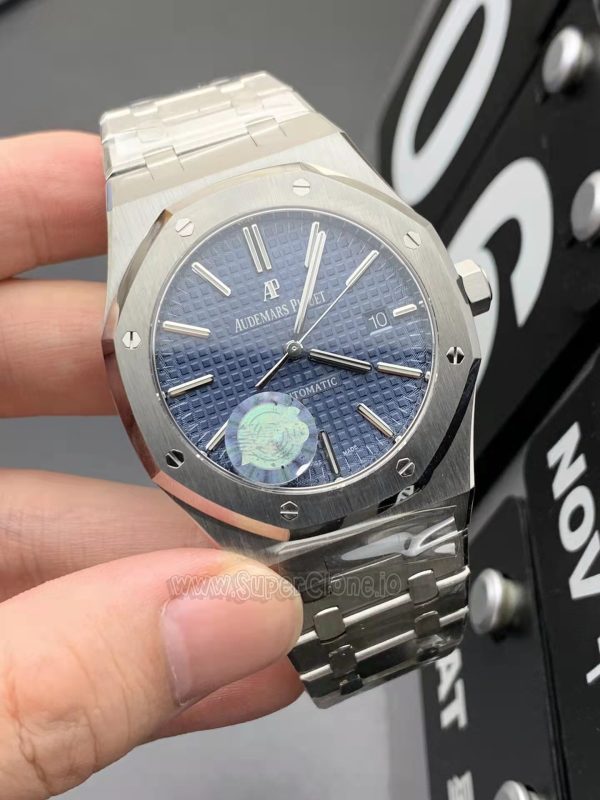
Inside the APS Factory AP Royal Oak 15400 and Its Clone 3120 Movement
There was a period when almost every serious Audemars Piguet replica discussion revolved around two dominant factories. Buyers looking for a Royal Oak 15400 typically chose between JF for finishing quality or ZF for dial texture accuracy, or waited for unstable production batches in a highly fragmented supply environment.
This equilibrium changed rapidly as factory disruptions reshaped the super clone watch ecosystem. Supply chain interruptions, workshop closures, and inconsistent production output created a gap in the Royal Oak segment, opening space for new manufacturers such as APS Factory to enter the market.
Initially, APS was met with skepticism. However, the release of the APS Royal Oak 15400 shifted collector perception significantly, particularly once attention moved from dial aesthetics to movement architecture and structural engineering.
—
The Evolution of the Super Clone Royal Oak 15400 Market
The Royal Oak 15400 remains one of the most stable and widely studied references in the Audemars Piguet replica segment. Its appeal lies in a balance between modern luxury sports aesthetics and practical daily wear proportions.
Compared to Offshore models or skeletonized variants, the 15400 maintains a cleaner case geometry, slimmer profile, and more versatile wrist presence. These characteristics explain why it continues to dominate entry-level discussions in the super clone category.
APS entered this mature market by targeting known structural weaknesses rather than attempting a full design reinterpretation.
—
Why the Royal Oak 15400 Is Difficult to Replicate
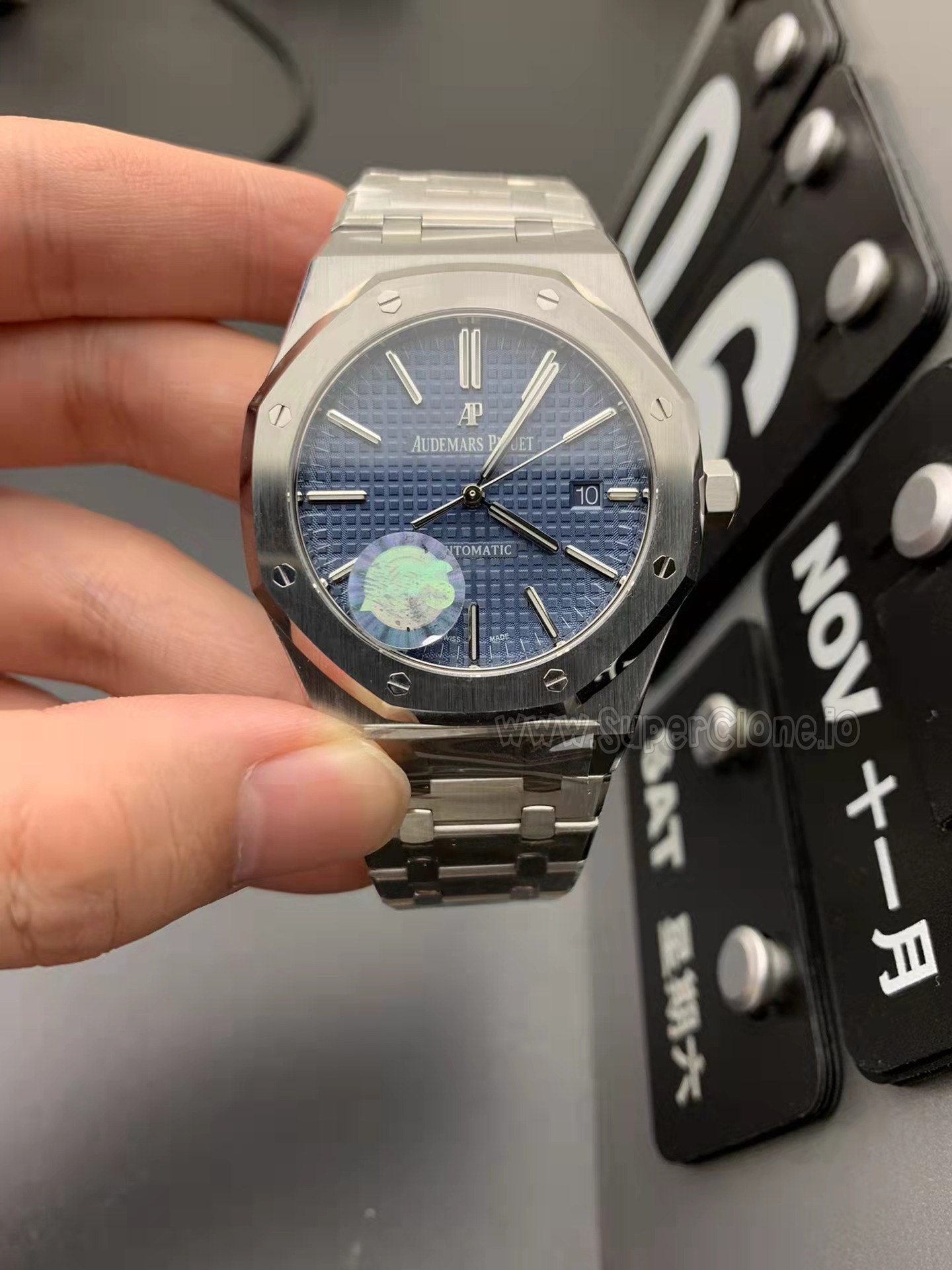
The Royal Oak 15400 designed by :contentReference[oaicite:0]{index=0} is structurally deceptive. While its octagonal bezel and integrated bracelet define its identity, the actual complexity lies in proportional engineering and finishing interaction.
Key replication challenges include:
- Maintaining correct mid-case thickness (~9.8mm target)
- Preserving brushed vs polished transition geometry
- Ensuring bracelet articulation and taper accuracy
- Reproducing depth variation in “Grande Tapisserie” dial texture
Even minor deviations in these parameters lead to immediate perceptual distortion when worn on the wrist.
—
—
Case Engineering and Thickness Accuracy
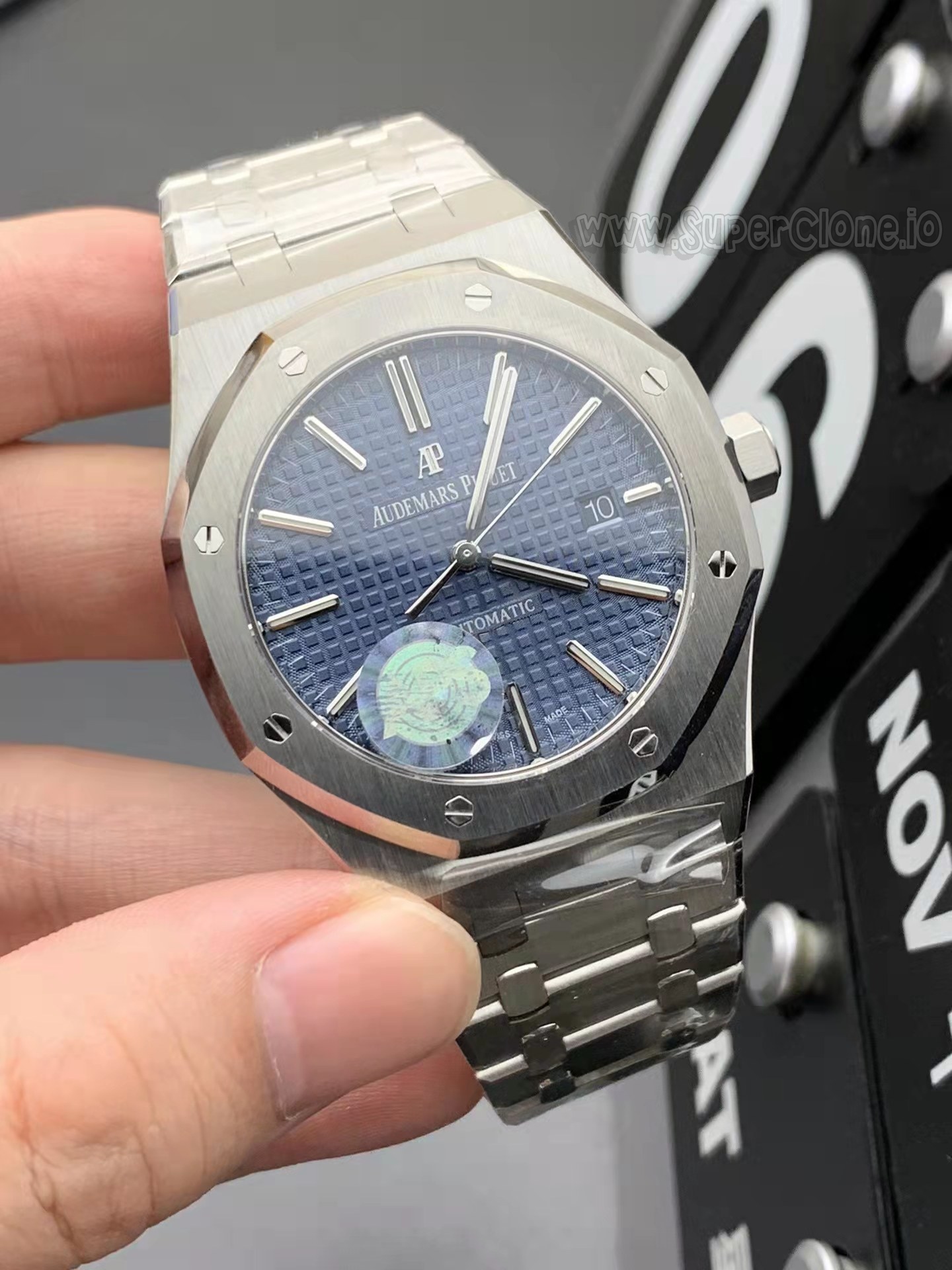
One of APS Factory’s most significant improvements is control over case thickness. Many earlier replicas exceeded genuine specifications due to stacked movement architectures.
APS achieves an approximate 9.8mm case profile, closely aligning with the original Royal Oak 15400 geometry.
This correction restores the slim integrated silhouette that defines the Royal Oak design language and significantly improves wrist conformity.
—

—
Case Finishing vs Earlier Factory Benchmarks (JF / ZF / APS)
Historically, JF set the benchmark for brushing precision, while ZF focused more on dial refinement. APS appears to have synthesized both approaches while improving structural consistency.
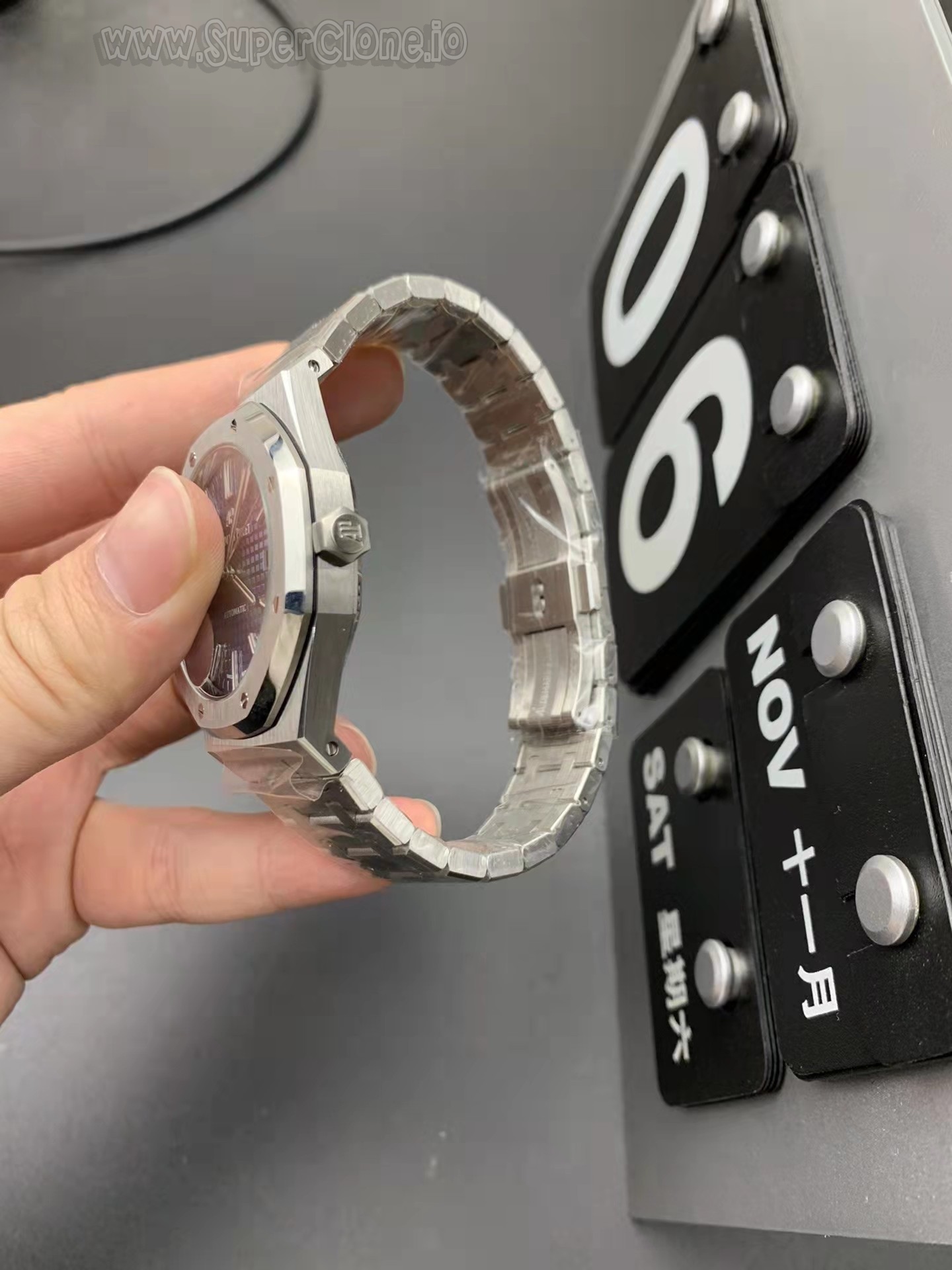
Brushed surfaces are executed with controlled linear grain, while polished chamfers maintain sharper transitions, improving light reflection behavior across angular surfaces.
The integrated bracelet shows improved articulation, reducing stiffness and enhancing wrist conformity compared with earlier-generation replicas.
—

—
The Clone 3120 Movement: Structural Advancement
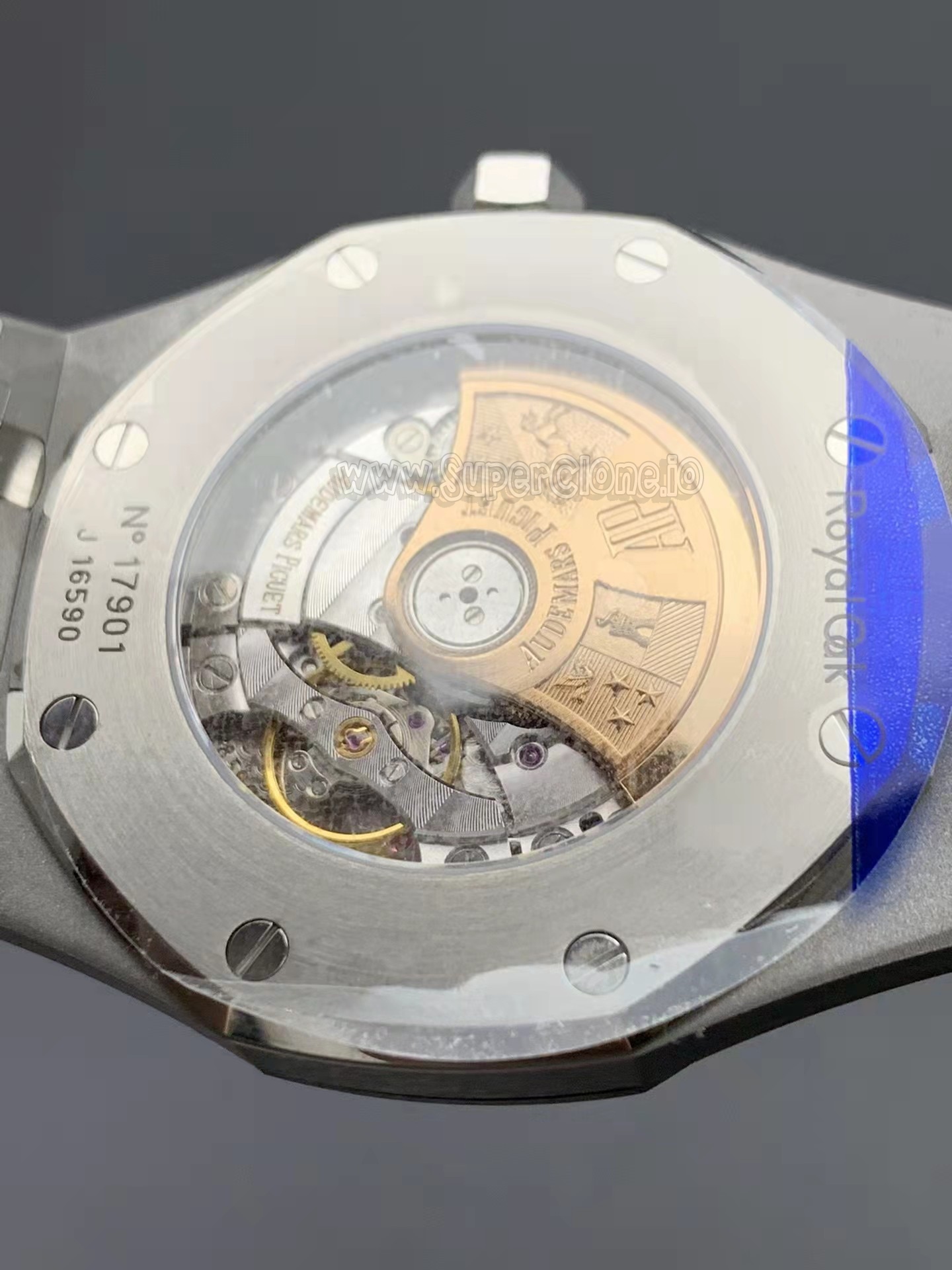
The most significant development in APS Royal Oak 15400 is the introduction of a dedicated clone architecture inspired by the AP Caliber 3120.
Earlier replicas typically relied on decorated generic movements, which only replicated surface aesthetics without reproducing internal geometry.
APS instead implements a more structurally aligned approach, including rotor geometry, bridge layout, and jewel positioning closer to authentic architecture.
This reflects a broader shift in the super clone industry, where movement visibility and mechanical credibility are now primary evaluation criteria.
—
—
Dial Accuracy and Color Stability
Dial reproduction remains one of the most technically sensitive areas in Royal Oak replicas. Blue variants are especially challenging due to lighting-dependent color variance.
APS improves tonal stability by refining pigment balance and enhancing tapisserie depth perception, reducing the flatness often seen in earlier generations.
Under natural light, the dial exhibits a deeper and more controlled blue tone with improved dimensional layering across the grid structure.
—
—
Market Positioning and Timing Advantage
The success of APS Factory is partially attributable to market timing. The decline of established supply sources such as JF consistency and ZF availability created a transitional demand gap.
APS entered during this instability, allowing faster adoption among collectors seeking reliable alternatives with measurable improvements.
Unlike stable market phases where incumbents dominate, transitional periods accelerate adoption of technically credible newcomers.
—
—
Wearability and Long-Term Practical Value
Beyond technical replication, the Royal Oak 15400 remains popular due to its balanced ergonomics. The integrated bracelet distributes weight evenly, while the mid-case profile maintains daily wear comfort.
Compared with larger Offshore references, the 15400 provides greater versatility for long-term use and remains one of the most widely recommended entry points in the super clone watch segment.
—
APS and the Maturation of the 15400 Platform
The APS Royal Oak 15400 does not redefine the Royal Oak replica category, but it represents a meaningful engineering progression in case architecture, movement realism, and dial refinement.
Within the evolution of Royal Oak 15400 replicas, APS reflects a shift from cosmetic replication toward structural fidelity.
As the super clone market matures, mechanical authenticity and proportional accuracy increasingly define product quality, and APS has positioned itself directly within that trajectory.
