

The Evolution of the “Wimbledon” Dial: A Technical Deep Dive into Clean Factory’s Datejust 41 126334
In the landscape of high-end horological replicas, the period between 2021 and 2026 has marked a structural shift in production quality and manufacturing specialization. With the decline of legacy factories such as Noob Factory, the market has consolidated around a smaller number of vertically integrated manufacturers capable of handling case finishing, dial printing, and movement assembly at a consistent standard.
Among these, Clean Factory (CF) has become a key reference point in the Rolex Datejust 41mm segment, particularly for the 126334 “Wimbledon” configuration featuring a slate sunburst dial and green Roman numeral markers.
This analysis focuses on measurable characteristics such as dial light diffusion behavior, case finishing geometry, movement architecture (VR3235), and bracelet articulation, rather than subjective marketing claims.
Technical Overview: Rolex Datejust 41 126334 “Wimbledon”
The Wimbledon dial configuration is widely recognized for its dual-layer visual complexity: a radial sunburst base combined with applied Roman numerals in a controlled green tone. This combination makes color fidelity and surface reflectivity key evaluation variables.

Under directional lighting, the sunburst effect is evaluated based on radial consistency, grain interruption, and reflection continuity. Higher-tier executions typically show smoother gradient transitions with reduced micro-texture banding.
Dial Engineering: Sunburst, Color Fidelity, and LSI Optical Behavior
The slate-grey dial relies on controlled galvanic brushing to produce directional light diffusion. In more refined executions, the radial brushing produces a continuous “flowing” reflection pattern rather than segmented or patchy highlights.
The green Roman numerals are a critical evaluation point. The target reference range is a muted forest-green tone, balancing saturation and depth to avoid both neon overshoot and desaturation drift.
9 O’Clock Marker, Date Window, and Cyclops System
The 9 o’clock baton and handset typically use BGW9-grade phosphorescent material, producing a cool blue emission under low light conditions. This is one of the most stable visual identifiers under nighttime observation.
The date window incorporates a magnification system approximating 2.5x optical enlargement via the Cyclops lens. Readability depends heavily on alignment accuracy, font thickness consistency, and AR coating neutrality to prevent blue halo distortion.
Case Construction and 904L Steel Finishing
Modern Datejust replicas in this category typically use 904L stainless steel to approximate corrosion resistance and reflective warmth of the genuine alloy. However, material composition alone is secondary to machining tolerance and polishing consistency.
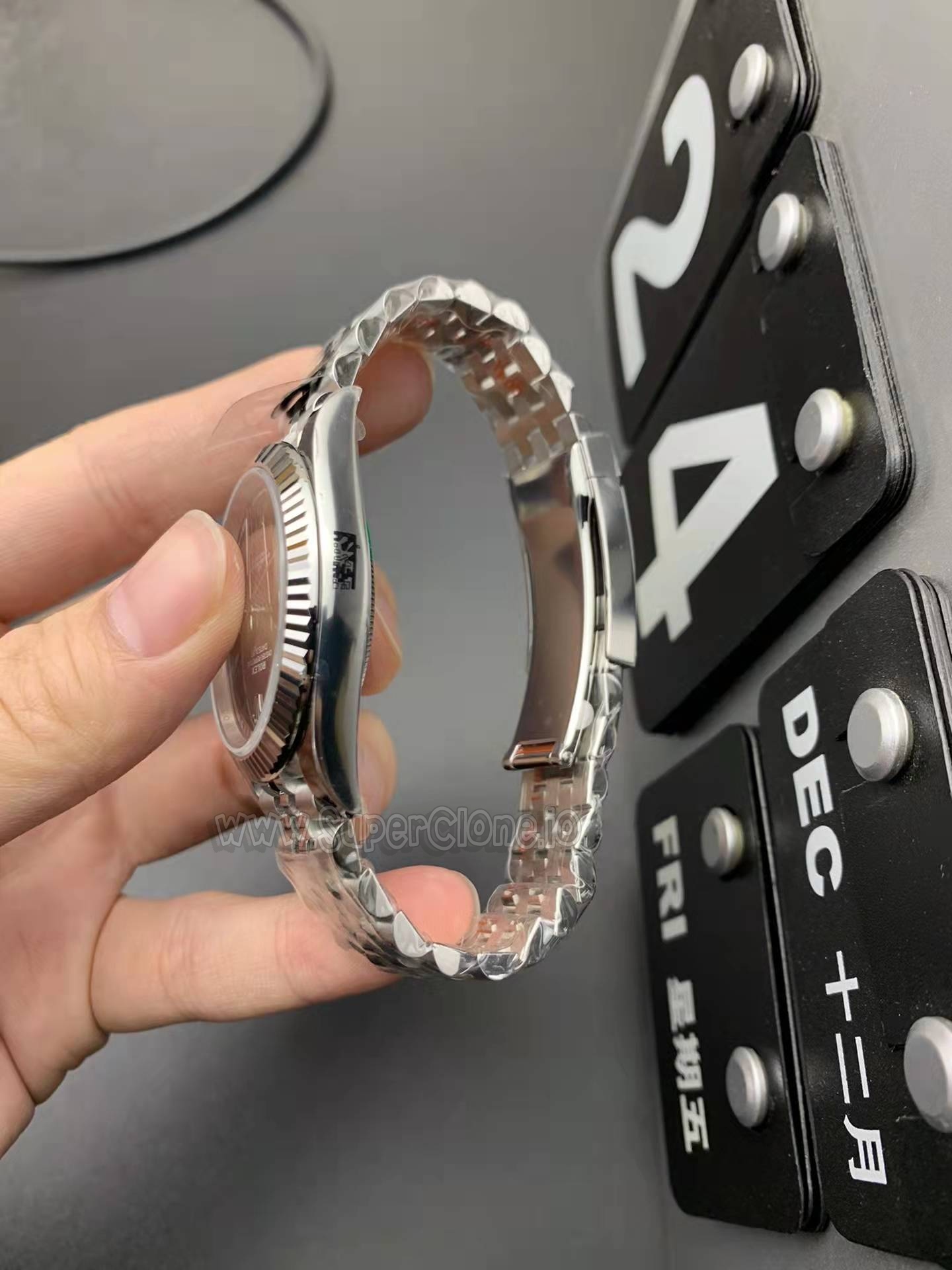
- Case Geometry: 41mm profile with controlled lug tapering and thickness consistency under ~12mm specification alignment.
- Surface Finishing: Alternating brushed and polished zones designed to replicate directional light dispersion behavior.
- Fluted Bezel: Multi-angle machining used to simulate 18k white gold reflective dispersion under variable lighting.
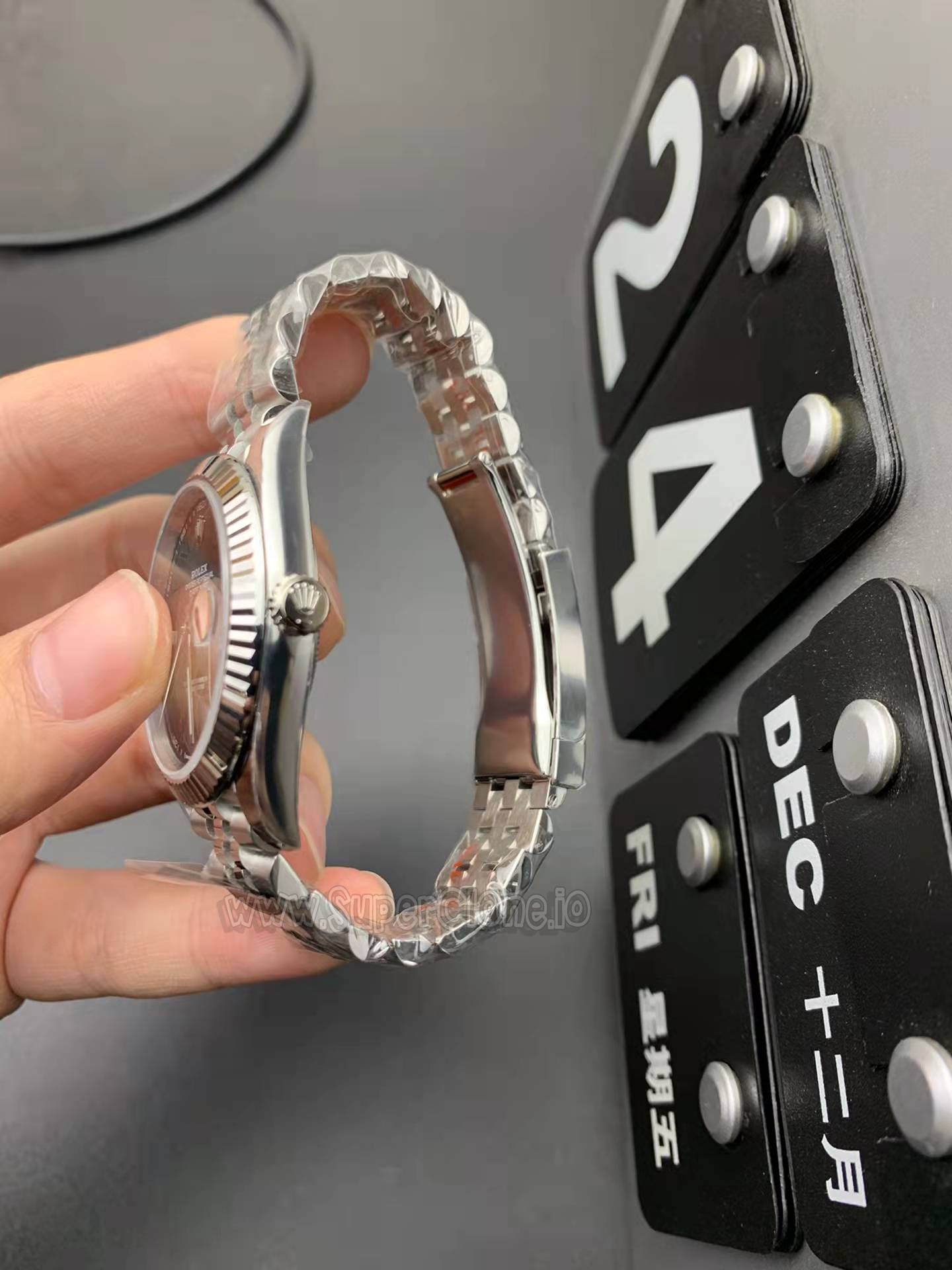
The crown assembly typically includes gasket-based sealing systems designed to improve daily water resistance performance, though real-world resistance varies by assembly precision.
Movement Architecture: VR3235 Caliber Analysis
The movement is the primary differentiator in long-term reliability assessment. The VR3235 architecture replicates functional layout principles of the modern 3235-style automatic caliber.
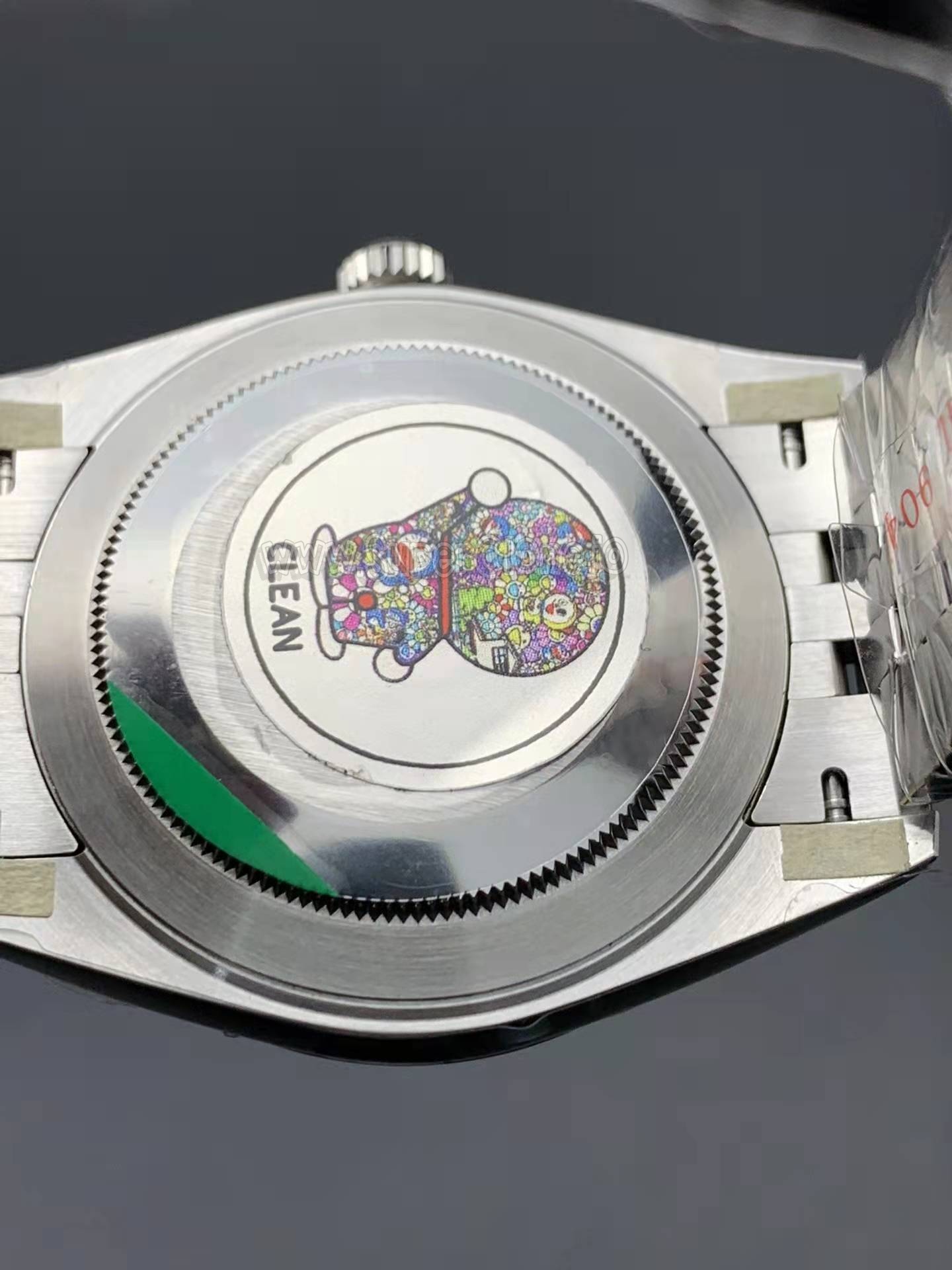
Unlike entry-level cloned calibers, the VR3235 is designed to replicate bidirectional crown behavior and instantaneous date switching around midnight, rather than gradual date creep.
Reported power reserve typically ranges between 65–70 hours under standard conditions. However, real-world consistency depends heavily on regulation precision, lubrication quality, and service history.
Observed finishing includes perlage and Geneva stripe decoration, primarily for visual approximation rather than functional performance improvement.
Bracelet Engineering: Jubilee Articulation and Wear Dynamics
The Jubilee bracelet remains one of the most ergonomically complex components due to its five-link architecture and high articulation requirements.

Improved executions focus on reducing lateral tolerance between links, allowing smoother wrist conformity and reducing structural stiffness during movement.
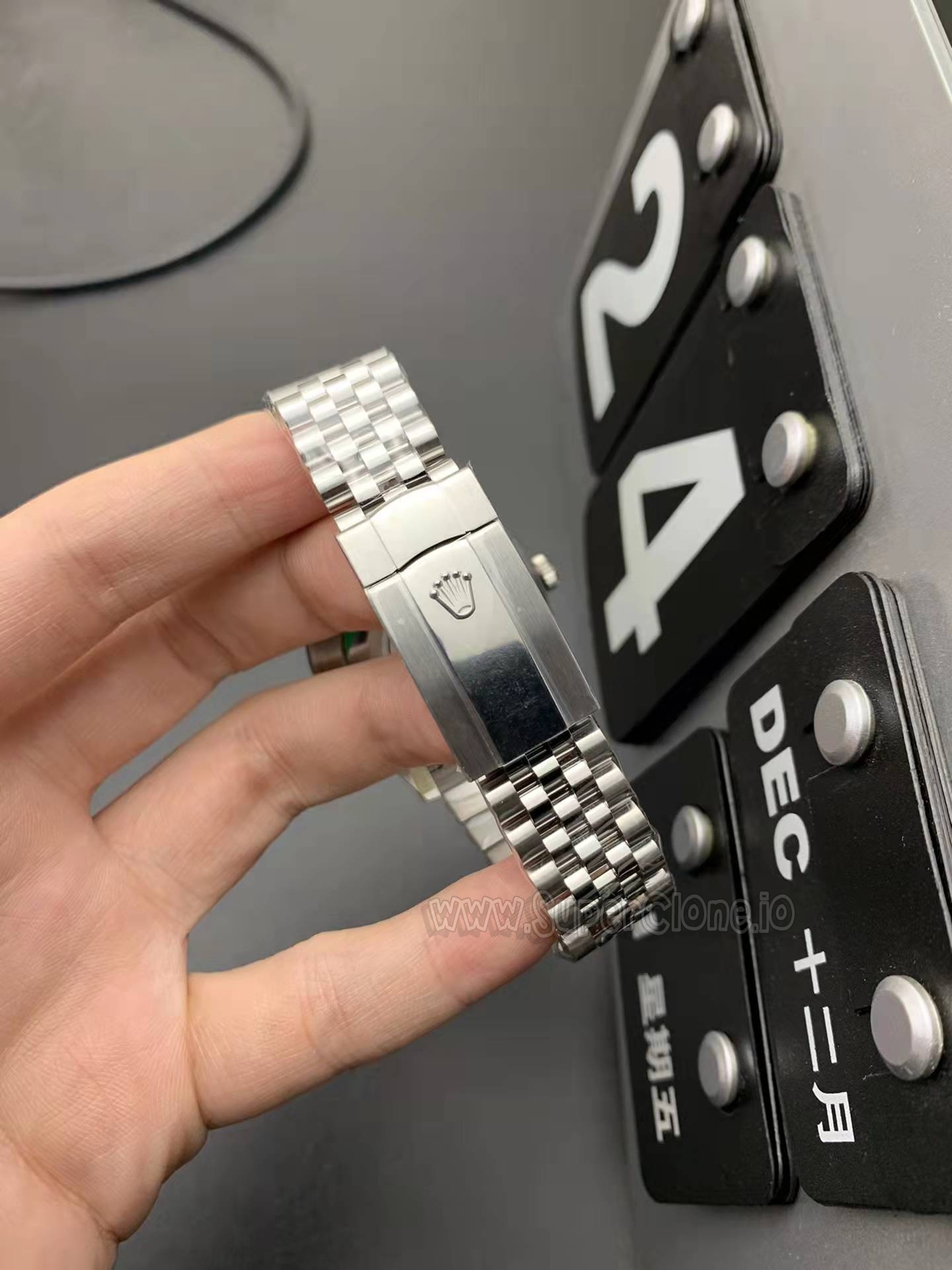
The Easylink 5mm extension system allows quick micro-adjustments without tools, improving thermal comfort during wrist expansion in warmer conditions.
Comparative Manufacturing Benchmark
| Category | Clean Factory | VS Factory | EW Factory |
|---|---|---|---|
| Steel Finishing Consistency | High uniformity 904L polish | High uniformity 904L polish | Variable batch consistency |
| Movement Architecture | VR3235 (65–70H reserve) | VS3235 (70H focus) | Hangzhou 3235 (lower reserve) |
| Dial Color Accuracy | High fidelity forest green | Strong sunburst, thicker print | Noticeable hue drift |
| Cyclops & Crystal | Clear AR coating, stable magnification | High clarity, slight distortion variance | Lower clarity, mild haze effect |
| Observed Tolerance Level | Low variance | Low–medium variance | Medium–high variance |
Quality Assessment Summary
From a manufacturing perspective, the most significant improvements in modern production are observed in dial consistency, bracelet articulation tolerance, and crystal clarity uniformity.
While movement architecture remains a key differentiator, the gap in external finishing quality between mid-tier and top-tier manufacturers has narrowed significantly compared to earlier production generations.
The Rolex Datejust 41 126334 “Wimbledon” remains a reference model for evaluating modern replica manufacturing capability. Clean Factory demonstrates strong consistency in dial finishing and bracelet ergonomics, while movement stability remains dependent on regulation quality.
Overall differentiation in the current market is increasingly defined by micro-level finishing tolerances rather than macro design replication.
About SuperClone.io: This analysis focuses on observable engineering characteristics including surface finishing behavior, movement architecture, and material consistency under controlled evaluation conditions.
