

Two Factory Moves That Quietly Changed the Super Clone Watch Market Before 2022
Near the end of every year, most watch collectors and horology enthusiasts pay close attention to upcoming releases from major Swiss luxury brands. Inside the super clone watches market, however, the more important industry signals often come directly from manufacturing factories themselves. In many cases, it is not a new clone movement or a ceramic case upgrade that shifts the competitive landscape, but rather smaller operational decisions such as accessory packages, production scaling, or entry into a new category that reveal where the high-end replica segment is heading.
In late 2021, two separate industry developments circulated among top-tier dealers and experienced replica watch collectors. At first glance, neither appeared particularly significant. One involved an accessory promotion for the Omega Seamaster 007 “No Time to Die” (NTTD). The other involved APS factory preparing a new Audemars Piguet Royal Oak Offshore Chronograph. In hindsight, both reflected broader structural changes within the high-end 1:1 super clone industry.
The first move came from OR factory, widely associated with high-accuracy Omega super clone watches. The second came from APS factory, a rising manufacturer that would later become a major competitor in the Audemars Piguet segment.
These updates were significant not only for the watches involved, but for what they revealed about increasing factory competition, refinement of clone movement engineering, and the ongoing specialization of the premium replica watch market.
—
OR Factory and the Seamaster 007 No Time to Die Demand Cycle
By late 2021, the Omega Seamaster Diver 300M “No Time to Die” had become one of the most requested military-style replica watches globally. The genuine model gained visibility through the James Bond franchise, but in the replica segment its appeal was driven more by design characteristics than branding.
Core design drivers behind demand:
- Grade 2 titanium case construction: Lightweight brushed finishing with low reflectivity.
- Vintage-inspired lume: Tropical-toned patina effect with subdued brightness.
- Mesh bracelet architecture: Titanium mesh structure requiring precise replication.
- Military tool-watch profile: No-date, functional design language.
- Ergonomic wearability: Reduced wrist fatigue compared to steel sports models.
- Minimal dial layout: Clean matte finish with reduced visual clutter.
Collectors who typically preferred Rolex Submariner or Panerai Luminor models increasingly shifted attention toward this Seamaster due to its distinct wearing identity. OR factory recognized this demand early and positioned production accordingly within the Omega-focused super clone segment.
At the time, OR factory had established a reputation for stable Omega replicas with consistent finishing control. Typical strengths included sapphire crystal clarity, bezel alignment accuracy, lume stability, and improved titanium color matching compared to entry-level factories.
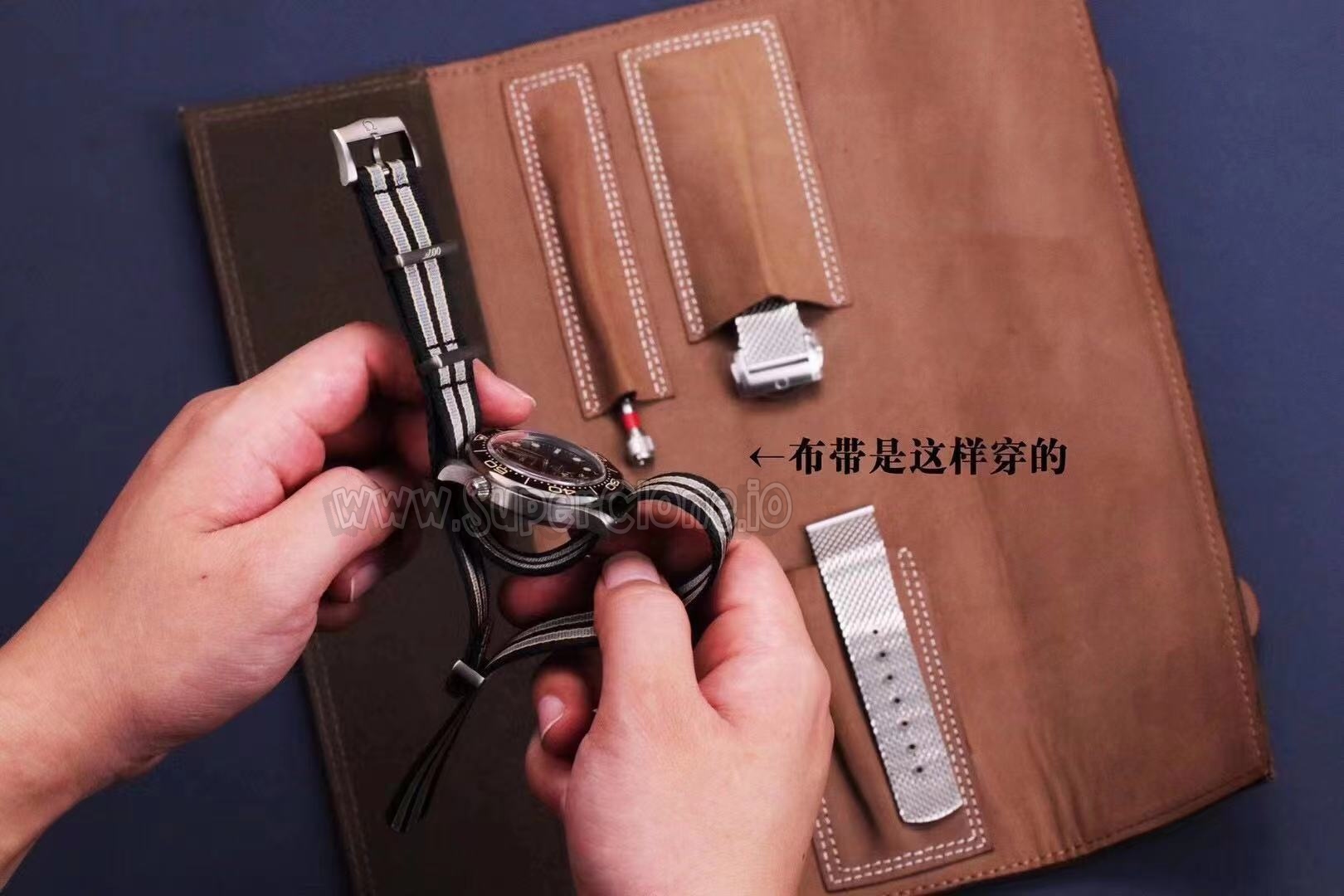
Rather than adjusting pricing during peak demand, OR factory introduced a limited accessory package for Seamaster 007 NTTD orders placed before January 2, 2022.
The package included:
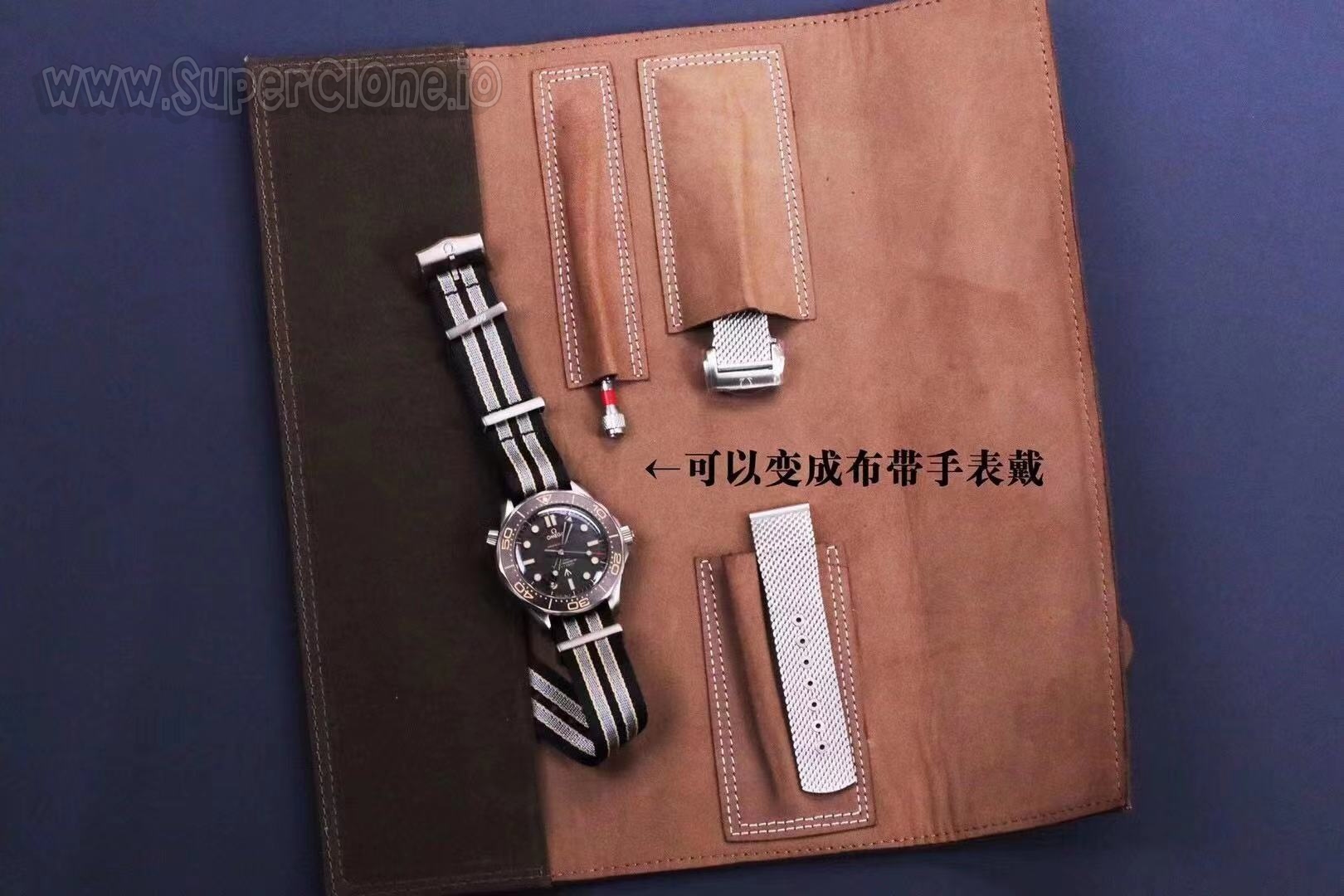
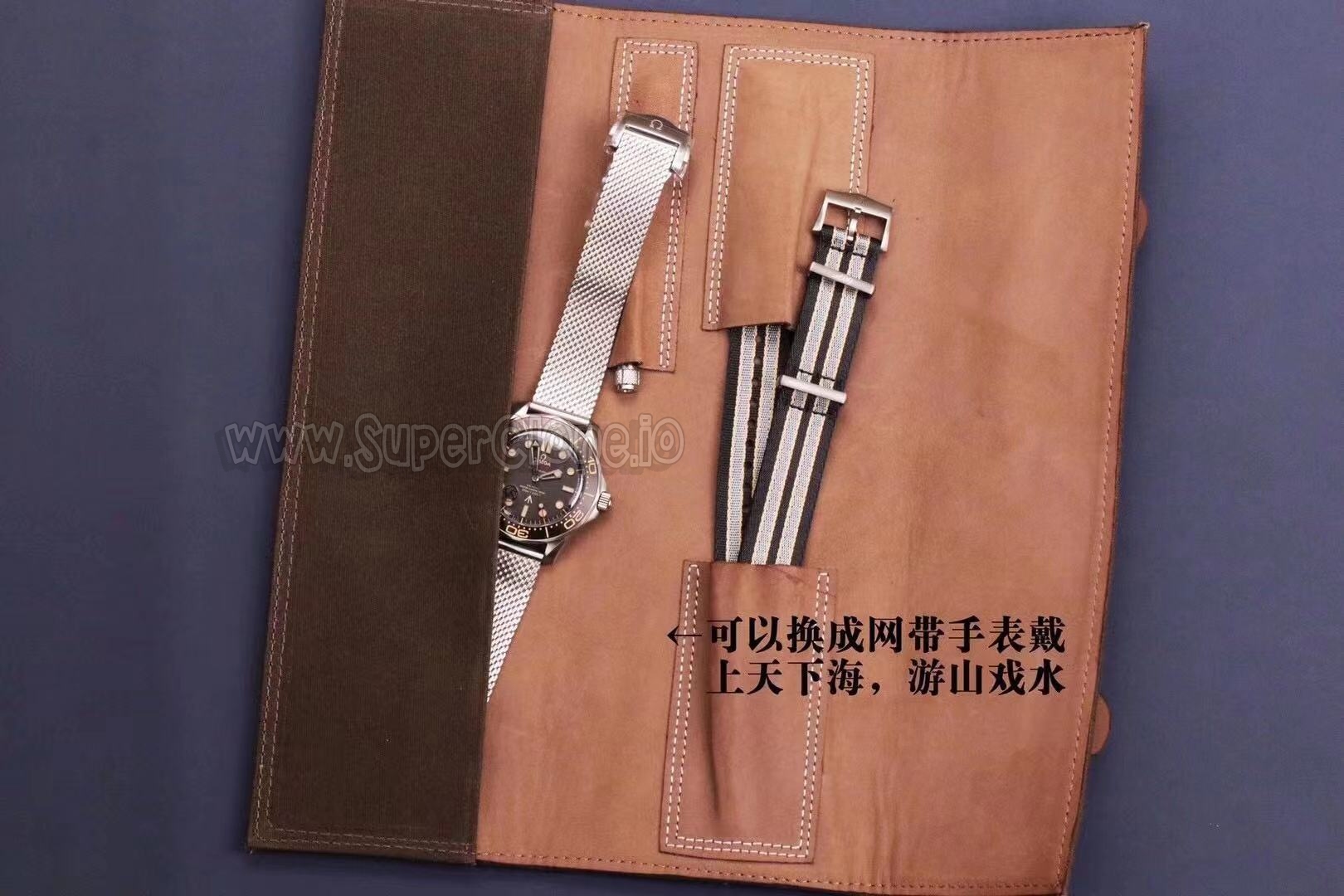
- Additional NATO strap matching the military configuration
- Leather travel pouch for storage and transport
- No change to base wholesale pricing structure
In the replica industry, competition is typically driven by movement upgrades (such as decorated Caliber 8806-style clones), case accuracy, dial refinement, and incremental model updates. Accessory bundling at this level was relatively uncommon, as factories usually prioritize production efficiency over presentation layers.

The inclusion of a leather pouch reflected a broader shift toward improved product presentation in the super clone segment. Around 2020–2022, higher-tier factories began integrating packaging enhancements, custom straps, and travel cases as part of a more complete ownership experience.
This shift aligned with a changing buyer profile, where more customers were experienced watch enthusiasts rather than first-time replica buyers focused solely on price.
—
Why the Seamaster NTTD Maintained Long-Term Market Stability
Several years later, the Seamaster 007 No Time to Die remains one of the most consistently recommended Omega super clone models. This level of long-term stability is uncommon in a market where models are frequently replaced by updated V2 or V3 factory revisions.
One key factor is the original design language of the genuine watch. The brushed titanium surface exhibits strong resistance to visible wear and avoids the high-reflection issues associated with polished steel or ceramic elements.
Common replication challenges for lower-tier factories:
- Titanium tone deviation (too dark or overly polished appearance)
- Inaccurate mesh bracelet flexibility and articulation
- Incorrect lume pigmentation and aging simulation
- Excess case thickness due to movement constraints
- Bezel alignment and rotational instability
Factories like OR contributed to raising baseline expectations for titanium-based Omega replicas. As accuracy improved, demand for this reference expanded beyond niche collectors into broader enthusiast communities.
Compared with standard Rolex sports replicas, the Seamaster NTTD is often considered more discreet and versatile:
- Lower visual recognition in public settings
- Distinct military-inspired identity
- Lightweight daily comfort due to titanium construction
- Reduced reliance on brand visibility effects
—
APS Factory and Entry into the Royal Oak Offshore Segment
The second development carried greater long-term technical significance. APS factory announced its entry into the Audemars Piguet Royal Oak Offshore Chronograph 44mm segment, featuring a small seconds layout at 12 o’clock. This configuration had previously been strongly associated with J12 factory, which dominated early Offshore super clone production.
Core evaluation factors for Offshore replicas:
- Chronograph subdial geometry accuracy
- Case thickness optimization under complex movement architecture
- Date window alignment and magnification consistency
- Push-button mechanical feedback precision
- Dial depth and Méga Tapisserie pattern replication
- Rubber strap molding quality and finishing consistency
The most critical factor remains movement architecture fidelity, which determines overall dial correctness and chronograph functionality.

—
3126 Clone Movement Engineering Significance
The Audemars Piguet 3126 chronograph architecture is particularly challenging due to its integrated subdial layout and mechanical layering. Accurate replication requires precise gear train positioning and stable chronograph engagement.
- Correct subdial spacing and indexing
- Stable chronograph start/stop/reset function
- Rotor finishing accuracy and balance tuning
- Case thickness control within wearable limits
- Date wheel synchronization with dial aperture
APS entry into this segment indicated investment in dedicated CNC machining capability and clone movement development rather than reliance on generic base calibers.
At the time, APS was still emerging compared to established factories, but its focus on technically demanding models signaled a long-term strategy centered on engineering depth rather than broad catalog expansion.
—
Factory Competition and Industry Acceleration
Between 2018 and 2024, competition between super clone factories significantly accelerated improvements in machining precision and movement engineering.
- CNC case refinement at micron-level tolerances
- Clone movement reliability improvements
- AR coating consistency on sapphire crystals
- Bracelet articulation and tolerances
- Power reserve and winding efficiency optimization
OR and APS represent two distinct strategic approaches: specialization versus technical expansion. Both contributed to shifting industry expectations toward higher fidelity replication standards.
—
Market Evolution After 2021
Following 2021, the distinction between low-end replicas and high-end super clone watches became increasingly clear. Collector awareness expanded significantly across several technical dimensions:
- Factory traceability and batch identification
- Movement classification (true clone vs modified base calibers)
- Case machining quality and finishing consistency
- Bracelet engineering and tolerances
- Dial printing precision and applied marker alignment
This shift also influenced factory marketing strategies, with greater emphasis on technical specifications such as CNC machining, clone calibers, material accuracy (316L/904L steel, titanium, ceramic), and long-term mechanical stability.
OR factory’s Seamaster strategy and APS factory’s Offshore expansion both represent transitional milestones in this evolution. While appearing minor at the time, they now reflect early indicators of a more technically sophisticated and segmented super clone ecosystem.
Ultimately, these developments marked a structural shift in buyer behavior—from visual similarity alone toward mechanical realism, finishing precision, and factory-level differentiation within the global replica watch industry.
