
From BP to EW to GM: How the Oyster Perpetual Replica Market Changed
Among modern Rolex sports watches and entry-level luxury models, few collections have changed their public image as dramatically as the Oyster Perpetual series. For many years, collectors viewed the Oyster Perpetual as one of the simplest, most unassuming watches in the Rolex catalog—a time-only piece free from rotating bezels, chronograph sub-dials, GMT hands, or even a date window. Compared with the ubiquitous Submariner, Daytona, or GMT-Master II models, the Oyster Perpetual once existed quietly in the shadow of its more complicated siblings, appreciated by purists for its minimalism but rarely discussed as a must-have by the broader collecting community.
That conservative positioning changed completely when Rolex revitalized the entire Oyster Perpetual lineup, introducing vibrant, lacquer-style colorful dials, expanded case dimensions, and the new-generation 124300 references. Almost overnight, an understated daily wearer transformed into one of the most elusive Rolex models to acquire at retail. Endless waitlists choked authorized dealers, and grey market premiums pushed secondary prices well above MSRP. This explosion in genuine market demand triggered an immediate, high-stakes arms race across the replica watch manufacturing industry, scrambling to keep pace with a shift nobody had fully anticipated.
Top-tier replica factories quickly recognized that the Oyster Perpetual demographic represented a unique, different segment of enthusiasts. Many buyers were not looking for a flashy professional sports watch or an obvious, loud status symbol; instead, they sought something cleaner, more visually balanced, and understated for versatile daily wear. This major shift in consumer preference prompted several prominent replica operations to enter the Oyster Perpetual market aggressively, investing heavily in dedicated tooling and bespoke movement sourcing rather than merely adapting existing Submariner or GMT case infrastructure.
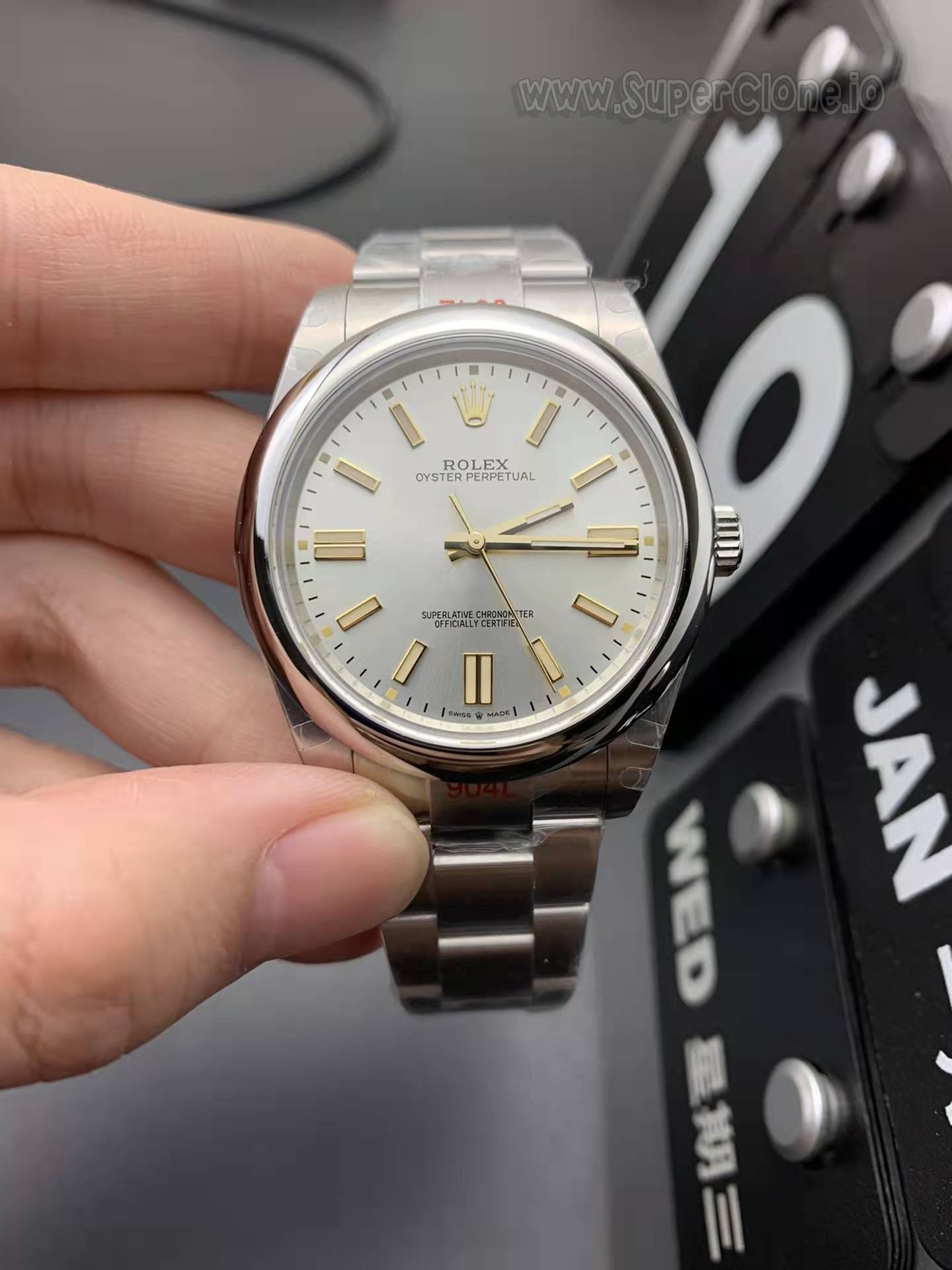
Today, the competitive landscape for high-end Oyster Perpetual replicas is dominated by three main manufacturing names: BP, EW, and GM. BP factory built its foundation on stable production runs and reliable mid-tier finishing, though its casing has historically leaned toward a slightly heavier execution that some purists find less convincing in hand. EW factory carved out its niche by offering aggressive, budget-friendly pricing and lightweight configurations, making it a popular entry point for first-time buyers, though experienced hobbyists often note its thinner bracelet links as a visual giveaway. GM factory, however, gradually established itself as the premier option for enthusiast-level buyers demanding precise dimensional accuracy, superior bracelet density, and a closer structural match to the genuine watch.
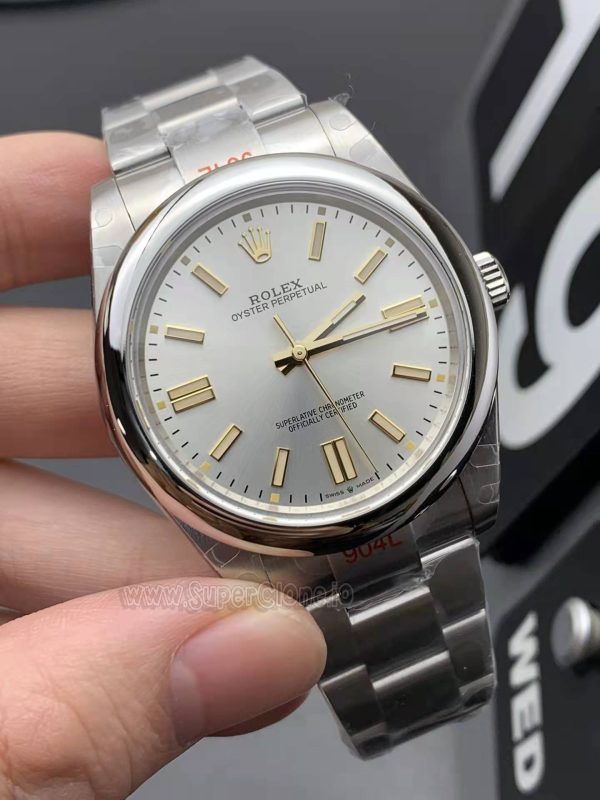
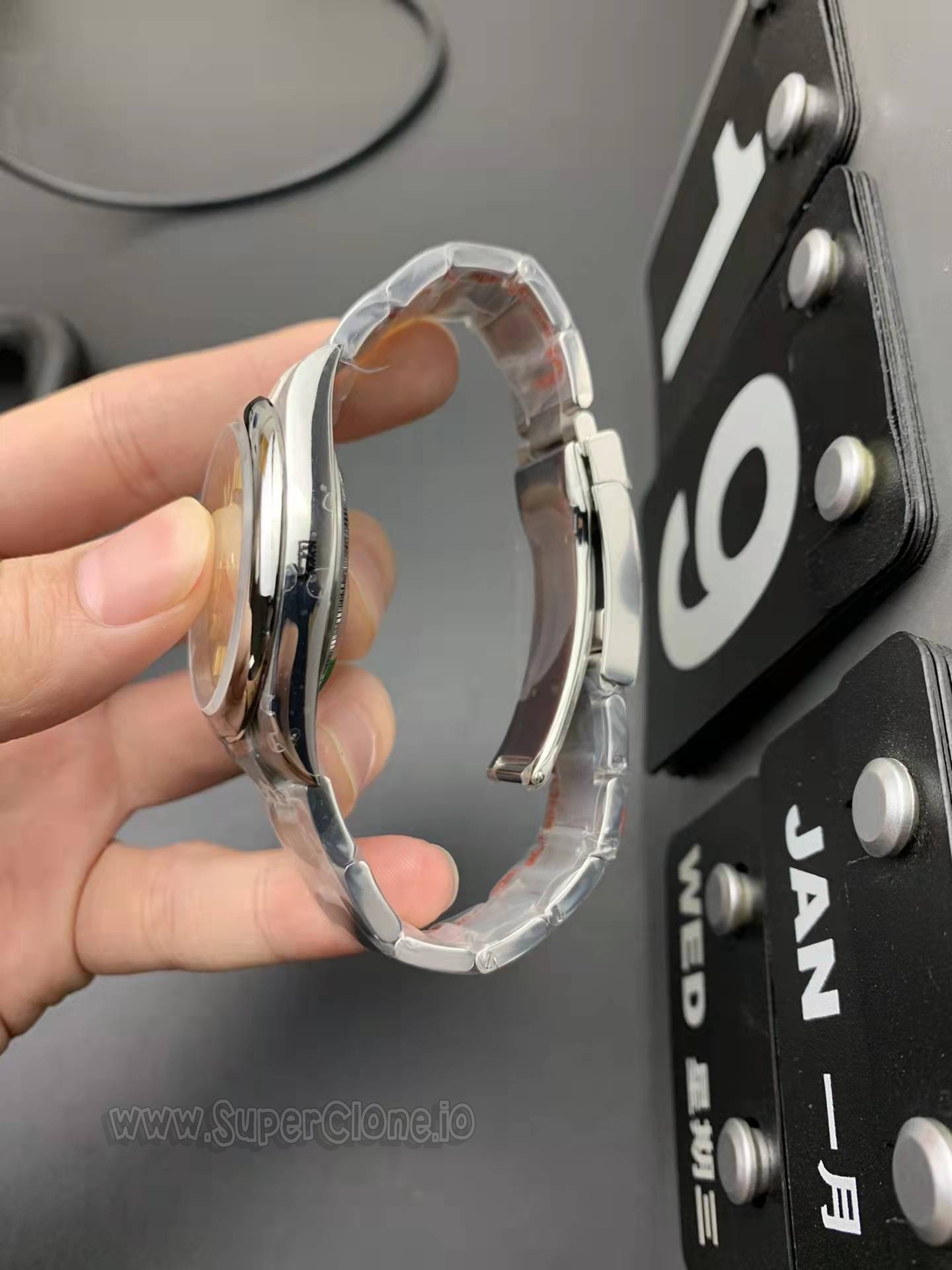
The silver dial Oyster Perpetual 124300 highlighted in the image above showcases GM factory’s technical execution. Although this specific iteration debuted several months ago, its market demand has remained remarkably stable. Unlike transient, trend-driven dial variants that experience rapid hype cycles followed by sharp declines, the classic silver sunburst dial sustains long-term interest due to its monochrome versatility and traditional Rolex design language—the kind of aesthetic that reads as expensive without shouting for attention.
The Oyster Perpetual’s Position in the Modern Replica Market
The modern replica watch ecosystem has evolved past superficial similarities, turning into a highly technical market focused on micro-tolerances. In earlier manufacturing eras, replicas relied solely on basic macro-aesthetics, where buyers were content if a watch merely simulated the correct silhouette from a distance. Today’s collectors approach reps with a discerning, near-microscopic lens.
Modern enthusiasts routinely perform side-by-side comparisons analyzing bezel proportions, rehaut engraving depth, dial finish textures, hand stack clearance, bracelet brushing fidelity, movement bridges, and actual case weights. This heightened scrutiny forced factories to rapidly upgrade their manufacturing capabilities, particularly on minimalist Rolex designs where even the slightest manufacturing variance stands out immediately because there is less visual complexity to absorb attention. A poorly executed Daytona chronograph still reads as a busy, detailed watch from across the room; a poorly executed Oyster Perpetual just looks cheap.
Replicating a time-only watch convincingly presents a distinct set of engineering challenges that many casual buyers initially overlook. Because the dial architecture is so stripped down and clean, every minor tolerance issue becomes magnified. The smooth dome bezel, high-polished case sides, and minimalist layout leave absolutely no visual clutter behind which a factory can hide structural inconsistencies. There are no pushers, no chapter rings, no colored ceramic inserts, and no cyclops date window to draw the eye elsewhere.
While complex Daytona or Submariner replicas can leverage busy dial layouts to distract the viewer’s eye, the Oyster Perpetual offers no such visual diversion. An incorrect curvature on the polished bezel, a coarse brushing grain transition, misaligned hour indices, or a flat, uninspired dial sunburst will ruin the optical illusion instantly for anyone who has handled the genuine reference. This vulnerability explains why GM factory’s iteration caught the attention of the community, as the factory managed to achieve a highly coherent structural balance across the entire watch profile, particularly when viewed from the side where the relationship between case height, bezel width, and crystal dome is most apparent.
Why the 41mm Case Became the Most Popular Choice
Rolex currently populates the Oyster Perpetual range with various sizes, including the unisex 31mm, the classic 36mm, and the contemporary 41mm. While the 31mm targets compact preferences and the 36mm captures traditionalists who revere historical mid-size proportions and vintage silhouettes, the 41mm variant has effectively monopolized mainstream market attention for reasons that extend beyond simple size preferences.
Modern watch trends strongly favor larger case dimensions, driven by an overall shift where consumer tastes have moved decisively away from delicate dress pieces toward robust, everyday sports watches that offer pronounced wrist presence. The Oyster Perpetual 41 manages this transition seamlessly. It wears large enough to feel contemporary on most wrists, but the core design language remains disciplined and restrained, avoiding the aggressive personality and bulk of dedicated dive watches or pilot models.
Even with its increased footprint, the 41mm reference maintains highly disciplined case proportions. The overall thickness hovers right around the 12mm mark, a slim profile that ensures the watch slips easily under restrictive shirt cuffs while retaining enough physical substance to feel substantial on the wrist. Compared with the blockier Submariner lugs, the Oyster Perpetual’s clean architecture makes the lugs appear slightly shorter visually, contributing to an overall impression of compactness despite the wider diameter.
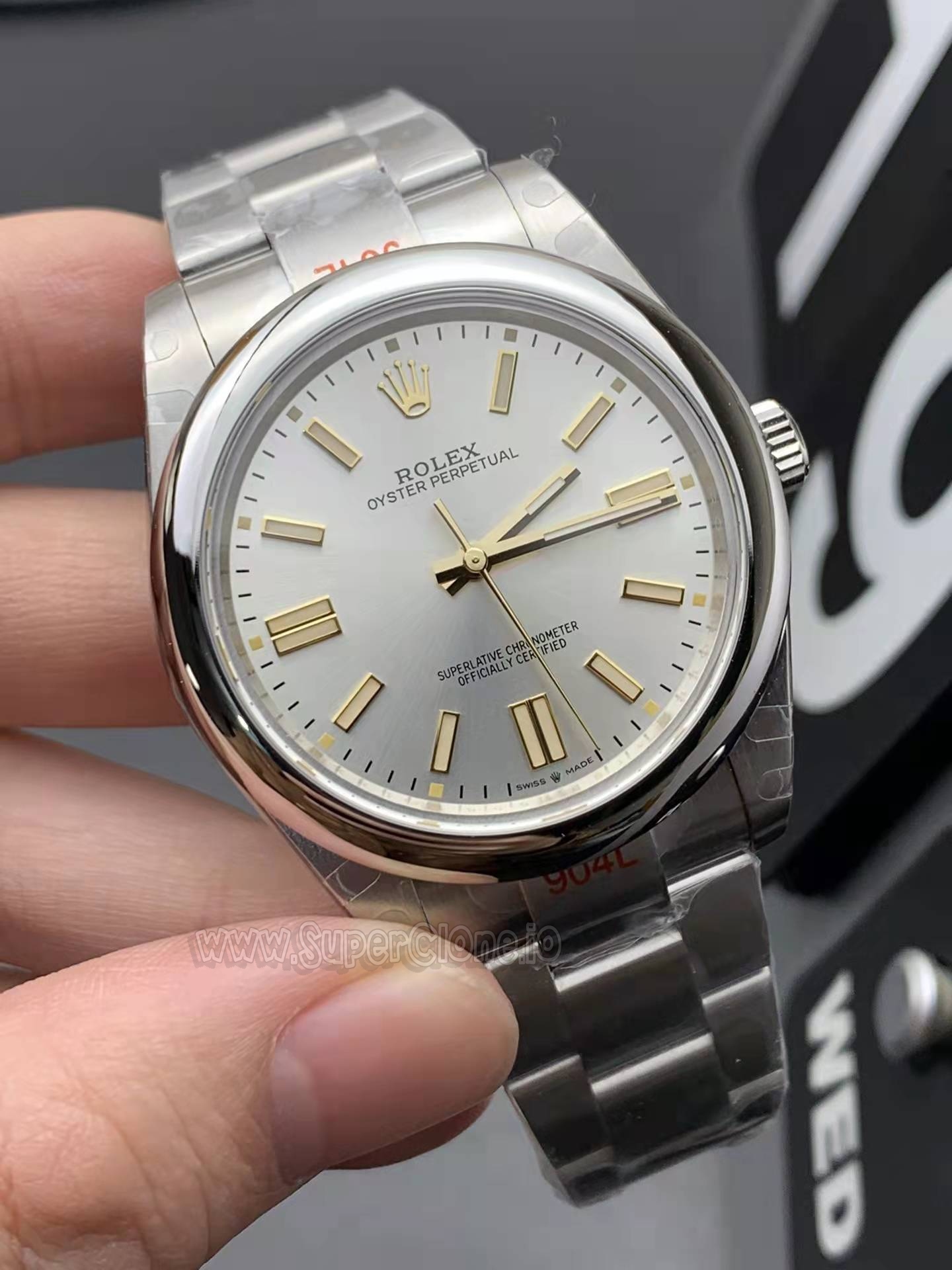
GM factory focused heavily on replicating these specific case geometry transitions. The interplay between the satin-brushed top surfaces of the lugs and the mirror-polished smooth bezel is critical because this contrast defines the visual character of the watch. On low-tier replicas, this polishing often suffers from a distorted, wavy reflection, while the companion brushing appears faint, shallow, or unevenly spaced. The GM factory version demonstrates tighter control over the grain alignment, with consistent grain running parallel to the lug length. The polished bezel also avoids the cheap, chrome-like mirror look often seen on entry-level models, providing a more wearable and authentic luster.
The Importance of 904L Stainless Steel
Material composition analysis has become a foundational topic within the super clone hobbyist community. Years ago, many replica manufacturers utilized “904L steel” purely as an unsubstantiated buzzword in marketing materials, while the actual metallurgical quality and structural density fluctuated wildly between batches regardless of what was claimed in product listings.
Today’s replica buyers are far more educated on the physical realities of luxury steel alloys. Genuine modern Rolex watches rely exclusively on Oystersteel (a proprietary 904L blend) due to its superior corrosion resistance and distinct optical luster when polished. The alloy contains higher nickel and chromium content than standard 316L steel, allowing it to take a deeper polish and maintain it longer under regular wear. High-end factories adopted genuine 904L structural steel not just to check a marketing box, but because experienced collectors can immediately feel the difference in tactile weight, edge crispness, and finishing permanence when comparing pieces side by side.
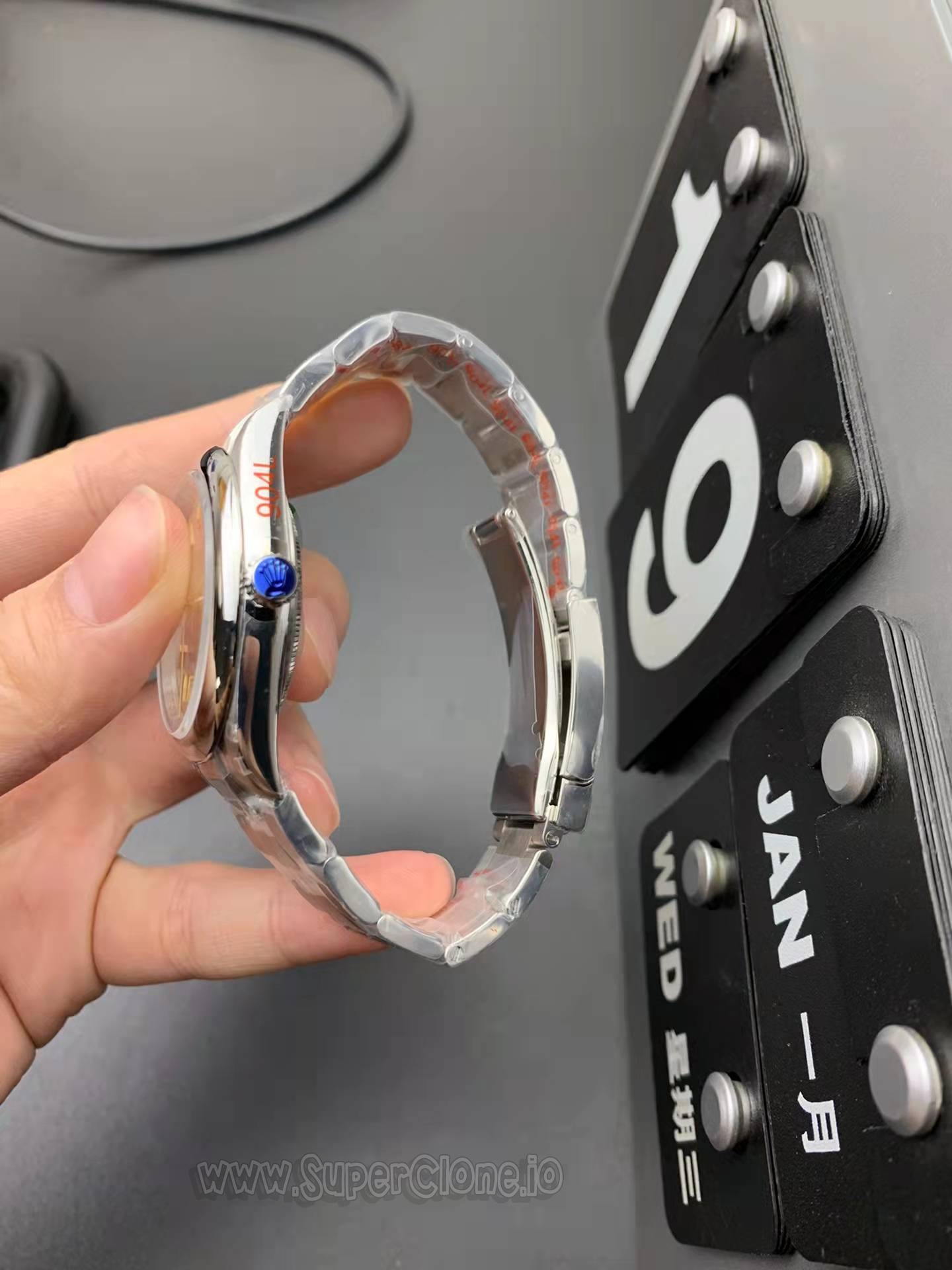
The GM factory Oyster Perpetual 41 utilizes solid 904L stainless steel throughout its case, bracelet, and clasp assembly. More importantly, the true upgrade lies in the execution rather than the raw material label. Correct mass distribution across the watch head and bracelet assembly is just as vital as utilizing the proper alloy compound, and a correctly specified steel still fails to impress if the machining or polishing process feels off.
A common flaw in older replicas was an unbalanced relationship between the heavy watch head and an overly light, hollow-feeling bracelet. Even if the total mass on a scale came close to genuine specifications, the watch felt awkward on the wrist because its center of gravity was misaligned. Buyers accustomed to handling genuine pieces could sense immediately that the bracelet felt too light relative to the case body. GM factory resolved this by engineering denser, solid-center links that match the authentic weight distribution, preventing the watch head from sliding forward during active wear and keeping the total weight comfortably within a credible range.
Dial Details Matter More Than Most Buyers Expect
The silver dial is arguably the most understated configuration in the modern 124300 catalog, yet it remains one of the most mechanically difficult finishes to replicate accurately. Vibrant lacquer finishes like turquoise or candy pink naturally overpower the eye, pulling focus away from minor grain inconsistencies. A monochromatic silver dial does the exact opposite, acting as a canvas that exposes every surface defect, reflection angle, and sunlight transition because there is no competing color to absorb attention.
The dial layout utilizes a true sun-ray pattern radiating from the center post, designed to interact dynamically with ambient light. Under direct sunlight, it produces a muted, champagne-tinted metallic sheen rather than the harsh, painted-on silver look found on low-grade alternatives which tend to use overly aggressive grain direction or inconsistent lacquer application to simulate the texture.
The applied hour indices are accurately squared with even gaps between the marker body and the surrounding dial plane. The application of the luminous material remains clean across the dial plane. On lower-tier options, the luminescent compound often exhibits messy overflow or thinning near the edges of the double batons at the 3, 6, and 9 positions, especially near the outer minute track.
Another subtle detail is the exact seating height of the sapphire crystal relative to the bezel line. While casual observers rarely notice this interface, seasoned collectors check this immediately to verify the watch profile. A crystal that domes excessively catches light at unnatural angles and changes the apparent shape of the watch, while one that sits too flush removes the subtle three-dimensional quality of the genuine piece. GM factory calibrated this fitment to mirror the genuine 124300 specification, preserving the correct side-silhouette without allowing the crystal gasket to protrude excessively or creating a flattened, bubble-like appearance common on competing versions.
Why Simple Rolex Models Are Gaining Ground Among Replica Collectors
There was a prolonged period when the replica market was almost exclusively obsessed with high-complication, highly recognizable Rolex professional sports references. Ceramic Submariners and complex Daytonas completely dominated forum discussions, trusted dealer catalogs, and factory research budgets. The reasoning was straightforward: buy the most recognizable version possible and maximize the visual return on investment.
However, that monochromatic market focus has steadily evolved into a more mature appreciation for clean design, reflecting a meaningful evolution in how replica buyers have changed as a community.
Many modern collectors are actively pivoting toward simpler Rolex models because they offer a superior level of integration into daily life. A clean Oyster Perpetual blends seamlessly into any wardrobe while still retaining the classic Rolex case architecture, signature Oyster link design, and balanced proportions that enthusiasts appreciate. In professional environments, a minimalist stainless steel watch with a silver dial passes without comment in a way that a ceramic-bezel dive watch or a panda-dial chronograph never quite can.
The Oyster Perpetual serves as an ideal entry point for newcomers who are hesitant to deal with the inherent mechanical risks of cloned chronograph movements. Replicas like the Daytona require intricate multi-tier movements that carry higher servicing overhead and increased failure points associated with column wheel mechanisms. The time-only configuration of the Oyster Perpetual offers a much more straightforward, reliable ownership experience over the long term, with a movement architecture that is easier to service and less likely to develop position-sensitive accuracy problems.
Buyers increasingly report holding onto their Oyster Perpetual replicas longer than more trend-dependent purchases. Because the design is not tied to a specific fashion cycle or pop culture moment, the watch remains wearable and visually appropriate across a wider range of years and contexts, leading to a notably higher retention rate among seasoned collectors.
The Clone 3230 Movement Inside
The most impactful technical upgrade found within current-generation Oyster Perpetual replicas lies hidden beneath the solid case back. Traditional replicas historically relied on generic, off-the-shelf Asian automatic movements modified with thin decorative plates glued onto the bridges to mimic Rolex calibers. While visually passable to an untrained eye during a brief glance through an exhibition back, these movements suffered from unreliable gear train spacing and lacked genuine structural accuracy, immediately alerting any watchmaker opening the case.
The bespoke clone 3230 movement housed inside the GM factory version represents a generational leap over those outdated decorative solutions.
While it does not mirror the exact metallurgical tolerances or proprietary hairspring technology of the genuine Rolex calibre internally, the physical gear train layout, the shape of the bidirectional winding rotor, and the structural orientation of the balance bridge are engineered to mimic the genuine architecture. The rotor geometry in particular is noticeably better executed, with an accurate angular profile and surface finish that reads more convincingly as a quality automatic caliber rather than a redecorated commodity movement.
This structural fidelity becomes critical when the watch is opened for routine lubrication, adjustments, or general servicing. Watchmakers who service replica watches regularly note that the clone 3230 platform causes fewer complications during routine maintenance, partly because the construction is closer to the genuine caliber and replacement parts within the clone movement ecosystem are more consistent.
Factories now understand that experienced buyers inspect internal movement finishing with close attention. The depth of the engraved calibers, the shape of the cutouts, the coloration of the assembly screws, and the satin finishing on the plates all play a role in establishing authenticity. A movement that fails basic visual scrutiny under magnification undermines confidence in the entire watch, regardless of how well the exterior finishing is executed.
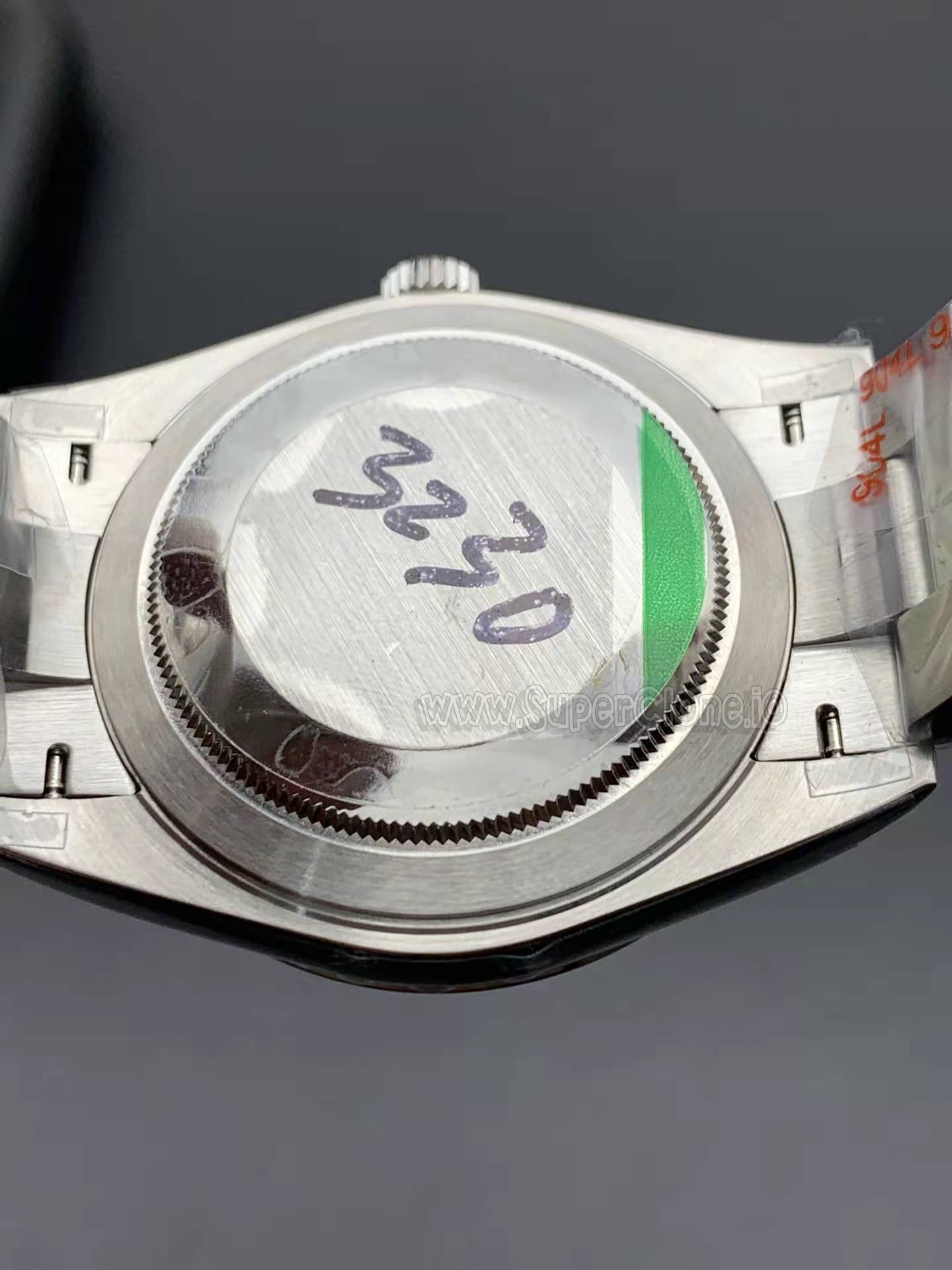
Beyond visual replication, operational stability remains paramount for enthusiasts who treat these reps as genuine daily wearers rather than novelty showpieces. Winding smoothness, keyless works engagement, and power reserve consistency are now critical functional requirements. The current clone 3230 platform has proven to deliver far more stable amplitude, lower breakdown rates, and tighter accuracy tolerances compared to the fragile, plate-decorated movements of the past, falling within a range that reads as normal automatic watch variation rather than the wider deviation associated with lower-tier generic calibers.
The Bracelet and Everyday Wear Experience
Bracelet articulation and clasp tolerance dictate how expensive a watch feels when it is actually on the wrist. A replica can feature a flawless case, but if the bracelet exhibits sharp edge flash, hollow rattling, or stiff link articulation, the premium illusion breaks down immediately.
The three-piece Oyster bracelet fitted to the GM factory 124300 feels noticeably more refined compared to early production runs from smaller factories. The grain of the satin brushing across the face of the links tracks perfectly straight and runs in a consistent direction across adjacent links rather than showing the mismatched grain angles visible on lower-tier versions. The stamped folding clasp shuts with a crisp, tactile snap, replicating the engagement feel that genuine Rolex Oyster clasps produce when closing.
Proper flex and clearance between individual links are also essential for comfort and perceived quality. A bracelet assembly engineered with zero tolerance feels rigid and binds up on the skin, while loose link pins create an unstable, worn-out feel where links slap against each other audibly during normal wear. GM factory found the sweet spot here, achieving a smooth, natural draping effect that tracks the curvature of the wrist nicely without binding at certain articulation points or rattling through the full range of motion.
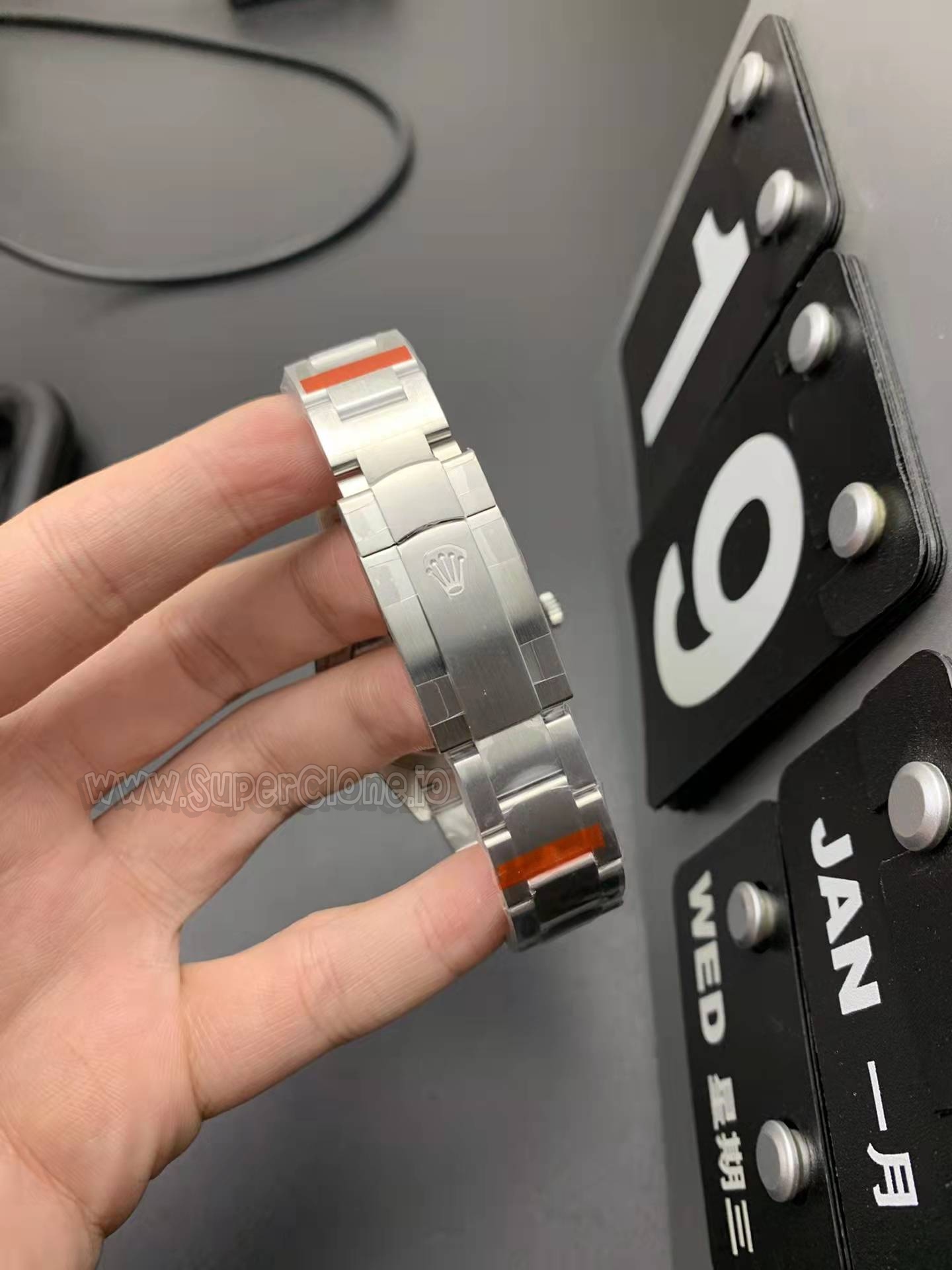
The clasp adjustment mechanism also deserves mention. On the genuine Rolex Oyster Perpetual 124300, the Oysterclasp includes a convenient Easylink extension system that allows wearers to add or remove approximately 5mm of length without tools. GM factory’s version replicates this mechanism with reasonable functional accuracy, which matters practically for anyone whose wrist circumference changes with temperature, activity level, or time of day.
How the Oyster Perpetual Became a Gateway Rolex
Across both genuine retail networks and clone enthusiast circles, the Oyster Perpetual increasingly functions as the ultimate gateway Rolex. It introduces enthusiasts to the core design philosophy of the brand without demanding the visual aggression, thickness, or pricing premiums associated with heavy-duty professional dive watches or racing chronographs. For buyers who find Submariners too sporty or Daytonas too formal, the Oyster Perpetual occupies a middle ground that proves difficult to fill with any other reference.
This balance explains why the 124300 reference has maintained strong demand long after the initial social media trend over brightly colored lacquer dials began to normalize. The buyers who rushed to acquire turquoise, olive, and yellow dials during peak attention have largely moved on to newer novelties. But Oyster Perpetual sales—both genuine and replica—maintained a steadier baseline because the underlying design proposition was never really about color novelty.
The silver sunburst variant remains a steady favorite because its aesthetic is entirely immune to changing fashion trends. While turquoise or coral red dials capture temporary attention on digital feeds, generating engagement from people who would never actually wear such a watch, a clean silver face remains effortless to wear year after year across any setting without the watch feeling dated or seasonally inappropriate.
For collectors making their first entry into the high-tier replica market, the Oyster Perpetual 41 also represents a secure, low-risk acquisition from a practical standpoint. The design is versatile enough to work in most daily environments, the time-only movement avoids complex failure points, and long-term mechanical maintenance is straightforward for any watchmaker to handle competently. These factors have allowed GM factory’s Oyster Perpetual 41 to secure a permanent spot in the market, remaining relevant long after typical factory release cycles fade.
What the Oyster Perpetual Trend Tells Us About Today’s Replica Buyers
The shift toward Oyster Perpetual replicas reveals a broader maturation within the super clone industry. A decade ago, a simple silver dial watch with no extra functions would have struggled to attract attention among replica buyers. The community was heavily driven by loud aesthetics; everyone wanted ceramic bezels, chronograph pushers, or at least a prominent date magnifier.
Today, the opposite happens as buyers become more detail-oriented, technically informed, and less impressed by pure visual flash. Collectors care less about how loud a watch looks on the wrist and more about how well its construction holds up under close, discerning inspection. This change in consumer mindset has quietly elevated minimalist watches to the highest levels of scrutiny, forcing top-tier factories to prioritize engineering tolerances, material finishing, and structural quality over loud marketing claims or feature lists to justify pricing.
GM factory understood this market shift earlier than most. While other operations chased complicated models with mixed results, GM focused on getting the fundamentals right on a watch that leaves absolutely no room for shortcuts. The result is a product that doesn’t need bright colors or bold claims to hold its value in the secondhand replica market, serving as an ideal case study for this ongoing industry transition. Its lasting appeal succeeds because of proportion, finishing balance, wearable design philosophy, and the ability to capture the exact, restrained elegance that made the genuine Oyster Perpetual a modern classic—that particular combination of confidence and quietness that the best Rolex designs have always managed to achieve without announcing themselves.
