BT vs Clean Daytona: Why Small Alignment Details Now Matter More Than Movements
Over the last two years, the replica Rolex Daytona market has undergone a fundamental shift in competition logic that many casual buyers fail to notice. What has really changed the market is not one factory suddenly producing a singular, flawless version. Instead, it is the ongoing, aggressive tug-of-war between top-tier replica manufacturers constantly correcting, upgrading, and refining micro-details. Especially after BT Factory entered the Daytona segment, Clean Factory noticeably accelerated its rolling update cycle. Many small aesthetic flaws that had existed for years on enthusiast forums have finally started getting the factory attention they deserved.
The Evolution of Buyer Expectations: Beyond the Cloned 4130 Movement
One of the clearest examples came after BT upgraded its Daytona lineup to the V2 generation. For the first time, the general market began seriously discussing subdial hand lengths and rehaut crown alignment details that previously only experienced collectors and macro photography geeks cared about. In the past, most buyers focused purely on rigid hardware specifications: whether the watch used a Dandong 4130 movement, whether the case was true 904L steel, or whether the overall weight felt close to genuine. Today, however, experienced buyers pay far more attention to the subtle visual proportions that become glaringly obvious during daily wear or side-by-side comparison.
The Critical V2 Upgrades: Visual Balance and Symmetry
The two most important upgrades on the BT V2 Daytona were both related to overall visual balance, directly determining how “natural” the watch looks on the wrist:
- Subdial Hand Correction: The lengths of the three subdial hands were corrected after years of looking slightly stunted and undersized, which used to ruin the dial layout under close inspection.
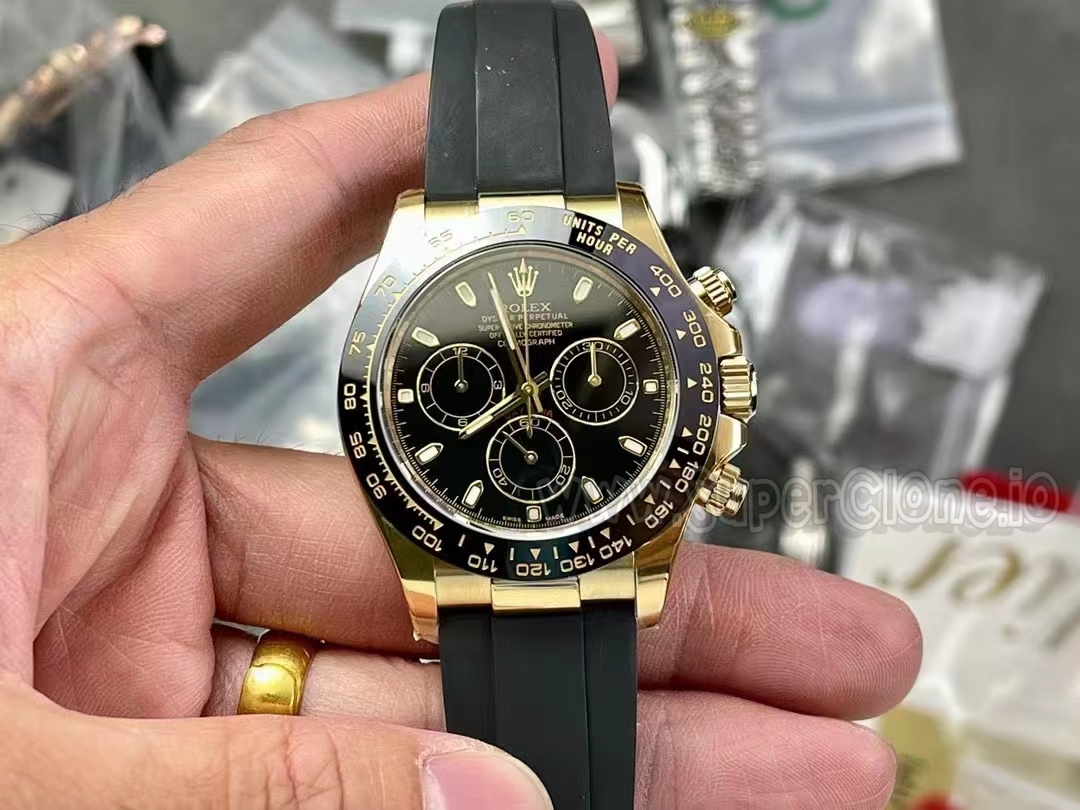
- The Multi-Dimensional Alignment: The alignment between the 60 triangle on the ceramic/metal bezel, the laser-etched crown marker on the inner rehaut, and the applied Rolex crown logo on the dial was finally improved.
This specific area is extremely sensitive visually. Once the central chronograph seconds hand points to 12 o’clock, even a fraction of a millimeter of left or right deviation immediately breaks the vertical symmetry of the watch. This pursuit of absolute symmetry is exactly how modern collectors separate a standard replica from a true top-tier super clone.
Clean Factory’s Rapid Response and Market Pressure
Clean clearly noticed the pressure from BT’s aggressive upgrades and shifted their production rhythm. Starting from the classic Panda Daytona, continuing through the gray dial Oysterflex version, and now this yellow gold black dial Daytona, Clean has been releasing new variants and rolling batches much faster than before. Years ago, Clean operated more cautiously, usually polishing and tweaking a single model for a long time before launch. Recently, however, the factory has behaved more like a continuously evolving live project. Once a specific detail defect becomes a hot topic on watch forums, Clean tends to react quickly with a new batch to address the criticism.
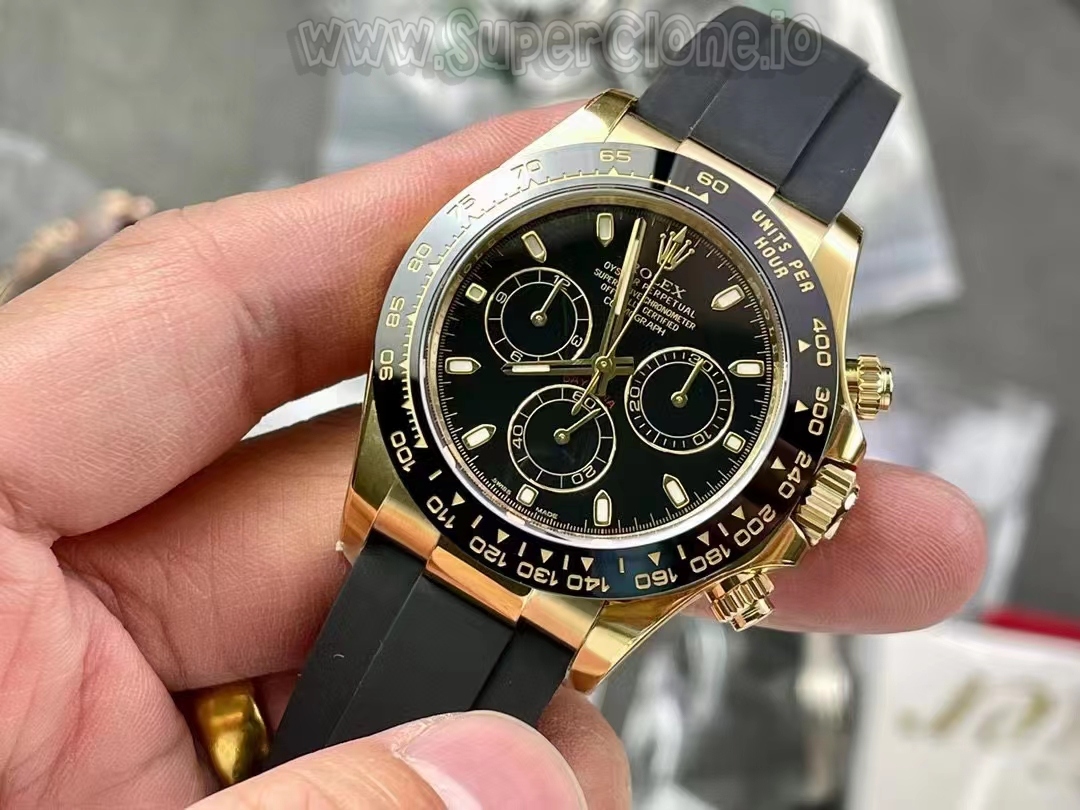
A New Visual Direction: Yellow Gold Black Dial vs. Champagne Dial
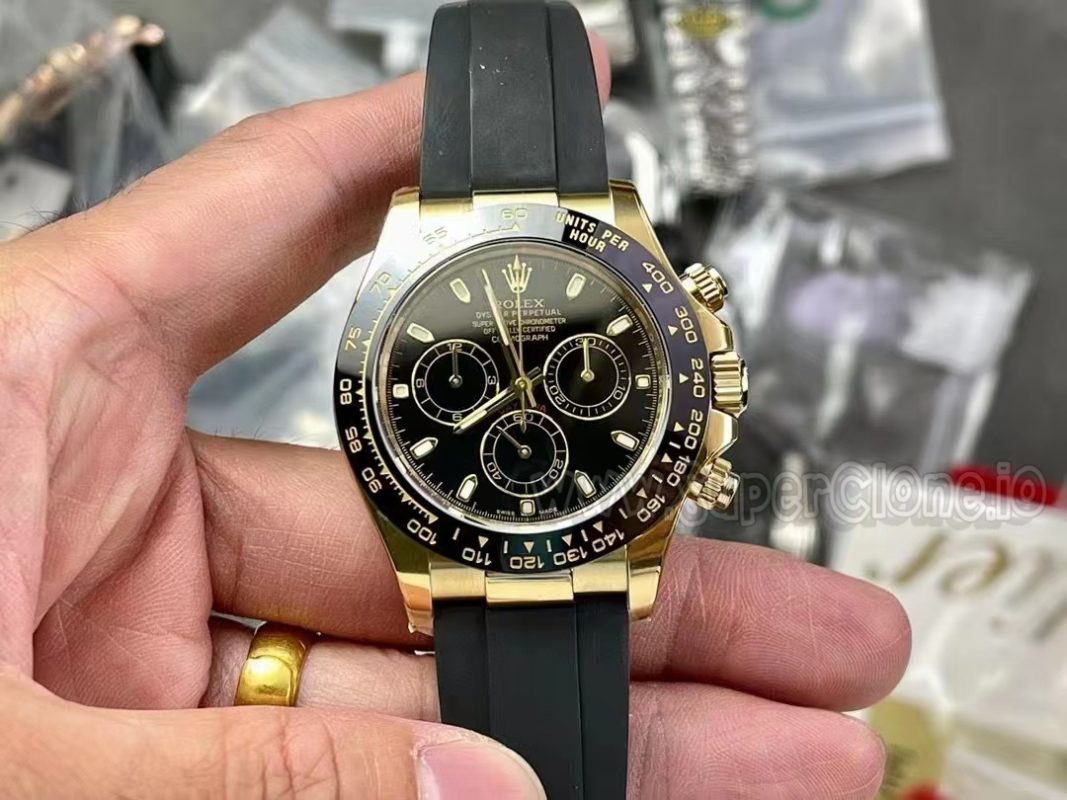
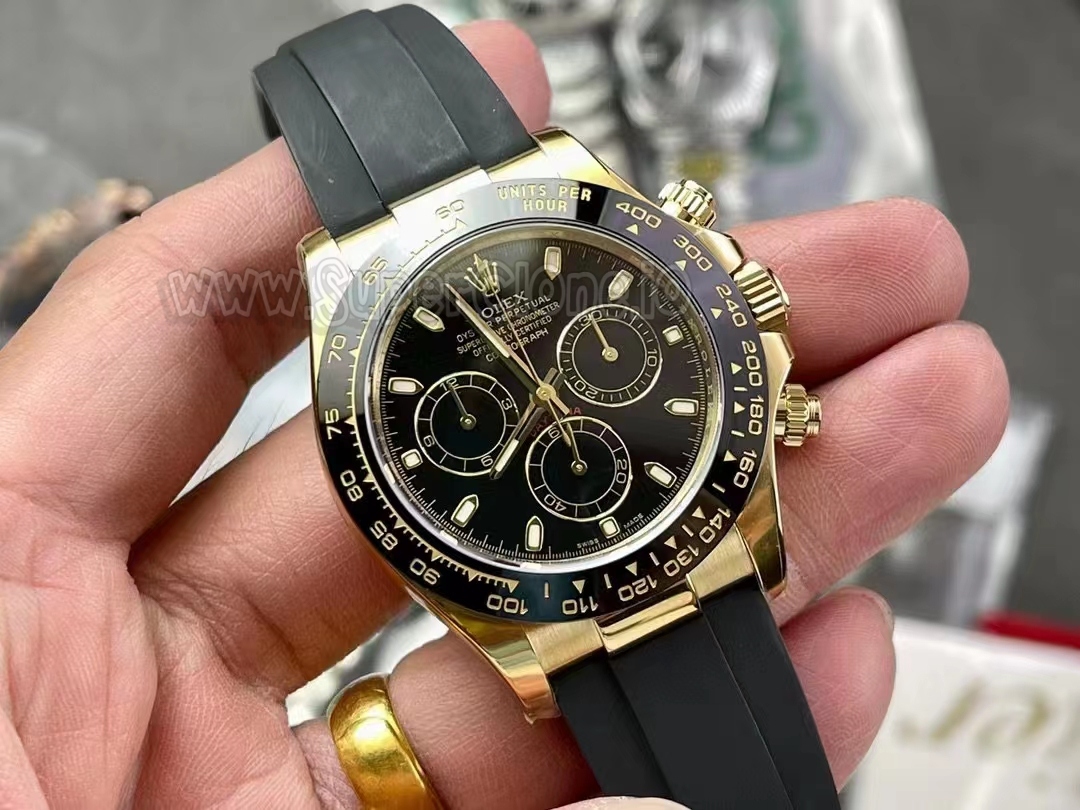
This new yellow gold Daytona with a black dial follows a completely different visual direction compared to the earlier champagne dial version. The previous release focused heavily on the bold, solid yellow gold appearance itself, which could sometimes look a bit overwhelming and lacked contrast. In contrast, this newer black dial version feels much closer to the genuine Oysterflex references like the Ref. 116518LN.
The deep black dial creates a stronger sense of depth around the chronograph layout, making the gold sub-rings pop beautifully. It gives the center section of the watch more contrast, which is why many longtime Daytona enthusiasts consider black dial versions much easier to wear as a daily driver long-term without getting tired of the look.
First Impressions & The Reality of Hand-Assembly Tolerances
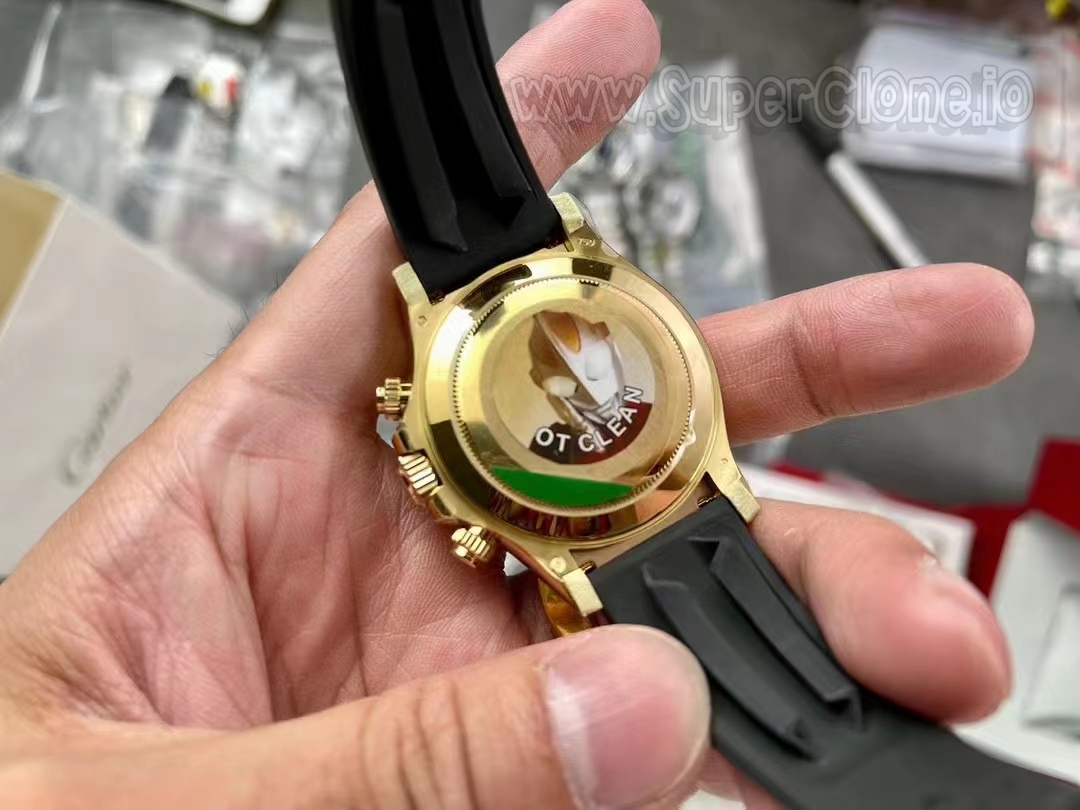
When I received the first yellow gold Daytona from Clean, my initial impression was already much better than many of the late-generation Noob Daytonas that came before it. The polishing around the mid-case, the smooth transitions along the lugs, and even the heavy 3D ink printing texture on the dial text had reached a much higher standard compared to older generations of super clones. Even so, the watch was still not truly perfect, showing how demanding the current market has become.
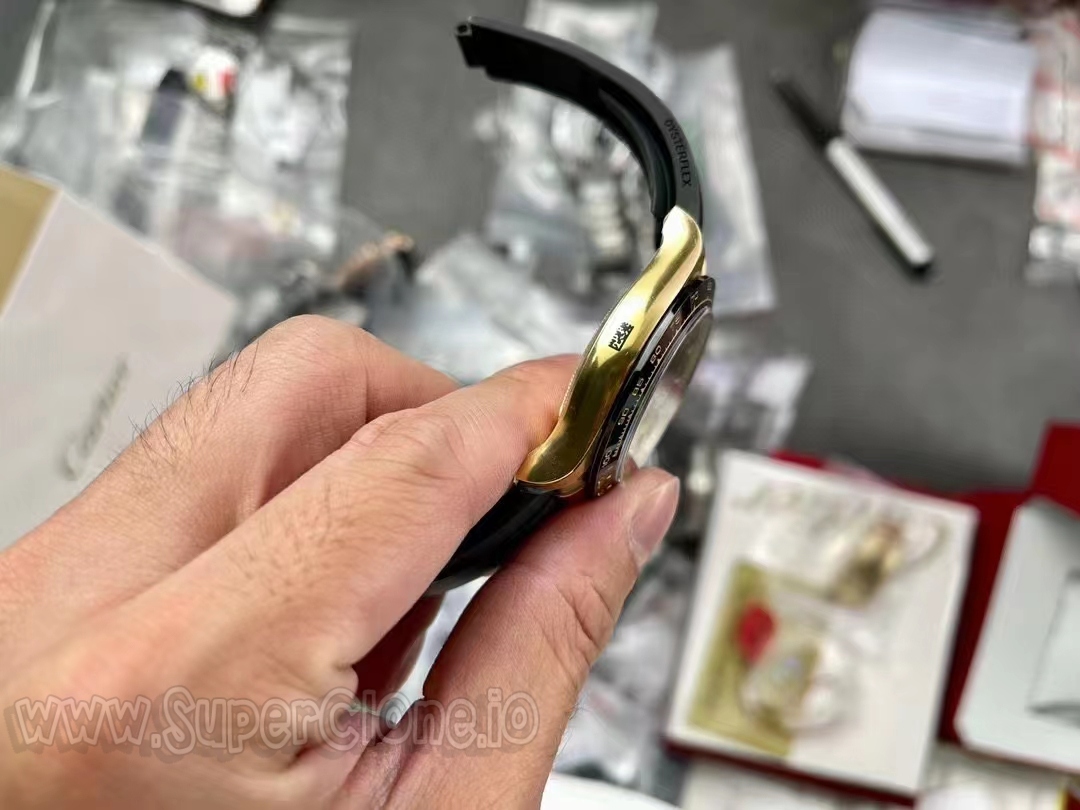
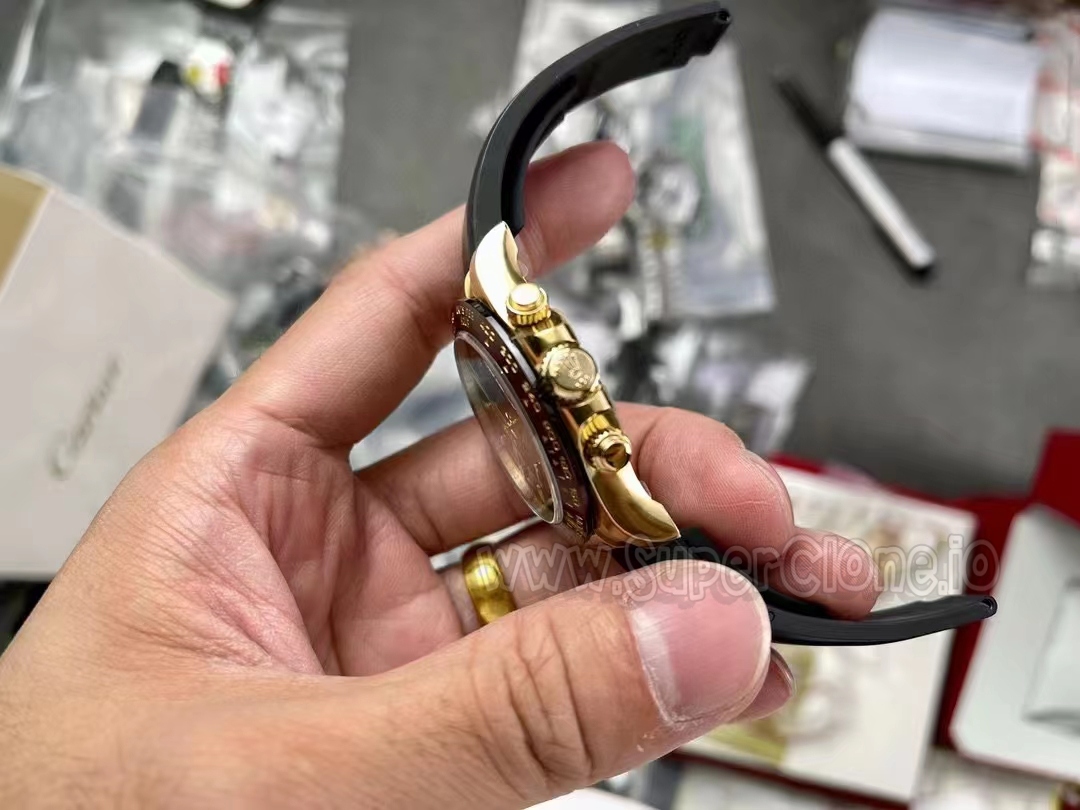
The alignment between the central seconds hand and the Rolex crown logo remains one of the hardest details for factories to control consistently during mass assembly. Ideally, collectors want the chronograph hand to align perfectly with the center axis of the crown logo when reset. In reality, tiny tolerances during dial installation, hand pressing, and pinion clearance make perfect consistency across a whole batch extremely difficult. What makes this frustrating is that it varies from watch to watch within the exact same factory run. This is why experienced buyers always ask dealers for high-resolution QC photos to hand-pick pieces with the cleanest possible alignment.
The Practical Side of Ownership: Oysterflex Strap Sizing
Another detail that many people overlook, but which significantly affects wearability, is the Oysterflex rubber strap sizing system. Clean currently offers multiple strap length combinations for this Daytona because the genuine Oysterflex system itself is not designed as a universal, one-size-fits-all strap. Different strap combinations (like E+E, E+F, or F+G codes) dramatically affect both wrist comfort and the visual proportion between the case and the wrist. A strap that is too long causes the heavy watch head to constantly drift off-center, while a strap that is too short creates uncomfortable pressure points during warm weather.
Most Clean Daytona models currently leave the factory with a standard strap combination designed for wrists between approximately 16cm and 17.2cm, which fits the majority of average-sized wrists perfectly. Anyone with significantly smaller or larger wrists usually needs to order additional factory strap segments separately. The issue is that Clean sells individual Daytona Oysterflex straps at surprisingly high prices, making post-purchase strap adjustments more expensive than many buyers initially expect. This reminds potential buyers that when chasing a perfect replica, post-purchase modification costs should always be factored into the budget.
Market Dynamics and Changing Aesthetic Trends
Despite the strap-matching costs, Oysterflex Daytona demand remains extremely strong. Even though BT, Clean, and the newer reincarnations of Noob are all now producing 4130-based Daytona replicas, only a small number of top-tier factories can maintain stable production quality and reliable finishing consistency. Popular dial configurations often become difficult to source very quickly due to supply chain bottlenecks, and waiting times can stretch longer than dealers initially estimate.
One interesting situation is that Clean’s gray dial Oysterflex Daytona was actually released before this yellow gold black dial version, yet the gray dial model is now harder to order in many cases. Some dealers are already dealing with longer waiting times, suggesting that market demand may be shifting toward more understated, “stealth-wealth” configurations. On the wrist, the gray dial offers a colder and more restrained appearance. The transition between the darker gray tones and the black Oysterflex strap feels more natural compared to the brighter, high-contrast yellow gold aesthetic, making it an incredibly versatile choice for different clothing styles.
The Era of Holistic Evaluation
The Daytona replica market today is very different from what it was several years ago. The industry competition logic has evolved through three distinct stages:
1. The Movement Era: Factories competed over whether they had a working clone 4130 movement.
2. The Component Era: The focus shifted toward isolated parts like dial color accuracy, bezel engraving depth, lume longevity, and case weight.
3. The Harmony Era: The market is entering a stage where collectors judge watches based on overall harmony and authentic wrist presence rather than isolated technical specs.
Buyers no longer care only about whether individual components look correct on paper. Instead, they pay attention to how the entire watch wears and catches the light. The continuous rivalry between BT and Clean will likely keep pushing Daytona replicas forward. Every time one factory improves a tiny detail, the other quickly responds. This healthy competition is steadily eliminating old, inferior processes and raising the overall standard of the super clone market to historic highs, directly benefiting enthusiasts who get to enjoy better craftsmanship than ever before.