
Inside the Modern Daytona Battle: Clean Factory vs BT Factory
If there has been one model quietly reshaping the upper end of the replica watch market since 2022, it is not the Submariner. The Submariner still sells in enormous numbers and continues to dominate entry-level discussions among casual buyers, but inside the actual factory competition—especially among collectors who pay attention to details—the Daytona has become the real pressure point. More specifically, the 4130 Daytona has evolved into the model that now exposes the true difference between factories that simply assemble products quickly and those that are genuinely trying to push modern super clone manufacturing into a more refined stage.
That shift did not happen overnight. Several years ago, most replica Daytona discussions were still relatively simple. Buyers mainly cared about whether the watch looked close enough to the genuine version from a normal viewing distance. Case thickness mattered. Subdial spacing mattered. Movement reliability mattered. But the overall expectations were still very different from what exists today. The market was smaller, information moved more slowly, and comparison standards were lower. Once Noob Factory released its famous 4130 Daytona series, however, the entire industry changed direction. Even now, long after Noob disappeared, collectors still reference those watches whenever Daytona quality is discussed, not because the watches remain technically unbeatable, but because Noob fundamentally changed what buyers expected from a Daytona replica. It set a new baseline for case proportion, dial finishing, and overall wrist feel that all subsequent manufacturers have had to compete against.
The Legacy of Noob 4130 and the Rise of Modern Competitors
That is also why so many buyers continue asking whether Noob has somehow returned. Every month, there are still dealers using the Noob name to market Daytona models or Submariners, and newer buyers often assume the original factory must still exist somewhere behind the scenes. Realistically, the old Noob operation has been gone for years, and experienced collectors already understand that the “New Noob” or “New N Factory” labels appearing in certain dealer catalogs have very little connection to the original manufacturer that once dominated the 4130 market. The reason the name continues surviving is simple: Noob established the modern expectation for what a high-end Daytona replica should feel like. Before that era, many Daytona replicas looked acceptable in photographs but immediately revealed weaknesses on the wrist. Cases felt thick, dial spacing looked awkward, pushers lacked proper proportions, and the overall balance never captured the unusually compact visual density that makes the genuine Daytona so recognizable in person.
Once Noob disappeared, a huge performance gap opened inside the high-end replica Daytona market. After a short period of market reshuffling, two professional factories eventually stood out from countless manufacturers and became the core competitors occupying the high-end 4130 track: BT Factory and Clean Factory. While other factories continue producing basic Daytona models for entry-level buyers, most serious collector discussions and in-depth quality comparisons today eventually return to these two brands. This is because BT and Clean represent two completely different manufacturing philosophies and market positioning in the modern super clone watch industry, each catering to different buyer needs and collection preferences.
BT Factory’s Rapid Volume Strategy vs. Clean Factory’s Methodical Approach
BT Factory’s market strategy and product advantages have been very clear since its rise. The factory expanded rapidly across multiple Daytona configurations, including the classic Panda black and white dials, mainstream Oysterflex rubber strap versions, precious-metal gold styles, and uncommon dial colors that many other factories had not yet attempted seriously. In some ways, the strategy resembled the older Noob approach during its strongest years: release quickly, establish market visibility early, then continue improving future versions once production has already begun. For most casual buyers and entry-level collectors, BT Factory’s biggest advantage lies in its rich selectivity and cost performance. It can meet almost all style needs of Daytona enthusiasts, and the overall appearance restoration of its products is qualified enough to meet daily wear and social scene use.
The problem is that rapid large-scale expansion inevitably brings inherent production drawbacks. The Rolex Daytona is one of the most structurally precise chronograph models in the brand’s lineup, exposing structural inconsistencies more aggressively than most modern Rolex designs. Small variations in case geometry, bezel proportions, pusher alignment, dial depth, or crystal distortion become surprisingly visible once the watch is worn regularly. It is easy for factories to produce single visually flawless samples, but maintaining uniform precision and consistent finishing standards in large-scale mass production across an entire expanding product line is much harder. This is the biggest bottleneck restricting BT Factory’s product upper limit, and it is exactly where Clean Factory gradually developed a different reputation inside the market.
Unlike BT, Clean approached the Daytona category with a slower, noticeably more rigorous development attitude. During the early stages, many collectors still associated Clean primarily with Submariner production because their bezels, dials, and finishing quality had already gained strong recognition there. After gaining a firm foothold in the Submariner track, Clean did not blindly expand its product line. Instead, it concentrated core technical teams and production resources to deeply study the structural parameters, craftsmanship details, and ergonomic design of the genuine Rolex Daytona. Rather than flooding the market immediately with every possible variation, Clean appeared more focused on refining overall structure, case shape, bracelet feel, and small ergonomic details after repeated mold revisions and process debugging.
Case Study: The Gray Dial Oysterflex Daytona 116519LN
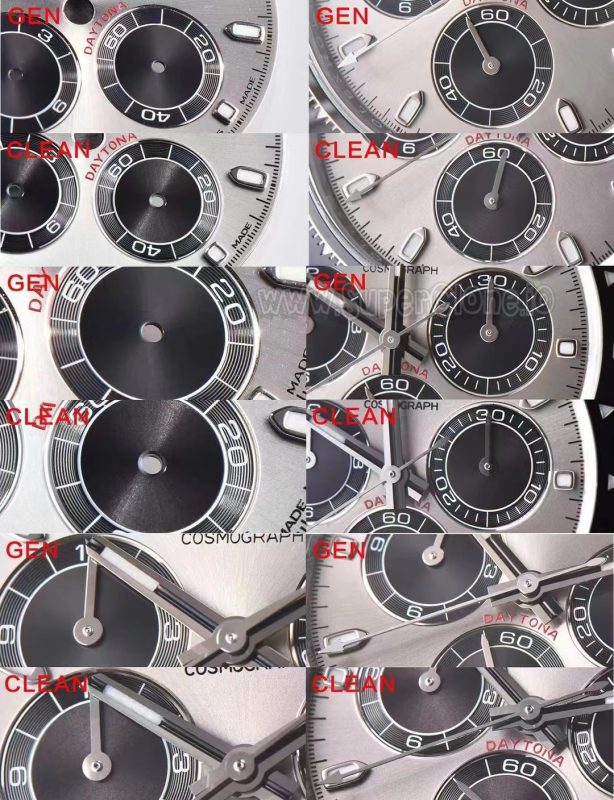
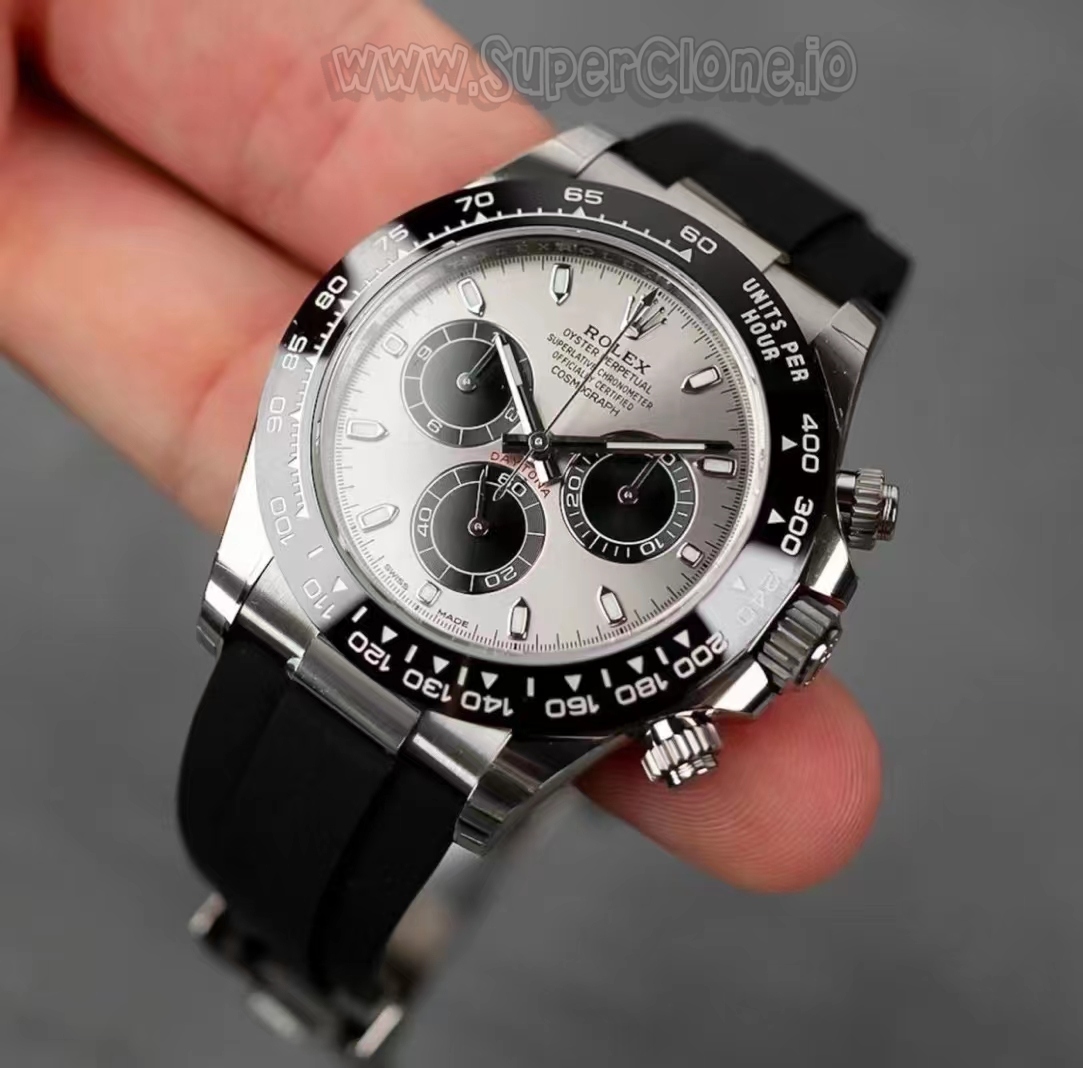
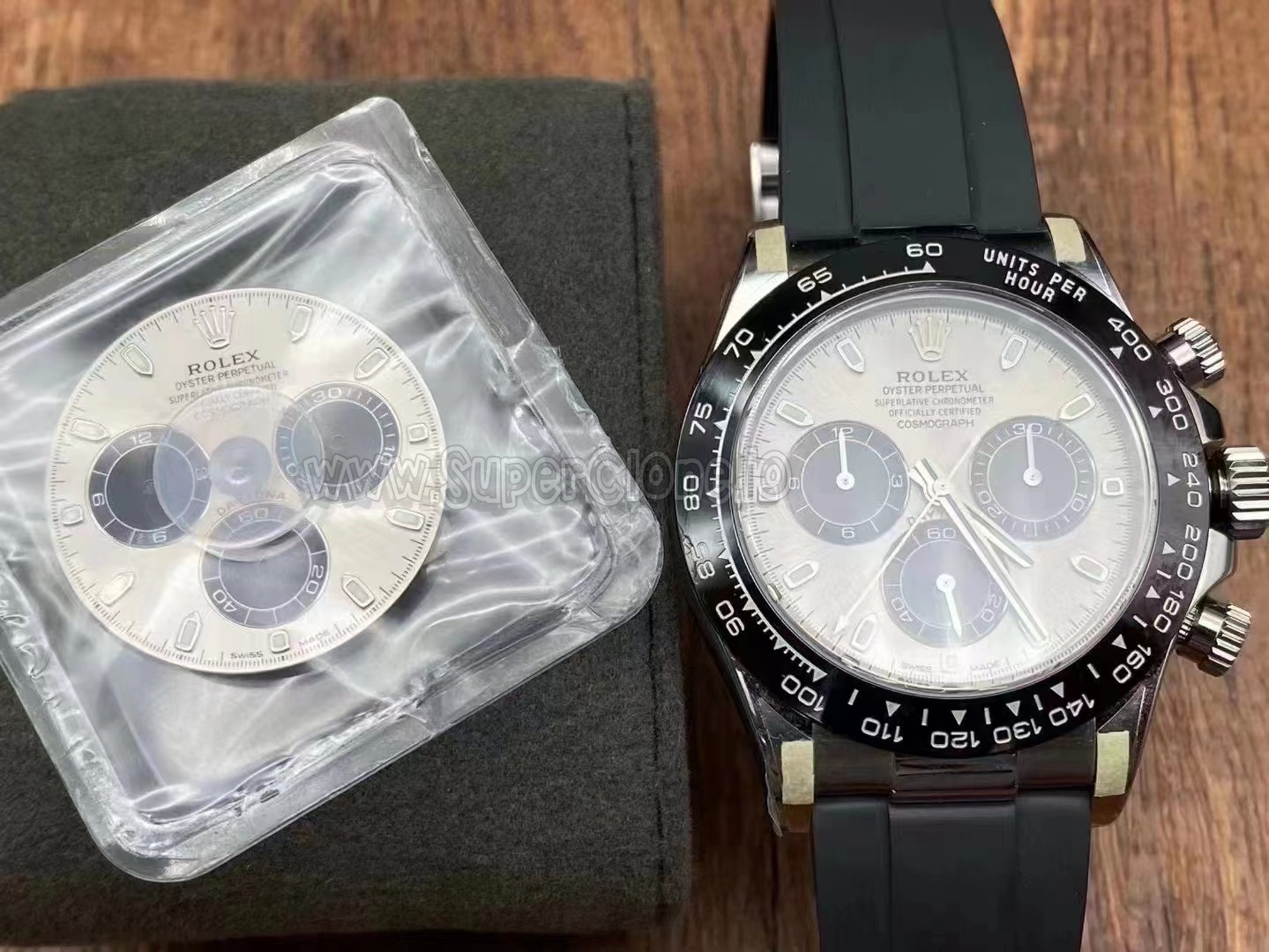
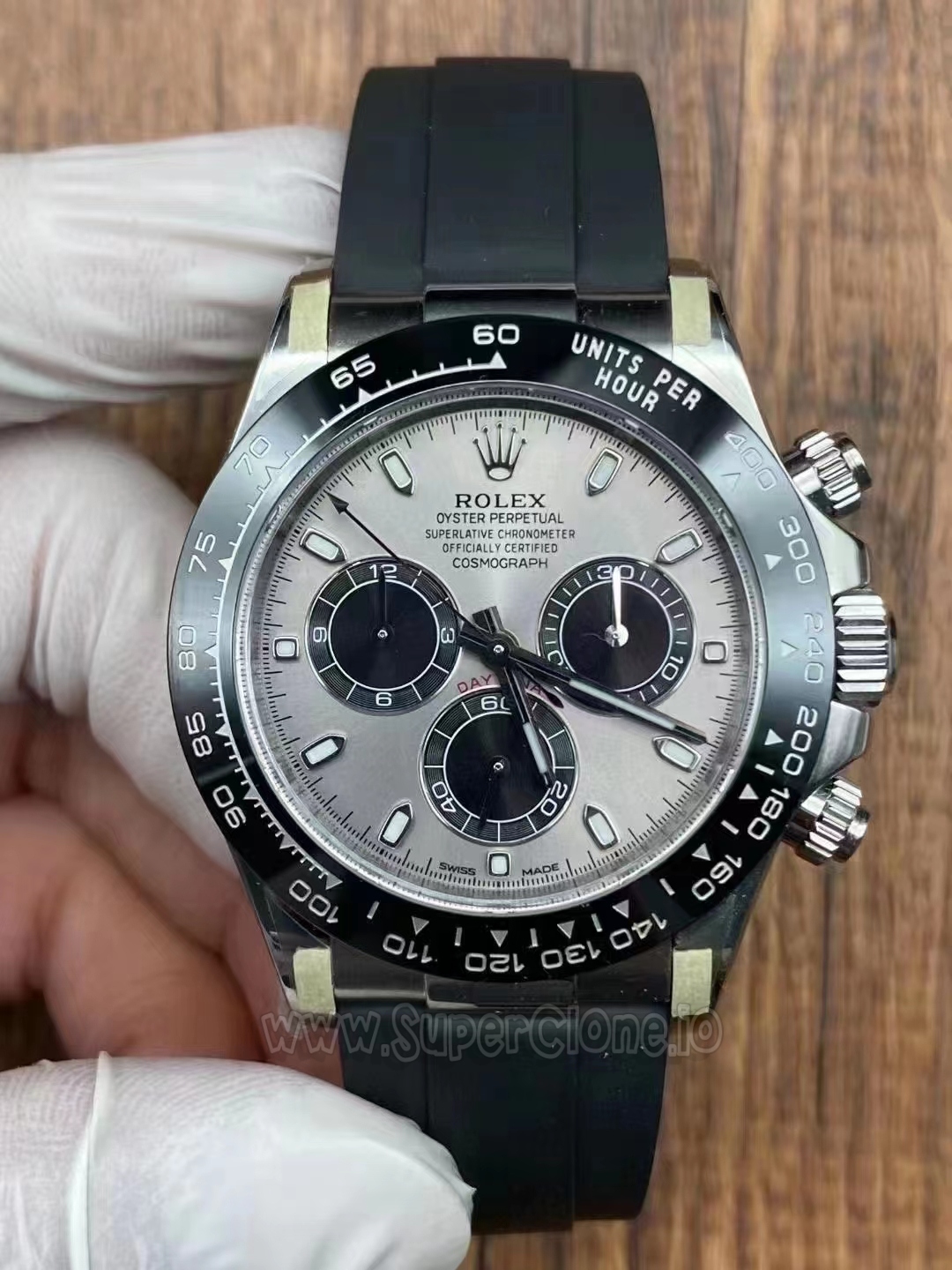
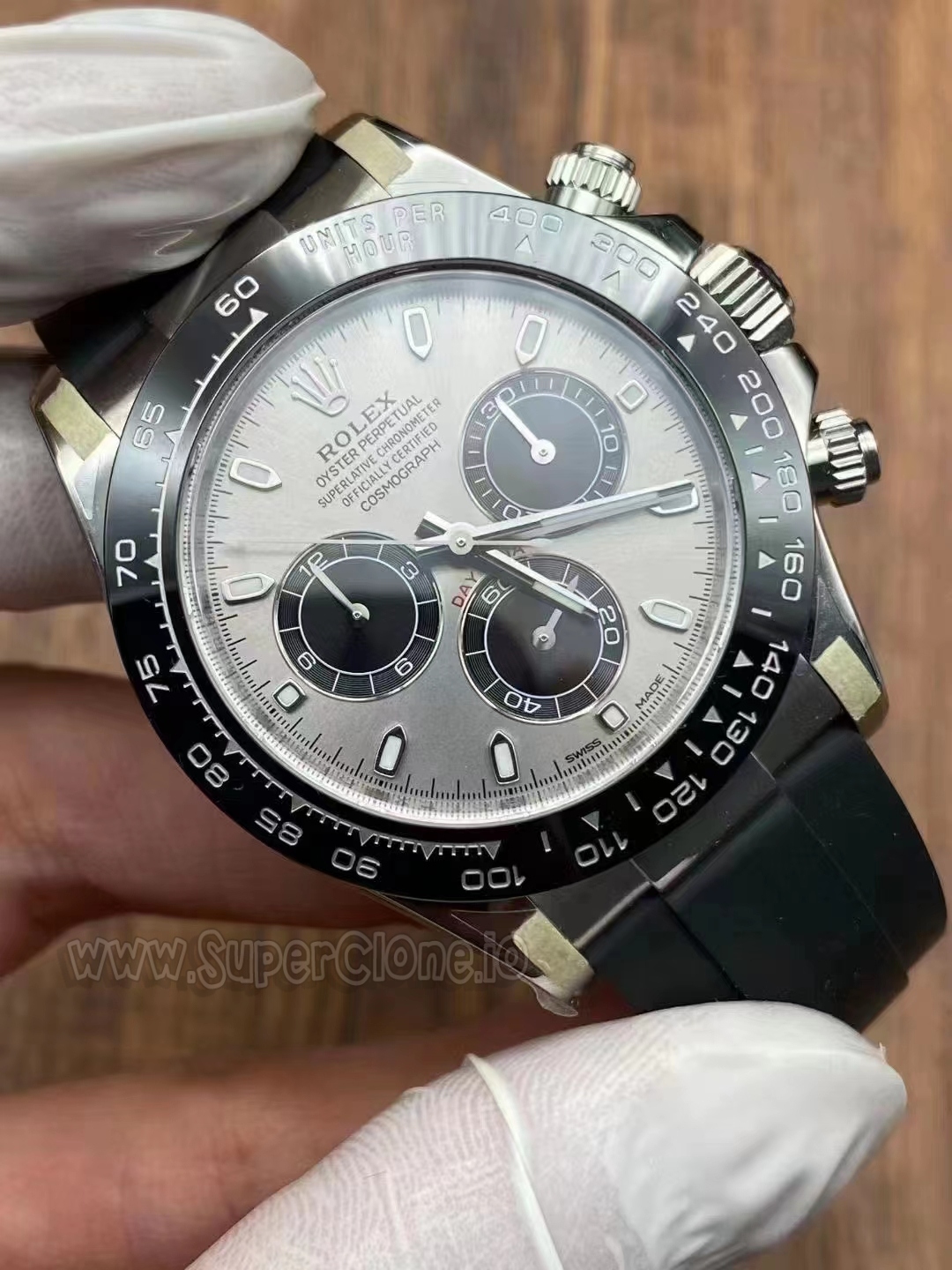
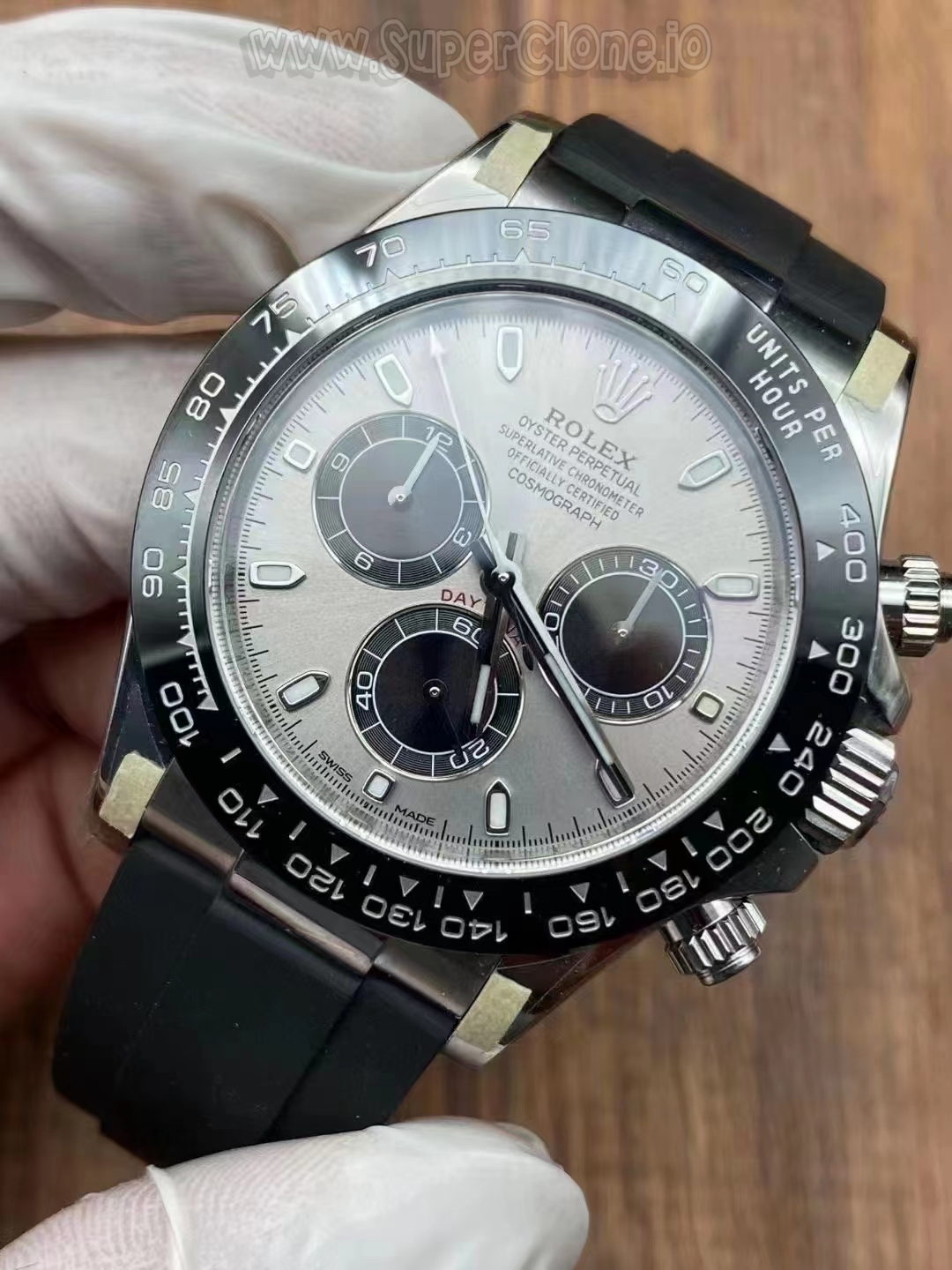
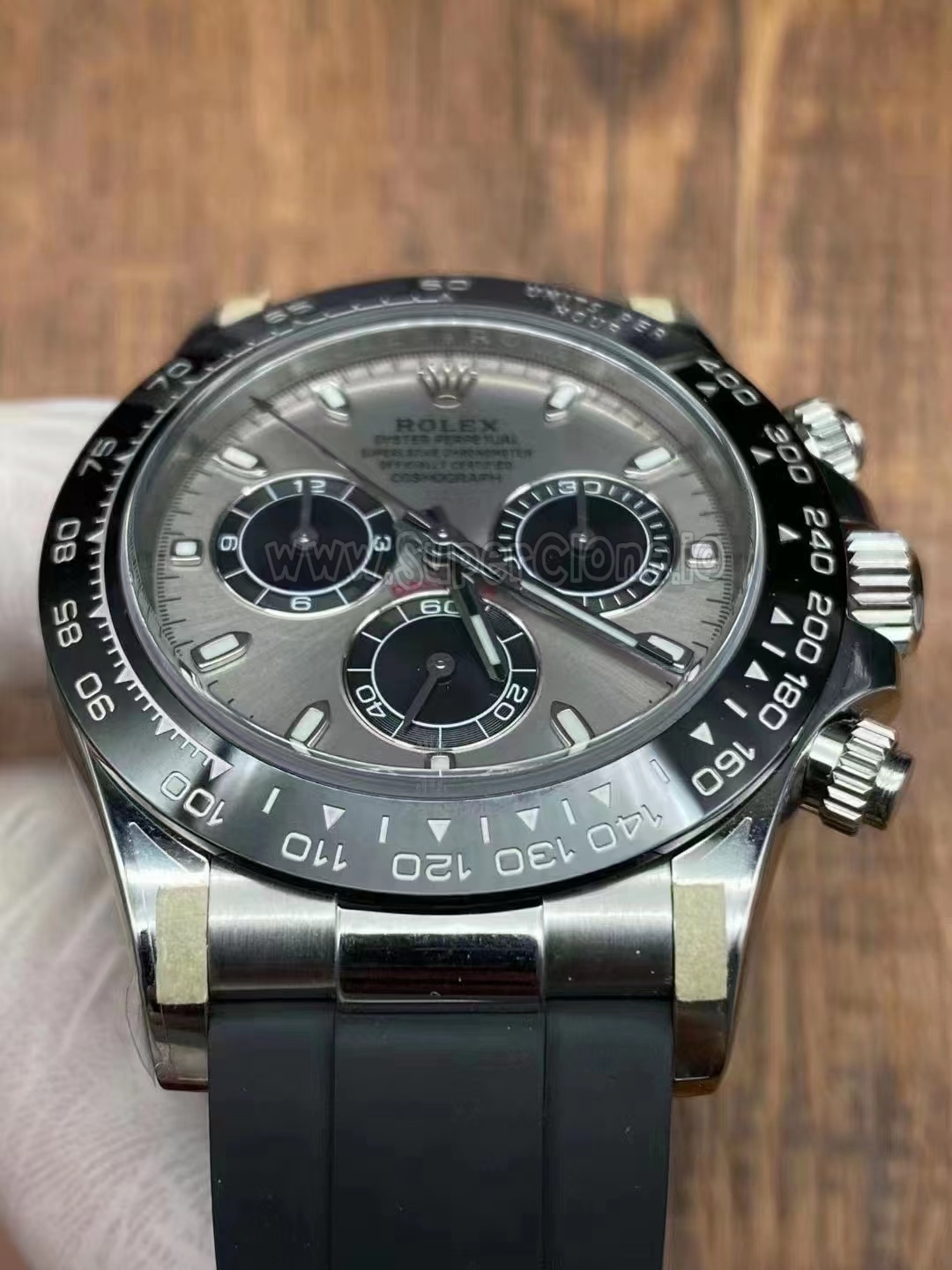
The gray dial Oysterflex Daytona 116519LN became one of the clearest and most compelling examples of this evolving competition because it highlighted the exact areas where factories begin separating themselves once the basic appearance has already become convincing. At first glance, many buyers underestimated the importance of the gray Daytona because it does not carry the same mainstream recognition as the Panda Daytona. Yet among experienced collectors, the low-saturation gray dial occupies a very interesting position because it exposes dial quality, surface treatment, and overall finishing much more aggressively than standard black or white executions, infinitely amplifying any potential process flaws.
Mastering the Sunburst Dial Texture
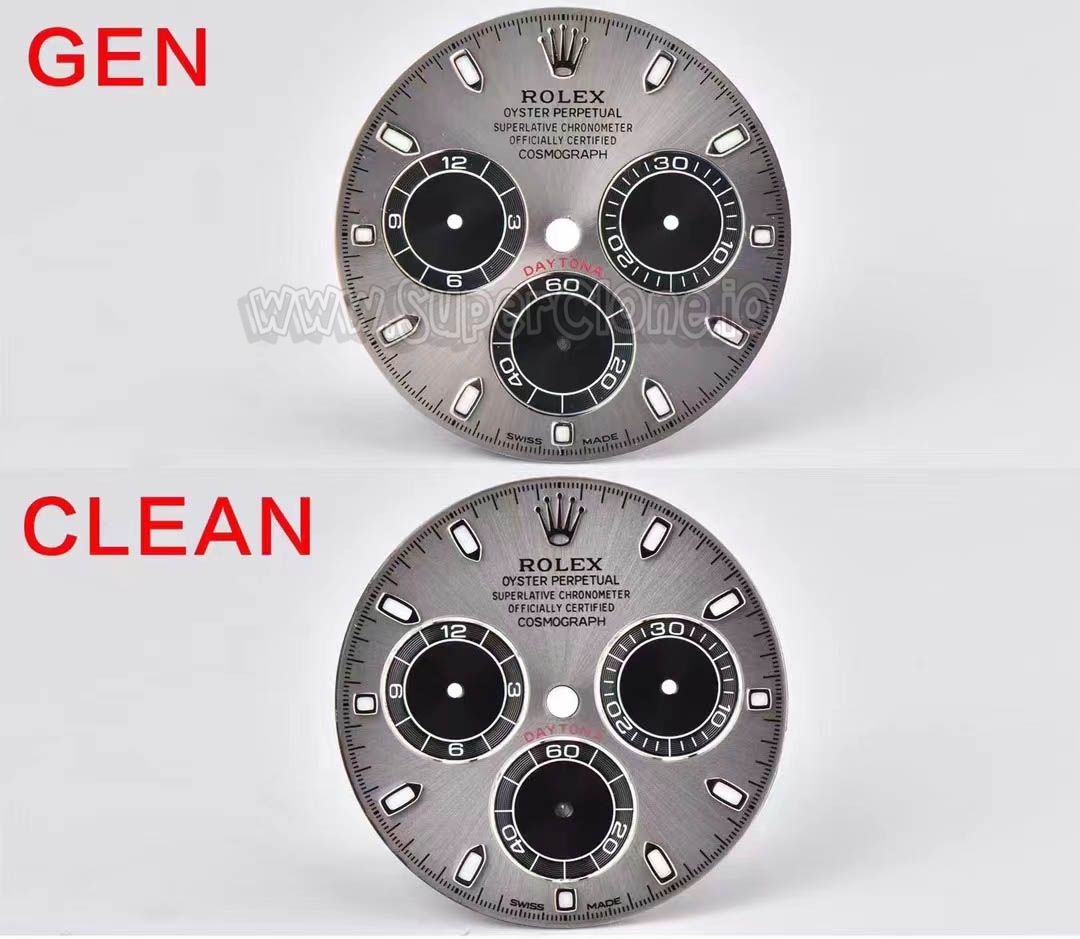
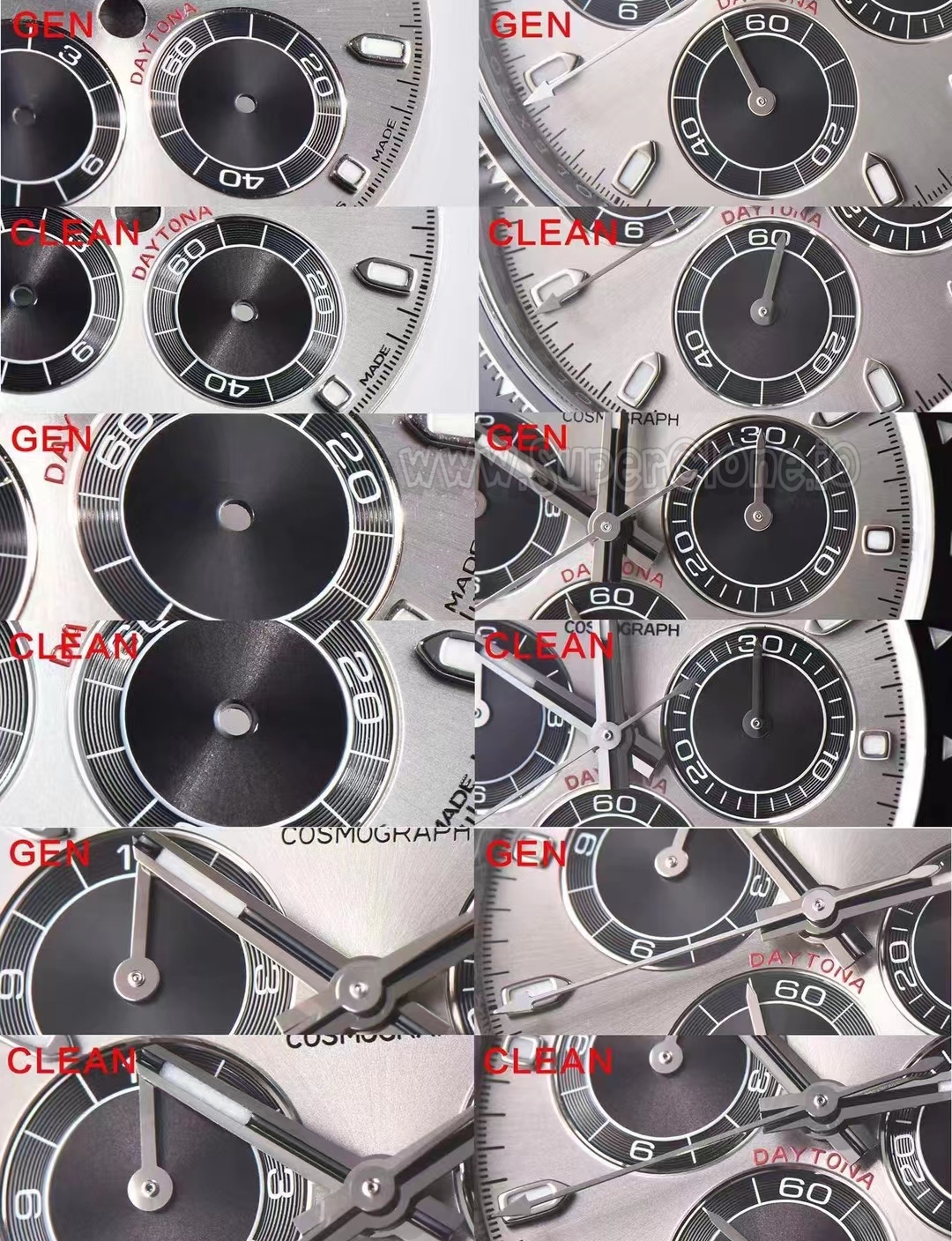
The core manufacturing difficulty begins directly with the dial surface restoration itself. A genuine gray Daytona does not display a flat gray surface under natural light. The color constantly shifts depending on viewing angle, producing subtle transitions between darker metallic tones and brighter reflections across the sunburst texture, showing a deep and high-grade visual texture. Factories that fail to reproduce this correctly usually create dials that look static, rigid, or artificially painted. Under direct lighting, weaker versions often appear lifeless because the metallic layering lacks depth. This is one reason many factories prefer producing black or white Daytona dials first. Gray dials expose too many weaknesses simultaneously, including brushing consistency, reflective layering, coating thickness, and the interaction between the dial surface and the crystal above it.
When BT released its gray Oysterflex Daytona, the model immediately attracted attention because relatively few factories were attempting that configuration seriously at the time. Soon afterward, Clean introduced its own optimized upgraded version of the same model, and the head-to-head comparison of the two products directly exposed the essential gap between rapid assembly mass production and refined precision manufacturing. Many buyers initially assumed Clean was simply reacting to BT’s release schedule, but once detailed comparison images and physical wearing experiences began circulating, it became clear that Clean’s product is completely based on the structural data of the genuine watch for comprehensive optimization, studying the structure of the genuine watch itself rather than merely reproducing the visible appearance.
Case Profile, Mid-Case Curvature, and Visual Density
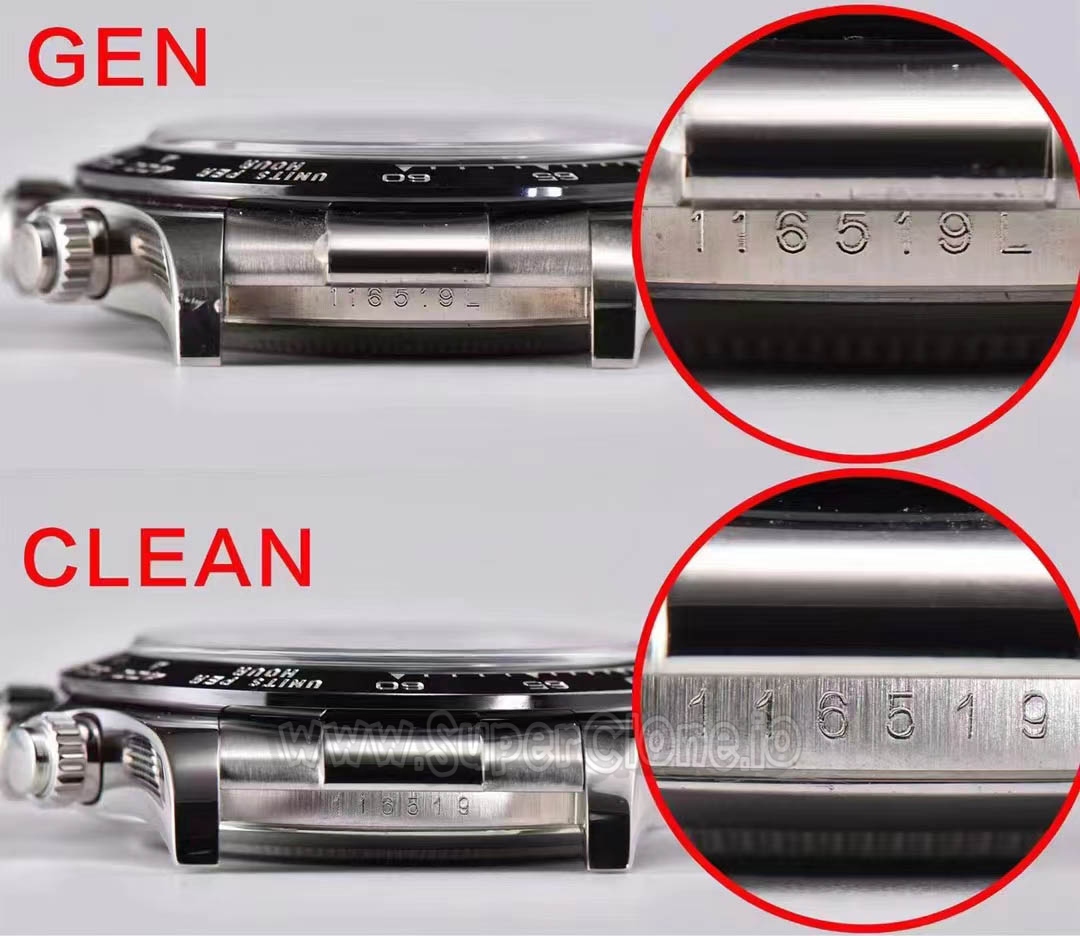
The most obvious advantage on the Clean version lies in the precise restoration of the case profile and three-dimensional curvature. Over the past several years, experienced collectors have gradually realized that the authenticity sense of a Daytona is determined just as much by the overall wrist feel and proportional coordination of the case as by the movement performance. The Daytona possesses a very specific, compact visual density on the wrist. Even though its official dimensions are not particularly prominent among sports chronographs, the watch feels tightly controlled and unusually balanced, fitting the wrist perfectly without a bulky sense.
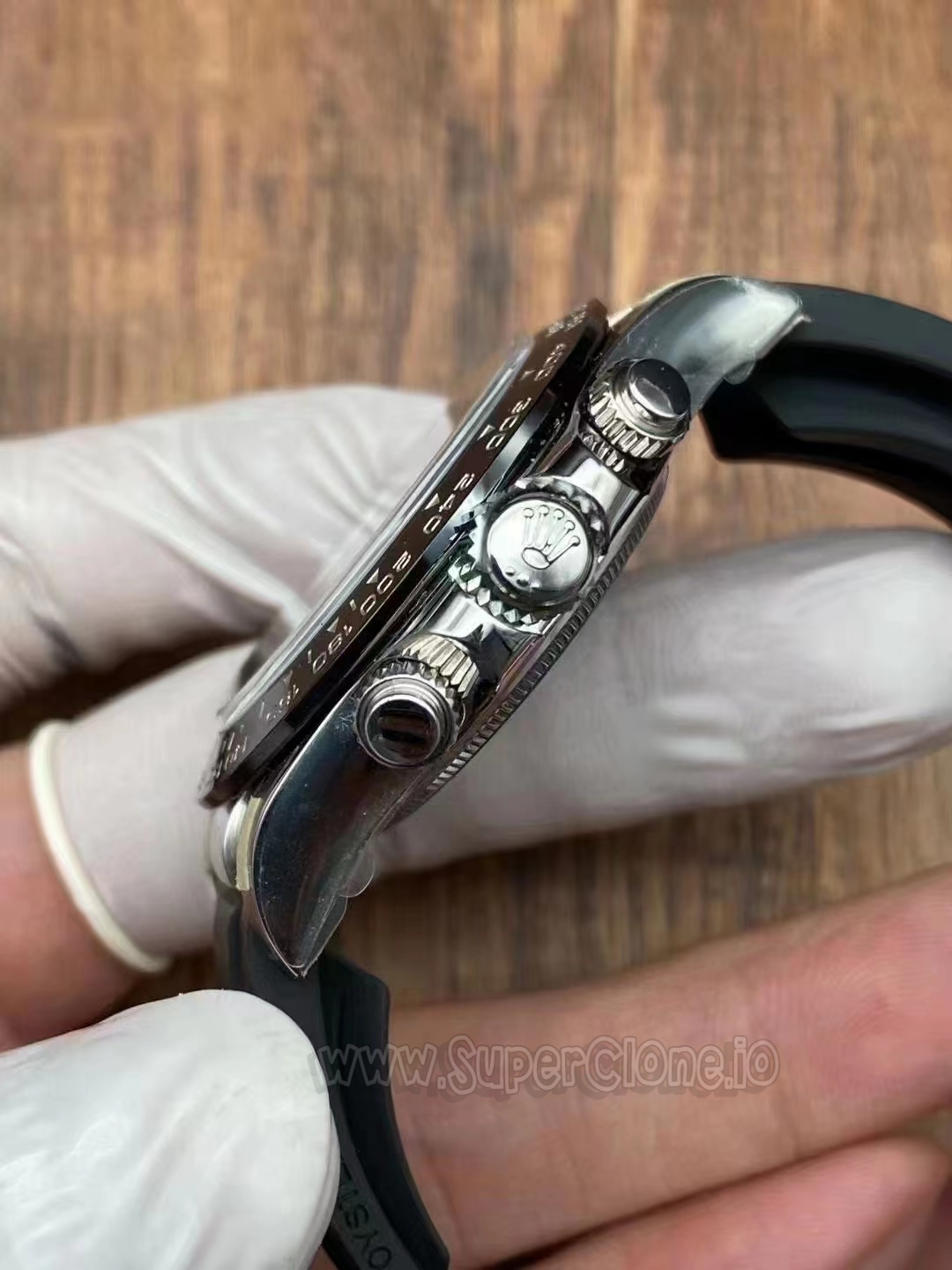
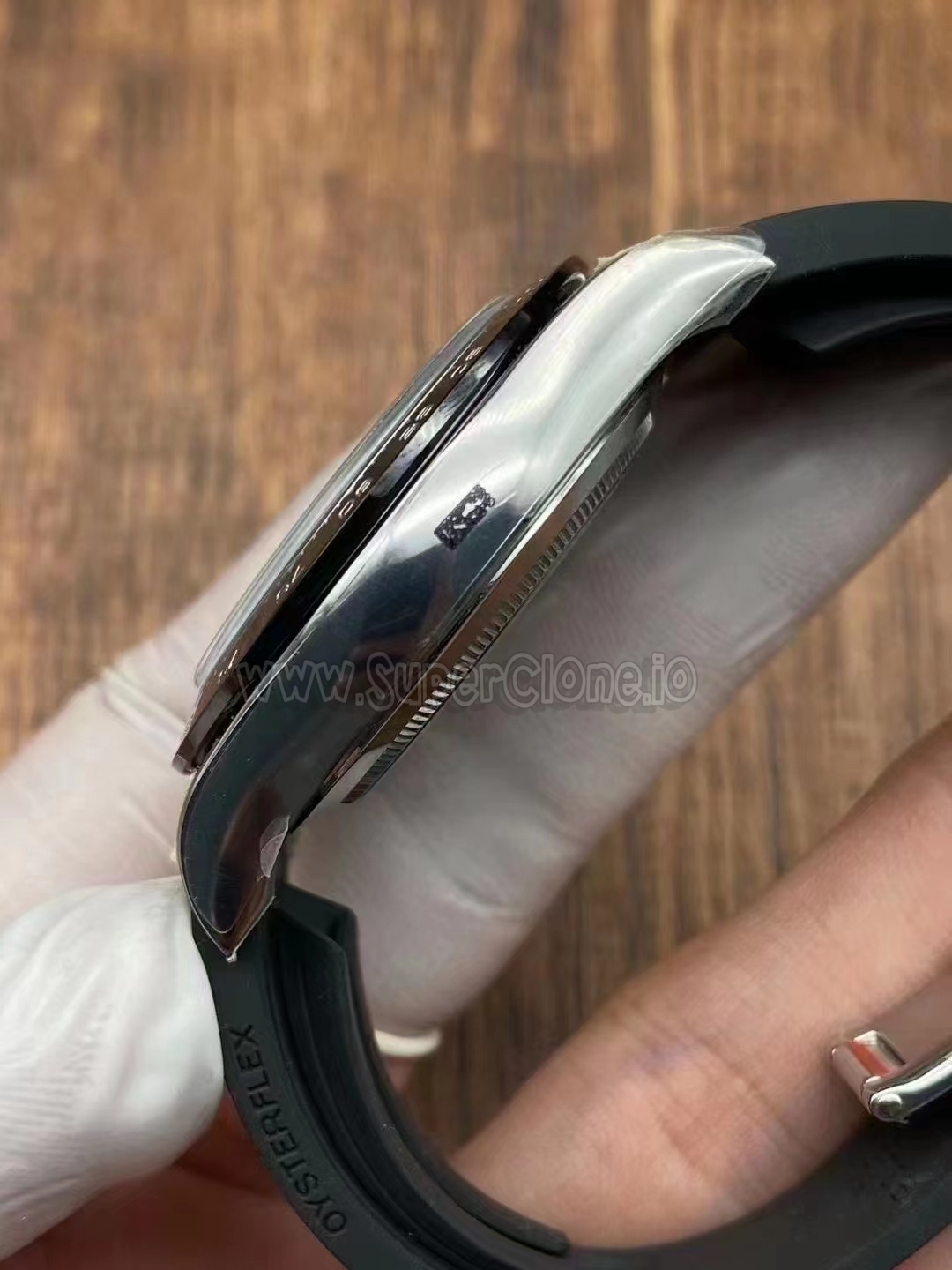
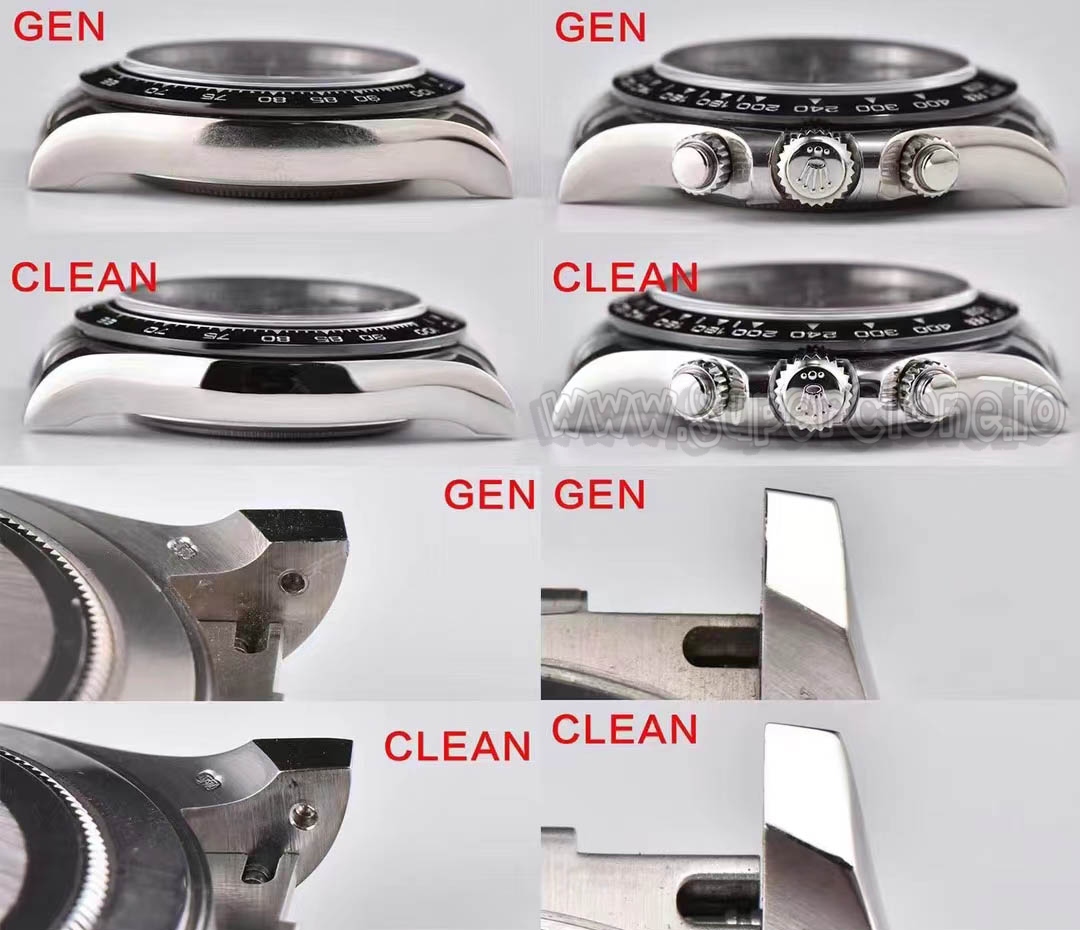
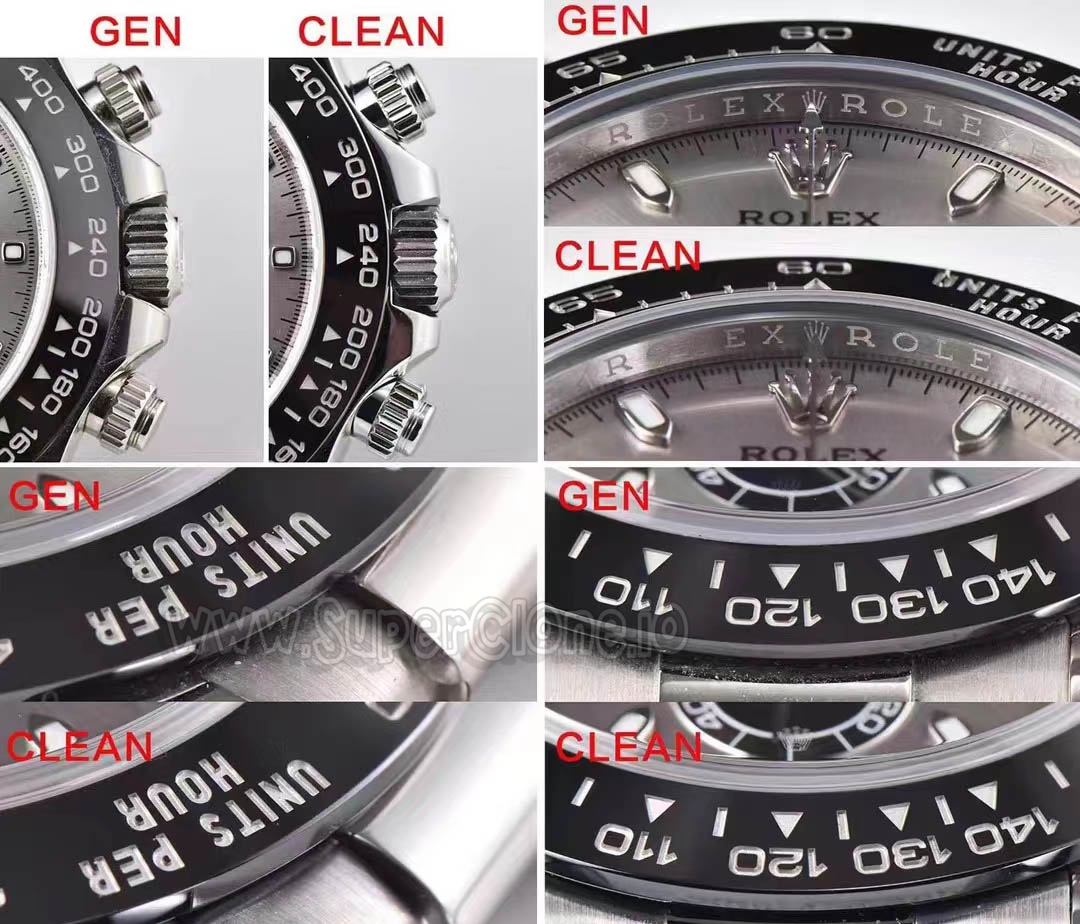
Most early replica Daytonas and BT Factory’s conventional versions have prominent case flaws: the side walls of the case are too flat and vertical, the radian transition is stiff, making the watch appear visually heavier and thicker than the genuine version. Clean Factory made targeted mold revisions for this core problem. The mid-case curvature of its gray Daytona is highly consistent with the genuine version, creating a smooth, softer inward transition that becomes surprisingly important once the watch is worn daily. Small proportional corrections like this rarely appear dramatic in isolated photographs, but collectively they influence whether the watch genuinely captures the balanced appearance and high-grade texture of the original, eliminating the bulky fake sense of ordinary replicas.
Precision Chronograph Pusher Alignment
Another crucial detail revealing the level of manufacturing precision involves the horizontal alignment of the screw-down chronograph pushers after tightening. Casual buyers often overlook this area completely, yet experienced collectors pay close attention because pusher positioning is a core evaluation standard, reflecting the accuracy of threading depth, gasket size matching, and internal structural tolerance control. On weaker Daytona replicas, including some BT versions, the pushers frequently stop at messy, awkward, or inconsistent angles after being tightened, which immediately disrupts the symmetrical and neat visual aesthetic of the watch side. Clean handled this aspect unusually well on the gray Daytona, demonstrating extremely precise thread matching. Once manually tightened, the pusher orientation sits perfectly horizontal and uniform, remaining very close to the genuine configuration. While this may sound like a small detail, corrections of this type dramatically improve the overall impression during real-world wear.
Beyond the Watch Head: Strap Architecture and Clasp Engineering
Reinforced Oysterflex Structure and Sizing Logic
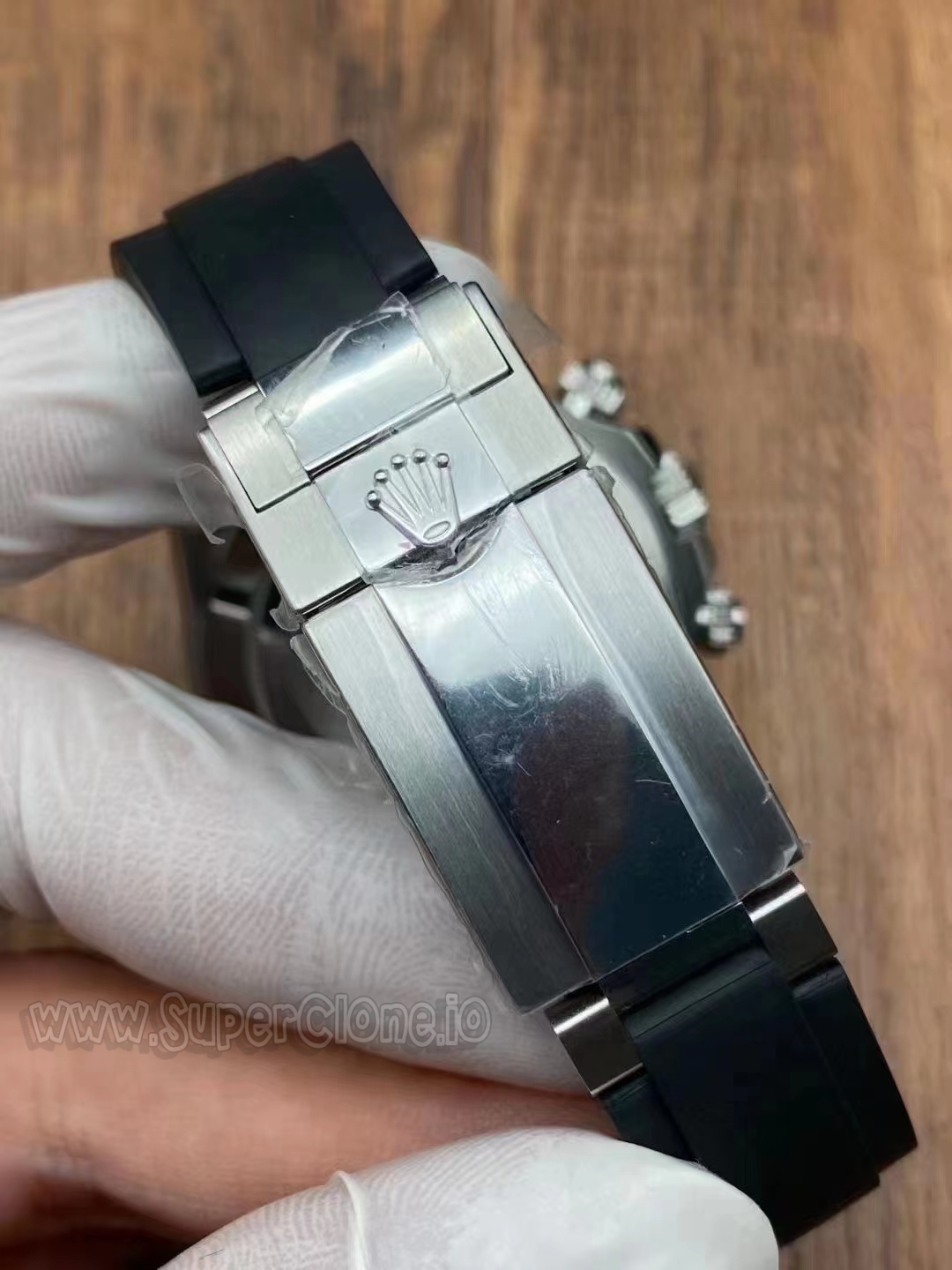
In terms of wearing experience, the Oysterflex rubber strap system represents another major upgrade breakthrough for Clean Factory, widening the gap with mass-produced replica products. Earlier replica Oysterflex straps, including some BT products, generally suffered from a hollow, soft, and unstable structure. They completely copied the external rubber shape but ignored the core internal reinforcement structure found inside the genuine Rolex design. The authentic Oysterflex bracelet contains internal flexible metal blade components that effectively maintain the strap’s three-dimensional shape, stable tension, and wrist fitting performance, preventing it from collapsing or deforming after long-term wearing.
Clean Factory fully optimized this core structure by introducing a reinforced internal support structure inside the rubber strap of the gray Daytona. While this detail may not appear visually dramatic in photographs, the difference becomes obvious once the watch is worn for longer periods. The bracelet holds its shape more naturally around the wrist, feels more stable during movement, and creates a wearing experience much closer to the genuine Oysterflex system without any sagging over extended use. Clean also optimized the humanized design by offering multiple strap length configurations to match different wrist circumferences, matching the genuine Rolex sizing logic. Most replica factories, including BT, only provide a single universal strap size, which fails to fit different wrist types properly and compromises the wearing experience.
Clasp Mechanics and ARF Supply-Chain Legacy
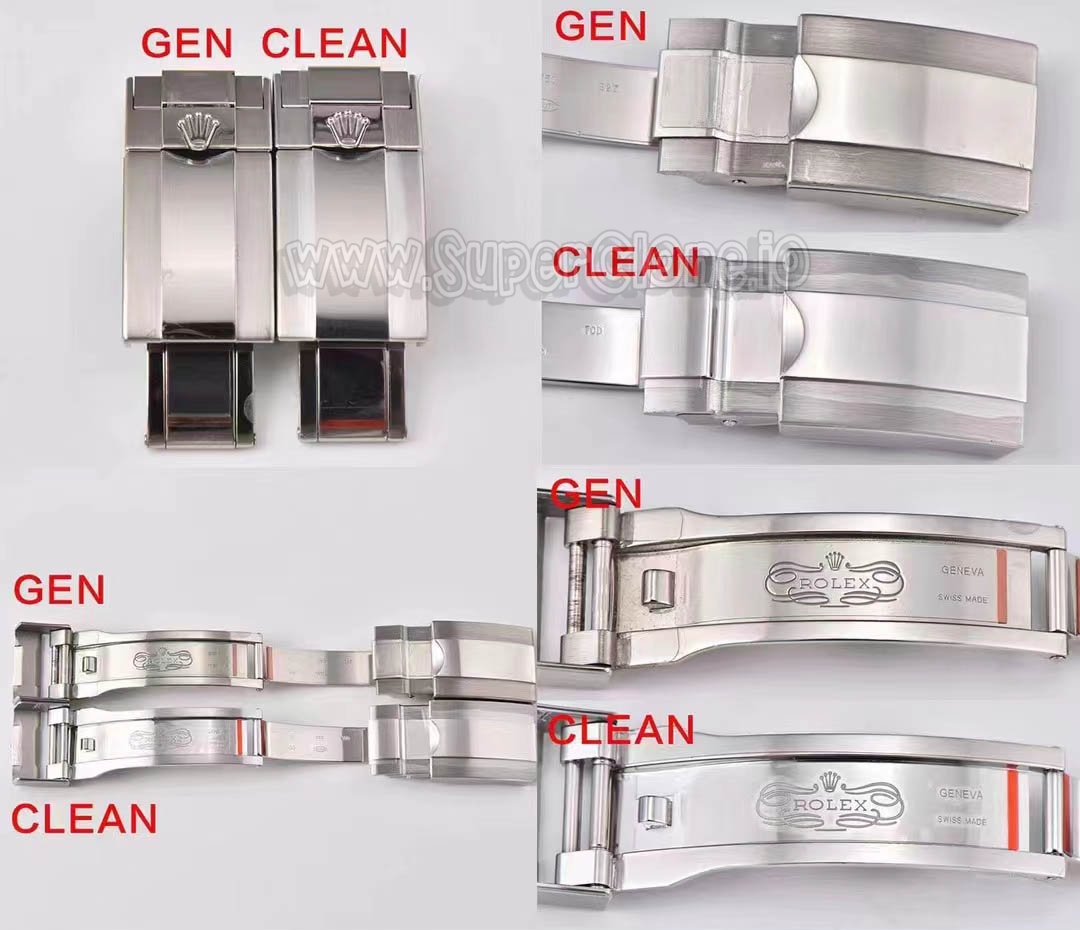
The clasp craftsmanship also deserves special attention because it highlights another important shift occurring inside the replica industry. Years ago, many buyers focused almost exclusively on visible engravings or external finishing, but experienced collectors now pay far more attention to tactile mechanical feedback, such as clasp resistance, opening pressure, locking smoothness, and overall damping. Clean’s customized clasp features excellent overall workmanship, with smooth opening and closing damping, moderate locking tightness, and no loose or stagnant feeling. Industry insiders generally believe that its clasp components benefit from supply-chain connections associated with top-tier accessory manufacturers that once produced components for ARF. Whether or not every rumor surrounding those connections is fully accurate, the resulting clasp quality does feel noticeably more refined, offering a durable and tactile texture far superior to many lower-tier mass-produced alternatives currently available in the market.
The Frontier of Sunray Dial Replication
Interestingly, Clean itself has always maintained an objective attitude and openly acknowledged one area where the gray Daytona still falls slightly behind the genuine watch: the dial texture. More specifically, the depth and refinement of the sunray effect remain extremely difficult to reproduce perfectly. Under specific soft light and natural light conversion conditions, the genuine gray Daytona produces a darker, more delicate radial gradient layer and deeper metallic texture than the replica version currently achieves, which still shows a slight lack of three-dimensional sense in extreme light environments.
This gap is not simply a matter of adjusting paint color. It involves multiple complex process links, such as dial substrate brushing direction, metal coating thickness, reflective layer lamination, and crystal light refraction matching under changing light conditions. These ultra-fine process barriers are the exact technical manufacturing variables that separate a visually convincing replica from one capable of reproducing the much more subtle emotional qualities of the original watch, and they remain the core focus areas that high-end factories are currently trying to break through.
The New Evaluation Criteria for High-End Replica Collectors
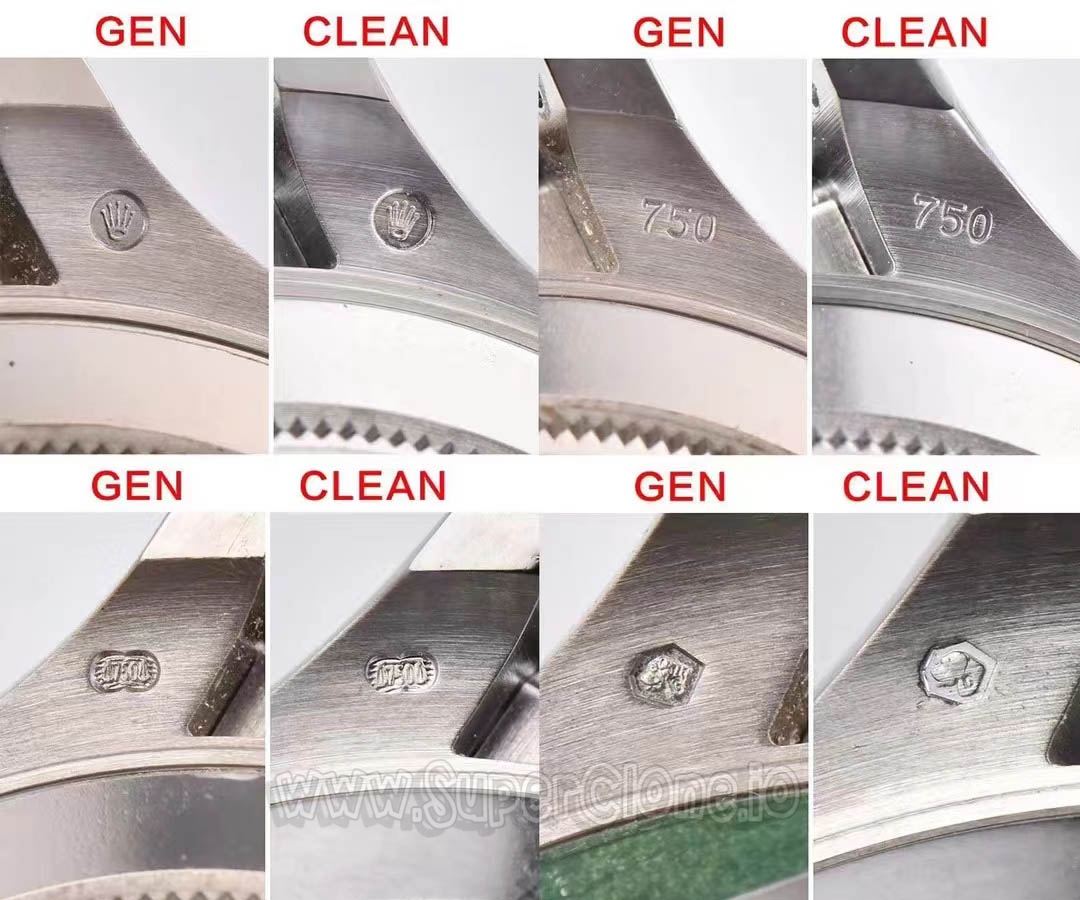
That technical reality also perfectly explains why the modern high-end replica Daytona market has completely entered the detail competition era, becoming far more detail-oriented than previous generations of production. A few years ago, factory competition only stayed at the superficial appearance similarity level; as long as the watch looked approximately correct from a normal viewing distance, it was recognized as a high-quality product. Today, the conversation has changed entirely, and senior collectors’ evaluation standards have become extremely professional and rigorous. The inspection scope now covers lug bevel transitions, ceramic bezel engraving depth, crystal edge polishing radian, bracelet tension uniformity, clasp mechanical feedback, caseback thickness tolerances, and the exact fitting gap between the Oysterflex strap and the case itself. Many of these subtle details would have been ignored almost completely several years ago, yet they now play a major role in determining which factories gain long-term credibility among experienced buyers.
Against this industry background, the market’s cognition of high-end replica Daytonas has also become more rational. Serious collectors no longer blindly pursue the unrealistic idea of a “100% perfect replica,” because everyone in the industry knows there is still an insurmountable, subtle gap between replica products and genuine luxury watches. The current core competition of high-end factories is no longer superficial appearance copying, but continuous iterative optimization of subtle processes and structural details based on genuine product data. The more important question now is which factories are genuinely willing to keep polishing details and improving their products even after reaching a high baseline level—which factories are willing to reopen molds, revise structural tolerances, or redesign components simply to correct subtle details that many casual buyers may never consciously recognize.
BT Factory and Clean Factory have their own distinct positioning and advantages in the 4130 Daytona market. BT Factory is more suitable for style lovers and entry-level buyers who value rich product styles, fast iteration speed, and high cost-performance to meet daily wearing and social matching needs. Clean Factory focuses heavily on senior collector groups who demand outstanding structural precision, a superior wearing experience, and a more restored genuine texture. In the current Daytona market, especially within the Oysterflex category, Clean increasingly appears committed to that rigorous process. The gray Daytona may not be absolutely flawless, but as a representative work of refined manufacturing, it clearly represents a level of maturity, refinement, and structural understanding that feels significantly more advanced than what the industry was producing only a few years ago, setting a new height for high-end replica watch manufacturing.
