
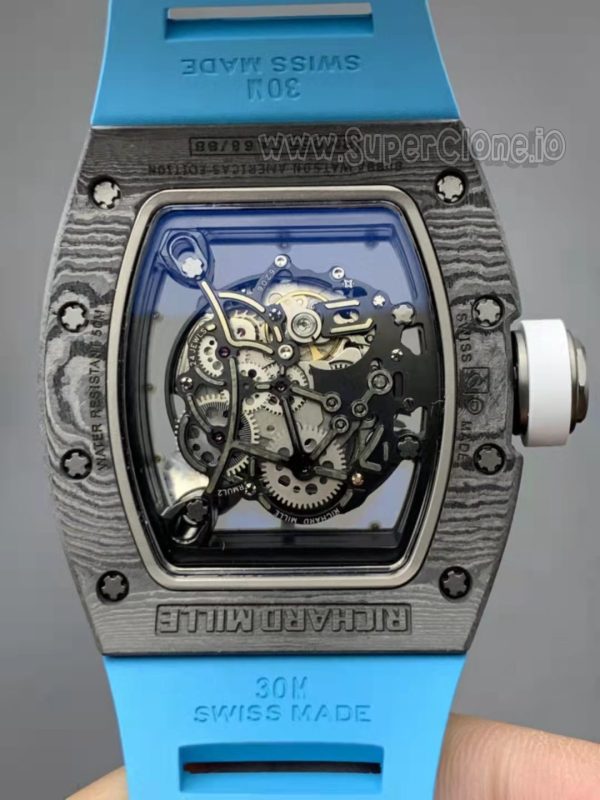
The Rise of Richard Mille Super Clones and the Role of ZF’s RM055 Bubba Watson
Before Richard Mille replicas started appearing widely across dealer catalogs, most factories focused on conservative and predictable models. The market was dominated by Submariner, Daytona, Datejust, Royal Oak, and Nautilus replicas. These models shared one thing in common: they were structurally simpler, easier to standardize, and more forgiving in production consistency.
Richard Mille changed that equation completely. The cases were architecturally complex, the skeletonized movements exposed every flaw, and the design language required a level of precision that traditional replica manufacturing was not ready for. For a long time, the category was considered “too difficult to scale” with acceptable consistency.
From Mechanical Replication to Visual Engineering
That perception shifted gradually when factories realized something important: most Richard Mille buyers were not evaluating watches the same way Rolex collectors did. The expectation was not perfect mechanical fidelity, but rather visual impact, structural aggression, and modern material simulation.
Once this shift was understood, the entire segment moved in a different direction. The focus became less about hidden movement perfection and more about how the watch behaves visually under light, motion, and wrist presence.
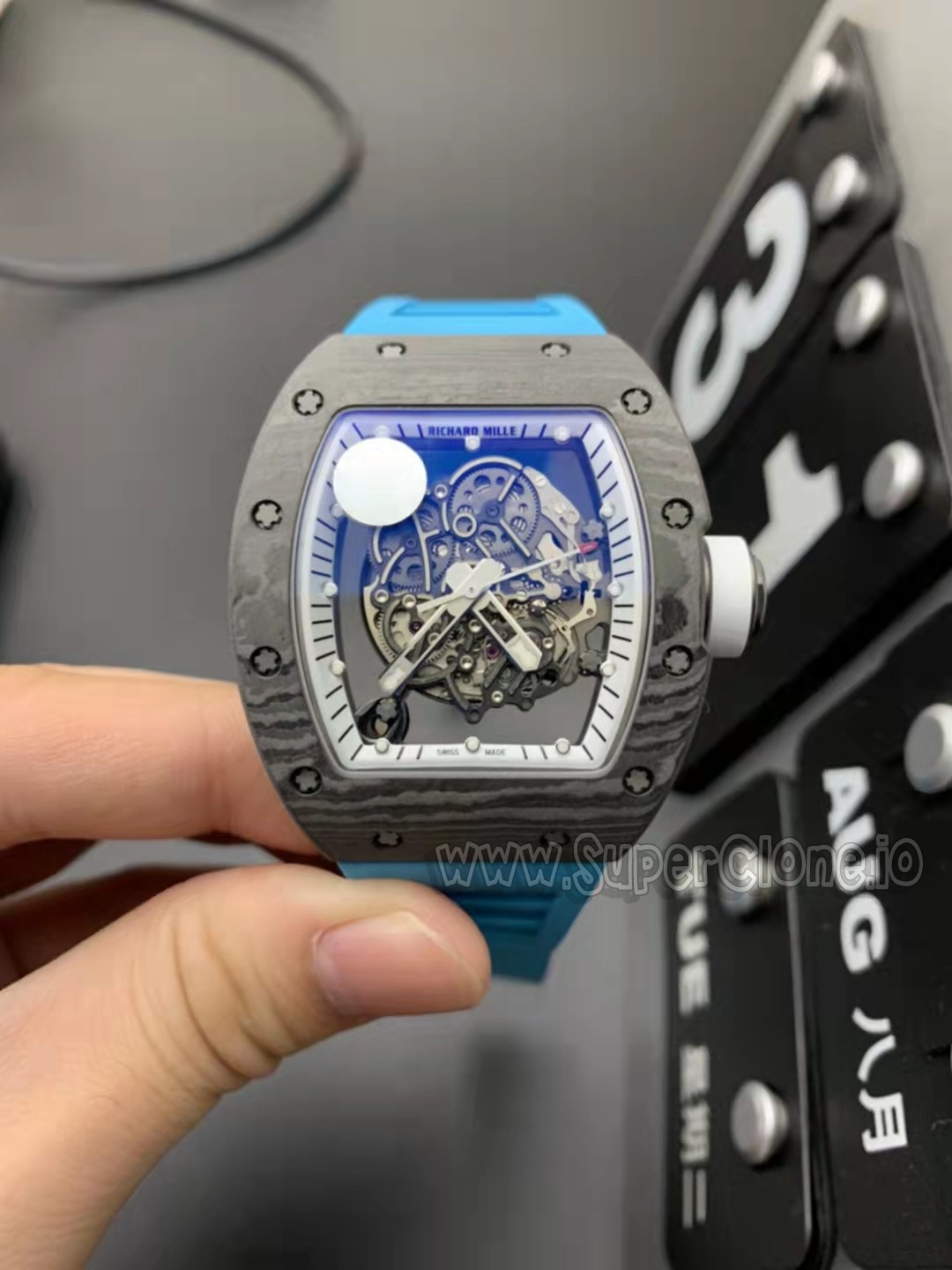
Submariner-style replicas are judged by symmetry, hand alignment, and functional stability. Richard Mille replicas are judged by a different set of criteria: depth perception, case layering, skeleton visual balance, and how convincingly the watch replicates a “mechanical sculpture” rather than a traditional timepiece.
RM055 Bubba Watson as a Turning Point Model
The RM055 Bubba Watson became a key reference point because it marked one of the first attempts where factories prioritized surface realism over purely geometric replication. Earlier generations often failed in subtle but visible ways: flat carbon textures, overly thick bezels, and inconsistent finishing transitions that broke the illusion immediately.
Factories like ZF pushed the category forward, while KV and JB Factory explored different technical directions. Each factory approached Richard Mille replication from a slightly different angle, reflecting how fragmented and experimental this segment still was at the time.
Market Reality: Richard Mille super clones are widely understood by collectors as “visual accuracy products” rather than strict mechanical reproductions. The priority is how convincing the watch looks in real-world wear conditions.
ZF RM055 V3 and the Forged Carbon Problem
The RM055 V3 arrived during a period when “version upgrades” were heavily marketed, often with exaggerated claims. In reality, most updates were incremental rather than structural redesigns.
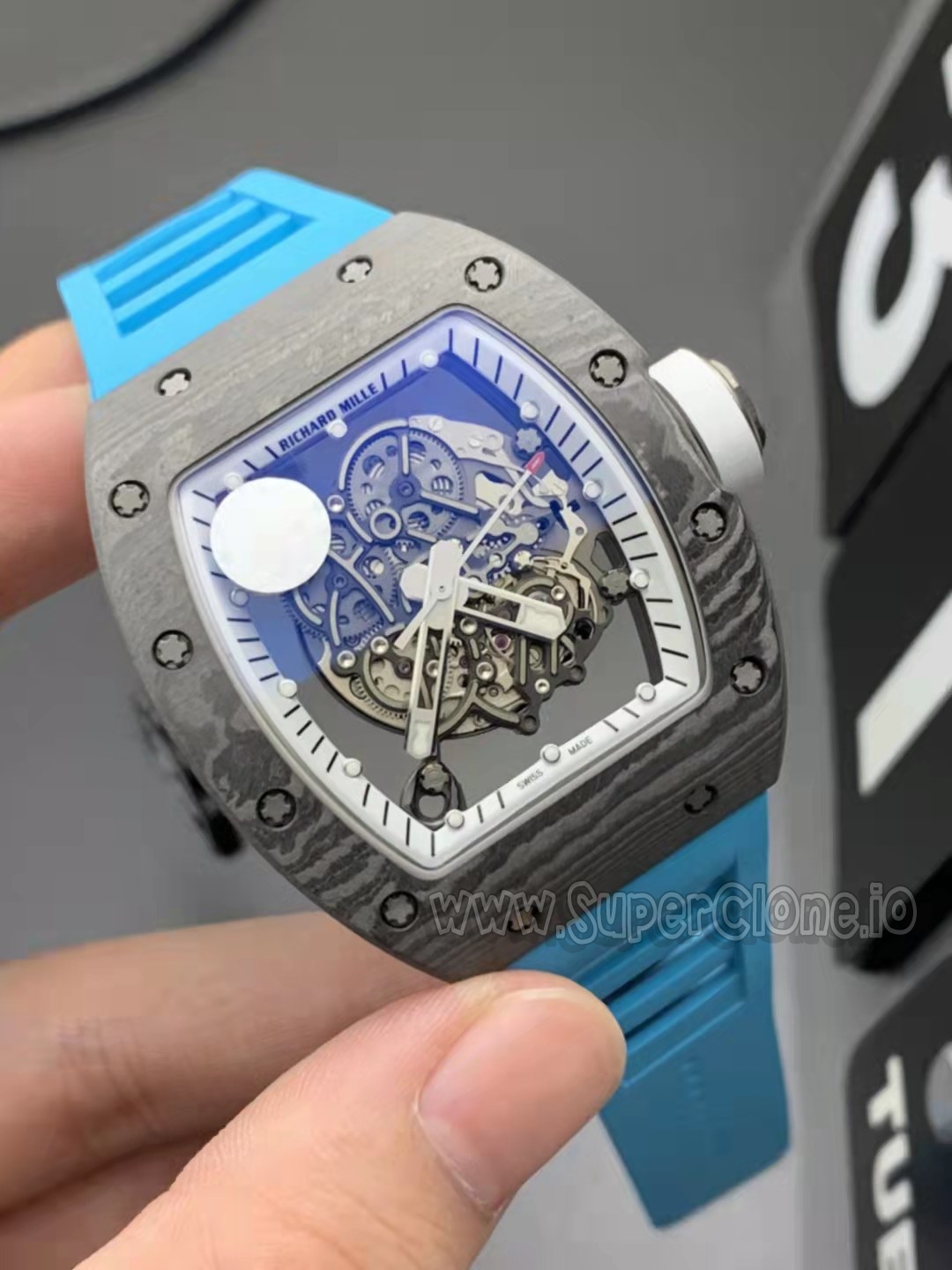
The most noticeable improvement was in forged carbon simulation. Earlier replicas often suffered from flat, repetitive patterns that lacked depth. ZF introduced more randomized texture behavior, especially under angled light, which significantly improved visual realism.
However, it is important to distinguish between material authenticity and visual simulation. Claims about matching genuine NTPT carbon were misleading. Genuine Richard Mille cases rely on industrial-grade composite processes that are not realistically reproducible in replica manufacturing environments.
ZF’s improvement was therefore not material equivalence, but optical believability — how the surface interacts with light and shadow.
Crown Design and Collector Behavior
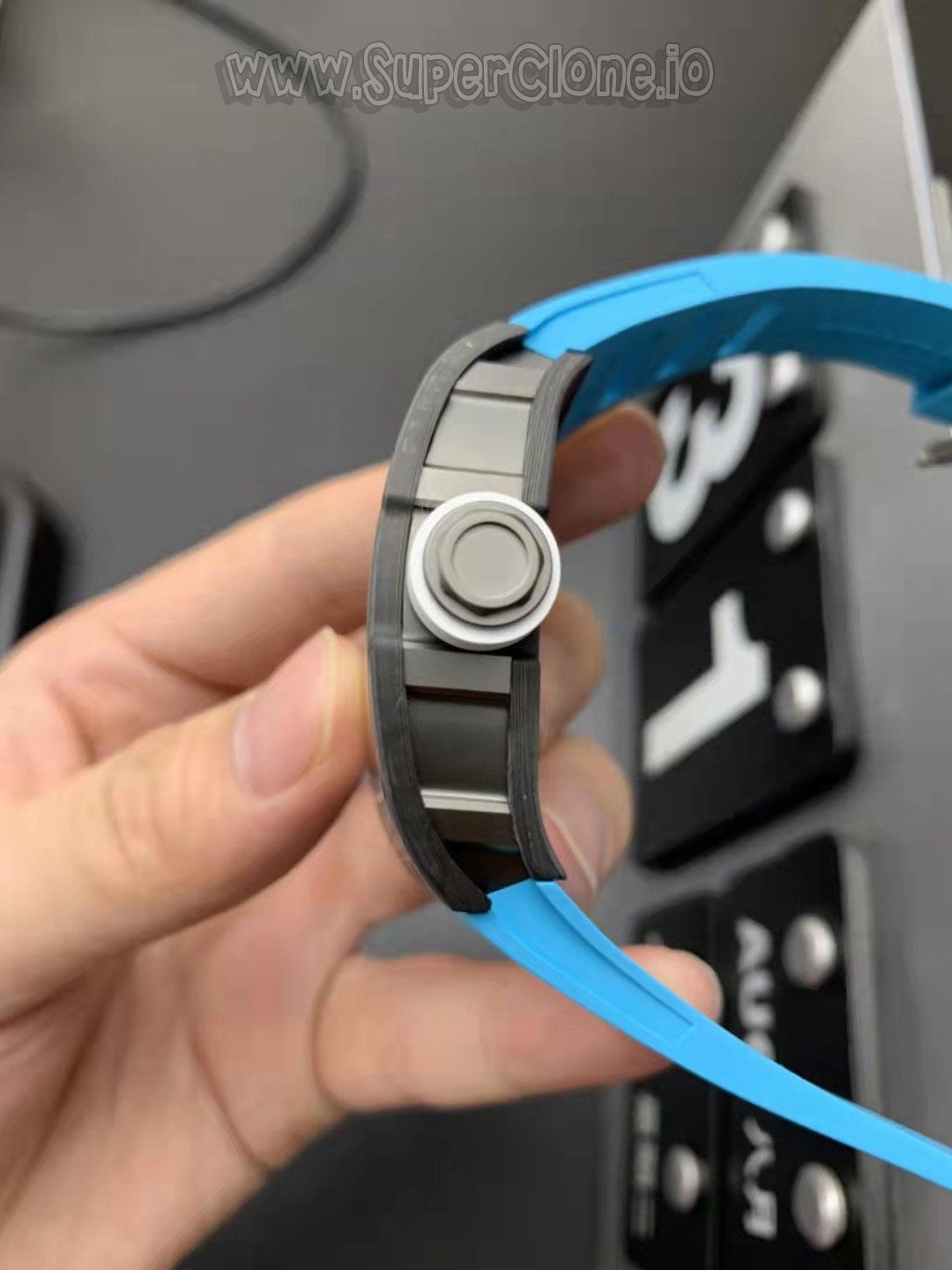
The crown area is one of the most revealing parts of any Richard Mille replica. On genuine models, it integrates seamlessly into the case architecture. Earlier replicas often failed here due to incorrect proportions or visual disconnection from the case geometry.
ZF improved the alignment and scale relationship on the V3, although some details such as the white rubber insert remained debated among collectors.
Interestingly, modding culture is more active in this segment compared to traditional Rolex replicas. Some users replace crown inserts or strap accents to improve visual balance, reflecting a more flexible attitude toward customization.
Case Construction and Real-World Visual Depth
The defining challenge of Richard Mille replicas is case geometry. If layering is even slightly incorrect, the entire illusion collapses instantly.
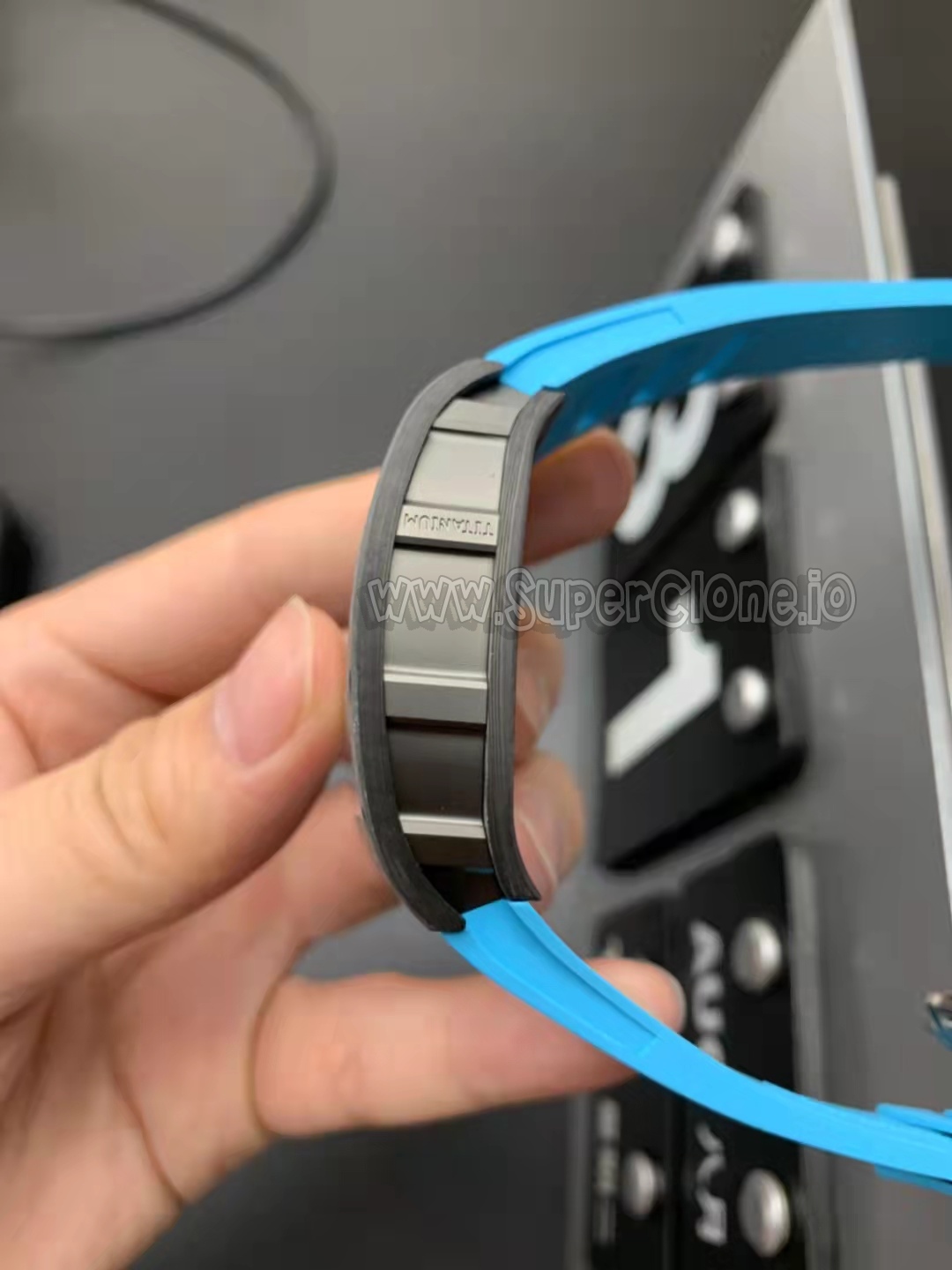
ZF improved mid-case transitions, screw positioning, and bezel alignment, which helped restore the sense of architectural depth. Under natural lighting, the case behaves more dynamically, especially in outdoor wrist shots.
However, experienced collectors still recognize limitations. Side-profile thickness consistency and edge finishing sharpness do not fully match genuine machining standards. These differences are subtle but noticeable under close inspection.
Water Resistance Reality
Water resistance remains one of the most misunderstood aspects of Richard Mille replicas. Although some listings claim basic water resistance ratings, real-world performance is inconsistent across production batches.
The structural complexity of RM-style cases introduces multiple sealing challenges. Even when initial testing is successful, long-term reliability cannot be guaranteed.
For practical purposes, most experienced collectors treat these watches as non-water-resistant in daily use scenarios.
Movement Choice: Seiko NH05A Reliability
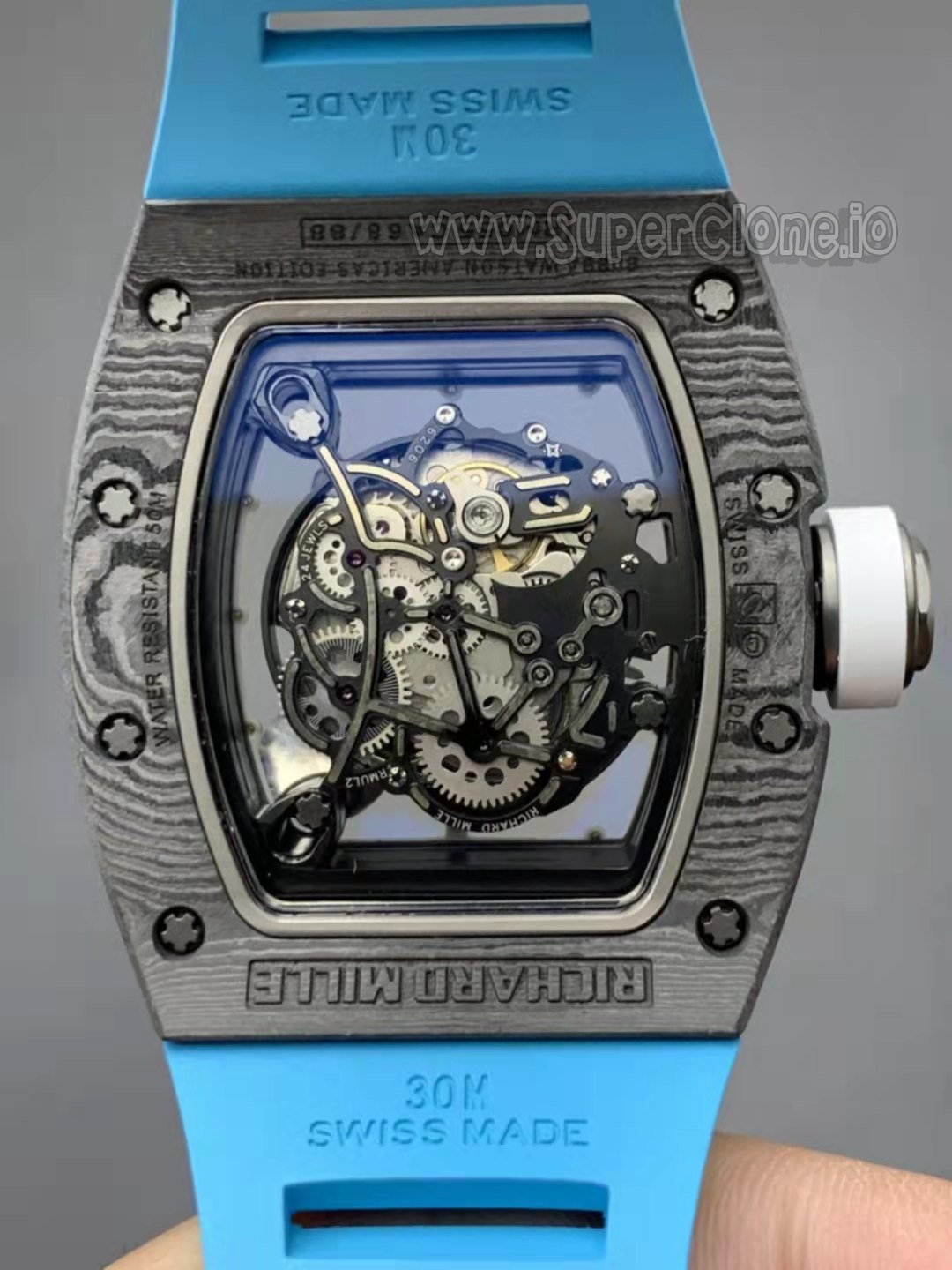
The RM055 uses a Seiko NH05A automatic movement. While some expect fully customized skeleton calibers, many experienced users prioritize stability and serviceability instead of visual movement authenticity.
Historically, skeletonized replica movements often failed under long-term use. The NH series gained adoption because it offers a practical balance between durability and cost efficiency.
This represents a broader shift in the replica industry: from over-engineered marketing claims to functional reliability trade-offs.
Dial Depth and Strap Integration
The skeleton dial execution improved significantly in V3 generation, with better layering depth and bridge coloration. This created a more convincing sense of internal structure under varying lighting conditions.
Sapphire crystal with purple AR coating enhances the futuristic visual effect, although opinions differ on whether the color shift is slightly exaggerated compared to genuine references.
Strap Comfort and Wearing Experience
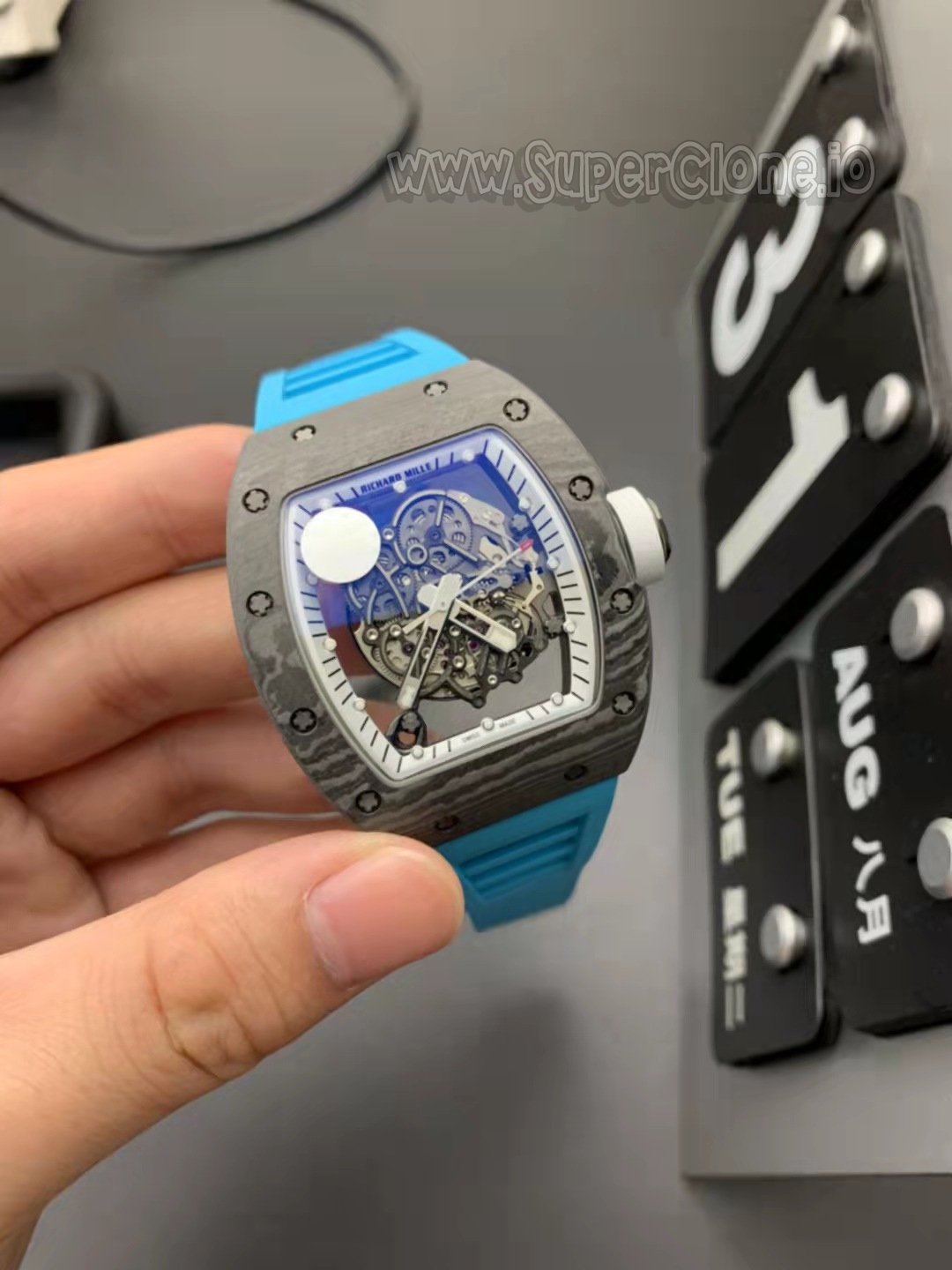
The blue rubber strap plays a critical role in balancing the visual intensity of the forged carbon case. Without color contrast, the overall design can feel visually compressed.
Over time, strap ergonomics improved across factories, with better flexibility and wrist curvature adaptation. This significantly improved comfort perception, especially for larger skeleton watches.
Conclusion: A Defining Moment in Super Clone Evolution
The RM055 represents a transitional phase in the evolution of super clone manufacturing. Factories began optimizing for real-world visual performance rather than static specification accuracy.
Even today, the ZF RM055 Bubba Watson V3 remains a reference point not because it is perfect, but because it demonstrated a new direction in how Richard Mille replicas should be visually engineered.
In the broader market context, the most influential replicas are not always the most accurate — they are the ones that redefine expectations.
ZF Factory RM055 Bubba Watson Specifications
| Specification | Details |
|---|---|
| Movement | Seiko NH05A Automatic Movement |
| Case Size | 42mm × 50mm × 12.5mm |
| Case Material | Forged Carbon Simulation |
| Crystal | Sapphire with Purple AR Coating |
| Dial | Layered Skeleton Structure |
| Strap | Blue Rubber with Deployant Clasp |
